Barbell Seated Good Morning
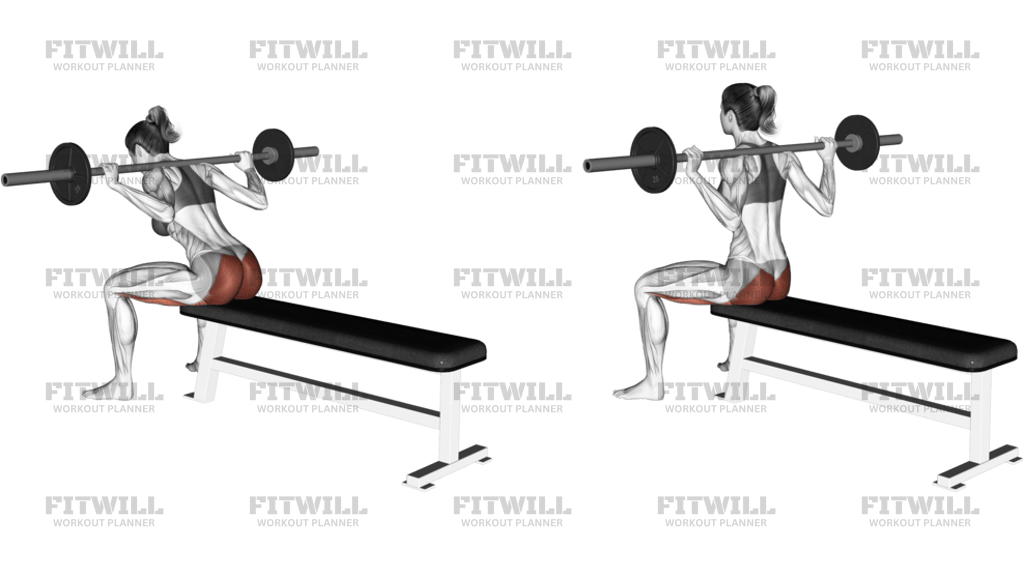
Barbell Seated Good Morning is a seated hip hinge that loads the back side of the body while the bench removes a lot of help from the legs. With the bar resting across the upper back and the hips anchored on the bench, the exercise asks the torso to fold forward and return by driving the hips open again. That makes it a useful drill for posterior-chain strength, trunk control, and learning to keep a bar stable while the pelvis and ribcage move together.
The seated position changes the feel of the movement more than many lifters expect. Because you are not standing, you cannot lean on a knee bend, step, or body swing to finish the rep, so the quality of the hinge matters from the first inch. The feet stay planted, the bench gives you a clear support point, and the torso should move as one unit around the hips rather than collapsing through the lower back.
Set the bar like a back-squat position across the rear delts and upper traps, then sit tall on a flat bench with your feet flat and roughly shoulder-width apart. A stable bench and a firm foot position matter because they keep the pelvis from sliding and make the hinge easier to control. When you lower, think about sending the hips back while the chest stays long and the spine stays neutral; the goal is a smooth fold at the hips, not a rounded reach toward the floor.
At the bottom, stop when your hamstrings or hip position tell you the range is done, then drive the torso back up by extending the hips and squeezing the glutes. Keep the bar pinned to the back and breathe with the rep so the trunk stays organized instead of loose. This exercise works well as accessory work, a warm-up hinge pattern, or controlled posterior-chain training when you want tension and precision more than maximum load.
Use light to moderate weight and let the bench do its job of removing momentum. If the bar starts to roll up the neck, the lower back rounds, or the hips drift off the bench, shorten the range and clean up the setup before adding load. Barbell Seated Good Morning is most useful when every rep looks similar, feels deliberate, and finishes with the torso under control instead of thrown back upright.
[ Workout Log & Planner ]
Put your next workout in Fitwill
Keep your plan and training log ready when you are.


Instructions
- Set a flat bench behind you and place a barbell across your upper back in a back-squat position before sitting down.
- Sit on the middle of the bench with your feet flat, about shoulder-width apart, and your shins close to vertical.
- Pin the bar against your rear delts and upper traps, lift your chest, and keep your ribs stacked over your pelvis.
- Inhale and brace, then hinge forward from the hips while your seat stays on the bench and your spine stays neutral.
- Lower until your torso reaches a controlled forward lean and your hamstrings limit the range without rounding your back.
- Pause briefly at the bottom without relaxing your brace or letting the bar drift up your neck.
- Exhale and drive your hips forward to bring your torso back upright, squeezing your glutes at the top.
- Reset your breath and repeat for the planned reps before standing carefully to rack the bar.
Tips & Tricks
- Keep the bar low on the rear delts; if it sits on the neck, the hinge usually feels unstable.
- Stay glued to the bench with your sit bones instead of sliding forward as you fold.
- Let the hips move back, not the knees forward, so the bench does not turn the rep into a squat.
- Use a shorter range if your lower back starts rounding before your hamstrings are challenged.
- A two- to three-second lower makes the seated hinge much more effective than dropping into the bottom.
- Keep the shins nearly vertical; if your knees keep drifting, reset the foot placement before adding weight.
- Choose moderate loads, because the seated position makes sloppy rep speed and bouncing very obvious.
- Exhale as you come up and finish with the ribs stacked, not flared, over the pelvis.
- If the bar keeps rolling on the back, use a narrower hand position and retract the shoulder blades harder.
- Treat this as a posterior-chain accessory, not a max-effort lift.
Frequently Asked Questions
What muscles does Barbell Seated Good Morning work?
It mainly targets the hips and glutes, with the hamstrings, spinal erectors, and core helping control the hinge and keep the bar stable.
Where should the bar sit in Barbell Seated Good Morning?
It should rest across the rear delts and upper traps, just like a back-squat setup, not on the neck.
How far forward should I hinge in Barbell Seated Good Morning?
Go only as far as you can keep a neutral spine and a steady bar path. For most lifters that means stopping when the hamstrings limit the motion rather than chasing extra depth.
Is Barbell Seated Good Morning beginner-friendly?
Yes, if you start very light and keep the range short at first. The bench makes the movement easier to learn because it removes a lot of standing balance and momentum.
Why do it seated instead of standing?
Sitting on the bench makes the hinge stricter and shifts more tension to the posterior chain. It is useful when you want less leg drive and more control through the torso and hips.
What is the most common mistake with Barbell Seated Good Morning?
Rounding the lower back to get a bigger range is the biggest issue. If that happens, shorten the descent and keep the chest long as you hinge.
Should my feet move during the set?
No, the feet should stay planted so the bench and floor give you a stable base. Moving the feet usually means the hinge is turning into a shuffle instead of a controlled rep.
Can I use this as a substitute for standing good mornings?
Yes, but expect less loading and more strictness. The seated version is better when you want posture control, lighter accessory work, or a cleaner hinge pattern.