Barbell Seated Overhead Press
Barbell Seated Overhead Press is a strict pressing exercise for the shoulders, triceps, and upper chest. Sitting down removes most of the leg drive you might use in a standing press, so the torso has to stay stacked while the bar travels from the upper chest to locked-out overhead. That makes the movement useful for building pressing strength, teaching cleaner bar path, and giving the shoulders a hard stimulus without turning every rep into a full-body heave.
The seated position changes the coaching priorities. With your hips fixed on the bench, the easiest way to cheat is to lean back, flare the ribs, or turn the press into a low-incline bench press. A good Barbell Seated Overhead Press keeps the glutes anchored, feet planted, and the chest tall without overextending the lower back. The bar should start in front of the face at the upper chest, then travel in a smooth line so the head can move slightly back on the way up and come back under the bar at the top.
This exercise trains the deltoids hardest, especially the front and middle heads, while the triceps finish the lockout and the upper back helps keep the shoulders organized. Because you are pressing a barbell with both arms at once, the rep also exposes side-to-side differences in shoulder mobility, wrist position, and elbow tracking. That makes it a good choice when you want a simple, repeatable press that is easy to load and easy to track over time.
Use a load that lets you lower the bar under control to the upper chest or collarbone area without collapsing the torso. If the bar drifts too far in front, the shoulders and wrists usually take the punishment; if you arch hard to force the rep, the lower back becomes the limiter instead of the shoulders. Keep the movement smooth, press to a stable overhead finish, and rack the bar only after you are fully balanced and the elbows are locked out.
Fitwill
Log Workouts, Track Progress & Build Strength.
Achieve more with Fitwill: explore over 9600 exercises with images and videos, access built-in and custom workouts, perfect for both gym and home sessions, and see real results.
Start your journey. Download today!




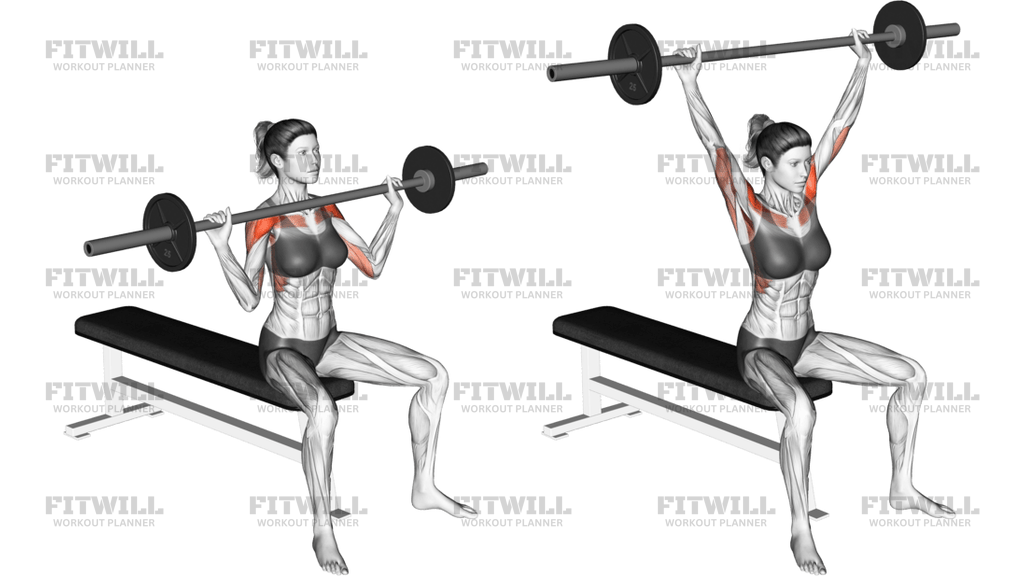
Instructions
- Sit on a flat bench with both feet planted and slightly in front of your knees, then hold the bar across your upper chest in an overhand grip just outside shoulder width.
- Stack your wrists over your elbows, keep your forearms close to vertical, and set your shoulders down without shrugging hard into the bar.
- Take a breath, brace your midsection, and keep your glutes in contact with the bench so your torso stays tall and stable.
- Press the bar upward and slightly back so it clears your face and finishes over the middle of your shoulders.
- As the bar passes forehead height, move your head forward under it instead of leaning your torso back to finish the rep.
- Lock out your elbows overhead with the bar centered over your shoulders, hips, and feet.
- Lower the bar under control along the same path until it returns to the upper chest or collarbone area.
- Reset your breath at the bottom, then repeat for the planned reps before racking the bar carefully at shoulder height.
Tips & Tricks
- Use a grip just wide enough that your forearms stay vertical when the bar sits on the upper chest.
- Keep your ribs down; if the lower back starts to arch, the set is too heavy for a strict seated press.
- Let the bar travel around your face in a slight arc rather than trying to drive it straight up from the chest.
- Think about bringing your head back only long enough to clear the bar, then push it through at lockout.
- Stop the descent on the upper chest or collarbone instead of bouncing the bar off the sternum.
- Keep the wrists stacked over the knuckles; a bent-back wrist usually means the bar is sitting too far in the fingers.
- A flat bench without back support makes this a stricter press, so reduce the load before you start leaning for reps.
- If the shoulders shrug early or the bar path wobbles, end the set and drop the weight for cleaner reps.
Frequently Asked Questions
What muscles does Barbell Seated Overhead Press work most?
It mainly targets the shoulders, especially the front and middle delts, with the triceps helping finish the lockout. The upper chest and upper back assist, but they should not take over the lift.
Is Barbell Seated Overhead Press easier than standing overhead pressing?
Usually yes, because sitting removes most of the leg drive and balance demands. That said, the seated version can feel stricter on the torso because you cannot use your lower body to cheat the bar upward.
How wide should my grip be on the bar?
Use a grip just outside shoulder width so your forearms are close to vertical when the bar is at your upper chest. If the grip is too wide or too narrow, the wrists and elbows tend to drift out of alignment.
Where should the bar lower during Barbell Seated Overhead Press?
Lower it to the upper chest or collarbone area in front of the face, then press from there. If you are dropping it much lower, the torso usually starts to relax and the shoulders lose their best line of force.
Do I need a bench with back support for this exercise?
Not necessarily. The version here is shown on a flat bench without back support, which makes the torso work harder to stay stacked; if you use a backrest, keep your ribs down so the press does not turn into a lean-back.
Why does my lower back arch during Barbell Seated Overhead Press?
That usually means the bar is too heavy or you are trying to finish the rep by leaning back. Reduce the load, keep your glutes planted, and press with a more vertical torso.
Can beginners do Barbell Seated Overhead Press?
Yes, but beginners should start with an empty bar or a very light load and focus on the bar path first. The seated position helps simplify the movement, but the overhead finish still needs shoulder mobility and control.
Should I use a spotter or rack safeties?
Yes if the bar is heavy enough that you might miss the first rep or struggle to rerack it cleanly. Set the J-hooks at shoulder height and use safeties if you are pressing inside a rack.