Smith Back Wide Shrug
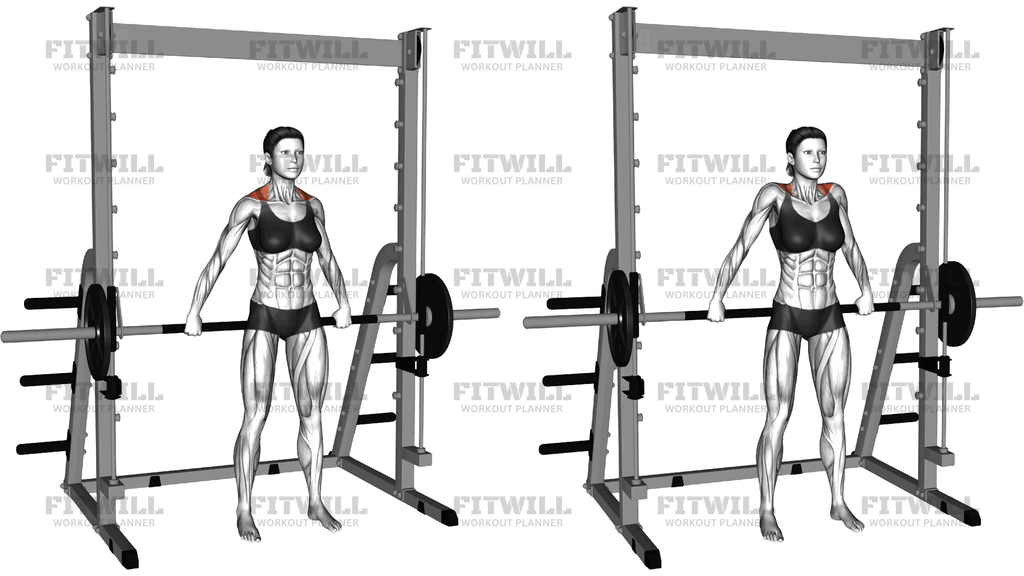
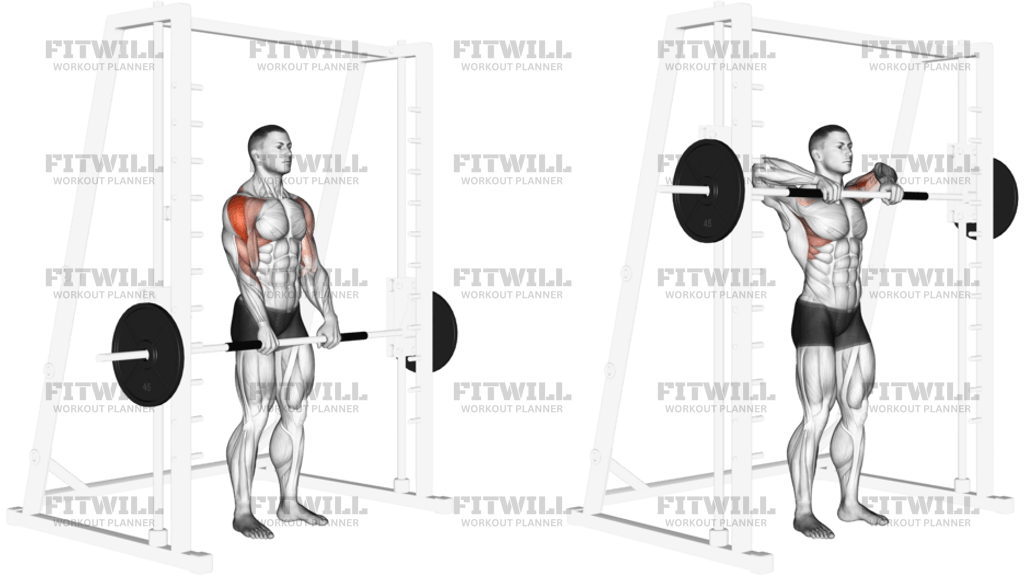
Smith Back Wide Shrug is a standing trap exercise performed with a wide overhand grip on a Smith machine bar. The bar travels on fixed rails, so the movement stays simple and repeatable: stand tall, let the bar hang in front of the thighs, then shrug the shoulders straight up under control. The wider grip changes the feel slightly compared with a narrow shrug, often making it easier to keep the arms long and the torso quiet while the upper traps do the work.
This exercise primarily trains the trapezius, especially the upper fibers that elevate the shoulder girdle. The rhomboids, rear shoulders, and forearms help stabilize the position, while the lats and biceps contribute mostly to keeping the arms straight and the bar path steady. In practice, the goal is not to lift the bar with the hands, but to move the shoulders upward without turning the rep into a curl, a row, or a full-body heave.
The setup matters because the bar should start at a height where your arms are straight and your shoulders can move freely. Stand inside the Smith machine with feet about hip-width apart, grip the bar wider than shoulder width, and keep the bar close to the front of the thighs. A tall chest, neutral neck, and quiet ribs help keep the load on the traps instead of the lower back. If the bar starts too low or too high, the rep usually becomes awkward and the shoulders lose their clean line of travel.
During each repetition, shrug the shoulders up toward the ears and slightly back if that feels natural, then pause briefly at the top before lowering under control. Keep the elbows straight, wrists stacked, and torso still. Breathing should stay rhythmic: inhale before the shrug, exhale through the effort, then reset fully at the bottom. Avoid rolling the shoulders, leaning back, or bouncing out of the bottom, because those habits reduce tension on the traps and can irritate the neck.
Smith Back Wide Shrug fits well as accessory work for trap size, posture-focused training, or upper-back development after bigger pulls and presses. It is also useful for lifters who want a guided path and consistent range of motion. Use a load that lets you pause cleanly at the top and control the descent. If your neck takes over, your elbows bend, or your torso starts to sway, the set is too heavy or the bar position needs adjustment.
[ Workout Log & Planner ]
Put your next workout in Fitwill
Keep your plan and training log ready when you are.


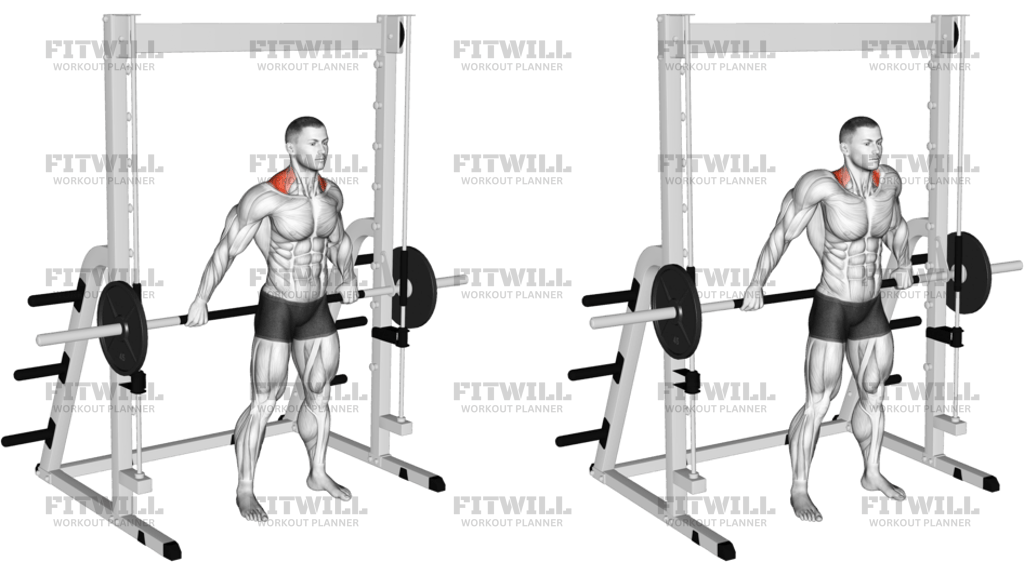
Instructions
- Set the Smith bar at mid-thigh height, step inside the frame, and take a wide overhand grip with your hands outside shoulder width.
- Stand tall with feet about hip-width apart, arms straight, the bar resting in front of your thighs, and your chest lifted without leaning back.
- Tighten your midsection, keep your neck long, and let your shoulders settle before starting the first rep.
- Shrug both shoulders straight up toward your ears while keeping the elbows locked and the wrists stacked over the bar.
- At the top, squeeze the traps for a brief pause instead of rolling the shoulders or bouncing the bar.
- Lower the bar slowly until the shoulders are relaxed again, but keep your torso upright and the arms straight.
- Reset at the bottom on every rep so the next shrug starts from a dead stop rather than from momentum.
- Breathe in as the bar lowers and exhale as you drive the shoulders upward for the next rep.
Tips & Tricks
- Pick a bar height that lets your arms hang straight without having to bend the knees or tip the torso forward.
- Use a grip wide enough to clear the thighs, but not so wide that your shoulders feel jammed at the bottom.
- Think of lifting the shoulder blades upward, not circling the shoulders around in a roll.
- Keep the chin slightly tucked so the neck does not jut forward as the traps contract.
- If the bar drifts in front of you or you start swaying, the load is too heavy for clean trap work.
- Use a brief top pause to make the upper traps do the work instead of using momentum from the bounce.
- Straps can help if your grip fails before your traps do, especially on higher-rep sets.
- Stop the set if you feel the movement mainly in the neck or lower back rather than across the upper traps.
Frequently Asked Questions
What muscle does Smith Back Wide Shrug target most?
It mainly targets the upper trapezius. The upper back and rear shoulder muscles help stabilize the position, but the shrug itself should come from the traps.
Why use a Smith machine for this shrug instead of free weights?
The fixed bar path makes it easier to keep the rep controlled and repeat the same range every time. That can be helpful when you want to focus on trap contraction rather than balancing the load.
How wide should my grip be on the bar?
Use a grip wider than shoulder width, just enough that the bar clears your thighs and your arms can stay long. If the grip is excessively wide, the shoulders can feel pinched and the shrug becomes awkward.
Should I roll my shoulders during the shrug?
No. Lift the shoulders straight up and lower them with control. Rolling usually shifts stress away from the traps and can irritate the neck.
Where should the bar start before each rep?
It should hang in front of the thighs with the arms straight and the torso upright. If the bar starts too low or too far forward, you will usually have to lean or bounce to get it moving.
Can beginners do this exercise safely?
Yes, as long as the load is light and the shoulders move smoothly without bouncing. Beginners should keep the neck neutral and stop the set if the traps cannot control the bar.
What should I do if my hands give out before my traps?
Use lifting straps or reduce the load so grip is not the limiting factor. On shrug work, the goal is usually to train the traps, not to turn the set into a grip exercise.
How high should I shrug the bar?
Lift the shoulders as high as you can without leaning back or bending the elbows. The top position should feel like a strong trap contraction, not like you are trying to pull the bar with your arms.