Barbell Incline Rear Delt Row
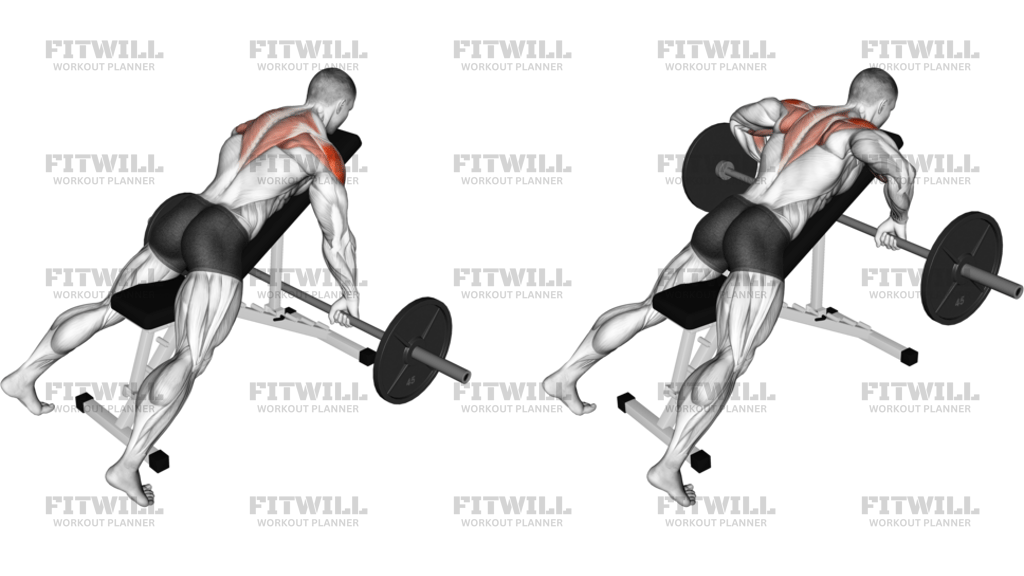
Barbell Incline Rear Delt Row is a chest-supported rowing variation that uses an incline bench and a barbell to train the upper back with a strong rear-delt bias. The torso stays fixed against the bench, so the work comes from the shoulders and upper back instead of from body swing or lower-back drive. That makes the exercise useful when you want honest pulling strength, better scapular control, and a row pattern that stays strict from the first rep to the last.
The movement usually emphasizes the traps and upper back most, with the rear delts, rhomboids, lats, and biceps assisting. In practical terms, you should feel the shoulders and upper back initiate and finish each rep while the elbows travel high and slightly out from the body. The incline position matters because it changes the pull angle: a steeper bench and a wider elbow path tend to shift the emphasis higher across the upper back, while a flatter setup makes the row feel more like a conventional chest-supported pull.
Set the bench so your chest and upper abdomen are firmly supported before you start. Plant your feet, grip the bar with both hands, and let the arms hang straight down under control. Keep the neck long, the ribs anchored to the pad, and the lower back quiet. When the torso is locked in, the row becomes much easier to repeat cleanly because the shoulders can move through the rep without the bar being yanked by momentum.
On each repetition, pull the bar toward the upper chest or high ribcage while driving the elbows back and slightly out. Squeeze the shoulder blades together without shrugging into the ears, then lower the bar slowly until the arms are long again and the shoulders are still organized. The goal is not to move the heaviest bar possible, but to keep the path smooth and the top position controlled. Exhale as you row, inhale as you lower, and reset if the torso starts to lose contact with the bench.
This exercise is a strong accessory choice for back-focused sessions, posture-oriented training, and any program that needs more upper-back volume without much lower-back fatigue. It also works well as a technique drill for lifters who tend to turn rows into hip swings or shrugging reps. Keep the load honest, the range pain-free, and the tempo deliberate so the rear delts and traps do the work they are supposed to do.
[ Workout Log & Planner ]
Put your next workout in Fitwill
Keep your plan and training log ready when you are.


Instructions
- Set an incline bench to about 30-45 degrees and lie chest-down so your sternum and upper abdomen are supported, with your feet planted wide for balance.
- Grip the barbell with an overhand grip slightly wider than shoulder width and let it hang straight down under the bench.
- Keep your neck long, your ribs gently anchored to the pad, and your lower back relaxed before the first rep.
- Brace your torso, then row the bar toward your upper chest or high ribcage by driving your elbows back and slightly out.
- Keep the bar path close to your body line and avoid turning the pull into a shrug or a hip-driven row.
- Squeeze your shoulder blades together at the top without lifting your shoulders toward your ears.
- Lower the bar slowly until your arms are straight again and your shoulders stay controlled.
- Breathe out as you row up, breathe in as you lower, and reset your chest on the bench if you lose position.
- Repeat for the planned reps with the same torso angle and elbow path on every rep.
Tips & Tricks
- If the movement turns into a lat row, widen the grip slightly and let the elbows travel a little higher.
- Use a bench angle that keeps your chest firmly planted; if the incline is too steep, the row usually turns into a shrug.
- Keep the bar moving toward the upper chest or upper ribcage instead of drifting down toward the stomach.
- Load the bar lightly enough that you can pause for a moment at the top without bouncing off the bench.
- Let the shoulder blades move, but do not jam them hard together on every rep; the motion should stay smooth.
- If your lower back starts helping, reduce the load and widen your foot stance so the torso stays glued to the pad.
- Use straps if grip is failing before the upper back, because grip fatigue can shorten the rep and change the elbow path.
- A controlled 2-3 second lowering phase usually works better here than letting the bar drop quickly.
- Stop the set when your shoulders start creeping toward your ears or the bar stops touching the same path rep to rep.
Frequently Asked Questions
What muscles does Barbell Incline Rear Delt Row work most?
It primarily targets the traps and upper back, with the rear delts, rhomboids, lats, and biceps helping during the pull.
Why use an incline bench for this row?
The chest support removes body swing and lower-back cheating, so the upper back has to do the work.
Where should the bar travel on each rep?
Pull it toward the upper chest or high ribcage, not down toward the stomach, so the elbows can stay high and slightly out.
Should my elbows stay tucked like a standard row?
No. A rear-delt row uses a wider, slightly flared elbow path so the upper back and rear shoulders stay involved.
Is this a good exercise for beginners?
Yes, as long as the load is light and the chest stays planted on the bench. The fixed setup makes the technique easier to learn.
What should I do if I feel it mostly in my lower back?
Lower the weight, keep the chest fully supported, and stop the set if you can no longer keep the torso still against the bench.
How heavy should I go on Barbell Incline Rear Delt Row?
Use a load that lets you pause briefly at the top and lower the bar under control without shrugging or bouncing.
Can I replace this with dumbbells or a machine?
Yes. Chest-supported dumbbell rows, incline rear-delt rows, or machine rows can all serve a similar upper-back purpose if they keep the chest supported and the elbow path high.