Dumbbell Lying Rear Delt Row
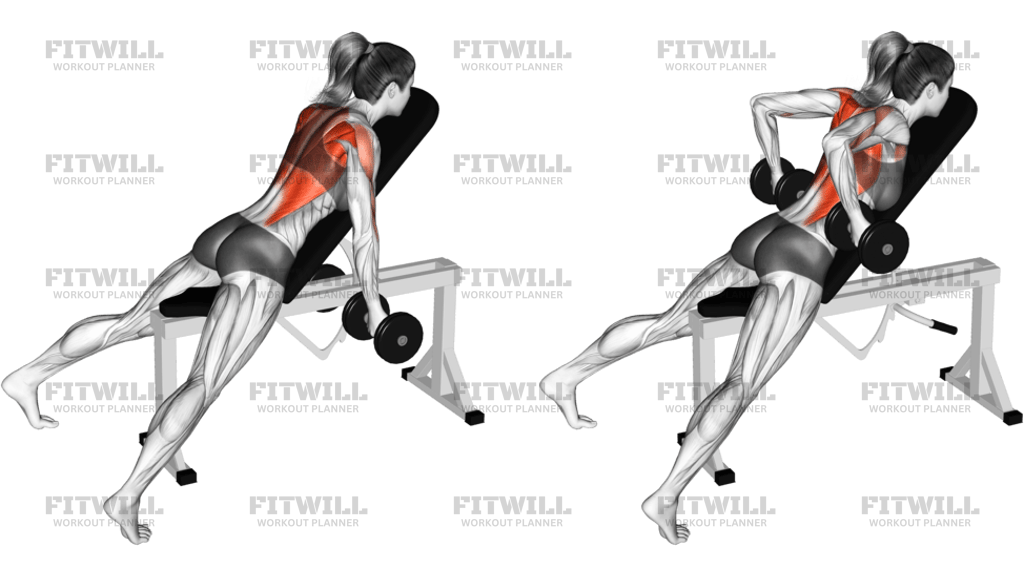
Dumbbell Lying Rear Delt Row is a chest-supported pulling exercise done face down on an incline bench. The setup removes most lower-back cheating and makes the upper back, rear delts, and mid-scapular muscles do the work. Because the torso is fixed on the pad, the quality of the rep depends on how well you set the bench angle, brace against the support, and guide the dumbbells through a controlled arc.
The exercise is most useful when you want to strengthen the back of the shoulders and the upper-back finish of a row without turning the set into a full-body heave. A moderate incline, usually around 30 to 45 degrees, gives the arms room to hang beneath the shoulders and lets the elbows travel out and back. If the bench is too steep, the movement starts to drift toward a shrug or incline raise; if it is too flat, the row becomes harder to target and easier to cheat.
The rep should start with the dumbbells hanging straight down, shoulders set, and chest anchored to the bench. From there, pull the elbows up and slightly out, as if trying to sweep them toward the sides of the bench or the lower ribs. The hands should stay quiet while the elbows drive the motion, and the shoulder blades should move back and together without the neck tightening up. Lower the weights slowly until the arms are long again, then reset before the next rep.
This pattern is a good accessory on back days, rear-delt work, and posture-focused training because it reinforces scapular control and upper-back strength with very little body English. It also pairs well with heavier rows and pulldowns, since it trains the upper-back contraction in a stricter, more isolated way. Lifters who tend to shrug, swing, or arch hard on free rows often find this version easier to control and easier to feel in the right places.
Common problems are turning the movement into a biceps curl, shrugging the shoulders toward the ears, or cutting the lowering phase short. Keep the neck relaxed, keep the chest in contact with the pad, and choose a load that allows a clean pull and a slow return. When done well, the set should feel deliberate, stable, and very specific to the rear delts and upper back rather than the low back or legs.
[ Workout Log & Planner ]
Put your next workout in Fitwill
Keep your plan and training log ready when you are.


Instructions
- Set an incline bench to about 30 to 45 degrees and lie chest-down with your sternum and upper chest supported on the pad.
- Plant your feet wide and stable behind you so your body does not slide when the dumbbells leave the floor.
- Hold a dumbbell in each hand with a neutral grip and let the arms hang straight down under the shoulders.
- Set the neck long, brace lightly against the bench, and keep the ribcage from flaring before the first pull.
- Pull the elbows up and out in a wide arc, leading with the upper arms instead of curling the dumbbells.
- Keep the wrists quiet and stop the pull when the elbows reach roughly bench height and the rear delts and upper back are fully tight.
- Squeeze briefly at the top without shrugging the shoulders toward the ears.
- Lower the dumbbells slowly until the arms are fully long again and the shoulder blades can open under control.
- Reset your breath before each rep and repeat for the planned number of repetitions.
Tips & Tricks
- A 30 to 45 degree bench angle usually keeps the pull in the rear-delt row zone; a much steeper bench turns it into more of a shrug.
- Think about moving the elbows out and back, not dragging the hands toward the chest.
- Keep the chest glued to the pad so the low back never has to finish the rep.
- If the dumbbells start to bang the bench or the floor, shorten the range slightly and keep the path clean.
- Use a lighter load than you would for a standard row; this movement rewards a strict elbow path more than raw weight.
- Let the shoulder blades move, but do not let the shoulders roll forward at the bottom or jam upward at the top.
- A brief pause near the top makes it easier to feel the rear delts instead of just yanking through the repetition.
- Exhale as you pull and inhale as the dumbbells lower so the torso stays braced against the bench.
Frequently Asked Questions
What muscles does Dumbbell Lying Rear Delt Row train most?
It mainly trains the rear delts and upper back, especially the muscles that retract and stabilize the shoulder blades.
How should I set the bench for this row?
Use a moderate incline, usually around 30 to 45 degrees, so the dumbbells can hang naturally and the elbows can travel out and back.
Should my chest stay on the bench the whole time?
Yes. Keeping the chest on the pad is what makes this a strict chest-supported row instead of a body-swinging pull.
How far out should my elbows travel?
Let them flare out enough that the pull hits the rear delts and upper back, but stop before the shoulders shrug or the neck tightens.
Is this more of a rear-delt exercise or a back exercise?
It is a rear-delt-biased row with strong upper-back involvement. The exact feel depends on how wide you keep the elbow path and how steep the bench is.
Can I use heavy dumbbells on this movement?
Usually not very heavy. If the load forces you to lose the chest support, shrug, or bend the elbows into a curl, it is too heavy.
What is the most common mistake with the dumbbells?
People often curl the weights instead of driving the elbows back and out. Keep the hands quiet and let the upper arms lead.
Can beginners do Dumbbell Lying Rear Delt Row?
Yes. It is a good beginner-friendly rowing variation if the load stays light enough to keep the chest pinned to the bench and the reps slow.