Dumbbell Palm Rotational Bent-Over Row
Dumbbell Palm Rotational Bent-Over Row is a hinged dumbbell row with a small palm turn during the pull. You set the torso in a strong bent-over position, keep the dumbbells hanging under the shoulders, and row while the forearms rotate so the finish feels smooth instead of jerky. The exercise is useful for building upper-back thickness, lat control, rear-delt engagement, and the postural strength needed to keep a hinge stable under load.
The hinge is the foundation of the movement. The torso should stay long and braced, with the hips pushed back, knees softly bent, and the spine held neutral from the base of the neck to the tailbone. Because the lift happens while the torso is fixed, any loss of position shows up immediately as lower-back rounding, shrugging, or a swing from the hips. A controlled hinge keeps the effort where it belongs: on the back and arm muscles doing the row, not on momentum.
At the bottom, let the dumbbells hang straight down with the palms in the starting position shown in the image and the shoulders set away from the ears. Pull the elbows back toward the lower ribs or outer waist, and let the hands rotate naturally as the dumbbells travel up. The top should feel like a hard squeeze between the shoulder blades without turning into an upright shrug. Pause briefly, then lower the weights along the same arc until the arms are fully extended and the shoulders are still packed.
This row fits well in back sessions, upper-body hypertrophy work, and pulling blocks where you want more shoulder-blade control than a simple straight row provides. It also works as a lighter accessory after deadlifts, pull-ups, or chest-supported rows. Because the hinge position demands a lot from the trunk and hamstrings, choose a load that lets you keep the torso fixed, the palms rotating smoothly, and the reps identical from start to finish.
Fitwill
Log Workouts, Track Progress & Build Strength.
Achieve more with Fitwill: explore over 9600 exercises with images and videos, access built-in and custom workouts, perfect for both gym and home sessions, and see real results.
Start your journey. Download today!




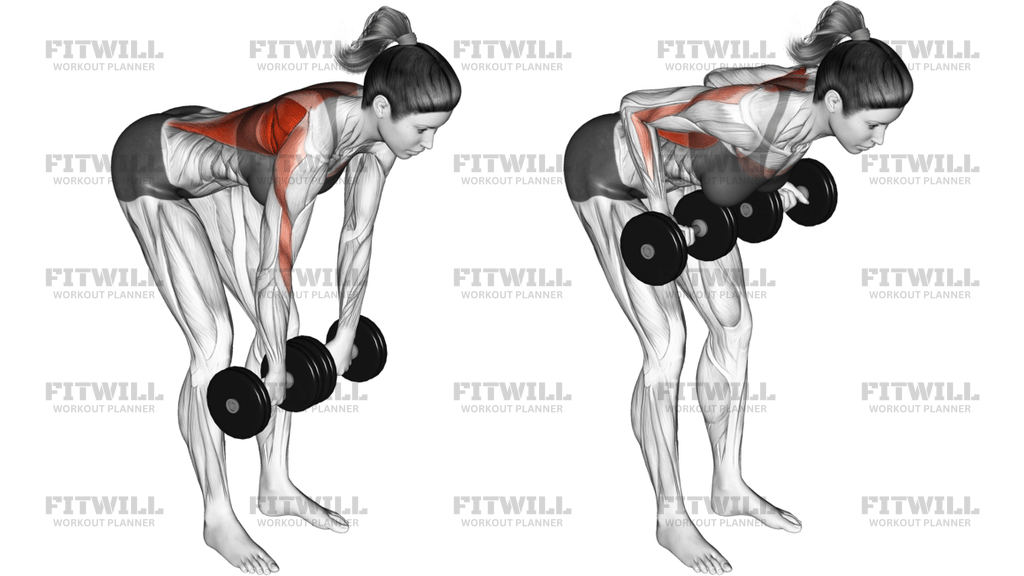
Instructions
- Stand with your feet about hip-width apart and hold a dumbbell in each hand with the arms hanging straight down.
- Hinge at the hips until your torso is close to parallel to the floor, keep a soft bend in the knees, and let the weights hang under the shoulders.
- Set your neck long, pull the ribs in, and brace your midsection before the first rep.
- Start with the palms in the bottom position shown in the image and the elbows pointing slightly back rather than out to the sides.
- Pull both dumbbells toward your lower ribs or outer waist while keeping the chest fixed and the torso from rising.
- Let the palms rotate naturally as the dumbbells travel up, finishing the rep without jerking the wrists or shrugging the shoulders.
- Squeeze the shoulder blades together briefly at the top, then lower the dumbbells along the same path under control.
- Inhale on the way down, exhale as you row, and reset the hinge before the next repetition.
- Stop the set if you have to stand up, round the back, or swing the weights to finish the rep.
Tips & Tricks
- A lighter load is usually better here because the hinge position makes every bit of cheating obvious.
- Keep the dumbbells close to the legs on the way up so the row stays in the back instead of turning into a wide swing.
- Let the palm rotation happen smoothly through the rep; do not crank the wrists hard at the top.
- Keep the elbows tracking back toward the hips, not flaring high toward the ceiling.
- If the lower back starts to feel like the limiter, shorten the set or use a more upright hinge rather than forcing more reps.
- The pause at the top should feel like a squeeze between the shoulder blades, not a shrug into the neck.
- Lower the dumbbells slowly enough to keep tension on the lats and rear delts instead of letting them drop.
- Keep the chin tucked slightly so the neck stays in line with the torso throughout the set.
Frequently Asked Questions
What does Dumbbell Palm Rotational Bent-Over Row work most?
It mainly trains the upper back and lats, with strong help from the rear delts, biceps, and the trunk muscles that hold the hinge.
What makes the rotational version different from a regular bent-over row?
You still row from a fixed hip hinge, but the palms turn as the dumbbells travel up, which adds a little more shoulder and forearm control.
How bent over should I be at the start?
Your torso should be close to parallel to the floor, with the hips pushed back and the spine held neutral.
Should the dumbbells touch my ribs at the top?
Not necessarily. Row them toward the lower ribs or outer waist, and stop where you can keep the shoulders down and the torso still.
What is the biggest mistake with this exercise?
Using too much weight and turning the row into a hip swing or shoulder shrug instead of a controlled pull.
Can beginners do this movement safely?
Yes, if they keep the hinge light and strict. The exercise becomes safer when the load is low enough to hold the back position steady.
Where should I feel the rotation?
The palm turn should feel smooth through the forearm and shoulder, not forced through the wrist.
Can I use this as an accessory after heavier back work?
Yes. It works well after deadlifts, pull-ups, or other rows when you want controlled volume without a machine.