Dumbbell Incline Fly On Exercise Ball
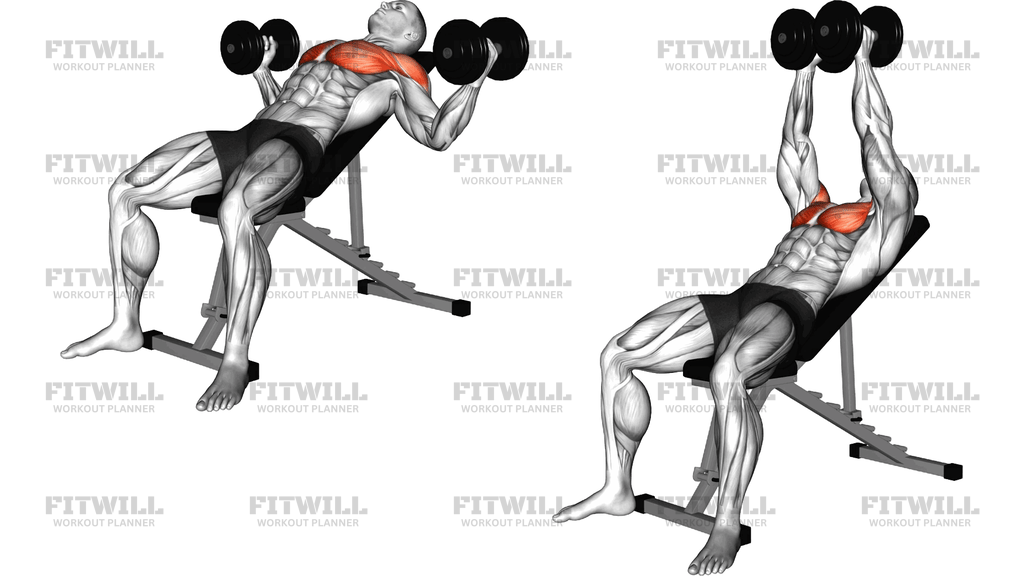
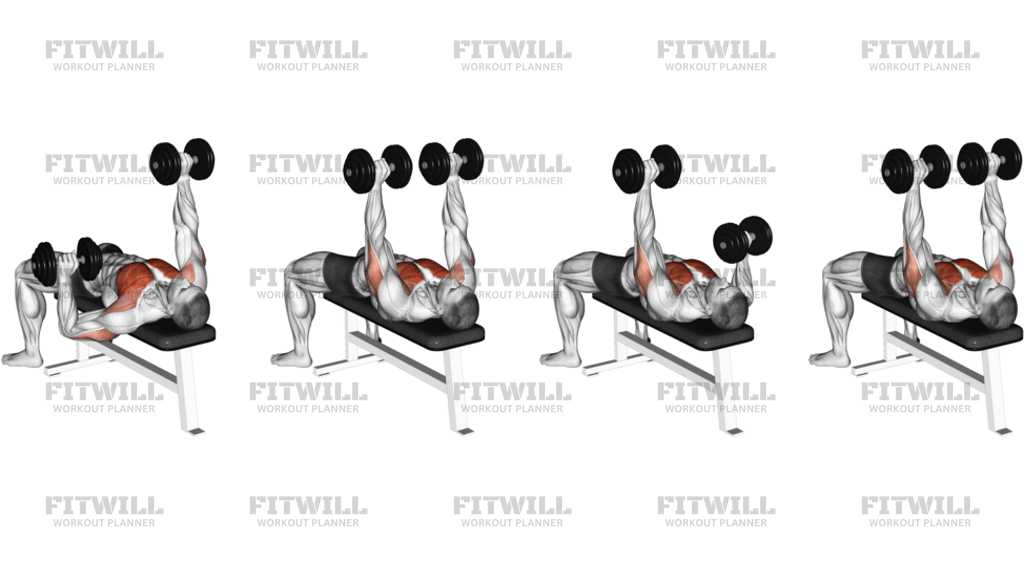
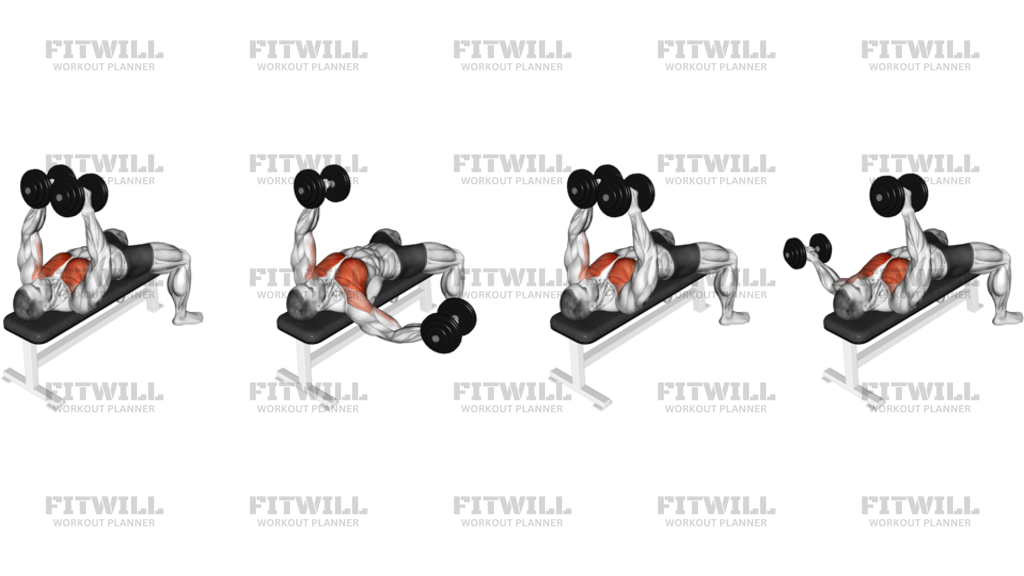
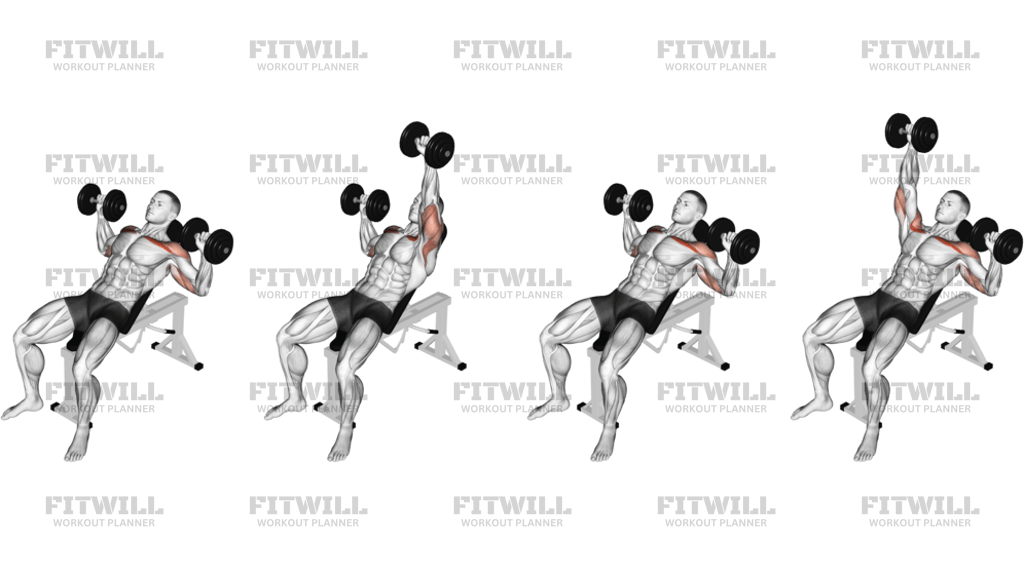
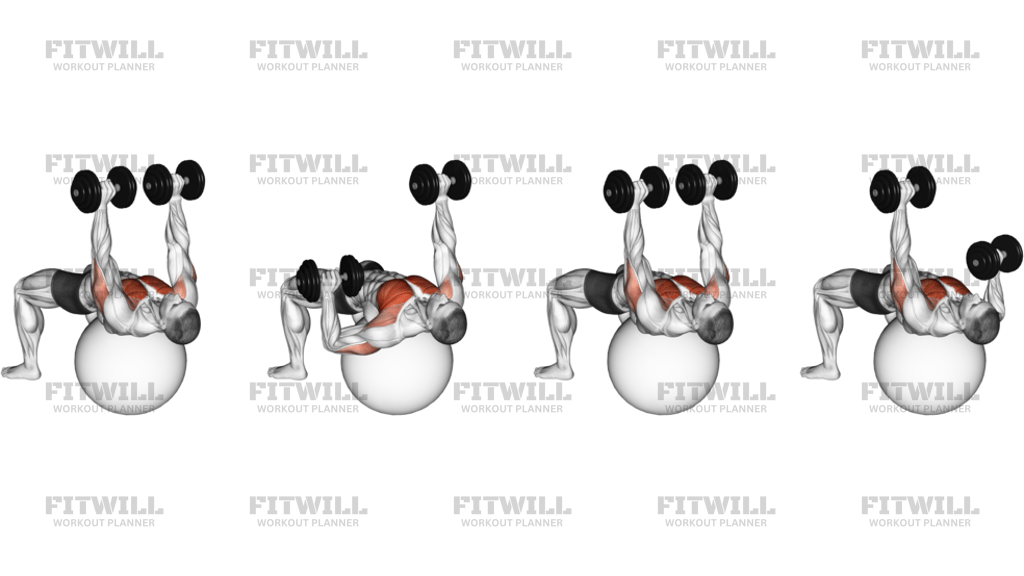
Dumbbell Incline Fly On Exercise Ball is a chest-focused fly variation performed with your upper back supported on a stability ball instead of a bench. The angled torso creates an incline-style position that shifts more work toward the upper chest and front shoulders while the ball adds a stability demand that forces your trunk, hips, and feet to stay organized throughout the set.
This exercise is useful when you want a controlled chest movement that does not rely on heavy pressing. The fly path emphasizes adduction at the shoulder, so the goal is not to move the biggest weight possible but to keep the dumbbells in a smooth arc and keep tension on the chest from the lowered position back to the top. The exercise ball also makes the setup less fixed than a bench, which means your foot position and core tension matter more than usual.
A good rep starts with a solid ball position. Your shoulder blades should be supported, your feet planted wide enough to keep the ball from rolling, and your hips set high enough to create an incline without overextending the lower back. From there, keep a soft bend in the elbows and lower the dumbbells out to the sides until you feel a strong chest stretch, not a shoulder pinch. The return should trace the same arc, bringing the dumbbells back above the chest without clanking them together or losing wrist alignment.
Because the ball is unstable, the exercise rewards patience and lighter loading. If the hips drop, the ribs flare, or the dumbbells drift behind the shoulder line, the chest usually loses tension and the shoulders take over. A shorter range with better control is more productive than chasing depth that changes the line of pull or makes the ball shift under you.
Use Dumbbell Incline Fly On Exercise Ball as accessory chest work, especially when you want a home-friendly or equipment-light option that still gives you a clear upper-chest stimulus. It fits best in moderate-to-higher rep ranges with deliberate tempo, controlled breathing, and a setup that lets you repeat the same position from the first rep to the last.
[ Workout Log & Planner ]
Put your next workout in Fitwill
Keep your plan and training log ready when you are.


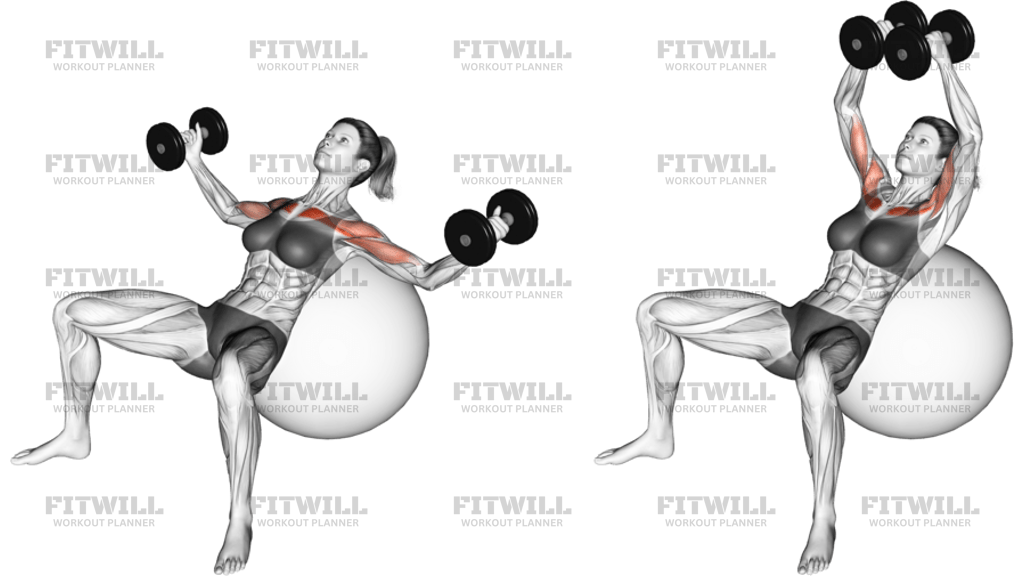
Instructions
- Sit on the exercise ball with a dumbbell in each hand, then walk your feet forward until your upper back and shoulder blades are supported and your torso is slightly inclined.
- Plant your feet wider than hip width, brace your core, and lift your hips until your torso forms a steady incline without letting the ball slide under you.
- Hold the dumbbells above your upper chest with palms facing each other and a soft bend in both elbows.
- Lower the dumbbells out to the sides in a wide arc until you feel a controlled stretch across the chest.
- Keep your elbows slightly bent and your wrists stacked as the arms open so the movement stays in the shoulders, not the elbows.
- Exhale and sweep the dumbbells back along the same arc until they meet above the chest.
- Stop the rep when the dumbbells are centered over the chest and your shoulders still feel packed, not rolled forward.
- Reset your feet and ball position before the next rep if you lose balance or your lower back starts to arch.
Tips & Tricks
- Choose lighter dumbbells than you would use on a flat-bench fly; the ball makes the setup less stable and the chest has to work harder to control the arc.
- Keep your feet far enough apart that the ball does not drift when your arms open, especially on the lowering phase.
- Hold the same elbow bend from start to finish; turning the movement into a press changes the load and reduces the chest stretch.
- Lower only until the chest is stretched and the shoulders still feel secure. If the arms go too low, the front of the shoulder usually takes over.
- Keep your ribs from flaring as the dumbbells rise. A huge back arch usually means the setup is too aggressive for the weight you chose.
- Move slowly on the way down and a little faster on the way up so the chest stays under tension instead of bouncing off the bottom.
- If the ball rolls or wobbles, widen your stance before you try to correct the dumbbell path.
- Finish each rep by bringing the dumbbells together over the upper chest, not above your face.
Frequently Asked Questions
What does Dumbbell Incline Fly On Exercise Ball work most?
It mainly trains the chest, especially the upper portion, with the front shoulders helping to stabilize and guide the arm path.
Is Dumbbell Incline Fly On Exercise Ball good for beginners?
Yes, if the dumbbells are light and the ball feels stable under your upper back. Start with a short range and learn the arc before adding load.
How do I set up on the exercise ball for Dumbbell Incline Fly On Exercise Ball?
Sit down first, walk the feet forward, and roll onto the ball until your shoulder blades are supported. Your feet should stay wide enough that the ball feels steady before you start the fly.
How low should I lower the dumbbells?
Lower only until you feel a strong chest stretch without the shoulders rolling forward or the lower back over-arching. Depth should be controlled, not forced.
Why use an exercise ball instead of a bench?
The ball adds instability, so your core, hips, and feet have to stay active while you work the chest. It also gives the fly a slightly different incline angle than a fixed bench.
Should my elbows stay bent during Dumbbell Incline Fly On Exercise Ball?
Yes. Keep a small, fixed bend in the elbows so the chest does the work and the movement does not turn into a dumbbell press.
What if the ball moves when I open my arms?
Widen your foot stance and lower the weight. If the ball still shifts, reduce the range until you can keep your upper back planted.
Can I replace this with a flat-bench fly?
Yes, a flat-bench fly is the simplest substitute. Use the ball version when you want the incline angle and the extra stability challenge.