Dumbbell Incline Press On Exercise Ball
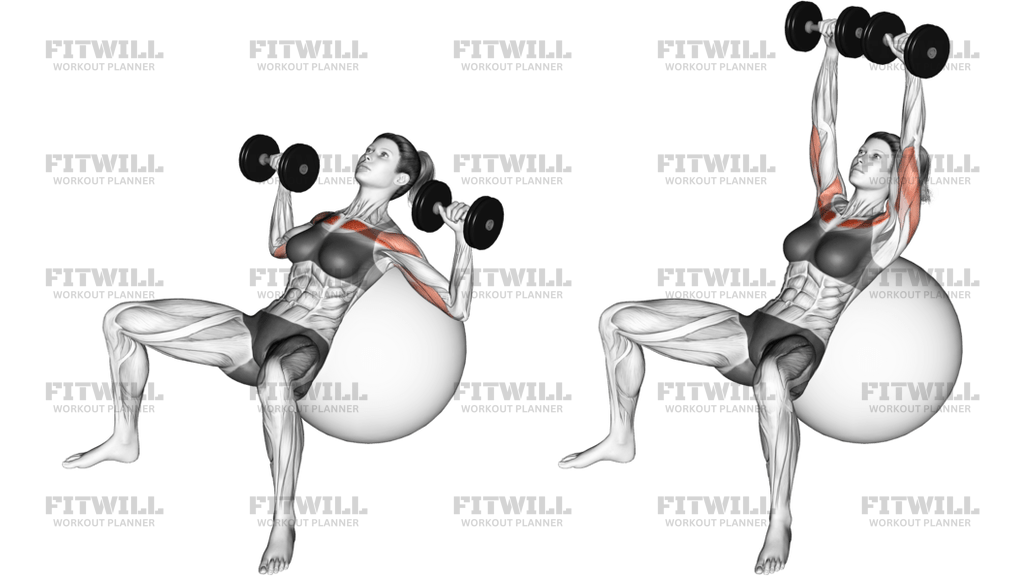
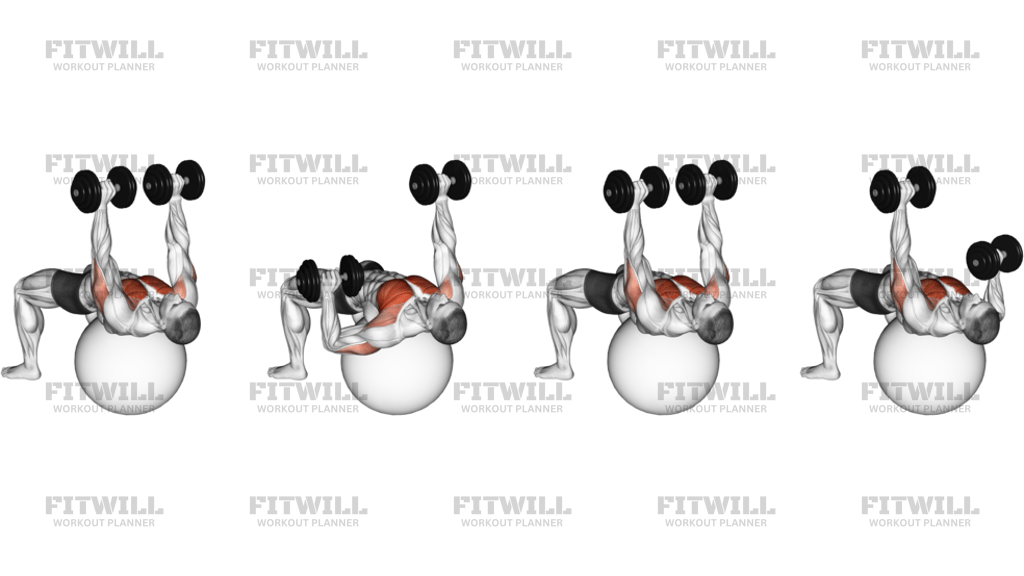
Dumbbell Incline Press On Exercise Ball is a pressing exercise that places your upper back on a stability ball while you drive dumbbells from shoulder level to a stacked position above the upper chest and shoulders. It trains the chest, front delts, and triceps through a longer pressing path than a flat bench press, while the ball forces the core, glutes, and legs to keep the body steady. The instability is part of the exercise, so the setup matters just as much as the pressing motion.
The ball changes the feel of the press in two useful ways. First, it limits how much you can arch or brace against a rigid bench, which makes the trunk work harder to stay organized. Second, it demands cleaner shoulder and wrist alignment because the load moves through space while your body is balancing on a rounded surface. That makes this a good option for lifters who want chest-focused pressing with a bit more coordination and less reliance on heavy external support.
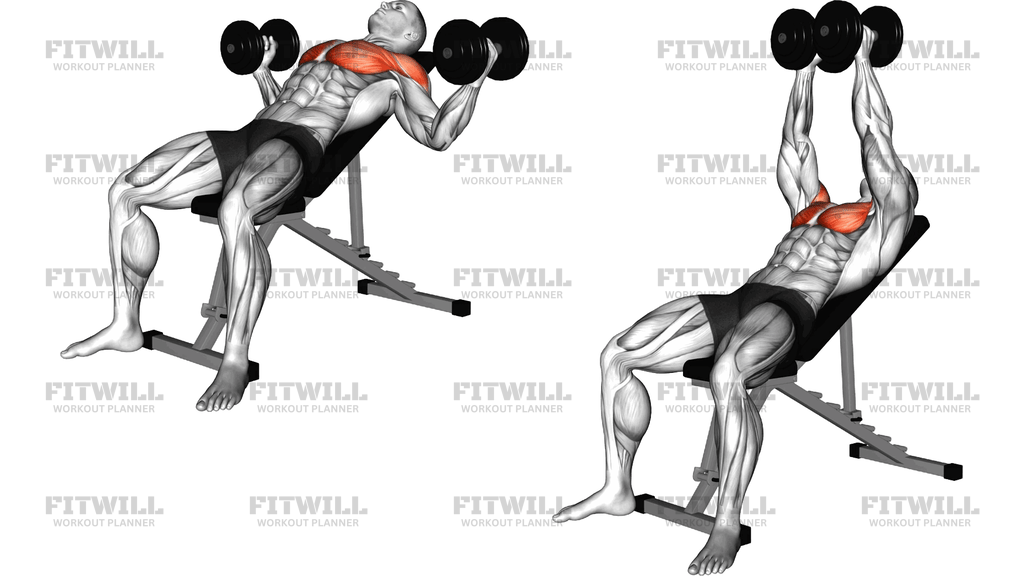
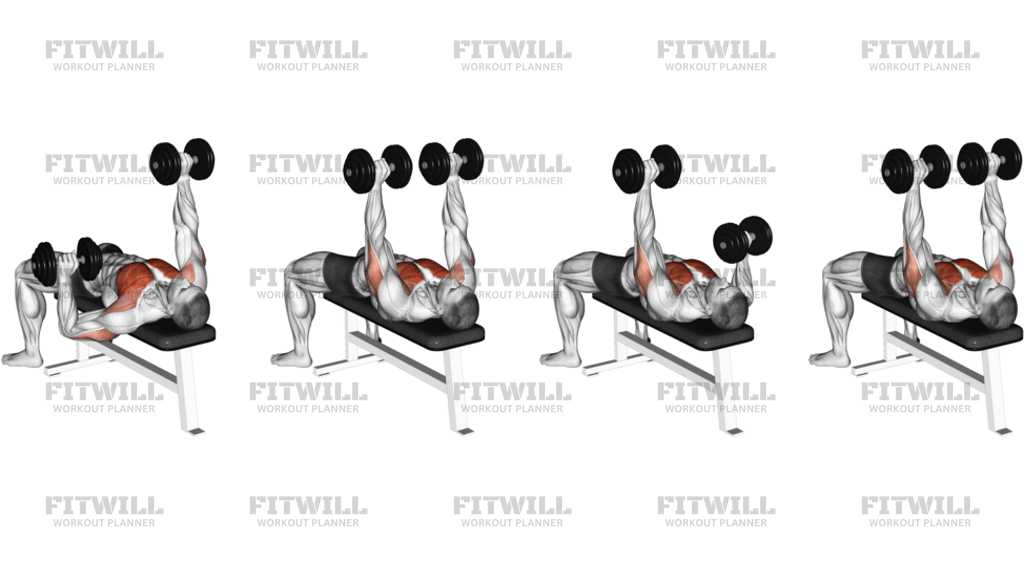
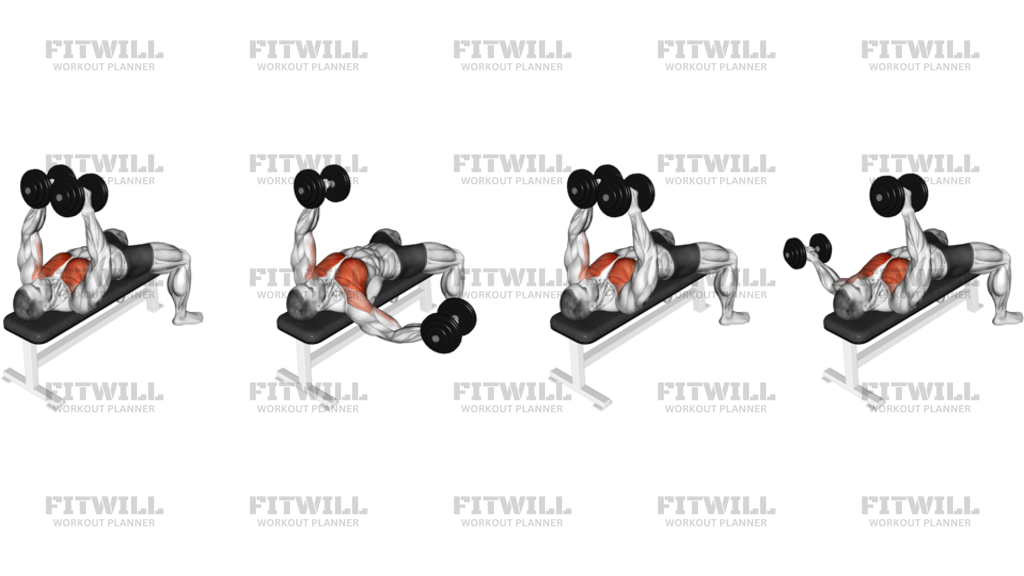
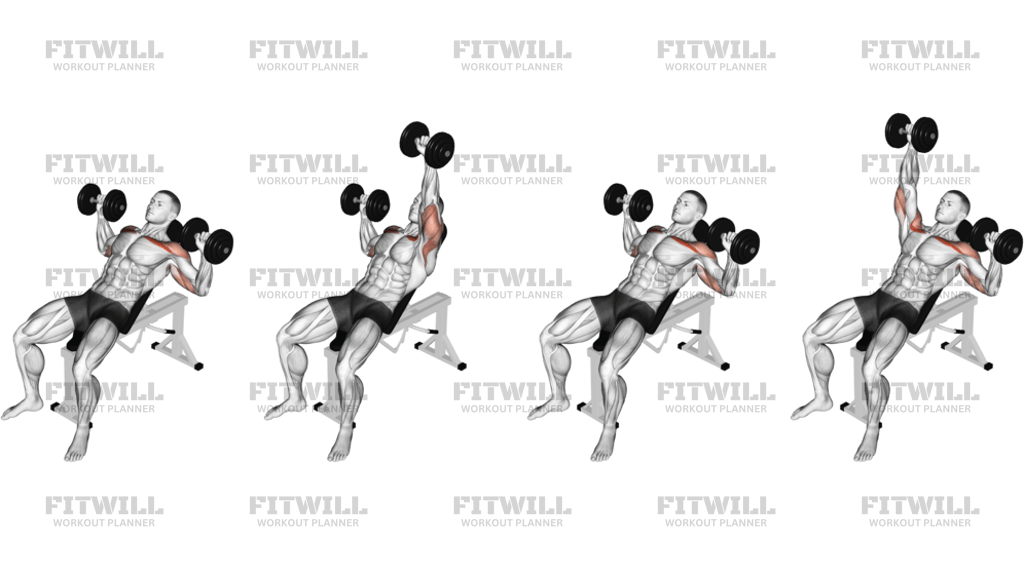
A good rep starts with the torso positioned securely on the ball, feet planted wide enough to keep it from rolling, and dumbbells racked near the shoulders. From there, press in a smooth arc until the arms are nearly straight above the chest and shoulders, then lower the weights under control until the elbows return to a comfortable depth. The shoulders should stay set and the ribs should not flare aggressively as the dumbbells rise. The movement should look smooth, not wobbly or rushed.
This exercise fits well in upper-body push sessions, accessory work, or training blocks where you want chest stimulation without a fixed bench. It is usually best with moderate loads and deliberate tempo, because the ball turns sloppy reps into unstable reps very quickly. Use a range of motion you can control, keep the neck relaxed, and stop the set when the ball starts shifting or the dumbbells drift out of line. Beginners can use it with light weights, but the instability makes it more technical than a standard dumbbell press, and it is better treated as controlled strength work than a max-effort lift.
[ Workout Log & Planner ]
Put your next workout in Fitwill
Keep your plan and training log ready when you are.


Instructions
- Sit on the exercise ball with a dumbbell in each hand and your feet flat on the floor wider than hip width.
- Walk your feet forward and let your upper back and shoulders rest on the ball so your torso is supported and your hips are lifted in line with the press setup.
- Hold the dumbbells at shoulder height with your palms facing forward or slightly angled, wrists stacked over elbows.
- Set your feet firmly, brace your core, and keep your ribs down so the ball stays stable before the first rep.
- Press the dumbbells up in a smooth arc until your arms are nearly straight and the weights finish over the upper chest and shoulders.
- Do not bang the dumbbells together or shrug your shoulders at the top; keep the motion controlled and even on both sides.
- Lower the dumbbells slowly back to shoulder level until the elbows are just below the torso line and the chest stays open.
- Exhale as you press and inhale as you lower, then reset your feet if the ball starts to roll or your position feels unstable.
Tips & Tricks
- Keep your feet wide enough that the ball feels pinned before you start the first rep.
- Set the ball under your upper back, not your lower ribs, so the press stays stable and your neck does not crank backward.
- Use a neutral wrist and keep the dumbbells stacked over the elbows to avoid losing force into the forearms.
- Press on a slight diagonal rather than straight out from the chest; that matches the shoulder angle shown in the setup.
- Lower the weights under control until the upper arms are about level with the torso, then stop before the shoulders dump forward.
- Choose lighter dumbbells than you would use on a flat bench because the ball adds balance demand to every rep.
- Keep your glutes lightly engaged so the torso stays long and the hips do not sag on the ball.
- If one dumbbell drifts or the ball starts sliding, end the set instead of trying to save the rep.
Frequently Asked Questions
What does Dumbbell Incline Press On Exercise Ball work?
It mainly trains the chest, with the front shoulders and triceps assisting. The core, glutes, and legs also work to keep the ball and torso stable.
Why use a stability ball instead of a bench?
The ball adds instability, so your torso has to organize itself while you press. That makes the exercise more demanding for balance and control than a standard incline-style press.
Where should the ball sit on my back?
It should support your upper back and shoulders, not your lower back. If your neck is overextended or your hips feel too low, adjust your position before pressing.
Should the dumbbells touch at the top?
No. Bring them close enough to finish stacked over the chest and shoulders, but do not force contact if that makes you shrug or wobble.
Can beginners do this exercise?
Yes, but only with light dumbbells and a controlled setup. Beginners usually need to master the ball position and foot placement before adding much load.
What should I do if the ball rolls while I press?
Stop the set, reset your feet wider, and make sure your upper back is centered on the ball. Rolling usually means your base is too narrow or the load is too heavy.
How far should I lower the dumbbells?
Lower until the upper arms are near torso level and the chest stays open, then stop before the shoulders roll forward or the elbows drift too deep.
What is the safest breathing pattern?
Inhale as the dumbbells come down, then exhale as you press them up. Keeping the exhale tied to the effort helps you stay braced without over-arching.