Kettlebell Front Squat
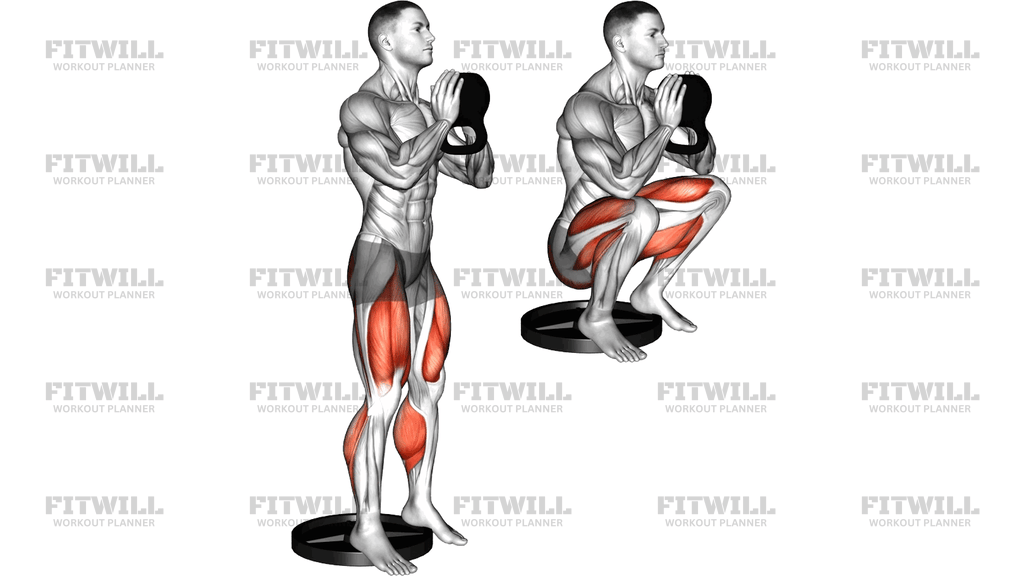
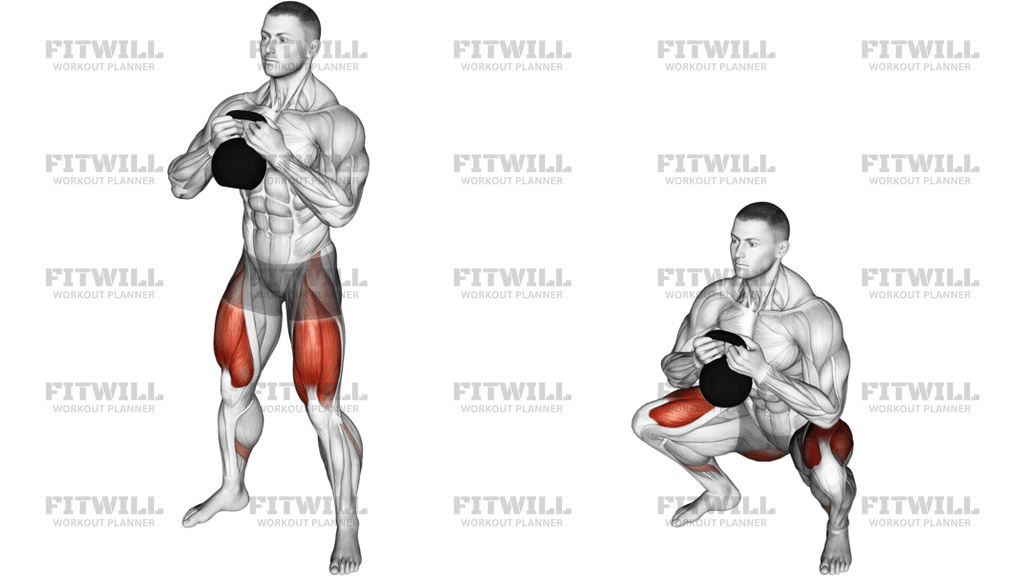
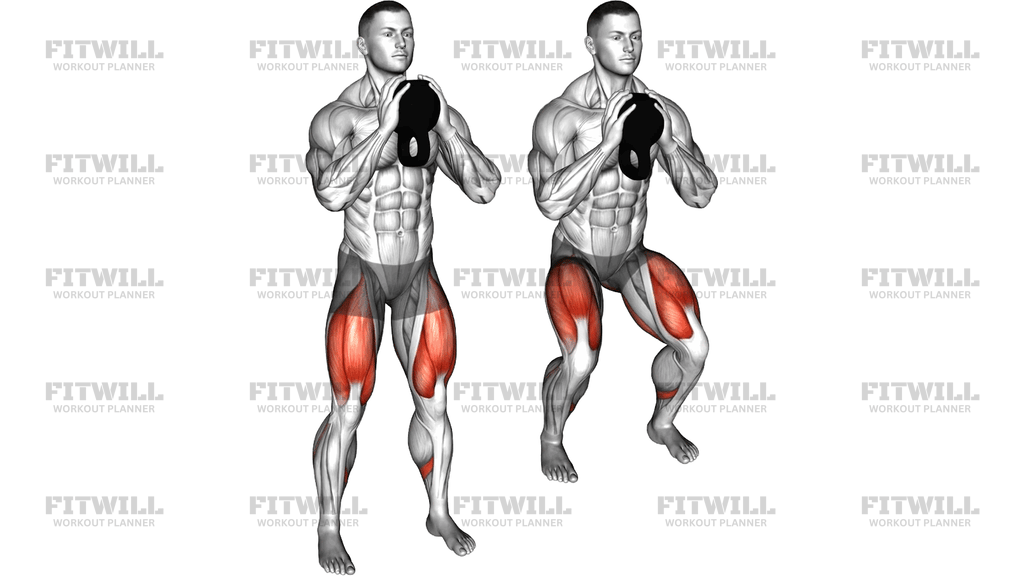
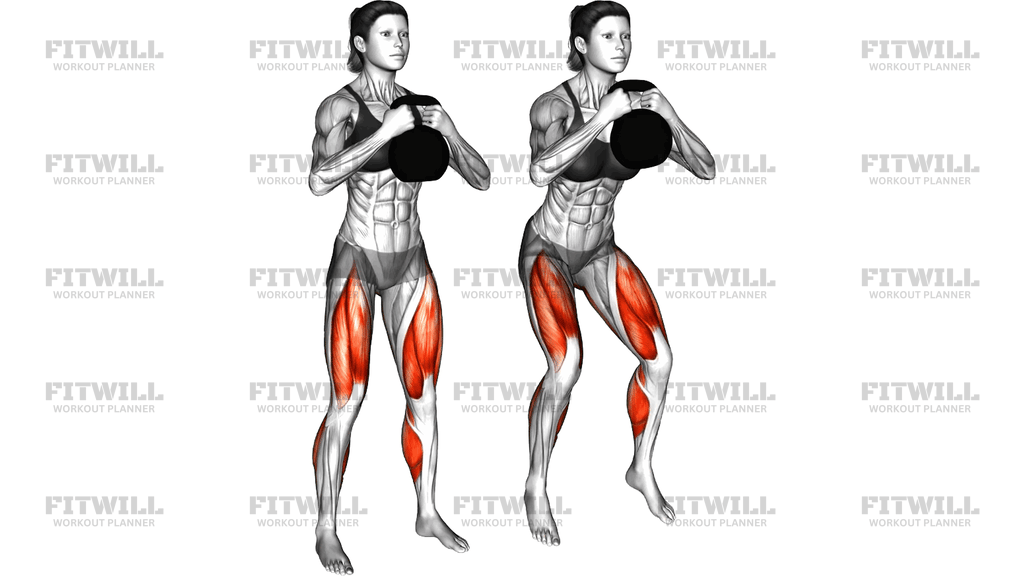
The Kettlebell Front Squat is a front-loaded squat performed with a single kettlebell held at chest height. The load sits close to the body, which helps keep the torso more upright than a back-loaded squat and shifts more demand to the quads while still requiring the glutes, adductors, and core to keep every rep organized.
The front position is the whole point of the exercise. Because the kettlebell pulls forward, you have to stay stacked through the ribs and pelvis, keep the elbows controlled, and resist collapsing into a forward lean. That makes this a useful lower-body strength movement for building leg drive, squat mechanics, and front-side bracing at the same time.
A good rep starts before you move. Set the feet in a stable stance, grip the kettlebell firmly by the horns or handle, and bring it to chest height with the elbows tucked close enough that the bell does not drift away from the body. From there, descend by bending the knees and sitting between the hips while keeping pressure through the whole foot.
At the bottom, the chest should stay proud and the spine should remain neutral. Go only as deep as you can while keeping the heels down, the knees tracking in line with the toes, and the kettlebell pinned close to the body. If the load pulls you forward, the bell is too heavy or the stance is too narrow for your current mobility.
This exercise fits well in warm-ups, lower-body strength work, or accessory volume when you want squat pattern practice without the setup of a barbell. It is beginner-friendly with a light kettlebell, but the front-loaded position still punishes sloppy reps, so control the lowering phase, breathe deliberately, and stand up with the same posture you used on the way down.
[ Workout Log & Planner ]
Put your next workout in Fitwill
Keep your plan and training log ready when you are.


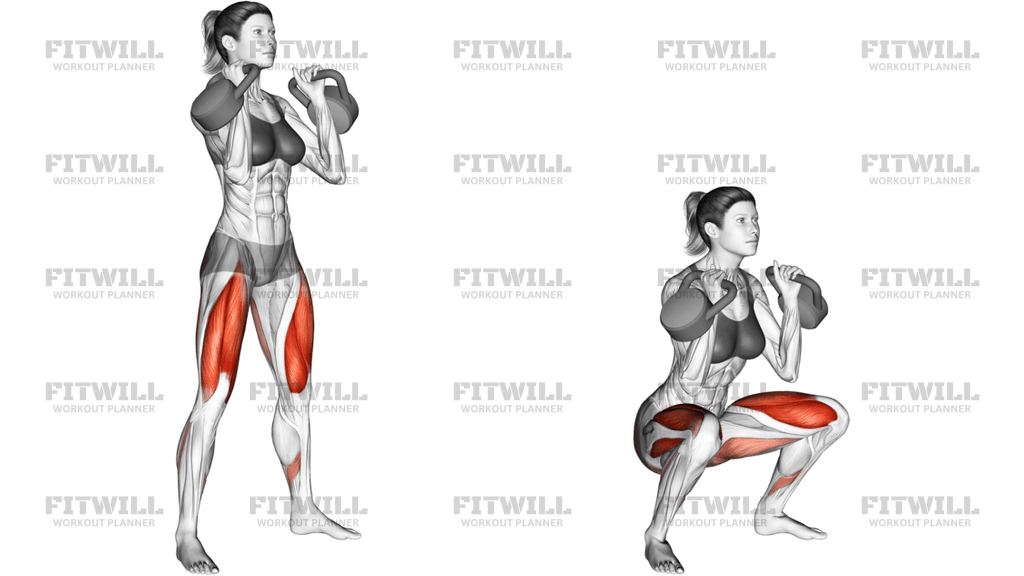
Instructions
- Stand with your feet about shoulder-width apart and hold the kettlebell at chest height with both hands on the horns or handle.
- Keep your elbows pointed down and slightly forward so the bell stays close to your sternum instead of hanging out in front of you.
- Set your ribs over your pelvis, brace your midsection, and keep your whole foot planted before you start the descent.
- Inhale and sit your hips down between your heels while bending the knees and letting them track in line with the toes.
- Keep your chest tall and your lower back neutral as you lower until your thighs are parallel or as deep as your mobility allows without losing position.
- Pause briefly at the bottom if you can stay balanced, with the kettlebell still pinned to your body and your weight centered over midfoot.
- Drive the floor away through your heels and midfoot to stand back up, keeping the torso upright as the knees and hips extend together.
- Exhale as you pass the hardest part of the ascent, then finish tall without leaning back or letting the kettlebell pull you forward.
- Reset your breath and posture before the next rep, then repeat for the planned number of repetitions.
Tips & Tricks
- If the kettlebell drifts away from your chest, the load is probably too heavy for a clean front-loaded squat.
- A slightly wider stance can help you keep the torso upright and create room for the hips between the thighs.
- Let the knees travel forward as needed, but keep them tracking in the same line as the second and third toes.
- A controlled pause in the bottom makes it easier to spot whether you are bouncing out of the hole or actually owning the position.
- Keep the elbows down and close enough that the bell does not tug the shoulders forward at the bottom.
- If your heels pop up, shorten the depth, widen the stance, or reduce the load before forcing the range.
- Use a slow lower if your knees cave or your chest drops, because the front position exposes those faults quickly.
- Breathe in on the way down and exhale as you drive up, but do not lose the brace when the bell gets heavy.
- Wear stable shoes or train barefoot on a safe surface so the foot pressure stays solid through the whole rep.
Frequently Asked Questions
What muscles does the kettlebell front squat work most?
The quads are the main target, with the glutes, adductors, and core helping you stay upright and controlled.
Is the kettlebell front squat beginner-friendly?
Yes, if you start light and keep the kettlebell close to your chest. The front load makes poor posture obvious, which is useful when you are learning.
Where should I hold the kettlebell during the rep?
Hold it at chest height with both hands on the horns or handle and keep it pinned close to the body so it does not pull you forward.
How deep should I squat?
Go as deep as you can while keeping your heels down, knees tracking well, and your chest from collapsing. Parallel is a good target for most lifters.
Why do my elbows matter so much in this exercise?
If the elbows drift too low or the kettlebell gets too far from the chest, the load pulls your torso forward and makes the squat harder to control.
What should I do if my heels lift?
Shorten the depth, widen the stance, or lower the weight. If needed, a small heel elevation can help while you work on ankle mobility.
How is this different from a goblet squat?
The movement pattern is very similar. In practice, the kettlebell front squat is a front-loaded squat with the bell kept close to the chest so the torso stays upright and the quads do more of the work.
How can I make the kettlebell front squat harder?
Use a heavier kettlebell, add a pause at the bottom, or slow the lowering phase while keeping the same upright torso and foot pressure.