Dumbbell Alternate Preacher Curl
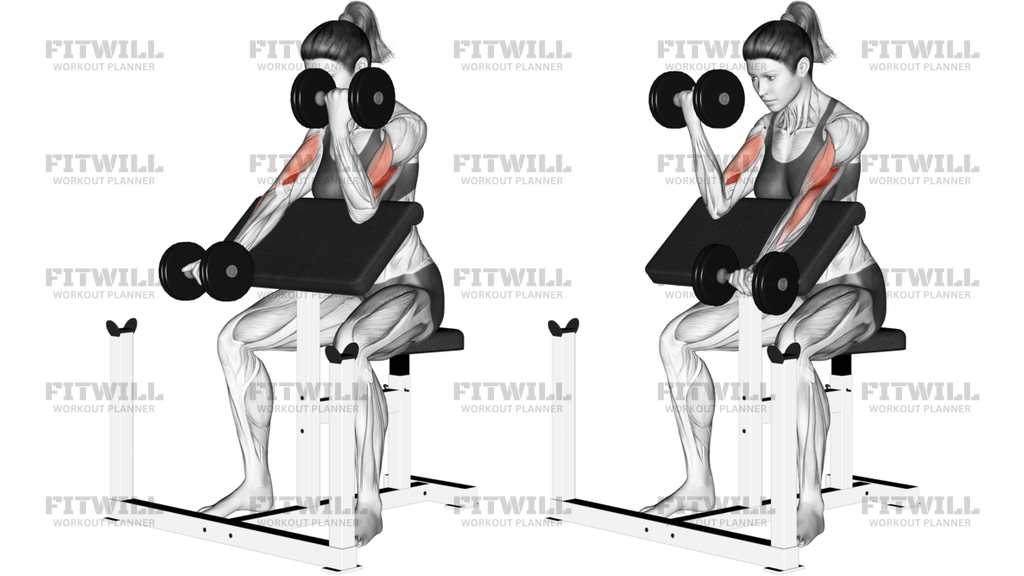
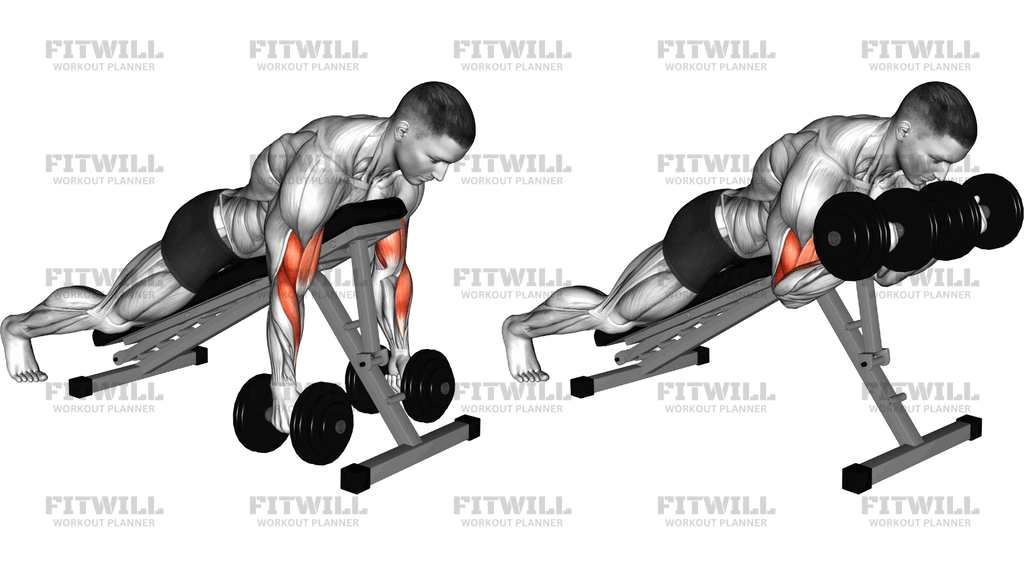
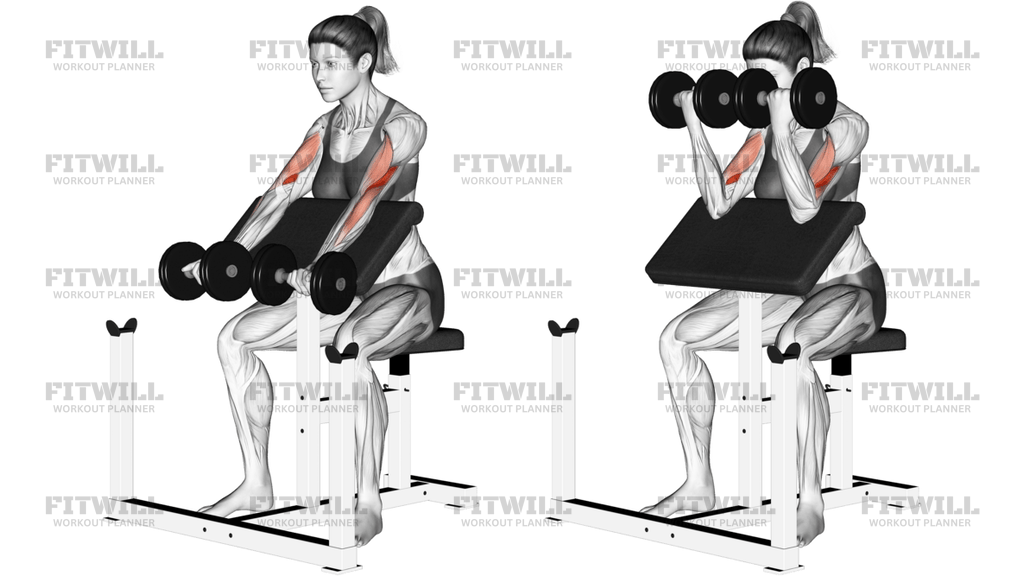
Dumbbell Alternate Preacher Curl is a strict arm exercise performed with the upper arm supported on a preacher bench while one dumbbell curls at a time. The pad takes the shoulder swing out of the lift, so the elbow flexors have to do the work through a very controlled range of motion. It is a strong choice when you want biceps training that feels deliberate instead of momentum-driven.
The main target is the biceps, with the brachialis and brachioradialis helping through the lower and middle part of the curl. Because the upper arm stays fixed against the pad, the exercise places a lot of emphasis on elbow flexion, wrist control, and a clean squeeze at the top. That makes the movement useful for building arm size, improving strict curl mechanics, and exposing side-to-side strength differences.
Setup matters here more than with a free standing curl. Sit close enough that the upper arm sits fully on the pad and the elbow can move without the shoulder creeping forward. Keep the chest settled, feet flat, and wrists stacked over the forearm. If the seat is too low or too far back, the arm will lose support and the set will turn into a shoulder movement instead of a preacher curl.
Curl each dumbbell toward the front shoulder with the upper arm pinned to the pad, then lower it slowly until the elbow is almost straight again. Alternate sides with steady rhythm so the resting arm stays quiet while the working arm does the lift. The controlled lowering phase is where the preacher position is most demanding, so keep tension on the biceps instead of dropping the weight at the bottom.
Use this exercise as accessory arm work when you want strict biceps loading without much body English. It is beginner-friendly if the dumbbells are light enough to keep the wrists and elbows organized, but the fixed arm position can be hard on the elbows if the load is too heavy or the bottom position is forced. Stop the set if the pad contact breaks down, the shoulders roll forward, or the elbows start to ache.
[ Workout Log & Planner ]
Put your next workout in Fitwill
Keep your plan and training log ready when you are.


Instructions
- Set the preacher bench so your upper arms can rest flat on the pad with your armpits just above the top edge.
- Sit with both feet planted, chest settled against the pad, shoulders down, and wrists straight.
- Hold a dumbbell in each hand with your elbows near full extension but not locked out at the bottom.
- Begin by curling one dumbbell toward the front shoulder while the upper arm stays glued to the pad.
- Keep the elbow in place and let only the forearm rotate upward as the biceps shorten.
- Squeeze briefly near the top without letting the shoulder roll forward or the elbow drift off the pad.
- Lower that dumbbell slowly until the arm is almost straight again and tension stays in the biceps.
- As the first arm reaches the bottom, curl the other dumbbell through the same path, then continue alternating sides for the planned reps.
Tips & Tricks
- Set the seat height so the upper arm is supported all the way up to the armpit, not balanced on the elbow.
- Keep the wrist stacked over the forearm; letting the hand bend back shifts stress away from the biceps and into the forearm.
- Stop just short of a hard lockout at the bottom so the elbow stays loaded and the joint does not slam into extension.
- Use a load that lets both arms match cleanly; if one side starts swinging, the weight is too heavy for preacher work.
- Lower each rep slowly because the preacher pad makes the bottom half of the curl more demanding than a standing curl.
- Keep the shoulder blade settled down and back so the front delt does not take over at the top.
- Start each set with the weaker arm if you notice a side-to-side difference, then match the stronger side to the weaker side's form.
- Exhale as the dumbbell travels up and inhale on the way down to keep the torso quiet and the rhythm consistent.
Frequently Asked Questions
What muscle does Dumbbell Alternate Preacher Curl target most?
The biceps are the main target, with the brachialis and brachioradialis helping through the curl.
Why use a preacher bench instead of standing up for curls?
The pad fixes the upper arm in place, which reduces shoulder swing and makes the curl more strict.
Should my elbow move a lot during the rep?
No. The upper arm should stay planted on the pad while the forearm does most of the moving.
Can I curl both dumbbells at the same time?
You can, but alternating usually makes it easier to keep the body still and focus on each arm individually.
What grip should I use on the dumbbells?
Use a palm-up curl grip with a straight wrist; avoid letting the hand fold back as you lift.
Is this a good exercise for beginners?
Yes, if the load is light enough to keep the arms pinned to the pad and the lowering phase controlled.
What is the most common mistake here?
Letting the shoulder roll forward or lifting the elbow off the pad turns the movement into a cheat curl.
How should I progress this movement?
Add reps first, then small weight jumps, while keeping the same strict elbow path and slow lowering.