Dumbbell Cross Body Hammer Curl Version 2
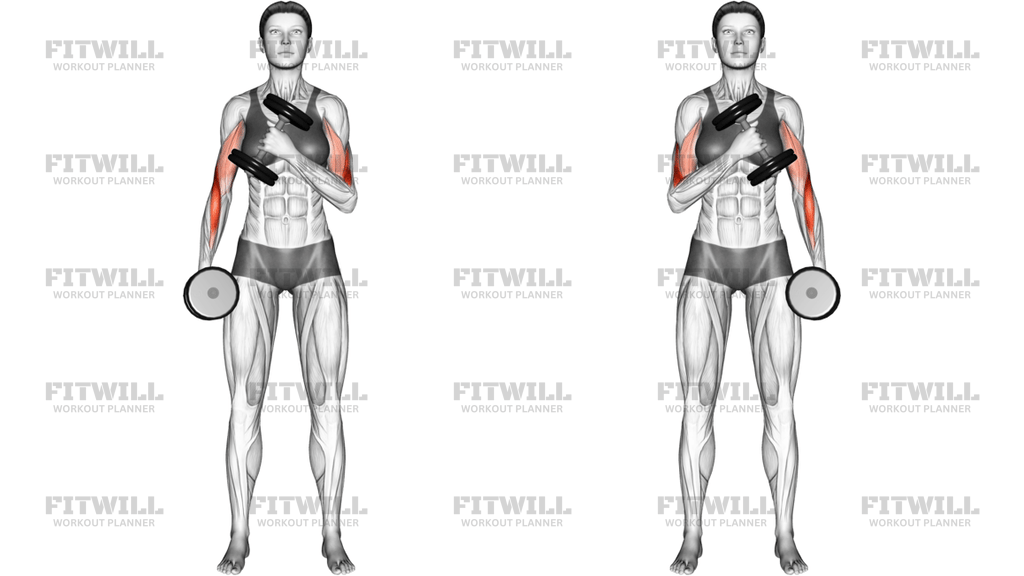
Dumbbell Cross Body Hammer Curl Version 2 is a standing dumbbell arm exercise that trains elbow flexion with a neutral grip and a diagonal curl path. Instead of lifting the dumbbell straight up in front of the body, you curl it across the torso toward the opposite shoulder or upper chest. That change in path keeps the wrist stacked, shifts some emphasis toward the brachialis and brachioradialis, and makes the movement feel slightly more “arm-thickening” than a standard supinated curl.
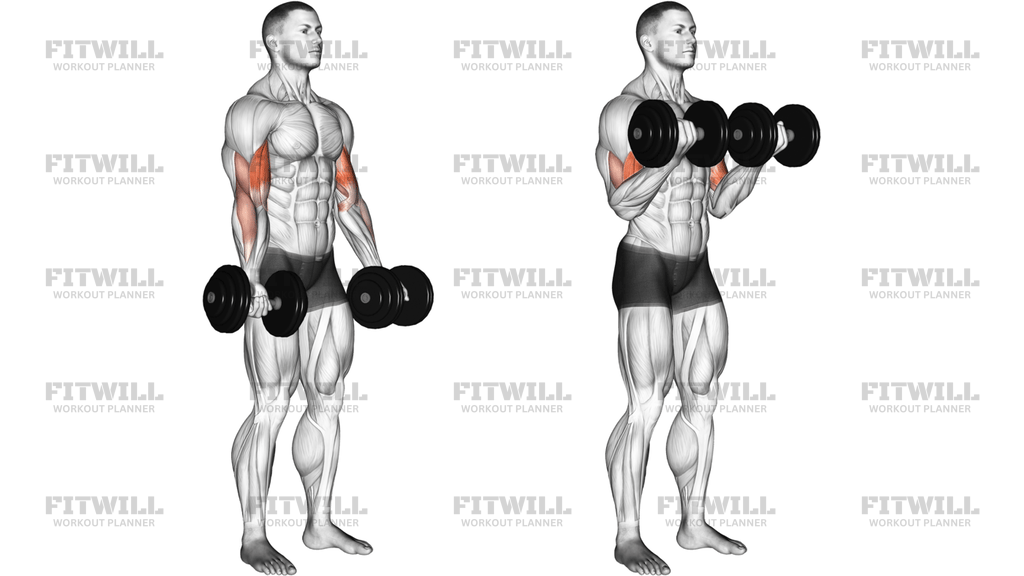
The image shows a tall stance with one dumbbell hanging by the thigh while the working arm crosses the midline of the body. That setup matters because the curl only stays honest if the torso stays quiet, the elbow remains close to the ribs, and the shoulder does not drift forward to steal the rep. The neutral grip should stay neutral from start to finish, with the palm facing inward and the wrist straight rather than bent back.
This exercise is useful when you want direct biceps work with a little more forearm and upper-arm involvement than a straight curl. It fits well in arm sessions, upper-body accessory work, or as a controlled dumbbell finisher. Because the arm travels across the body, it is easy to turn the rep into a swing if the load is too heavy, so the setup and tempo should keep the dumbbell moving in a smooth diagonal line rather than a jerky arc.
Use the rep to build tension, not momentum. Start with the dumbbells quiet at your sides, lift one side across the body toward the opposite shoulder, squeeze briefly at the top, then lower the weight back to the starting position under control. If you alternate sides, let each arm reset fully before the next curl. If one side tends to rotate or drift, reduce the load and own the path before trying to push volume or speed.
For most lifters, the best result comes from clean repetitions that finish with the upper arm still close to the torso and the shoulder relaxed. The exercise is beginner-friendly when the weight is light enough to keep the torso still, but it becomes sloppy fast when the dumbbell is too heavy. Treat the movement as strict arm work with a diagonal finish, and the target muscles will stay loaded without turning the set into a whole-body heave.
[ Workout Log & Planner ]
Put your next workout in Fitwill
Keep your plan and training log ready when you are.


Instructions
- Stand tall with a dumbbell in each hand at your sides, palms facing in and wrists straight.
- Set your feet about hip-width apart, soften your knees, and keep your ribs stacked over your pelvis.
- Pin your upper arms close to your sides before the first rep so the shoulders stay quiet.
- Curl one dumbbell diagonally across your torso toward the opposite shoulder or upper chest.
- Keep the elbow pointed down and slightly in, and do not let it drift forward as the weight rises.
- Squeeze briefly at the top while keeping the forearm neutral and the wrist aligned with the handle.
- Lower the dumbbell back to the starting position under control until the arm is straight again.
- Repeat on the other side or continue alternating, breathing out on the curl and in on the return.
- Stop the set if your torso starts swinging or the dumbbell can no longer travel smoothly across the body.
Tips & Tricks
- Keep the palm facing in throughout the rep; rotating into a full curl turns this into a different exercise.
- Think about lifting the knuckles toward the opposite pec, not simply bending the elbow straight up.
- If your shoulder rolls forward at the top, the dumbbell is usually too heavy or you are trying to finish with momentum.
- A slight pause at the top makes the brachialis and forearm work harder without needing more weight.
- Use a controlled lowering phase so the biceps stays loaded after the squeeze at the top.
- Keep the upper arm close to the ribs; flaring the elbow turns the rep into a front-delt assist.
- Choose a load that lets you stay still from the first rep, because torso sway shows up quickly in this pattern.
- If one side twists more than the other, reduce the weight and match both arms before adding load.
Frequently Asked Questions
What does the cross-body path change compared with a regular hammer curl?
The diagonal path keeps the grip neutral but changes the line of pull, which shifts more work toward the brachialis and brachioradialis while still training the biceps.
Which muscles work hardest in Dumbbell Cross Body Hammer Curl Version 2?
The biceps do the main elbow-flexion work, with strong help from the brachialis, brachioradialis, and forearm flexors.
Should the dumbbell travel straight up or across the body?
Across the body toward the opposite shoulder or upper chest. If it rises straight in front, you are drifting into a standard hammer curl pattern.
How do I keep my elbow in the right position?
Start with the elbow close to the side of the torso and keep it pointed down as the dumbbell rises. The upper arm should stay quiet instead of swinging forward.
Can beginners use this exercise safely?
Yes, as long as the load is light enough to prevent body sway and shoulder shrugging. It is a good beginner dumbbell curl variation when technique comes first.
What is the most common mistake with this movement?
Using too much weight and twisting the torso to move the dumbbell higher than the elbow can comfortably lift it.
When should I use this exercise in a workout?
It works well as accessory arm work after bigger pushing and pulling lifts, or as a controlled finisher when you want direct arm tension.
Can I alternate arms, or should I curl both together?
Either can work, but alternating usually makes it easier to keep the torso still and to keep each rep clean across the body.