Lever Incline Chest Press
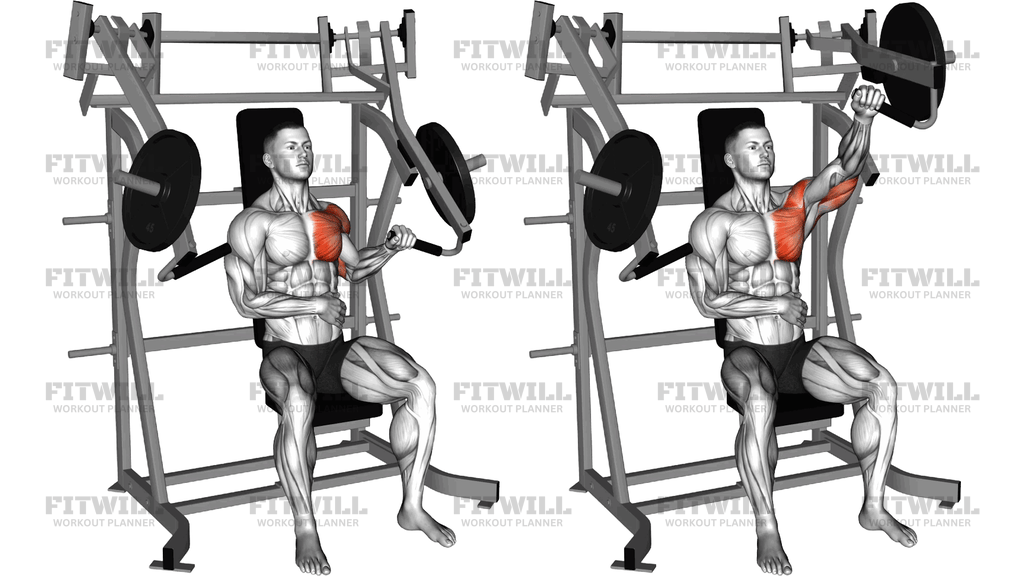
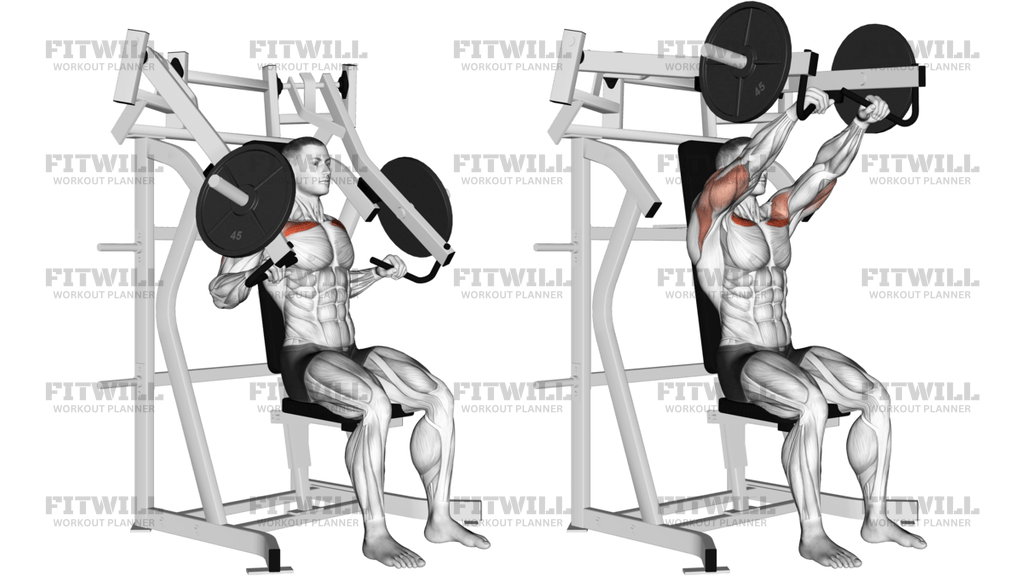
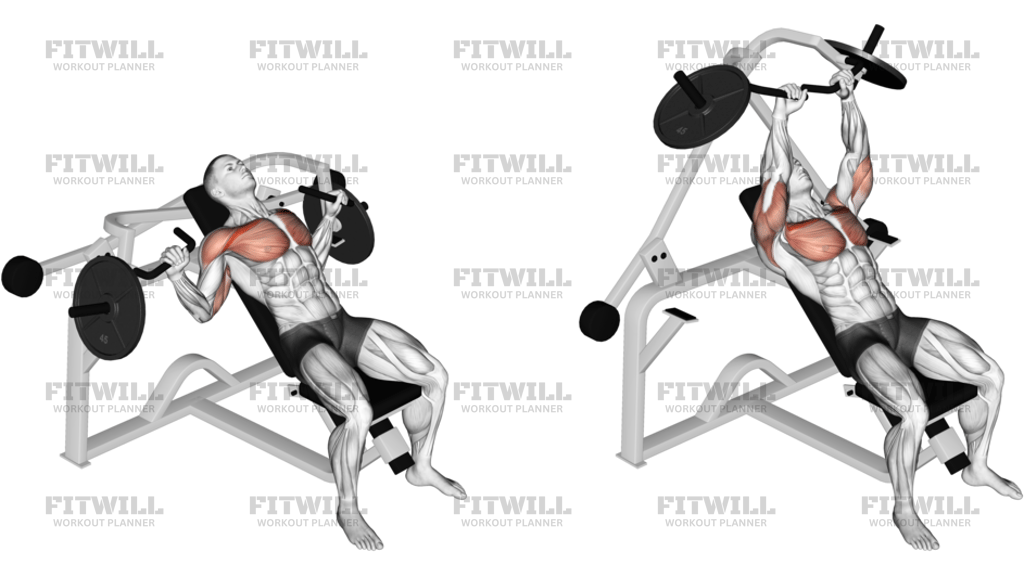
Lever Incline Chest Press is a machine-based pressing exercise that biases the upper chest while still involving the front shoulders and triceps. The angled back pad and fixed lever path let you train hard without having to balance free weights, which makes it useful for controlled hypertrophy work, strength accessory work, or any session where you want steady tension through the pressing range.
The inclined seat changes where the force is felt compared with a flat chest press. With your torso supported, the pectoralis major does most of the work, especially the upper fibers near the clavicle, while the anterior deltoids and triceps help finish the press. In anatomy terms, the main work centers on the Pectoralis major, with help from Anterior deltoid, triceps brachii, and Rectus abdominis.
The setup matters because the machine path should match your chest and shoulder line, not your neck or upper traps. Sit back into the pad, keep your feet planted, and set the handles so the press starts near the upper chest or upper sternum rather than too low on the torso. If the seat is too high or too low, the shoulders usually take over and the press feels awkward or compressed.
Each repetition should feel smooth and repeatable. From the stretched start, brace, press the handles up and slightly forward along the machine's arc, then lower them under control until the chest is comfortably loaded again. Exhale as you press, inhale as you return, and keep the elbows from flaring hard outside the shoulder line. The goal is not to bounce the weight; it is to keep tension on the chest through the full range.
This exercise is a strong option for lifters who want chest volume without needing spotters or a barbell setup. It also works well after heavier free-weight pressing, because the fixed path makes it easier to isolate the chest when fatigue rises. Use a load that lets you keep the shoulders pinned to the pad, the wrists stacked over the handles, and the rep path consistent from the first rep to the last.
[ Workout Log & Planner ]
Put your next workout in Fitwill
Keep your plan and training log ready when you are.


Instructions
- Adjust the seat so the handles start around upper-chest height, then sit with your back and head against the pad.
- Plant both feet flat on the floor and keep your hips and shoulders firmly against the machine support.
- Grip the handles with wrists straight and elbows slightly below shoulder height.
- Take a breath, brace your torso, and set your chest tall before the first press.
- Press the handles up and slightly forward along the machine's fixed arc until your arms are almost straight.
- Keep your shoulders down as you drive, and avoid shrugging toward your ears at the top.
- Lower the handles slowly until your chest is loaded and your elbows are back in a comfortable stretched position.
- Exhale on the press, inhale on the return, and keep each rep smooth instead of bouncing off the bottom.
- Stop the set if the seat shifts, your lower back arches hard, or the handles drift out of the pressing path.
Tips & Tricks
- Set the seat first; if the handles start too low, the press turns into an awkward shoulder lift instead of a chest press.
- Keep your wrists stacked over the handles so the lever force stays in line with your forearms.
- Think about squeezing your upper arms toward each other rather than just pushing the handles away.
- Do not let your shoulders roll forward at the bottom; keep the chest open against the pad.
- Use a controlled lowering phase so the front delts do not steal the whole eccentric.
- Stop just short of hard elbow lockout if that keeps tension on the chest and feels better on the joints.
- If the machine path feels rough, reduce range slightly and keep the same arc on every rep.
- Choose a load that lets you keep your ribs down and your torso pinned instead of arching off the back pad.
Frequently Asked Questions
What muscle does Lever Incline Chest Press target most?
The upper chest is the main target, with the front shoulders and triceps assisting the press.
Can beginners perform this exercise?
Yes. The supported seat and fixed path make it beginner-friendly as long as the load stays light enough to control.
Where should the handles start before I press?
Set them so the start position lines up with your upper chest or upper sternum, not down near your belly.
What is the most common mistake on this machine?
Letting the shoulders shrug forward or the seat sit too high so the press turns into a shoulder-dominant movement.
Should I lock out my elbows at the top?
A soft near-lockout is usually enough. Fully locking out is optional if it does not irritate your elbows or shoulders.
Why does this feel different from a flat chest press?
The incline angle shifts more work toward the upper chest and front shoulders, and the lever path keeps the motion more guided.
How low should I lower the handles?
Lower only as far as you can keep your shoulders down and your chest open without forcing the front of the shoulder to pinch.
How can I progress this exercise over time?
Add small amounts of weight, or keep the load the same and make the lowering phase slower and more controlled.