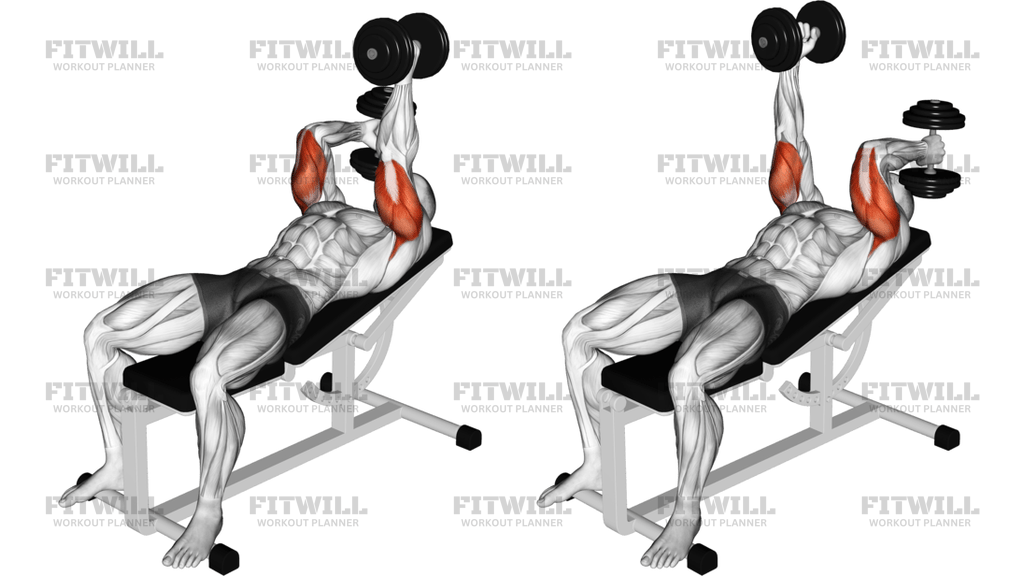
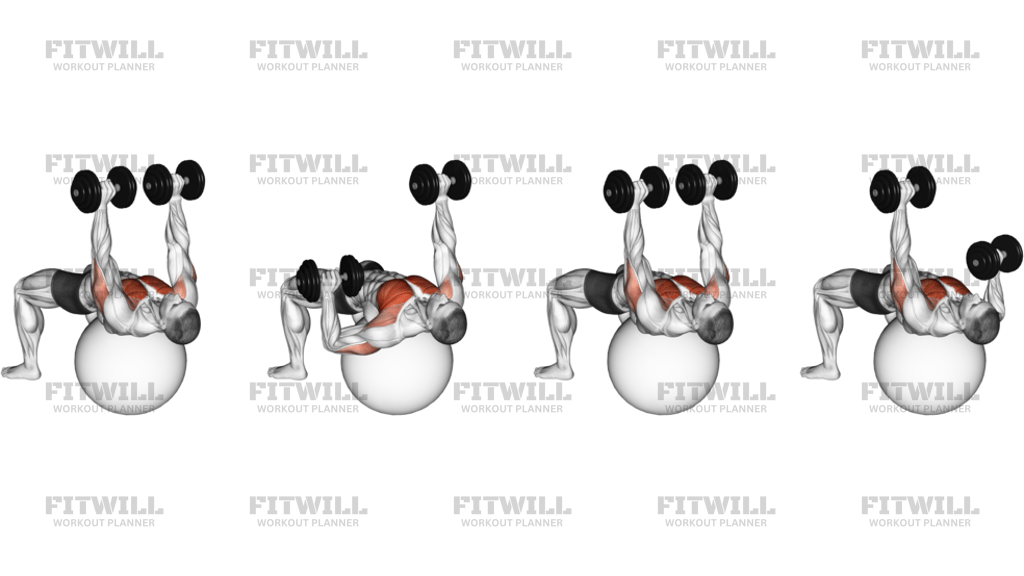
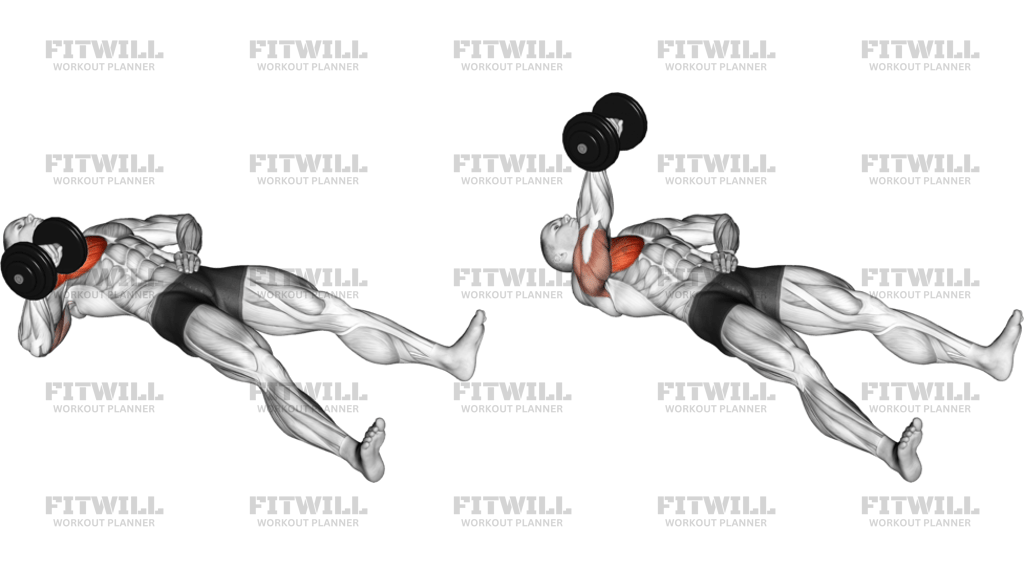
Dumbbell Lying One-Arm Press
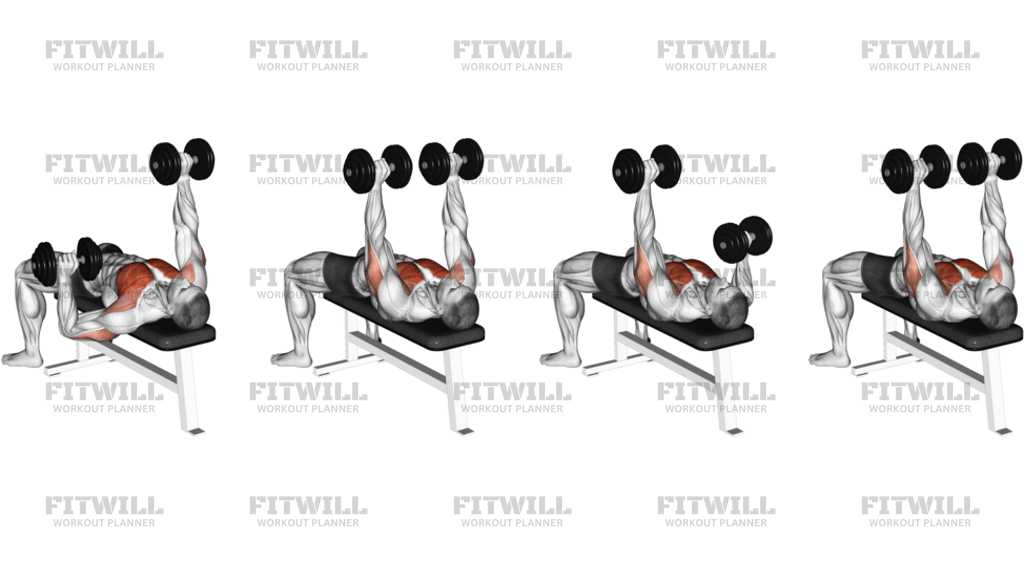
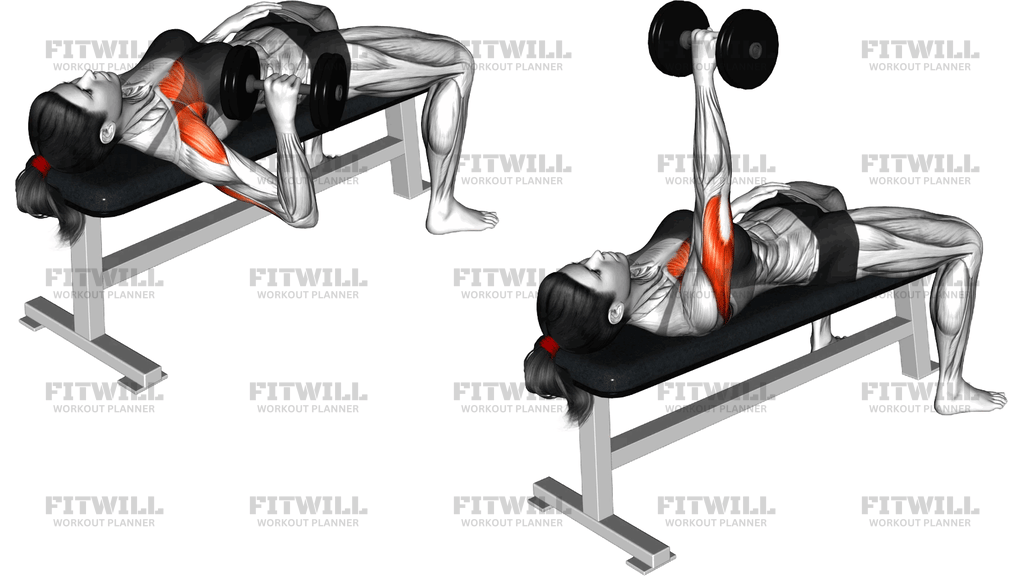
Dumbbell Lying One-Arm Press is a unilateral flat-bench pressing exercise that builds chest strength while demanding serious trunk control. One arm does the pressing while the rest of the body has to stay quiet, so the movement trains the chest, triceps, and front shoulder without letting one side twist the torso off the bench.
The flat bench changes the feel of the press because the upper back, head, and hips all have to stay organized before the dumbbell moves. That setup matters more here than in a two-arm press. If your shoulder blades are loose or your feet are not planted, the load will drift and the body will rotate instead of driving the press.
Set up by lying face up on the bench with your head and upper back supported and your feet flat on the floor. Keep the shoulder blades gently down and back, then stack the wrist over the elbow so the dumbbell starts above the working shoulder. The non-working side should stay still so the rib cage and pelvis remain level.
On each rep, lower the dumbbell in a controlled line to the outer chest or lower shoulder area, then press it back up without shrugging the shoulder or flaring the ribs. The path should feel smooth and deliberate, not rushed or bouncy. Exhale as you press and inhale on the way down so the trunk stays braced without holding your breath the entire set.
This variation is useful when you want one-side-at-a-time pressing to expose imbalances, reinforce shoulder stability, or give the chest a harder stability challenge than a standard dumbbell bench press. It fits accessory strength work, asymmetry correction, and controlled hypertrophy blocks. Use a load that lets you keep the bench contact, the wrist stack, and the same bar path on both sides from the first rep to the last.
If the dumbbell drifts toward your face, your torso turns, or your shoulder rolls forward at the bottom, the range or load is too aggressive. Shorten the depth, slow the lowering phase, and finish each set by bringing the dumbbell to your thigh before sitting up so you do not dump the shoulder forward when the set is over.
[ Workout Log & Planner ]
Put your next workout in Fitwill
Keep your plan and training log ready when you are.


Instructions
- Lie face up on a flat bench with your head, upper back, and hips supported, and plant both feet firmly on the floor.
- Set your shoulder blades down and back, then keep your ribs stacked so the bench contact stays even from side to side.
- Hold one dumbbell above the working shoulder with the wrist stacked over the elbow and the forearm vertical.
- Keep the non-working arm quiet so your torso does not rotate while the press starts.
- Lower the dumbbell in control toward the outer chest or lower shoulder until the elbow is just below bench level or at a comfortable depth.
- Pause briefly at the bottom without bouncing the weight off the chest or losing shoulder position.
- Press the dumbbell up smoothly until the arm is nearly straight above the shoulder, finishing without shrugging or twisting.
- Exhale during the press, inhale on the lowering phase, and keep the trunk braced so the rib cage does not flare.
- Complete all planned reps on one side, then switch arms and match the same range and tempo on the other side.
Tips & Tricks
- Choose a dumbbell that lets you lower to the outer chest without the bench contact shifting or the torso rotating.
- Keep the wrist directly over the elbow at the start so the press begins with a stacked forearm instead of a bent wrist.
- Let the elbow travel about 30 to 45 degrees away from the torso; flaring it straight out usually makes the shoulder take over.
- Keep both shoulder blades set on the bench instead of letting the pressing shoulder glide forward at the bottom.
- Lower the dumbbell slowly enough that you can feel the chest load before you reverse the rep.
- If the non-working side lifts or twists, the load is too heavy for the amount of control you have.
- Use a slightly shorter range if the shoulder feels pinched near the bottom, especially on the heavier side.
- After the set, bring the dumbbell to the thigh before sitting up so you do not yank the shoulder out of position.
Frequently Asked Questions
What muscles does Dumbbell Lying One-Arm Press work?
It mainly trains the chest, with the triceps and front shoulder helping to finish the press. The core and obliques also work hard to stop the torso from rotating.
Is this different from a regular dumbbell bench press?
Yes. Pressing one dumbbell at a time makes the trunk work harder to stay square on the bench and can expose side-to-side differences more clearly.
How should my elbow travel on the bench press?
Keep the elbow slightly tucked, usually around 30 to 45 degrees from the torso, so the dumbbell tracks over the chest without forcing the shoulder forward.
Should the dumbbell touch my chest every rep?
Only if you can do it without bouncing or losing shoulder position. A controlled stop just above the chest is fine if deeper range makes the shoulder feel jammed.
Can I keep my free hand on the bench or torso?
Yes, as long as it helps you stay level. The free side should stay relaxed and quiet, not pull or twist you through the rep.
Can beginners use this exercise?
Yes, but start with a light dumbbell and a short, controlled range so you can keep the bench contact, wrist stack, and torso position consistent.
What if my torso twists during the press?
That usually means the dumbbell is too heavy or the setup is loose. Reduce the load, plant the feet harder, and keep the ribs down before each rep.
How do I progress this movement?
Add reps or load only when both sides use the same path and the non-working side stays level. Quality of the bench setup matters more than forcing a heavier dumbbell.