Dumbbell One-Arm Lateral Raise
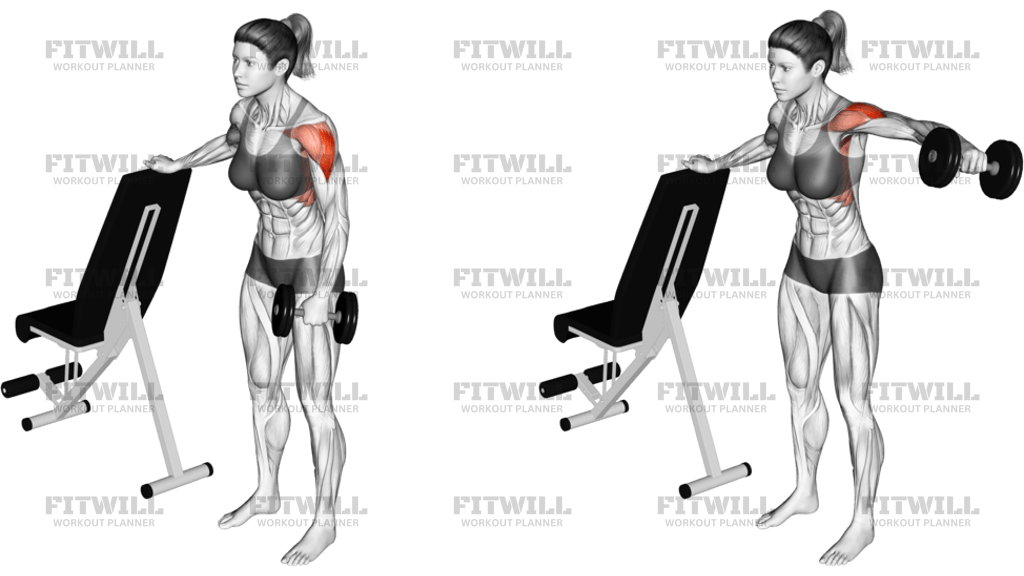
Dumbbell One-Arm Lateral Raise is a shoulder isolation exercise that builds the side deltoid while asking the upper back, trunk, and gripping hand to keep the body quiet. In the image, the working arm lifts a single dumbbell out to the side while the free hand braces on a bench backrest. That support changes the exercise from a loose standing swing into a much stricter lateral raise, which makes the shoulder do the real work.
The setup matters because the bench, stance, and torso angle determine whether the dumbbell travels in a smooth arc or gets thrown upward. Stand side-on beside the bench, place the free hand on the top of the backrest, and let the working arm hang at the outside thigh with a soft elbow. Keep the ribs stacked over the pelvis and let the shoulder sit down rather than hunching toward the ear. The brace should help balance you, not pull your body through the rep.
Each repetition should feel like the dumbbell is sweeping outward from the hip to about shoulder height, not being heaved up with the neck or torso. Lead with the elbow, keep the wrist neutral, and stop the ascent when the upper arm lines up with the shoulder or just before it if your joint feels better there. A brief pause at the top makes the side deltoid do more work, then the dumbbell should lower under control on the same path back to the starting position. Exhale as you raise the arm and inhale as you return.
This is a useful accessory movement when you want to bring up shoulder width, improve side-deltoid control, or add volume without loading the spine heavily. It fits well after pressing, on shoulder days, or in a higher-rep accessory block where clean position matters more than big load. Because only one arm works at a time, the exercise also exposes side-to-side differences in shoulder control and torso stability.
Treat the movement as a controlled isolation drill, not a momentum exercise. If the body starts leaning, the trap takes over, or the dumbbell rises above a comfortable range, the load is too heavy. Use a weight that lets you repeat the same line of pull on every rep, keep the neck relaxed, and finish the set before form turns into a shrug-and-swing pattern. When the setup stays strict, this version gives the side deltoid a very direct, joint-friendly stimulus.
Fitwill
Log Workouts, Track Progress & Build Strength.
Achieve more with Fitwill: explore over 9600 exercises with images and videos, access built-in and custom workouts, perfect for both gym and home sessions, and see real results.
Start your journey. Download today!




Instructions
- Stand side-on beside an incline bench and place your free hand on the top of the backrest for balance.
- Hold one dumbbell in the outside hand and let it hang at the outer thigh with the palm facing your body.
- Set your feet about hip width, stack your ribs over your pelvis, and keep the working shoulder down.
- Soften the elbow slightly and brace before the dumbbell leaves your thigh.
- Raise the dumbbell out to the side in a smooth arc, leading the motion with the elbow.
- Stop when the hand reaches about shoulder height or slightly below if that feels cleaner.
- Pause briefly at the top without shrugging or twisting your torso.
- Lower the dumbbell along the same path until it returns to the starting position under control.
- Breathe out as you lift and inhale as you lower, then reset before the next rep.
Tips & Tricks
- Use the bench only as a balance point; if you are pushing or pulling through it, the raise is turning into a body-English rep.
- Keep the working shoulder away from the ear as the arm rises so the upper traps do not take over early.
- A slight lean away from the working arm can help the dumbbell clear the hip, but the torso should stay fixed once the rep starts.
- Let the elbow lead the arc instead of lifting the hand first; that keeps tension on the side deltoid instead of the forearm.
- Choose a lighter dumbbell than you would for two-arm lateral raises, because the one-arm version exposes every bit of sway.
- Stop around shoulder height unless your shoulder feels better with a slightly shorter range; higher is usually more trap than delt.
- Keep the wrist quiet and neutral so the hand does not tip the dumbbell into a front-raise path.
- Lower the weight slowly enough that you can feel the shoulder controlling the descent instead of just dropping it back to your thigh.
Frequently Asked Questions
What does Dumbbell One-Arm Lateral Raise train most?
It targets the side deltoid most directly, with the upper traps, rotator cuff, and core helping to stabilize the body.
Why is one hand braced on the bench?
The bench gives you a fixed point for balance so the working shoulder can lift the dumbbell without the torso swaying.
How high should I raise the dumbbell?
For most people, shoulder height is enough. Going much higher usually shifts the work toward the upper traps and can make the movement sloppier.
Should my elbow stay straight or bent?
Keep a soft bend in the elbow and hold that angle fairly steady throughout the set. Locking the arm out makes the lever longer and can feel harsher on the shoulder.
What is the most common mistake on this raise?
Shrugging the shoulder and swinging the torso are the big ones. If the dumbbell only moves because the body leans, the side deltoid is not doing its job.
Can beginners do this exercise safely?
Yes, if they start with a very light dumbbell and use the bench support to keep the torso still. The exercise is more about control than load.
Is this different from a standing two-arm lateral raise?
Yes. The one-arm version lets you focus on one shoulder at a time and usually makes it easier to notice side-to-side differences in control.
What should I do if the top of my shoulder feels pinchy?
Shorten the range slightly, lighten the dumbbell, and keep the arm a little in front of the torso rather than directly out to the side. If it still pinches, stop the set.