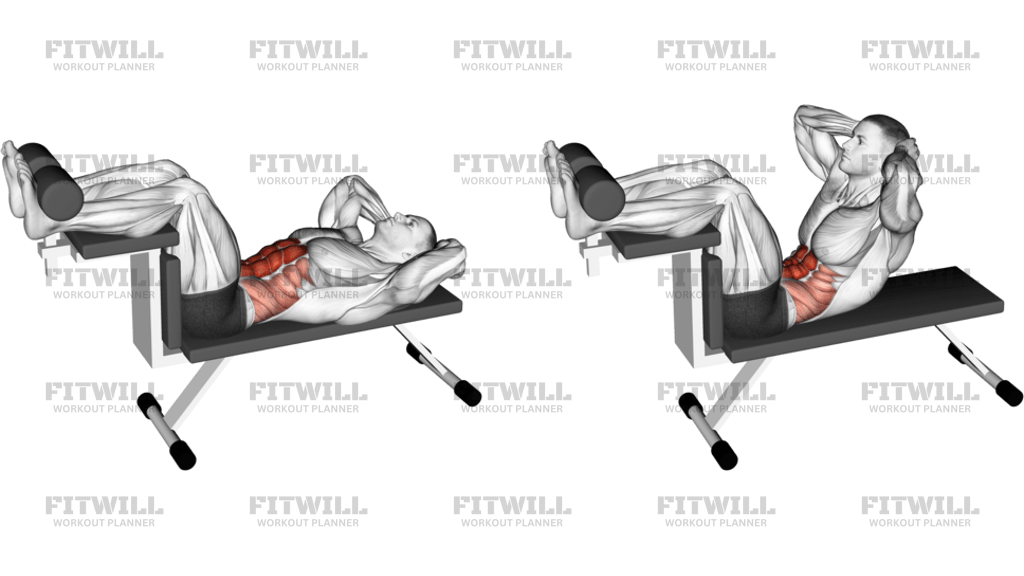
Incline Leg Hip Raise Leg Straight
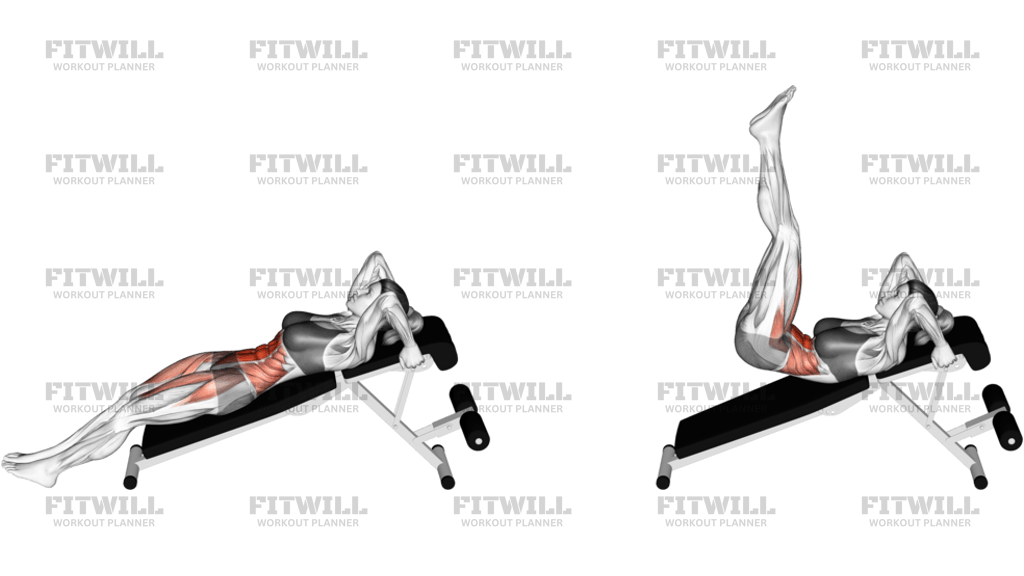
Incline Leg Hip Raise (leg Straight) is a bench-based abdominal exercise that asks you to keep your legs long while you curl your pelvis upward against gravity. The incline bench changes the leverage: the lower your legs hang, the harder the lift becomes, and the more important it is to control the start and finish of every rep. It is a very direct core drill, but it only stays productive when the motion comes from the trunk and pelvis instead of a swinging kick.
The main emphasis is on the abs, especially the lower portion of the rectus abdominis, with obliques, hip flexors, and deeper core stabilizers assisting to keep the torso anchored to the bench. In anatomy terms, the primary work centers on the Rectus abdominis, with help from External obliques, Iliopsoas, and Transversus abdominis. When the set is done well, you should feel a strong abdominal curl and a clear posterior tilt of the pelvis at the top, not a loose arch in the lower back.
The setup matters because the bench gives you a fixed reference point for the shoulders and upper back while the hips and legs move freely. Lie back on the incline bench, hold the bench or top handles near your head, and keep the legs straight as they extend away from the pad. From there, start each repetition by bracing the ribs down and tucking the pelvis slightly so the low back does not take over. That setup keeps the abs in position to shorten the distance between the pelvis and the ribs.
During the lift, think about rolling the tailbone upward rather than throwing the feet toward the ceiling. The legs stay long, the knees stay quiet, and the hips rise only as far as you can keep tension through the midsection. A short pause at the top is useful if you can keep the motion strict. Lower under control until the pelvis returns to the pad and the legs hang back down with the same level of control you used on the way up.
This exercise fits well in core-focused sessions, warmups for bracing work, or accessory blocks after the main lifts. It is especially useful when you want abdominal work without spinal loading from a barbell or machine. The biggest form errors are using momentum, bending the movement at the hips instead of the abs, and letting the lower back arch as the legs rise. A controlled range is better than chasing height, especially on a steep bench.
[ Workout Log & Planner ]
Put your next workout in Fitwill
Keep your plan and training log ready when you are.


Instructions
- Set the incline bench to a moderate angle and lie back with your upper back and shoulders supported near the top edge.
- Grip the bench or the side handles near your head so your torso stays anchored as you move.
- Extend both legs straight and let them hang down together without locking the knees hard or letting the low back arch.
- Brace your abs, exhale, and tuck your pelvis slightly so your lower ribs and pelvis start close together.
- Lift the straight legs by curling your pelvis upward, bringing your feet toward the ceiling as the hips peel off the bench.
- Keep the legs long and together through the whole rep; do not swing, kick, or bend the knees to finish the lift.
- Pause briefly at the top when the pelvis is fully curled and the abs are tight.
- Lower slowly until the hips return to the bench and the legs hang back down under control.
- Reset your breath and repeat for the planned reps with the same tempo and range.
Tips & Tricks
- Hold the bench firmly so your shoulders do not slide when the hips start to rise.
- Think about curling the tailbone toward the ceiling; that pelvic tuck is what makes the abs do the work.
- If the feet start moving faster than the hips, shorten the range and slow the lowering phase.
- Keep the legs straight but soft at the knees so you do not lock out and jam the joints.
- Keep the chin slightly tucked and your neck relaxed instead of craning forward to watch the feet.
- Stop the rep when the lower back starts to arch; height is less important than keeping the trunk folded.
- Use a controlled negative on every repetition, because the lowering phase is where many people lose tension.
- If the hip flexors dominate, focus on bringing the pelvis up first instead of leading with the thighs.
- Choose a bench angle that lets you stay strict; a steeper setup increases the leverage demand quickly.
Frequently Asked Questions
What does Incline Leg Hip Raise (leg Straight) work most?
It mainly trains the rectus abdominis, with the obliques and deep core muscles helping stabilize the pelvis as the legs rise.
Why use an incline bench for this movement?
The incline bench changes the leverage so the legs hang lower and the abs have to work harder to curl the pelvis upward.
Where should my hands go on the bench?
Hold the top edge or side handles near your head so your upper body stays fixed while the lower body moves.
Should my legs stay straight the whole time?
Yes, keep them long through the rep. A small knee softness is fine, but bending the knees turns the exercise into a different movement.
How high should I lift my legs?
Lift only until the pelvis fully curls and the abs are tight. If you have to swing or arch your back to go higher, the rep is too big.
Why do I feel this in my hip flexors?
The hip flexors assist the lift, but they should not take over. Start the rep by curling the pelvis, not by kicking the thighs upward.
Is this the same as a reverse crunch?
It is similar, but the incline bench makes the lever longer and the straight-leg position increases the challenge.
Can beginners use this exercise?
Yes, but they should start with a smaller range of motion and slow reps before trying to lift the legs higher.