Kettlebell Sumo High Pull
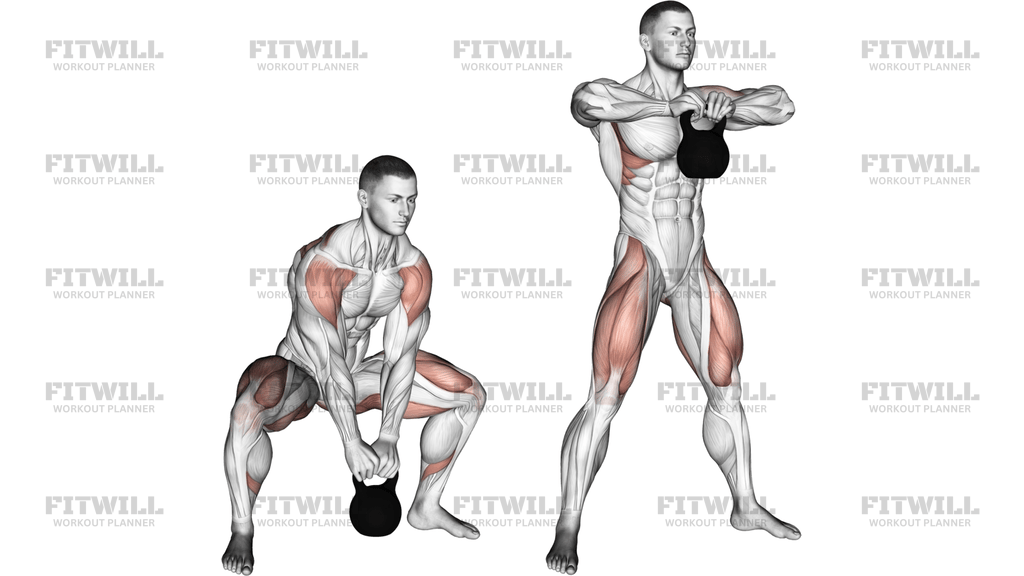
Kettlebell Sumo High Pull combines a wide sumo stance with a powerful pull from the floor, turning the repetition into a lower-body drive exercise that finishes with an upper-body pull. The kettlebell starts low between the feet, then travels close to the body as the hips extend and the elbows lift. It is a useful choice when you want to train hip power, adductor strength, upper-back engagement, and shoulder control in one coordinated movement.
The sumo stance changes the demand compared with a narrow-stance high pull. The wide feet and turned-out toes let the hips drop between the knees, which shifts more work into the inner thighs, glutes, and hamstrings while still asking the back to stay organized. Because the bell starts from the floor, the setup matters: if the chest collapses or the shoulders drift ahead of the handle, the pull becomes jerky and the arms take over too early.
A clean rep begins with a strong hinge and squat, then a hard drive through the floor. The bell should stay close to the shins and thighs, rising because the hips and knees extend, not because the shoulders shrug immediately. At the top, the elbows travel high and slightly outside the body, but the neck stays long and the ribs stay down. The finish should feel athletic and controlled, not like a reckless upright row.
This exercise is often used in strength circuits, power-focused sessions, or accessory work when you want a kettlebell drill that challenges the posterior chain without requiring a full snatch or clean. It can also help people learn how to coordinate the lower body with a crisp upper pull. The range should remain pain-free and repeatable, with each rep starting from a reset position if form begins to drift.
Treat the movement as a floor-based power drill, not a conditioning swing done at random speed. Load it only as heavy as you can keep close to the body, with steady breathing and the same torso angle on every rep. If the shoulders feel pinched, the elbows are pulling behind the line of the body, or the bell is drifting forward, the weight is too heavy or the setup needs to be cleaned up.
[ Workout Log & Planner ]
Put your next workout in Fitwill
Keep your plan and training log ready when you are.


Instructions
- Stand with your feet wider than shoulder width, toes turned slightly out, and place the kettlebell on the floor centered between your feet.
- Hinge and sit down into a deep sumo position, keeping your chest lifted and your shins fairly vertical as you reach for the handle with both hands.
- Set your shoulders down and back, brace your trunk, and make sure your hips are low enough that the bell starts inside your stance.
- Push the floor away to stand up, driving through your heels and midfoot so the kettlebell rises close to your body.
- As the bell passes your thighs, continue extending the hips and knees, then pull the elbows up and out until they finish around lower-chest to sternum height.
- Keep the kettlebell tight to your torso instead of letting it swing away from you or turn into a shoulder shrug.
- Pause briefly at the top with a tall spine, ribs stacked over the pelvis, and the kettlebell still controlled in front of your body.
- Lower the kettlebell under control by letting the elbows come down first, then hinge back into the wide stance as the weight returns toward the floor.
- Reset each rep from the sumo position or continue for the planned set while keeping the same stance, tempo, and breathing pattern.
Tips & Tricks
- Think of the exercise as a deadlift first and a high pull second; the legs and hips should create most of the power.
- Keep the kettlebell skimming close to your body so it does not arc forward and pull you off balance.
- Your elbows should rise because the bell is moving upward from the hip drive, not because you yank with your arms.
- If the top position feels like a shrug in your neck, lower the load and finish with the shoulders away from the ears.
- Let your knees track in line with your toes so the wide stance loads the hips and inner thighs instead of collapsing inward.
- Keep your ribs from flaring at the finish; a stacked torso protects the low back and keeps the pull cleaner.
- Use a controlled lowering phase so the adductors, glutes, and upper back stay involved on the way back down.
- Stop the set when the bell starts drifting away from you or the elbows stop coming up smoothly.
Frequently Asked Questions
What muscles does Kettlebell Sumo High Pull work most?
It emphasizes the glutes, adductors, hamstrings, upper back, and shoulders, with the core working hard to keep the torso organized.
Can beginners perform this exercise?
Yes, if they start light and learn the wide stance, hip drive, and close path before adding speed or load.
How is this different from a regular kettlebell high pull?
The sumo stance opens the hips and shifts more work to the glutes and inner thighs while the bell still finishes with a high pull.
What is the biggest form mistake to avoid?
Pulling with the arms too early. The bell should rise because you drive through the floor and extend the hips first.
Where should my feet and knees be in the setup?
Take a wide stance with the toes turned out slightly and keep the knees tracking over the toes as you descend and stand.
Why does the kettlebell need to stay close to my body?
A close path makes the pull more efficient, keeps the shoulders safer, and prevents the bell from swinging forward and stealing power.
Should I lock out hard at the top?
Stand tall and finish the hips, but avoid leaning back or over-shrugging. The top should feel controlled, not forced.
Can I use this as conditioning?
Yes, but keep the reps crisp. Once the path gets sloppy or the bell drifts away, the set is too long or too heavy.