Dumbbell Supported Squat
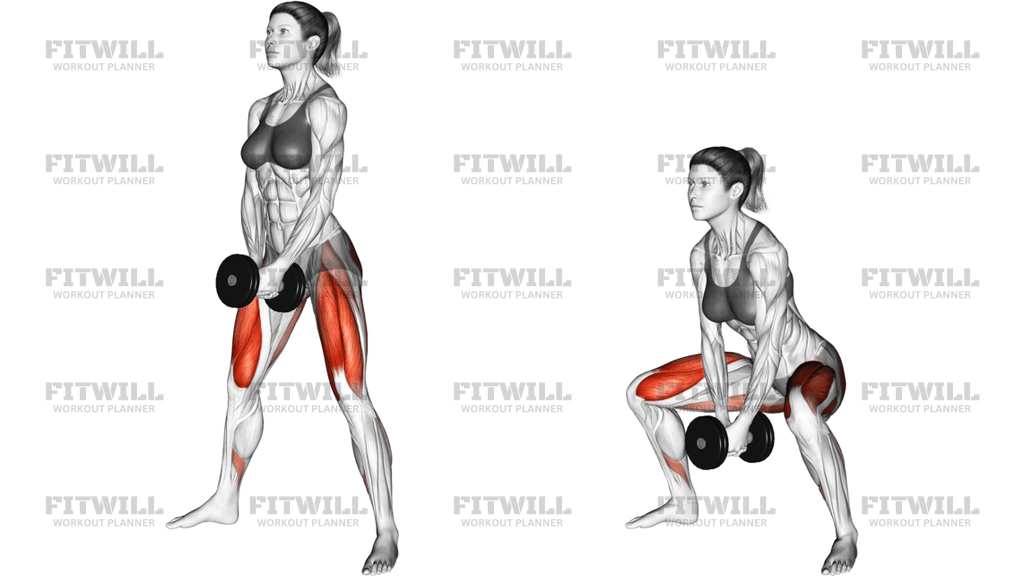
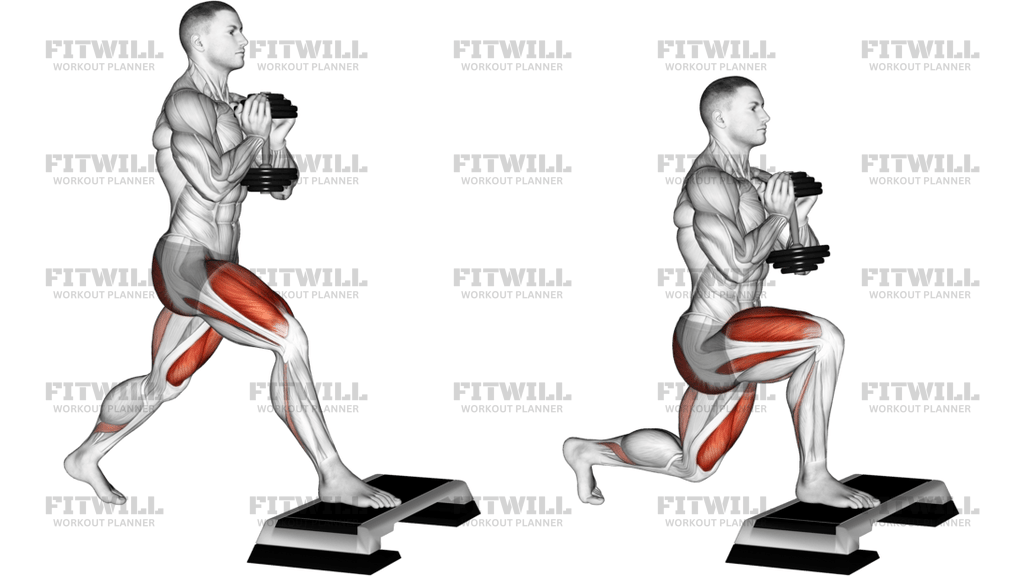
Dumbbell Supported Squat is a front-loaded squat variation that uses a dumbbell held high at the chest and a stable support target behind you to guide depth. The support makes the rep easier to standardize, which is useful when you want a cleaner squat pattern, a consistent bottom position, or a way to train legs without chasing load. The main work is still coming from the quads, with help from the glutes and core as you sit down and stand back up.
This variation is especially useful when you want a more upright torso than a free back squat and a simpler way to repeat the same range on every rep. Holding the dumbbell in front acts as a counterbalance, which helps you stay centered over midfoot while you squat toward the box, bench, or other support. That front-loaded position also keeps the upper back active and makes the exercise feel more controlled than a loose bodyweight squat.
The setup matters because the support determines your depth and how much pressure you can keep through the feet. Stand far enough forward that you can sit back to the target without collapsing onto it, then keep your chest tall, ribs stacked, and knees tracking in line with the toes. If the support is too low, you may lose position at the bottom; if it is too high, you may not get enough squat depth to challenge the quads.
On each rep, lower under control until your hips lightly touch the support, then drive up by pressing through the whole foot. The goal is a brief, controlled touch rather than a full sit-and-relax moment. Keep the dumbbell close to the sternum, stay braced through the trunk, and let the knees and hips rise together so the movement stays smooth and balanced.
Dumbbell Supported Squat is a good choice for beginner technique work, warm-ups, accessory leg training, or higher-rep strength sets where posture matters more than maximal load. It is also useful when you want a squat pattern that is easier to repeat after fatigue or when free squatting feels inconsistent. Treat the support as a guide, not a place to crash, and keep every rep deliberate from the first descent to the final stand.
[ Workout Log & Planner ]
Put your next workout in Fitwill
Keep your plan and training log ready when you are.


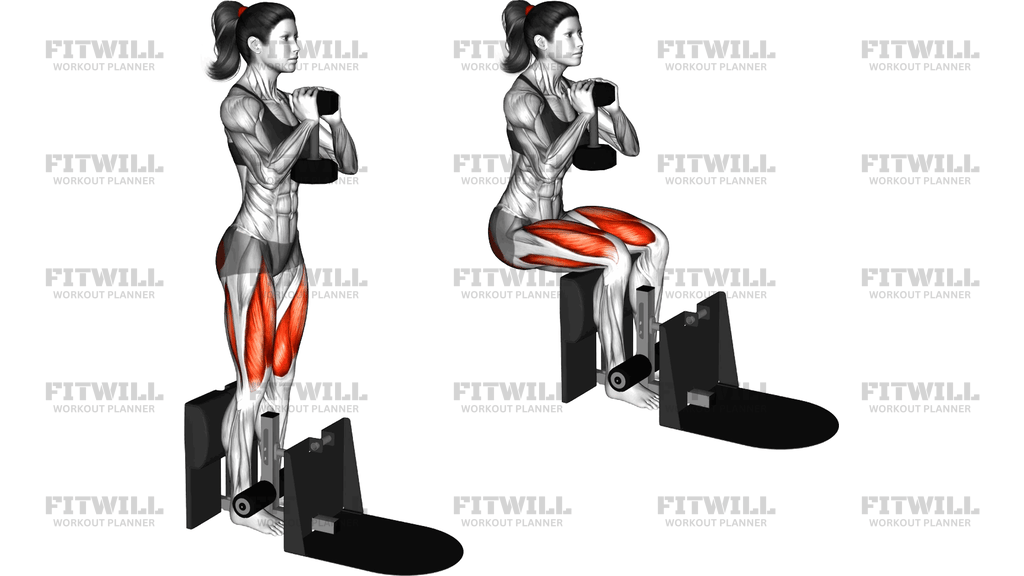
Instructions
- Place a sturdy box, bench, or squat target behind you and stand with your feet about shoulder-width apart, toes turned slightly out.
- Hold one dumbbell vertically at the center of your chest with both hands and keep your elbows pointing down in front of your ribs.
- Stand tall over midfoot, keep your chest lifted, and tighten your trunk before you start the descent.
- Sit your hips back and down between your knees while keeping your heels flat and your knees tracking in line with your toes.
- Lower under control until your glutes lightly touch the support target without collapsing onto it.
- Pause briefly at the bottom while staying braced, then drive through the whole foot to stand back up.
- Let your knees and hips extend together as you rise, and keep the dumbbell close to your chest instead of drifting forward.
- Inhale on the way down, exhale as you stand, then reset your stance before the next rep.
Tips & Tricks
- Choose a support height that lets you reach depth without tucking your pelvis hard at the bottom.
- Keep the dumbbell against your chest so it acts as a counterbalance instead of pulling you forward.
- If your heels lift, widen your stance slightly or use a small heel wedge before adding more load.
- Touch the support lightly; dropping onto the box turns the squat into a bounce and removes tension from the quads.
- Keep your knees moving over the toes rather than letting them cave inward as you stand.
- Use a slower lowering phase if you tend to lose position on the way down.
- Stop the set when the dumbbell starts drifting away from your sternum or your torso starts folding forward.
- A lighter dumbbell and a cleaner bottom position are better here than chasing a heavy load.
Frequently Asked Questions
What muscles does Dumbbell Supported Squat work?
It mainly targets the quads, with the glutes and core helping you keep balance and drive out of the bottom.
Is Dumbbell Supported Squat good for beginners?
Yes. The support target and front-loaded dumbbell make it easier to learn squat depth and torso position without needing a heavy load.
What should I use as the support in Dumbbell Supported Squat?
A firm box or bench that is tall enough for you to touch lightly at the bottom is ideal. It should not wobble or force you to round your lower back.
Should I sit all the way down on the box or bench?
No. Light contact is the goal. If you fully sit and relax, you lose tension in the quads and turn each rep into a bounce off the support.
Can I hold two dumbbells instead of one?
You can, but the single dumbbell goblet hold is usually easier to keep centered and upright. Use two only if it does not change your balance or bottom position.
Why do my heels come up during Dumbbell Supported Squat?
Your stance may be too narrow, the support may be too low, or you may be leaning too far forward. Start with a slightly wider stance and keep pressure through the full foot.
How deep should I squat on this exercise?
Go only as low as you can while keeping your chest tall, heels down, and glutes lightly reaching the support. Depth is useful only if you can keep the position clean.
What is the biggest mistake in Dumbbell Supported Squat?
Letting the support do the work. The box or bench should guide depth, not take your weight or let you relax between reps.