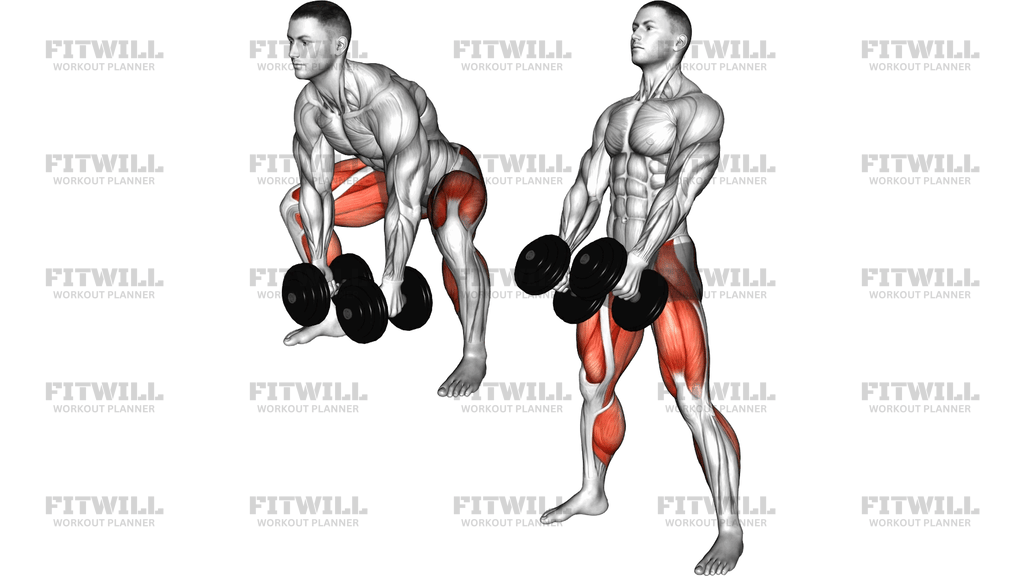
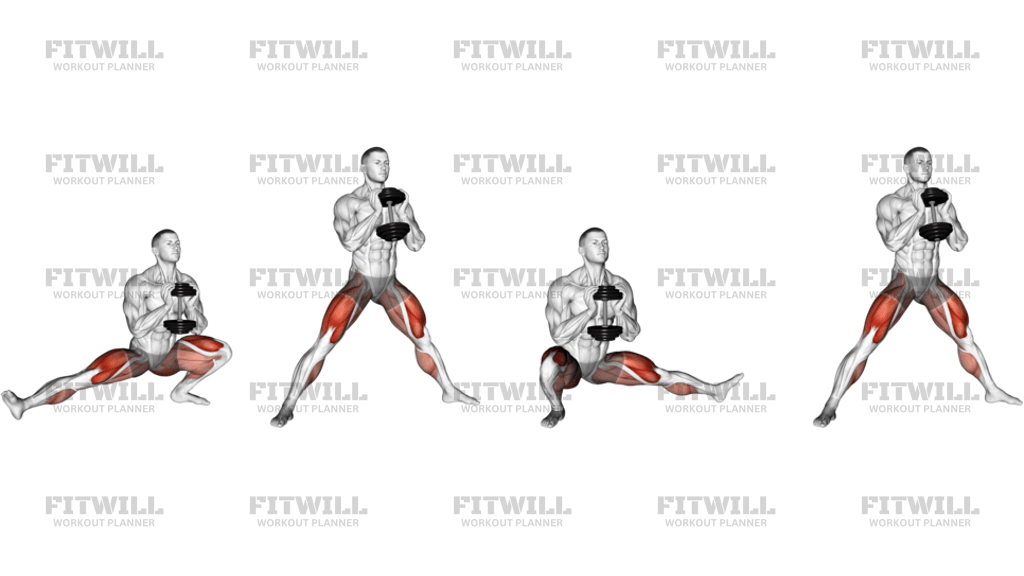
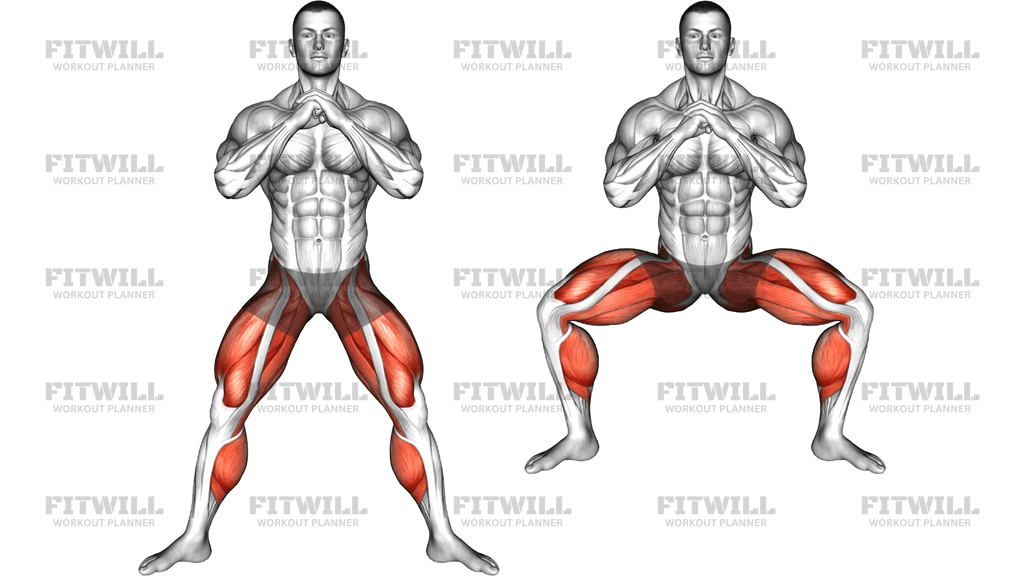
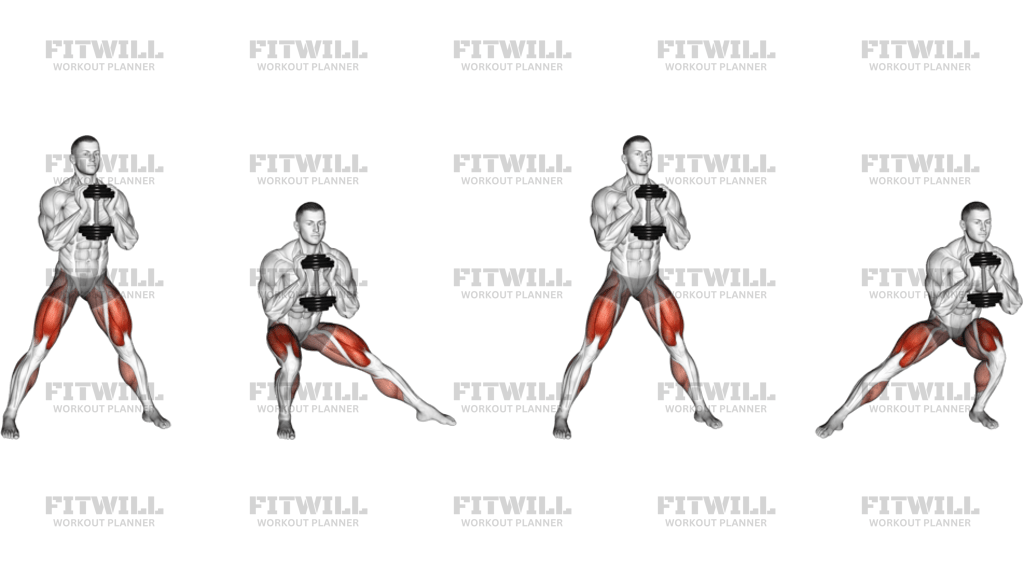
Dumbbell Supported Squat
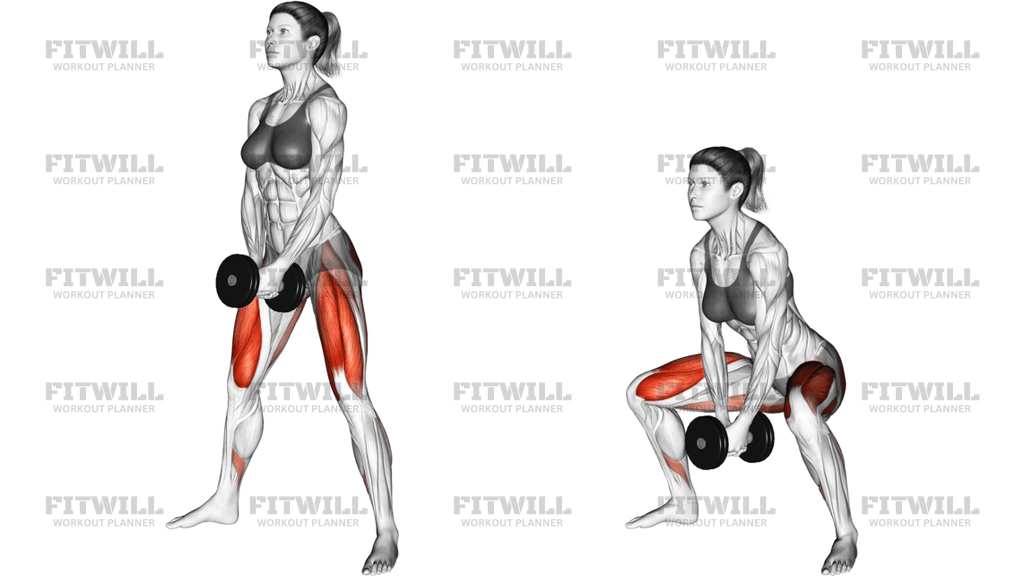
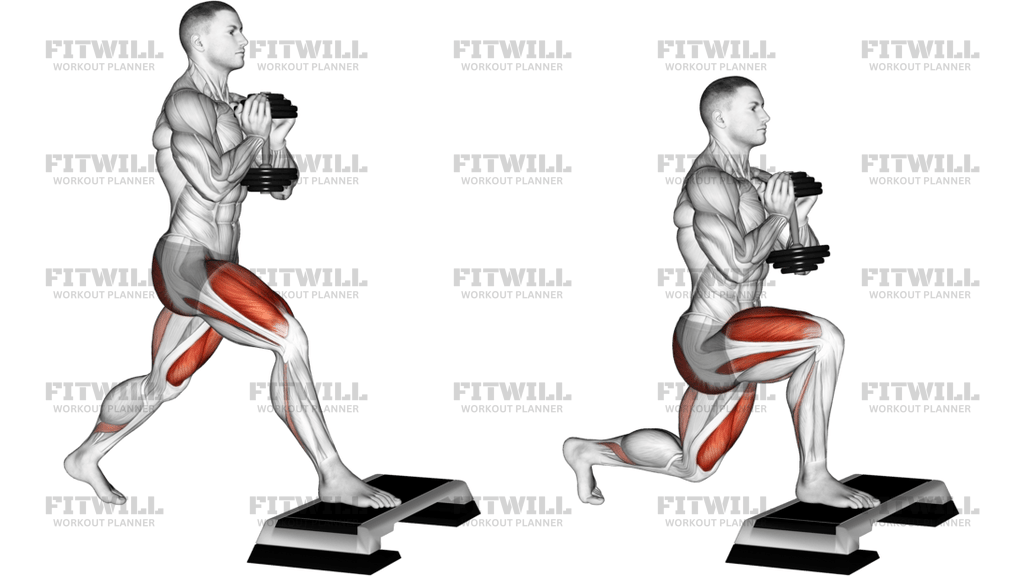
Dumbbell Supported Squat is a quad-focused squat variation that uses a supported squat station to steady the torso while you hold dumbbells at the shoulders. The setup lets you stay more upright than a free squat, so the legs can do the main work without as much balance demand. That makes it useful for lifters who want a controlled lower-body exercise with a clear, repeatable path.
The movement is built around a stable base: feet planted on the platform, torso in contact with the support, and the dumbbells held high in a front-rack position. That arrangement matters because if the weights drift forward or the chest leaves the pads too early, the rep turns into a hinge instead of a squat. A clean set keeps the shoulders, ribs, and pelvis stacked so the knees can travel forward while the heels stay down.
At the bottom, the thighs should lower as far as your mobility and the machine allow without losing control. The descent should feel smooth and deliberate, not dropped, and the ascent should come from driving through the whole foot while keeping the dumbbells quiet against the shoulders. The machine support is there to help you stay organized, not to replace bracing or to let you bounce out of the bottom.
This exercise works well as a hypertrophy accessory, a quad-biased strength movement, or a safer option when you want less balance demand than a free barbell squat. It is especially useful if you tend to tip forward in squats or if you want to keep the torso more upright. Keep the load light enough that the rack position stays secure and the knees track cleanly over the toes from the first rep to the last.
Fitwill
Log Workouts, Track Progress & Build Strength.
Achieve more with Fitwill: explore over 9600 exercises with images and videos, access built-in and custom workouts, perfect for both gym and home sessions, and see real results.
Start your journey. Download today!




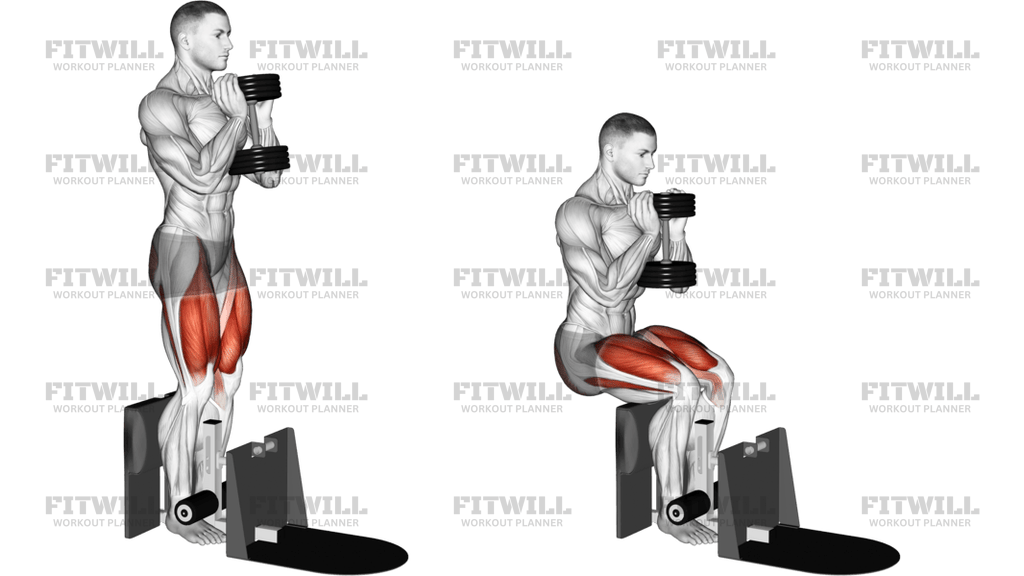
Instructions
- Stand on the platform with your feet about shoulder-width apart, toes turned slightly out, and both heels flat.
- Set your shoulders and upper torso against the machine support so your upper body has a steady contact point before you squat.
- Hold the dumbbells at shoulder height in a front-rack position with your elbows slightly forward and your wrists stacked.
- Take a breath, brace your midsection, and keep your chest tall before unlocking your knees.
- Lower straight down between your feet while keeping pressure through the whole foot and your torso in contact with the support.
- Let your knees travel in line with your toes as you descend, and keep the dumbbells close to your shoulders instead of letting them drift forward.
- Sink until your thighs are near parallel or as deep as you can go without lifting your heels or losing control of the support.
- Drive back up by pushing through midfoot and heels, extending your knees and hips together without bouncing out of the bottom.
- Exhale as you pass the hardest part of the rep, finish tall without snapping your knees back, and then re-rack or set the dumbbells down before stepping away.
Tips & Tricks
- If your torso wants to tip forward, place your feet a little farther out on the platform so your hips can drop without peeling off the support.
- Keep the dumbbells parked at the shoulders; letting them hang low usually turns the rep into a front-loaded balance drill.
- Use a stance that lets your knees follow the second or third toe instead of forcing a narrow track that makes them cave inward.
- Do not bounce off the bottom pad or your own stretch reflex; a short pause makes each rep more honest and keeps the quads working.
- Choose dumbbells you can hold in the rack position without shrugging your shoulders or bending your wrists back.
- If your heels rise, shorten the depth or widen the stance slightly instead of forcing extra range.
- Keep steady pressure through the big toe, little toe, and heel so the platform does not feel like a toe-only push.
- Stop the set when you can no longer keep the chest against the support or the pelvis starts tucking hard at the bottom.
Frequently Asked Questions
What muscle does Dumbbell Supported Squat target most?
The quads are the main target, with glutes and adductors helping drive the squat and the core working to keep you stacked against the support.
Why use a supported squat station instead of a free squat?
The support helps you stay more upright and stable, which reduces balance demands and lets you focus more on knee bend and quad work.
Should the dumbbells stay at shoulder height during Dumbbell Supported Squat?
Yes. Keeping them racked at the shoulders helps maintain an upright torso and keeps the load from pulling you forward.
How deep should I go on the platform?
Go as deep as you can while keeping both heels down, your torso in contact with the support, and your pelvis from tucking under hard.
What is the most common mistake with Dumbbell Supported Squat?
Letting the hips drift back and the dumbbells pull forward turns it into a forward fold instead of a true squat.
Can beginners do Dumbbell Supported Squat?
Yes. Start with light dumbbells or even just bodyweight to learn the foot placement, support contact, and rack position.
What should I do if my knees cave inward?
Adjust your stance so the knees can track over the toes, and keep pressure through the whole foot instead of collapsing onto the inside edge.
Is Dumbbell Supported Squat a good substitute for barbell squats?
It can be a good accessory or alternative when you want less balance demand and a more upright torso, but it will not replace every benefit of a free barbell squat.