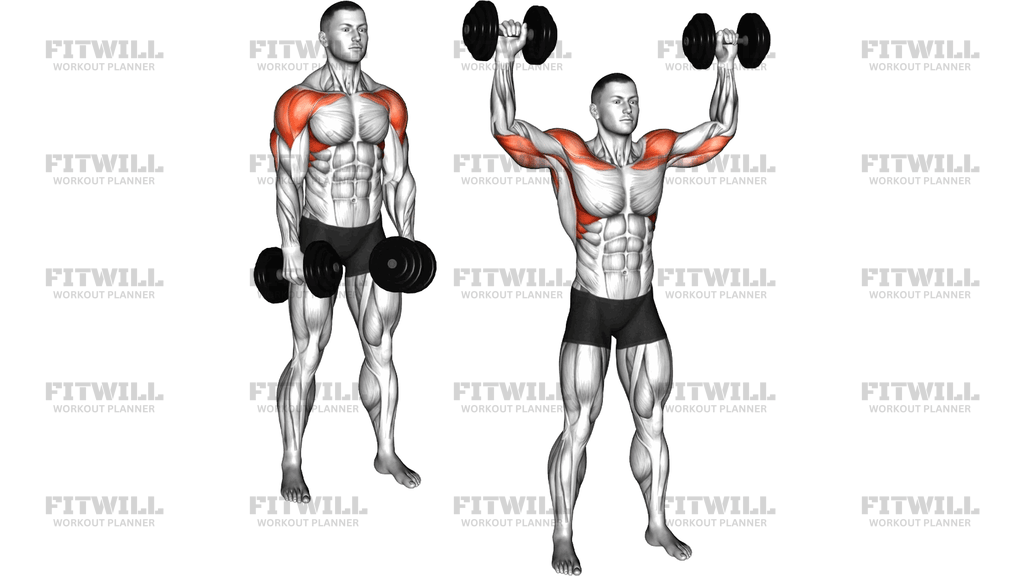
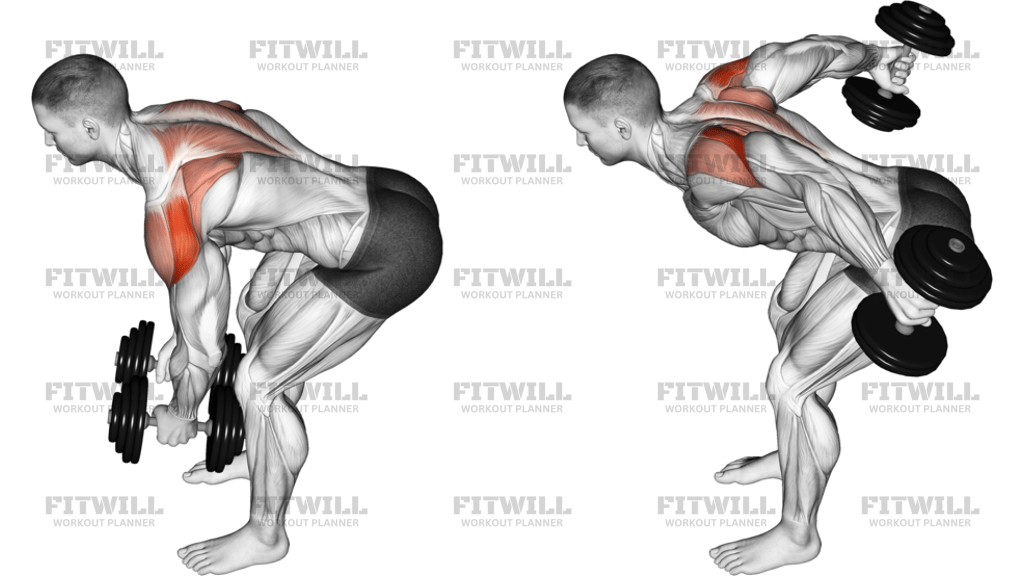
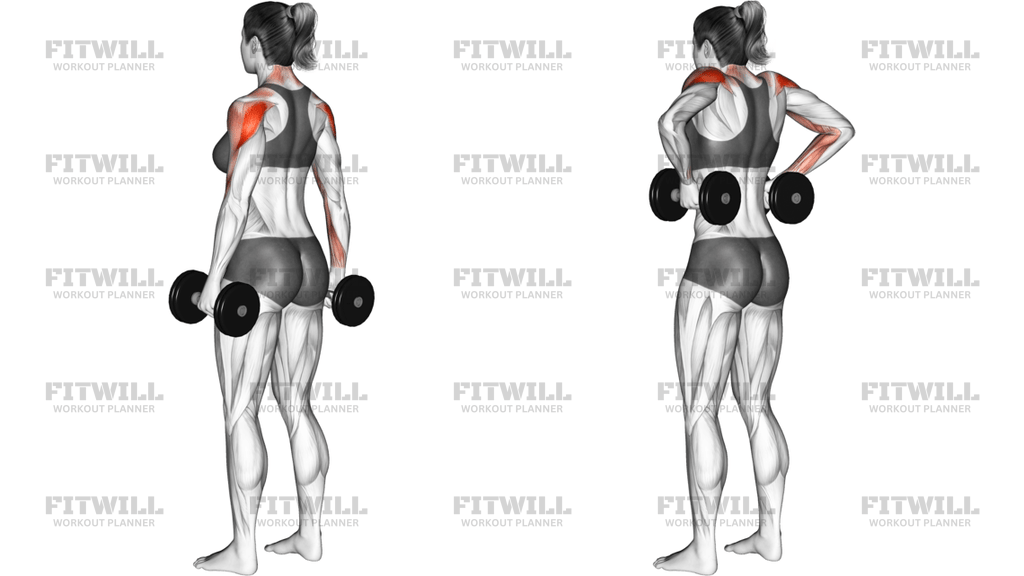
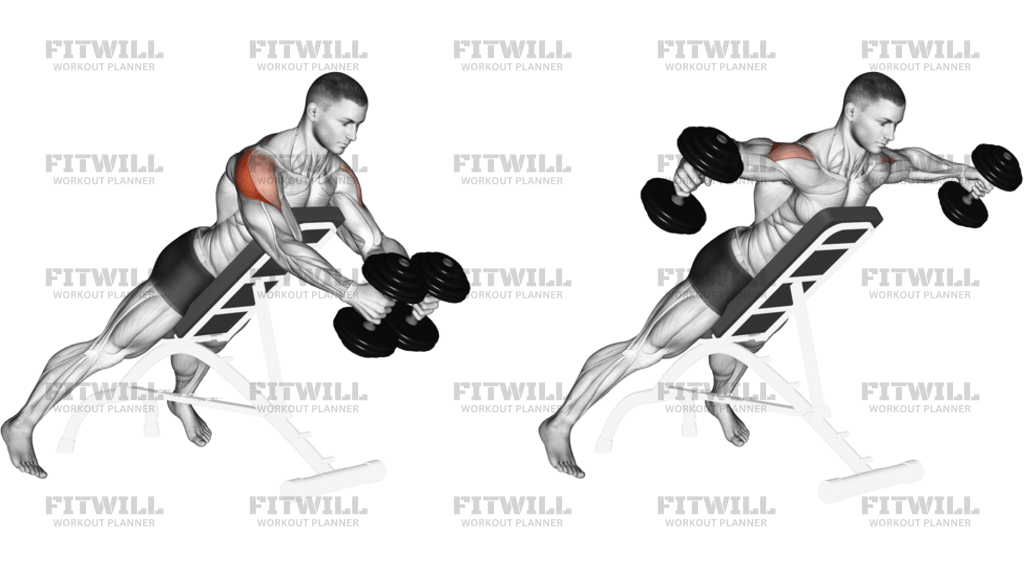
Dumbbell Incline One-Arm Lateral Raise
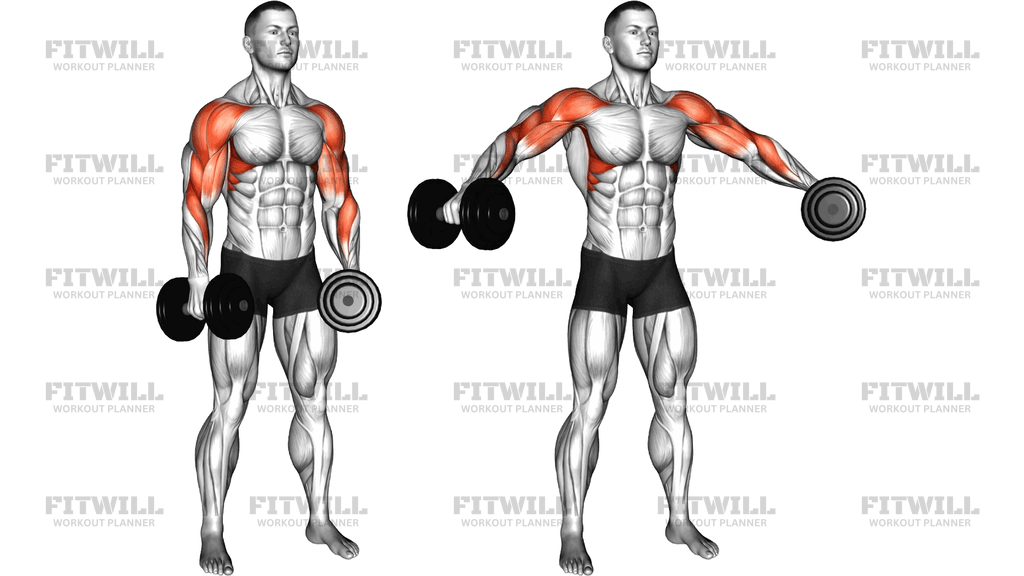
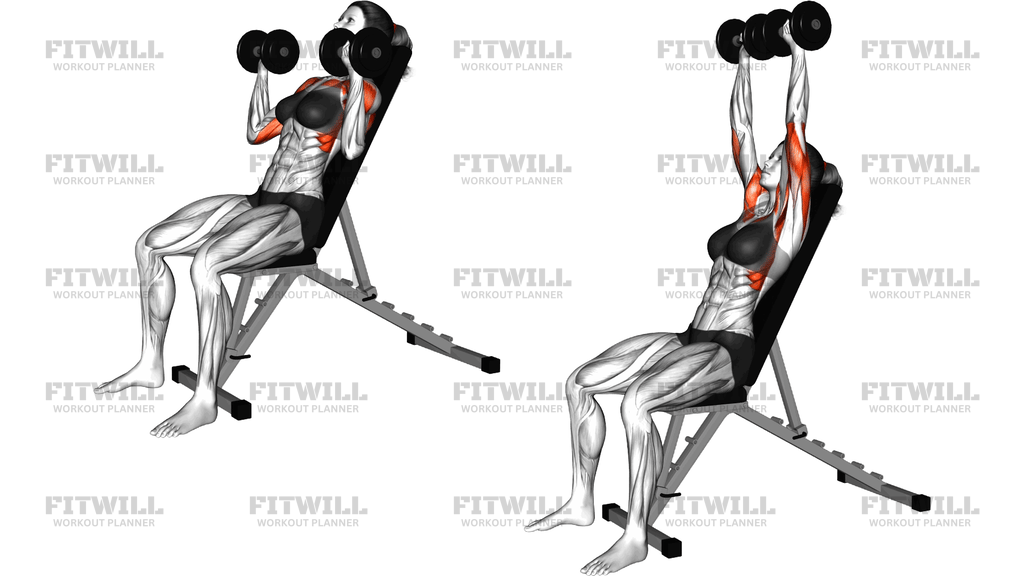
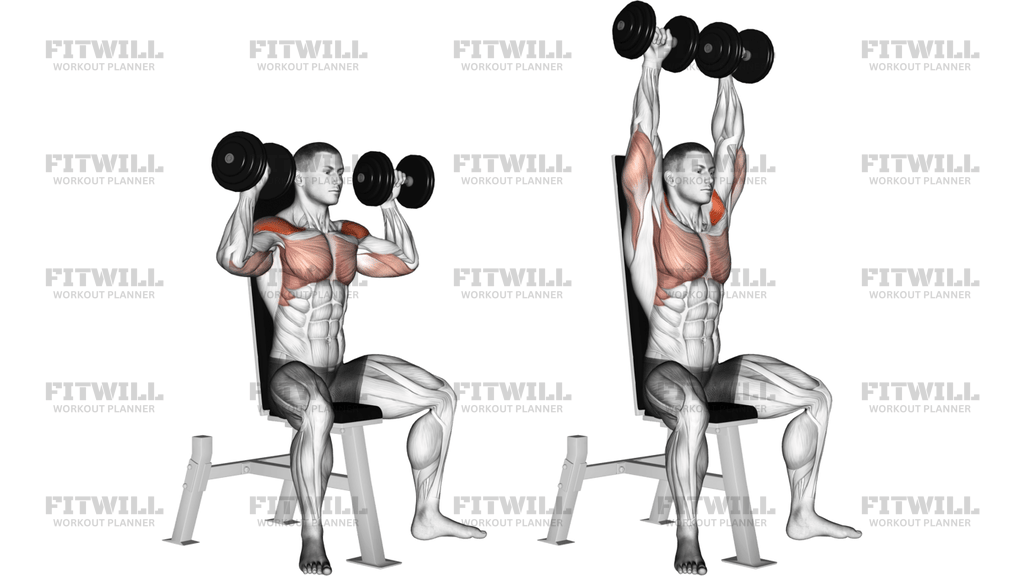
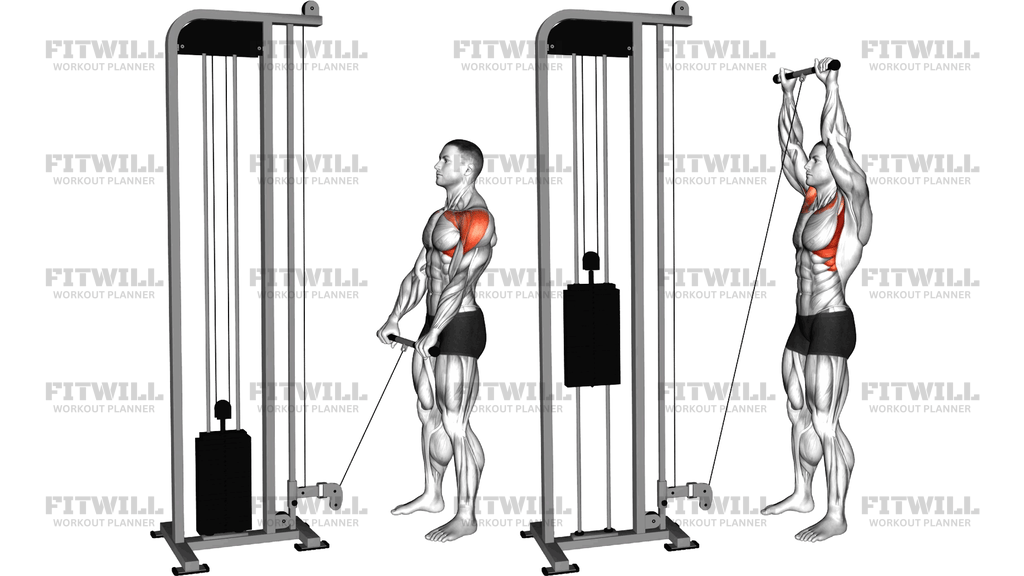
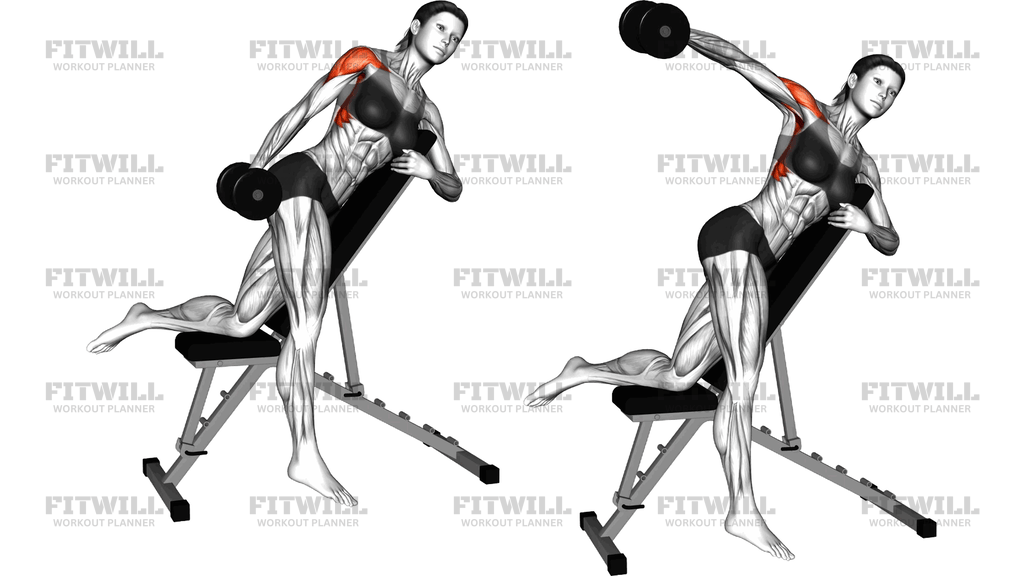
Dumbbell Incline One-Arm Lateral Raise is a supported shoulder isolation exercise that puts most of the work on the side delts while asking the upper back and arm to stabilize the line of the lift. The incline bench removes a lot of body swing, so the rep is easier to feel in the shoulder and harder to fake with momentum. That makes it useful when you want cleaner lateral-delt work than a standing raise usually allows.
The setup matters because the bench angle, torso support, and arm path all change how the shoulder feels. In Dumbbell Incline One-Arm Lateral Raise, the working side hangs under the shoulder while the body stays anchored against the incline pad. That stable position helps you keep tension on the deltoid through the whole raise instead of turning the movement into a shrug or a twist.
Start with the dumbbell hanging straight down, then lift it out to the side in a smooth arc until the upper arm is close to shoulder height. Keep the elbow softly bent and let the hand travel with the elbow rather than leading the motion with a bent wrist. The lift should feel controlled on the way up and even more controlled on the way down, with no body heaving to help the weight along.
This exercise is a good choice for shoulder-focused accessory work, warm-up activation before pressing, or higher-rep hypertrophy sets when you want one side to work at a time. It is also useful if a regular lateral raise makes you lean, jerk, or shrug too much. Because the bench limits cheating, lighter dumbbells often produce better shoulder tension than a load that is too heavy to keep strict.
Keep the range honest and stop the raise when the shoulder is working hardest, not when the trap takes over. A small pause near the top helps you own the position, but there is no need to bounce at the top or drop the dumbbell quickly. If the shoulder feels pinchy, lower the bench angle, shorten the range slightly, and keep the arm a little in front of the torso instead of drifting behind it.
Fitwill
Log Workouts, Track Progress & Build Strength.
Achieve more with Fitwill: explore over 9600 exercises with images and videos, access built-in and custom workouts, perfect for both gym and home sessions, and see real results.
Start your journey. Download today!




Instructions
- Set an incline bench to a low or moderate angle and position your torso sideways against the pad so the working arm can hang freely below shoulder level.
- Hold one dumbbell in the outside hand, keep the other hand or forearm braced on the bench for balance, and plant your feet so your body stays locked in place.
- Let the dumbbell hang under the shoulder with a soft elbow bend, a neutral wrist, and the palm facing in or slightly forward.
- Brace your midsection and keep your ribs and hips pressed into the bench before you start the raise.
- Lift the dumbbell out to the side in a smooth arc, leading with the elbow and keeping the shoulder down as the arm rises.
- Raise until the upper arm is about level with the shoulder or just below it, stopping before the trap starts to take over.
- Pause briefly at the top without twisting the torso or rolling the shoulder forward.
- Lower the dumbbell slowly back to the hanging start position and keep tension on the side delt all the way down.
- Reset your shoulder, take your next breath, and repeat for the planned reps before carefully lowering the dumbbell to the floor or rack.
Tips & Tricks
- If your shoulder rides up toward your ear, lighten the dumbbell and think about lifting the elbow away from the hip instead of shrugging.
- Keep the wrist stacked under the dumbbell; a bent wrist usually turns this into a forearm and trap fight instead of a delt raise.
- A low incline usually makes the side delt work harder than a steep bench angle, which can turn the rep into more of a rear-shoulder motion.
- Do not chase height above shoulder level; the top of the rep should feel controlled, not forced.
- Use a slight pause at the top if you tend to swing the dumbbell or let it bounce out of the bottom.
- If the dumbbell drifts behind your torso, bring it a touch forward so the shoulder stays in a safer, stronger line.
- Choose a weight that lets you lower the dumbbell for at least two seconds without losing the bench contact.
- Keep your neck long and your chin gently tucked so the upper traps do not dominate the set.
- One side at a time makes asymmetries obvious, so match the same bench angle and rep speed on both sides.
- Stop the set when the torso starts rotating off the bench; that is usually the point where the shoulder stops driving the rep.
Frequently Asked Questions
What muscles does Dumbbell Incline One-Arm Lateral Raise work most?
It mainly targets the side delts, with the upper traps and upper back helping stabilize the supported position.
Is Dumbbell Incline One-Arm Lateral Raise good for beginners?
Yes, because the bench support reduces cheating and makes it easier to learn a strict shoulder raise with light weight.
How high should I lift the dumbbell on Dumbbell Incline One-Arm Lateral Raise?
Lift until your upper arm is about level with your shoulder, or slightly below if your trap starts taking over sooner.
Why use an incline bench for this lateral raise?
The incline bench removes body sway and gives the shoulder a more honest line of pull, so the side delt has to do more of the work.
Should my elbow stay bent during Dumbbell Incline One-Arm Lateral Raise?
A small bend is best; locking the arm straight or turning it into a curl changes the leverage and makes the rep harder to control.
What if I feel it mostly in my traps?
Lower the load, keep the shoulder away from the ear, and stop the raise a little earlier so the trap does not steal the top of the rep.
Can I do Dumbbell Incline One-Arm Lateral Raise instead of a standing lateral raise?
Yes, and it is often a better option if you want less momentum and a stricter side-delt contraction on each side.
How many reps work well for this exercise?
Moderate to higher reps usually work best because the supported setup shines when the shoulder can stay under tension without using heavy momentum.