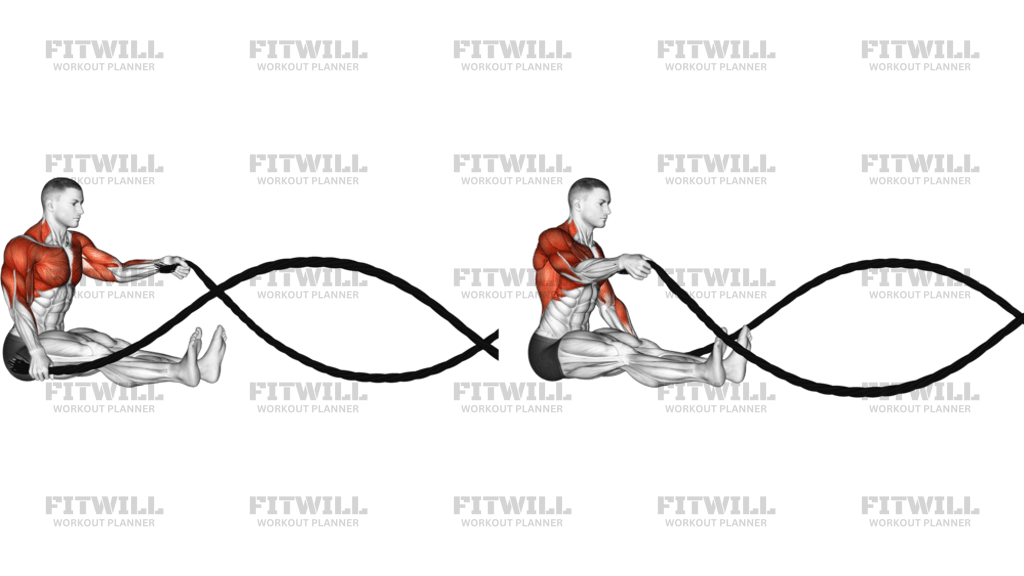
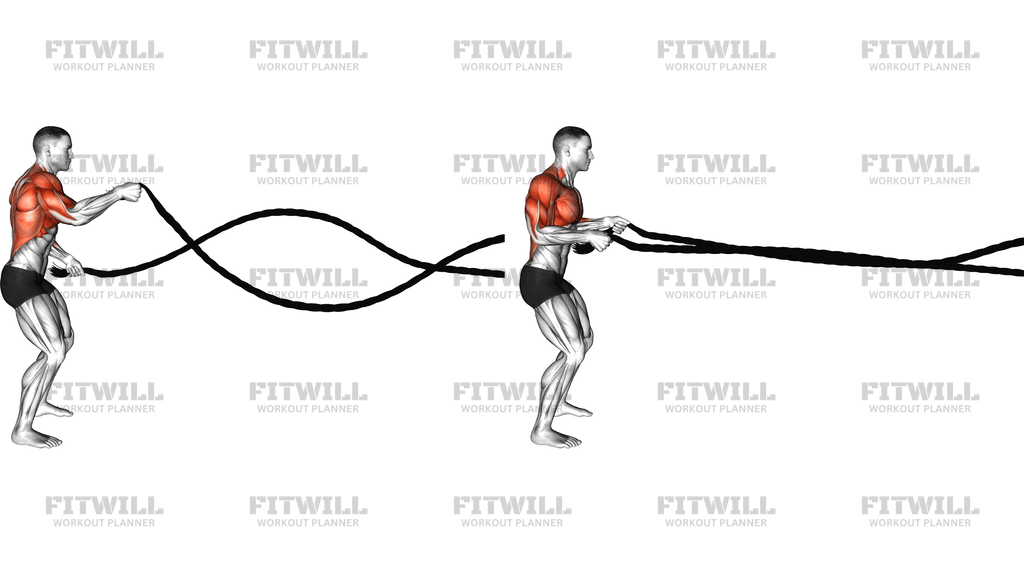
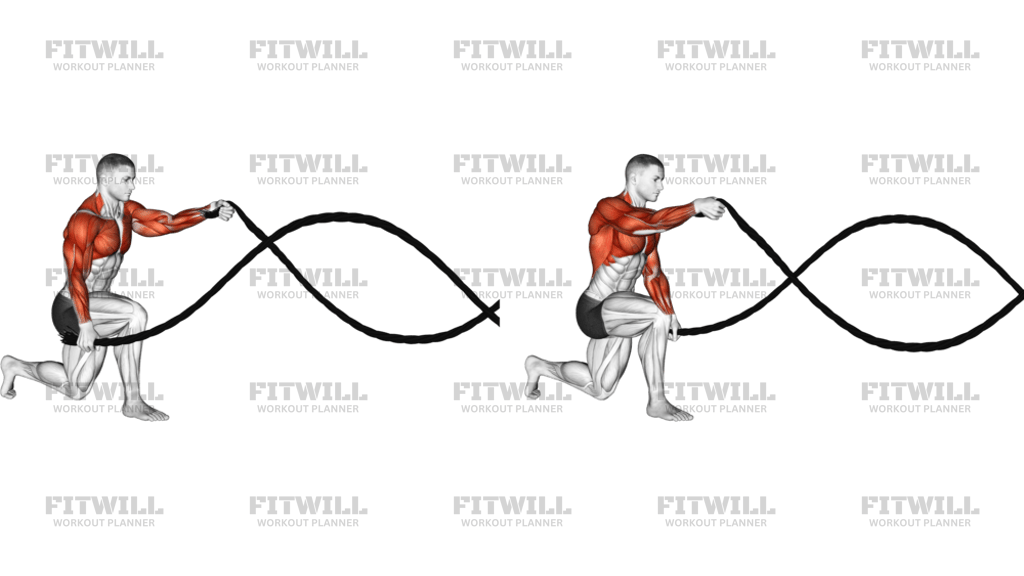
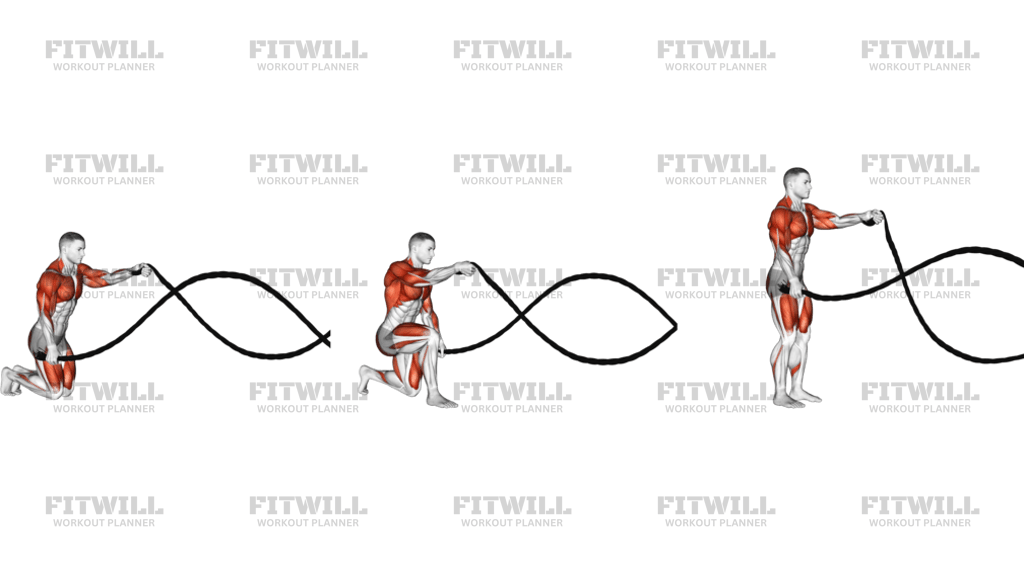
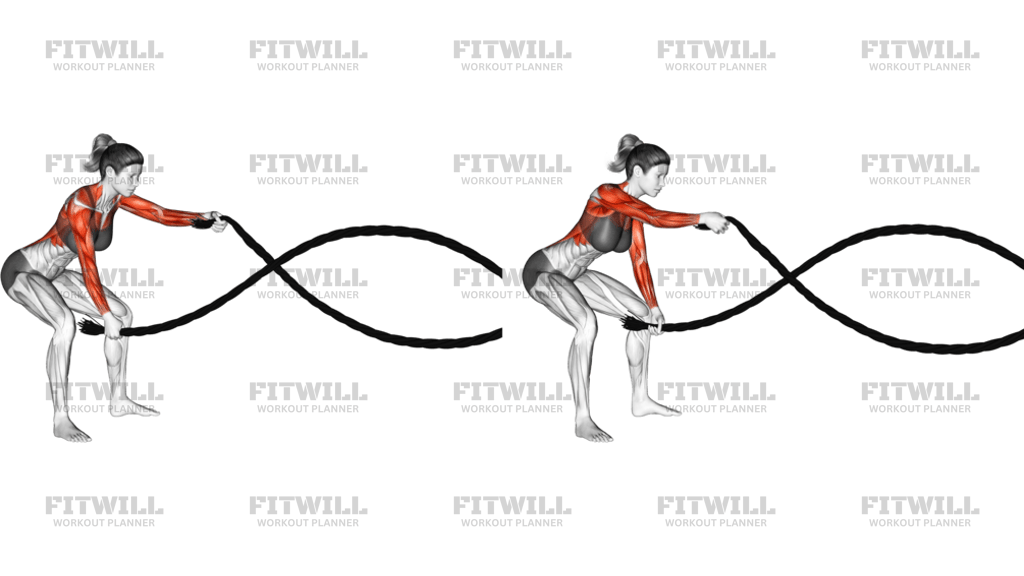
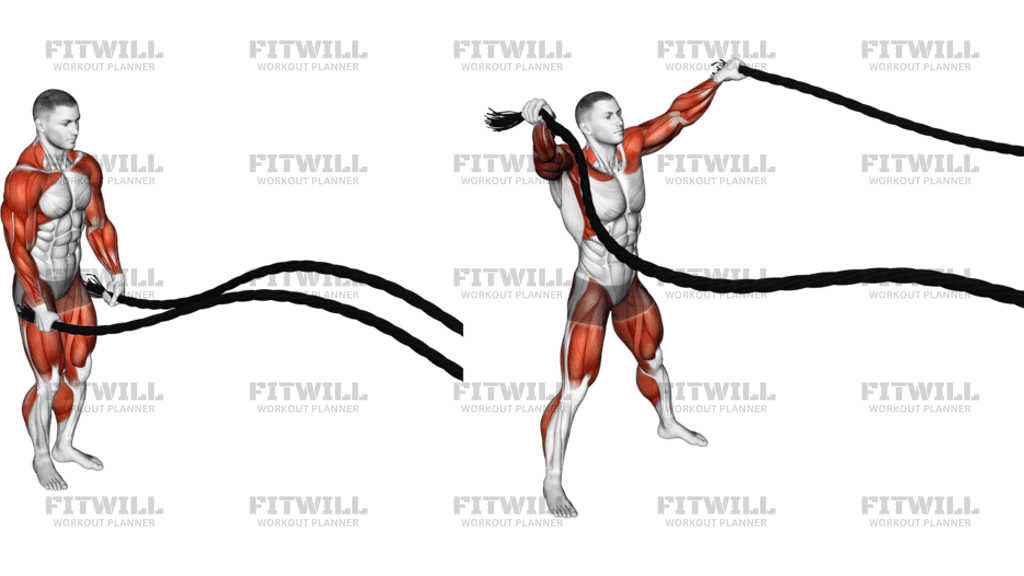
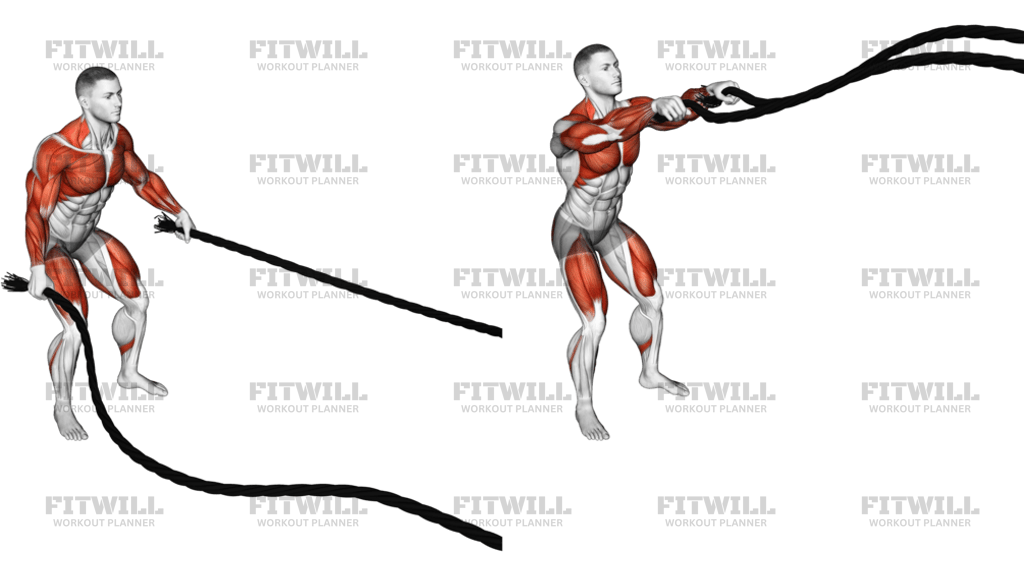
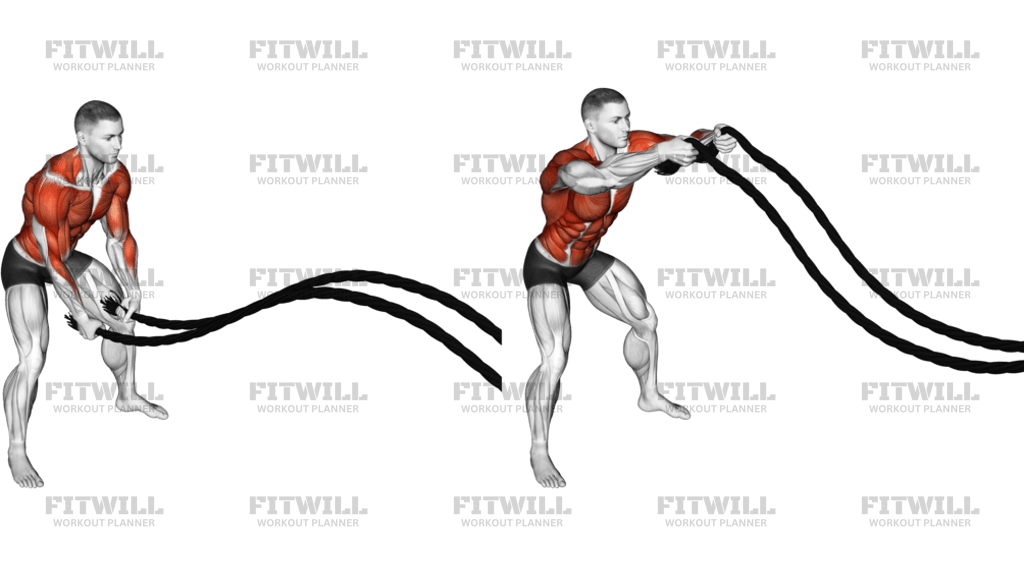
Battling Ropes Side Raise
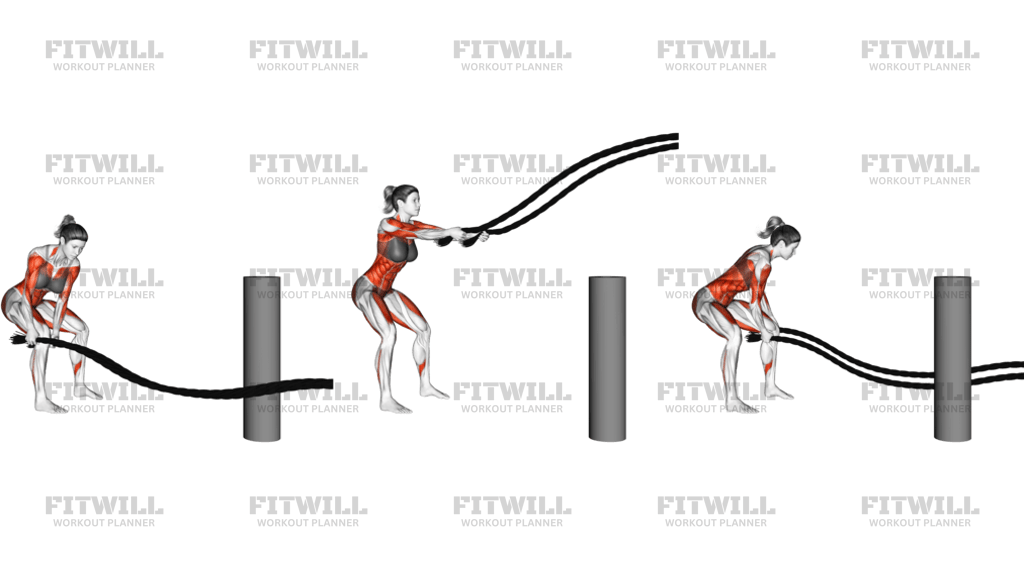
Battling Ropes Side Raise is a rope-based shoulder and conditioning drill that combines a lateral-raise style arm path with constant tension from the anchor. It is useful when you want to train the shoulders, upper back, grip, and trunk while keeping the movement rhythmic and athletic rather than purely heavy or explosive.
The setup matters because the rope line and body angle determine whether the raise stays smooth. Stand near the anchor with your feet about hip-width apart, knees softly bent, and your torso slightly hinged. Hold one end of the rope in each hand, start with your hands low near the thighs, and keep your chest tall without leaning back to create the lift.
As you raise the ropes, think about guiding the hands out and up to shoulder height instead of shrugging the shoulders or swinging the torso. The arms should stay long with only a small bend in the elbows, and the shoulders should remain down as the rope moves. That keeps the work where it belongs: in the delts and stabilizers, with the core resisting rotation and unwanted sway.
This exercise fits well as warm-up work, a shoulder accessory, or a conditioning finisher. It is especially useful when you want a shoulder pattern that feels easier on the joints than loaded pressing but still challenges posture, breathing, and control. Keep the pace smooth, lower the ropes under control, and stop the set when the body starts cheating with momentum or the rope path becomes uneven.
[ Workout Log & Planner ]
Put your next workout in Fitwill
Keep your plan and training log ready when you are.


Instructions
- Attach the battling rope to a low anchor point and stand close enough that the rope stays taut through the raise.
- Stand with your feet about hip-width apart, knees softly bent, and your torso slightly hinged with a tall chest.
- Hold one rope end in each hand and start with your hands low near the front of your thighs.
- Set your shoulders down and back lightly, then brace your midsection before the first rep.
- Raise both hands out and upward until they reach about shoulder height, keeping a small bend in the elbows.
- Keep your torso still as the rope travels so the movement comes from the shoulders instead of momentum.
- Pause briefly at the top without shrugging, leaning back, or letting the rope lose tension.
- Lower the ropes back to the start in a controlled way while keeping the same body angle.
- Breathe out as you lift and inhale as you lower, then repeat for the planned reps.
Tips & Tricks
- Keep the rope tension alive at the bottom so you do not have to yank the first inch of each raise.
- Raise to shoulder height, not higher; going past that point usually turns the set into a trap-dominant shrug.
- A small elbow bend is fine, but do not turn the movement into a bent-arm row or press.
- If your torso rocks backward, the rope is too heavy or you are standing too far from the anchor.
- Think about moving the hands in a wide arc rather than pulling the rope straight up with the traps.
- Keep your neck long and your jaw relaxed so the upper traps do not take over the set early.
- Use short sets if the burn turns into sloppy repetition quality; this exercise works best when the path stays clean.
- A slower lowering phase will make the shoulders work harder without needing a bigger rope wave.
Frequently Asked Questions
What does Battling Ropes Side Raise train?
It stresses the shoulders, upper back, grip, and trunk while also driving a strong cardio demand.
How do I set up the rope for this movement?
Use a low anchor, stand close enough to keep tension on the rope, and start with your hands low near your thighs.
Should my arms stay straight during the raise?
Keep a small bend in the elbows, but do not turn it into a curl or press. The line should feel long and controlled.
How high should the ropes come up?
Stop around shoulder height. Higher than that usually turns the set into a shrug and reduces shoulder control.
What is the biggest mistake on this exercise?
Most people use too much momentum, lean back, or shrug their shoulders instead of keeping the torso quiet.
Can beginners do Battling Ropes Side Raise?
Yes. Start with short sets, lighter rope tension, and a very clean shoulder path before adding volume.
What should I feel if my form is right?
You should feel the side and front of the shoulders working, with the core and grip helping to stabilize the motion.
What can I use if I do not have a battling rope?
A band or cable lateral raise can mimic the shoulder path, but the rope version adds more grip and conditioning demand.