Battling Ropes Half Kneeling
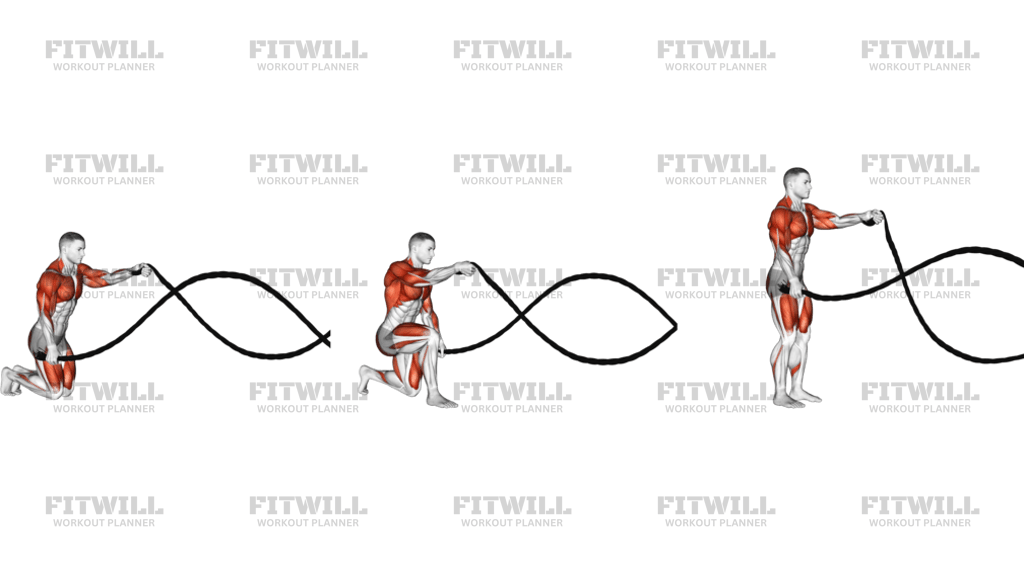
Battling Ropes Half Kneeling is a rope conditioning exercise performed from a half-kneeling stance, usually with one knee on the floor and the opposite foot planted in front. The position forces you to create rope waves without relying on standing momentum, so the set becomes a cleaner test of shoulder endurance, trunk control, and rhythm. It is especially useful when you want a conditioning drill that also challenges posture and anti-rotation stability.
The half-kneeling base changes the exercise in a useful way. With one knee down, the pelvis has less room to sway, the torso has to stay stacked, and the shoulders must drive the rope without letting the body collapse forward. That makes Battling Ropes Half Kneeling a strong choice for core-focused conditioning, warm-ups before upper-body training, and accessory work when you want the arms and trunk to stay honest under fatigue.
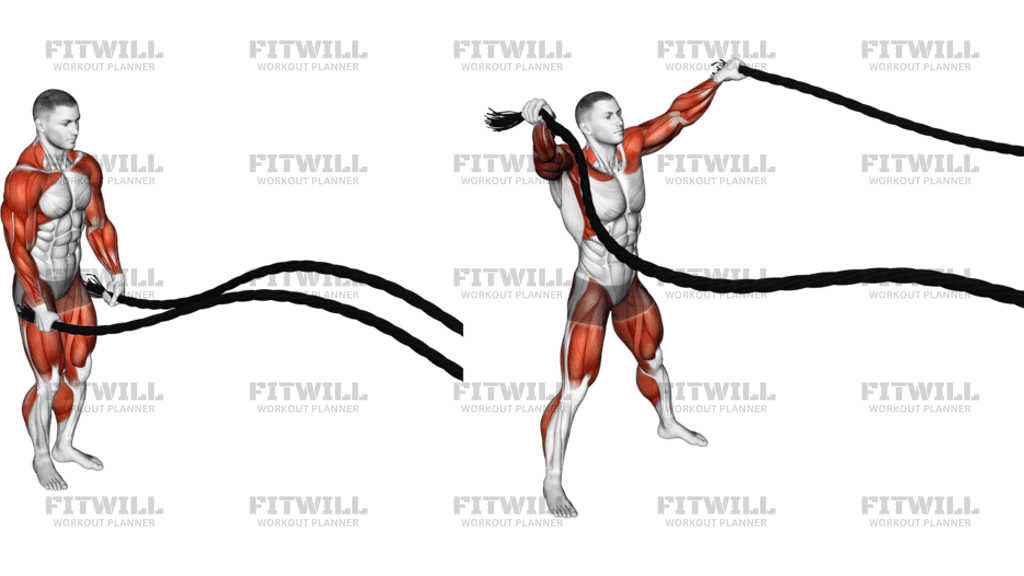
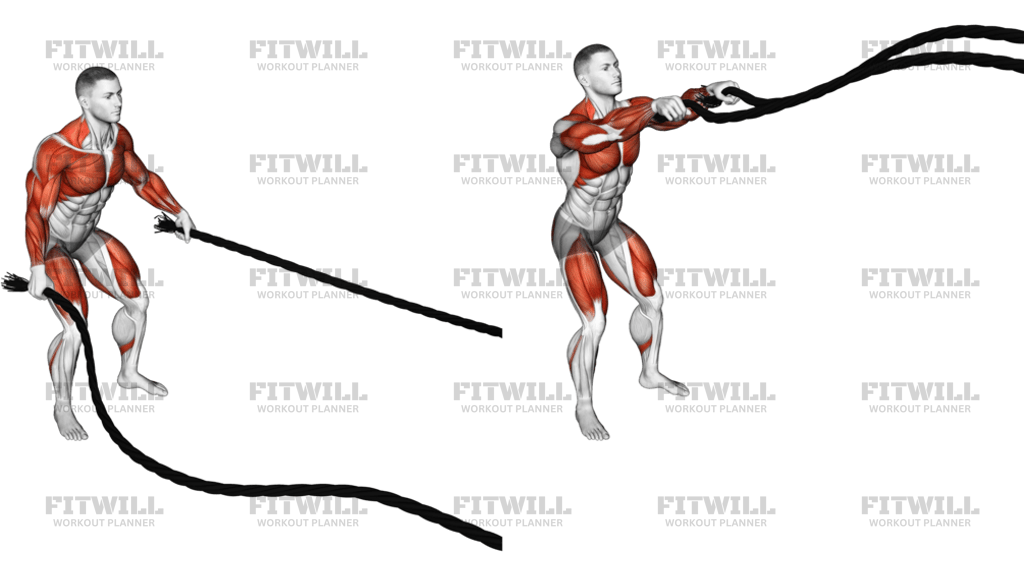
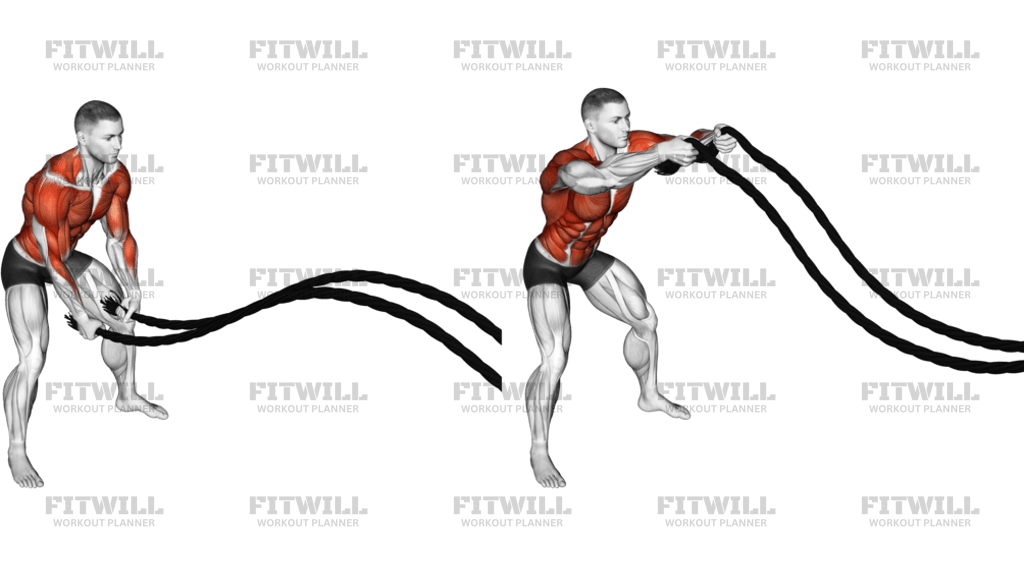
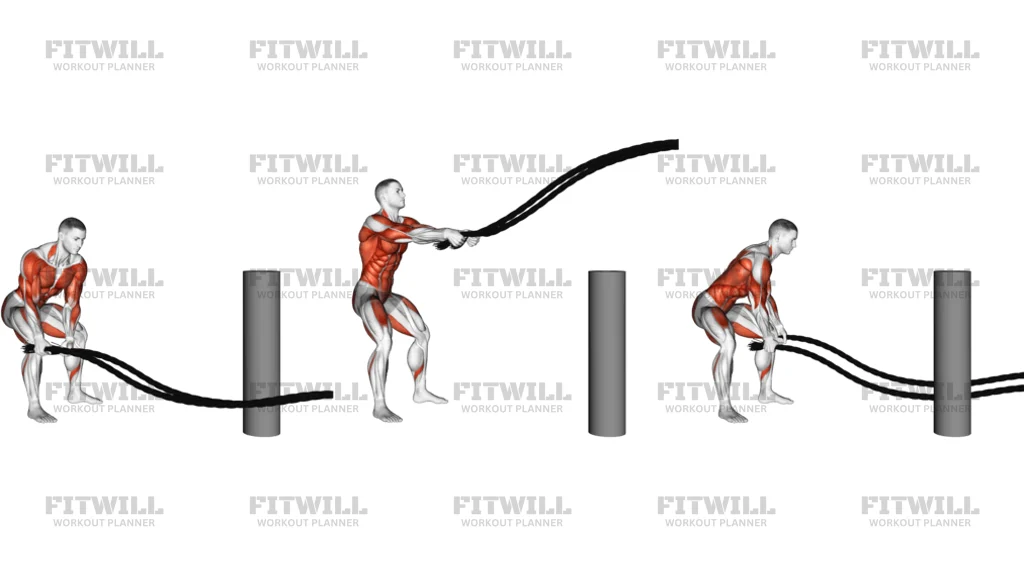
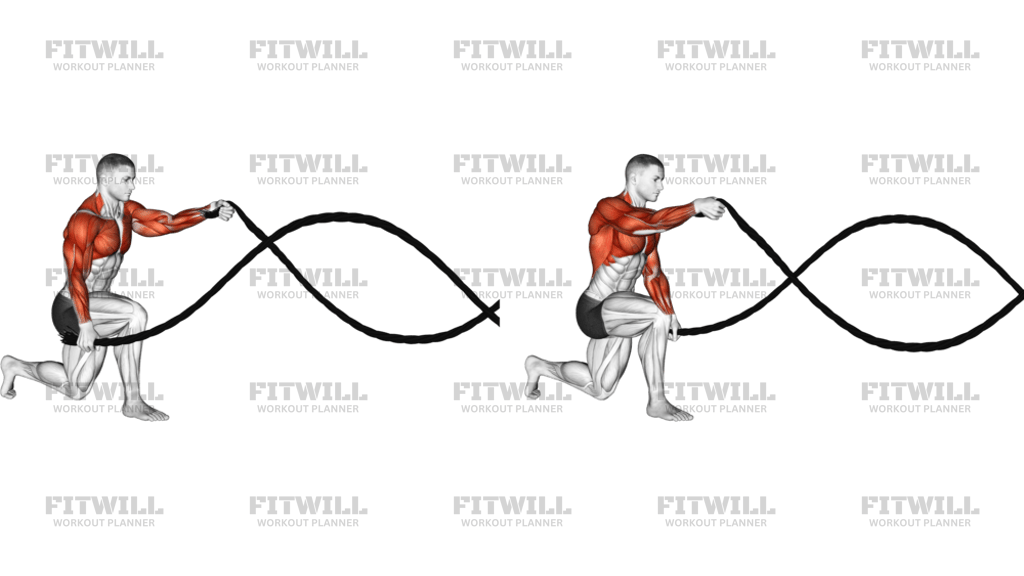
The image shows alternating rope waves, which means one hand drives down as the other hand rises, creating a steady rhythm through the shoulders and elbows. The goal is not to yank the ropes as hard as possible; it is to keep crisp wave shape while the ribs stay down and the spine stays tall. The rope should move from a controlled shoulder snap and arm drive, not from arching the low back or rocking the hips.
Setup matters because the half-kneeling stance can expose poor alignment quickly. A padded knee, a front foot far enough forward to keep balance, and a tall chest all help you stay organized before the first wave starts. Once the set begins, the wave pattern should stay smooth and repeatable, with the torso quiet enough that the ropes do the visible work and the rest of the body stays braced.
Use Battling Ropes Half Kneeling in intervals, circuits, or finishers when you want a conditioning drill that also rewards control. It can be scaled by slowing the cadence, shortening the wave height, or changing the kneeling side. If you feel the low back taking over, the waves are probably too large or the ribs have drifted forward. Done well, this exercise builds work capacity, shoulder stamina, and better control under breathing stress without needing heavy loads.
[ Workout Log & Planner ]
Put your next workout in Fitwill
Keep your plan and training log ready when you are.


Instructions
- Place a padded knee on the floor, step the opposite foot forward, and square your hips toward the rope anchor.
- Hold one rope end in each hand at about chest height with your arms long but not locked.
- Stack your ribs over your pelvis, keep your chest tall, and brace before the first wave.
- Drive one hand down to create a wave while the other hand lifts to reset.
- Alternate the hands in a steady rhythm so the rope makes clean, even waves.
- Keep your shoulders level and resist leaning onto the front leg or twisting the torso.
- Breathe out as each wave is driven down, then inhale as the opposite hand rises.
- Finish the set by lowering the ropes under control and resetting the kneeling position.
Tips & Tricks
- Use a cushion or mat under the down knee so you can focus on the rope pattern instead of knee discomfort.
- Keep the wave height moderate; bigger waves usually turn into low-back arching and sloppy timing.
- If your torso starts rotating, shorten the wave and think about keeping both hip bones pointed forward.
- Keep the front foot far enough in front that you can stay tall without collapsing onto the thigh.
- Relax your grip just enough to let the rope move, but do not let the wrists break back on each rep.
- Drive the waves from the shoulders and elbows, not from a torso throw or a rear-leg push.
- Use a fast but repeatable cadence that you can hold for the entire interval without losing shape.
- Switch which knee is down between sets if one hip flexor or glute fatigues sooner than the other.
Frequently Asked Questions
What does Battling Ropes Half Kneeling train?
It trains shoulder endurance, conditioning, and trunk stability while the half-kneeling stance limits cheating through the hips.
Why use a half-kneeling position instead of standing?
Half kneeling removes some lower-body momentum, so the rope waves depend more on clean upper-body drive and a stable torso.
Should the rope waves be alternating or together?
The image shows alternating waves, with one hand driving down as the other hand rises to keep the rhythm continuous.
What muscles work hardest in this exercise?
The shoulders and arms do most of the visible work, while the core and hip stabilizers keep you from rotating or swaying.
How do I know if my setup is correct?
You should feel balanced with one knee down, the front foot planted, the torso upright, and enough space to move the ropes without leaning forward.
Can beginners do Battling Ropes Half Kneeling?
Yes, as long as they start with short intervals, moderate wave height, and a setup that keeps the knee and hips comfortable.
What is the most common mistake?
The most common mistake is twisting or arching to make bigger waves instead of keeping the ribs stacked and the hips square.
How can I make this exercise easier or harder?
Make it easier by lowering the wave size or shortening the interval, and make it harder by increasing speed, duration, or rope thickness.