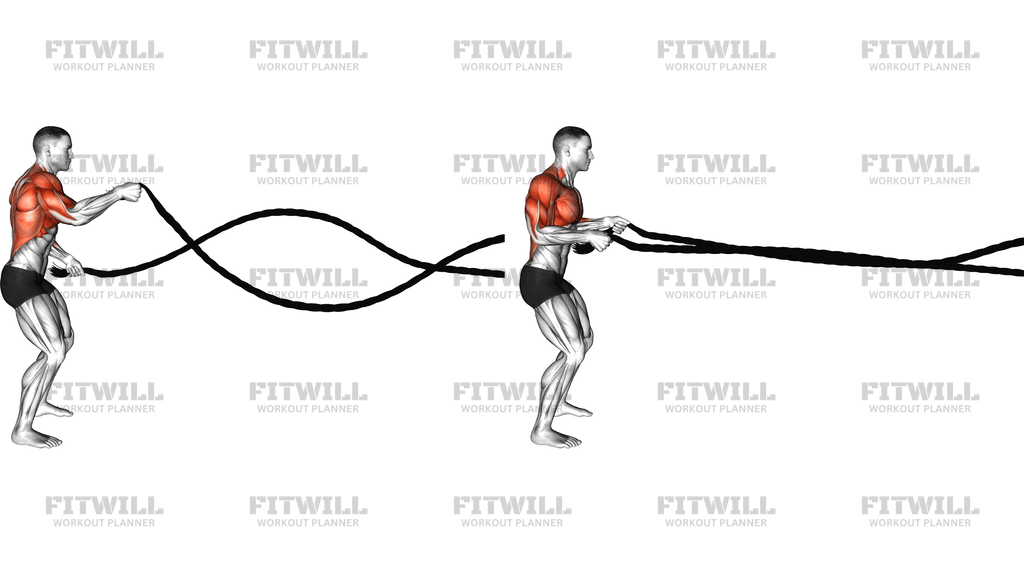
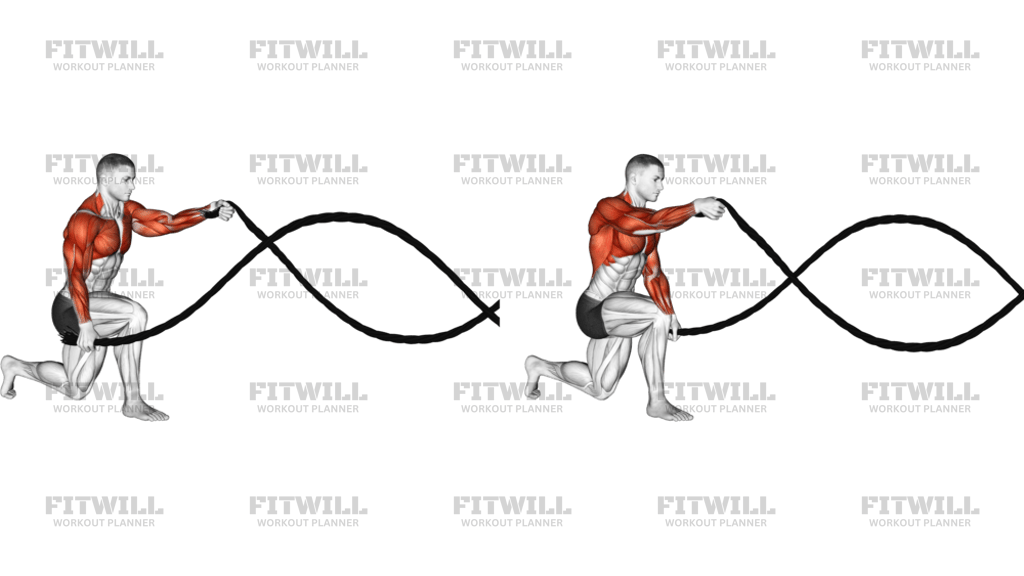
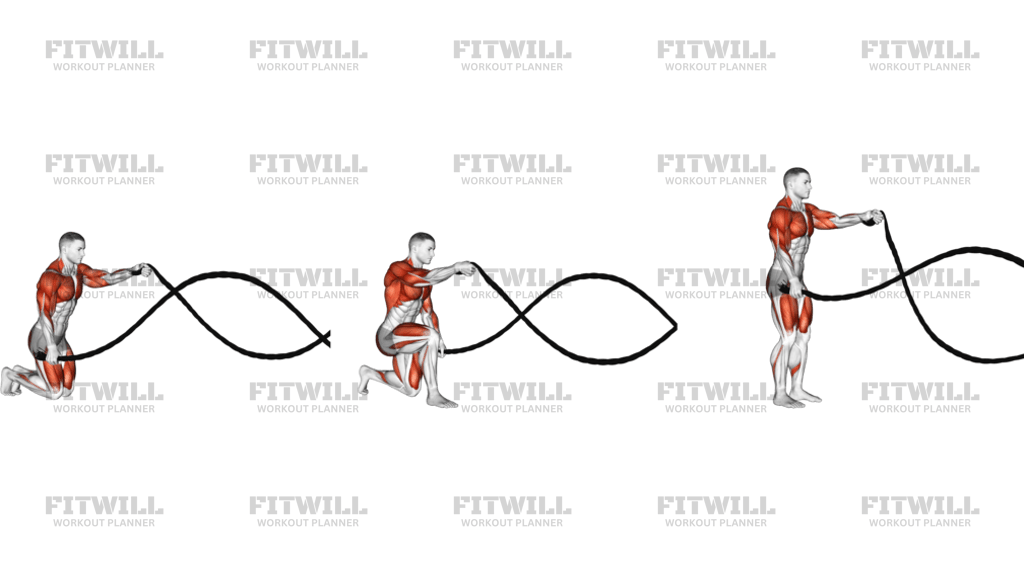
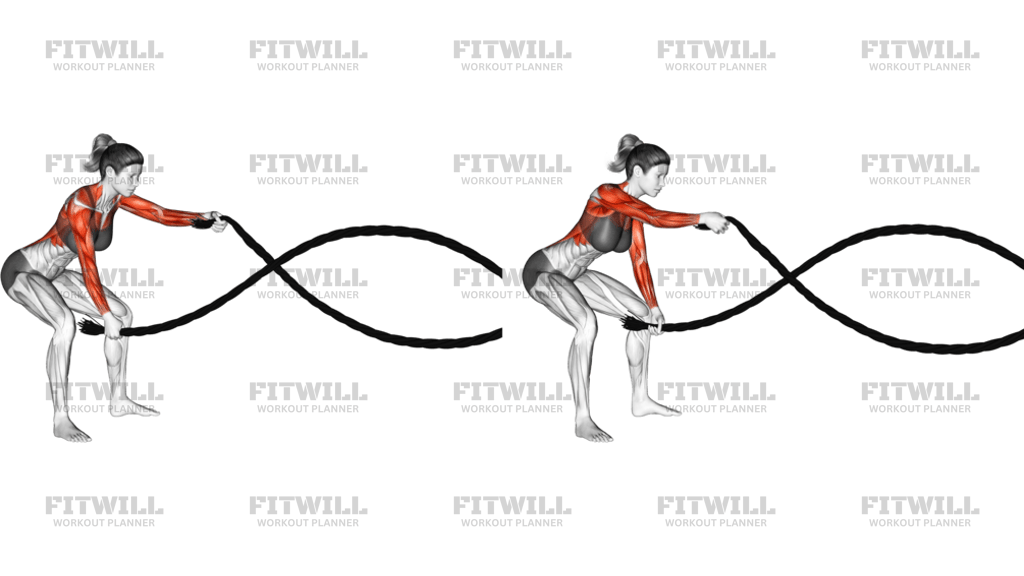
Battling Ropes Seated
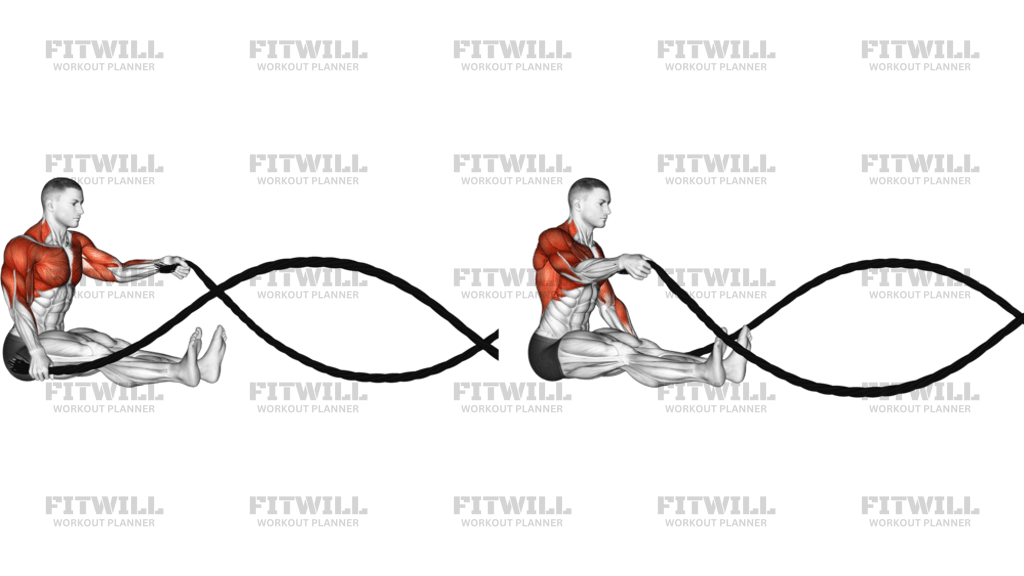
Battling Ropes Seated is a seated conditioning drill that uses an anchored battling rope to build upper-body endurance, trunk control, and work capacity without standing or jumping. In the version shown here, you sit on the floor with your legs extended and create alternating rope waves from a fixed seated position. That setup matters because the exercise is less about moving your whole body and more about keeping the torso quiet while the arms, shoulders, and breathing drive a continuous rhythm.
The seated position changes the stress compared with standing rope waves. With the legs out in front, you have less ability to cheat by bouncing through the hips, so your posture and rope timing become the main variables. A tall spine, relaxed neck, and steady pelvis help you keep force going into the rope instead of leaking it through slumped shoulders or a rocking torso. If the anchor is too close or the rope is too short, the waves get choppy; if you sit too far back, the rope loses tension and the pattern becomes sloppy.
Each repetition should look like a controlled up-and-down rhythm through the hands. One hand drives as the other returns, creating alternating waves that travel down the rope toward the anchor point. The elbows stay softly bent, the shoulders stay away from the ears, and the chest stays open enough to keep breathing smooth. As fatigue rises, the most common failure is letting the torso lean back and the shoulders take over, which turns the drill into a shrugging contest instead of a clean conditioning pattern.
This exercise is useful when you want a demanding conditioning finisher, a cardio block that does not require leg impact, or a shoulder and trunk endurance drill that fits between strength sets. It is also easy to scale: smaller, faster waves emphasize rhythm and repeatability, while larger waves increase effort and demand more upper-body force. The best version for most lifters is the one that lets you keep the rope moving with clean posture for the whole interval.
Treat Battling Ropes Seated as a repeatable pattern, not a max-effort flail. The goal is to keep the waves crisp, the breath organized, and the trunk still enough that the rope work stays in the shoulders, arms, and core. When the posture breaks, the set is over; when the setup is right, the exercise becomes a simple and brutally effective way to accumulate high-quality conditioning work.
[ Workout Log & Planner ]
Put your next workout in Fitwill
Keep your plan and training log ready when you are.


Instructions
- Sit on the floor facing the rope anchor with your legs extended in front of you and your feet relaxed or lightly flexed.
- Hold one rope end in each hand and scoot back until the rope has enough slack to make smooth waves without going slack on the return.
- Stack your ribs over your pelvis, lift your chest, and keep your shoulders down away from your ears.
- Set your hands just outside your thighs with a soft bend in the elbows and your palms facing in.
- Brace your midsection before the first rep so your torso stays tall instead of rocking backward.
- Drive one hand up as the other hand drops, then alternate quickly to send continuous waves toward the anchor.
- Keep the wave coming from the arms and shoulders while your hips and legs stay planted.
- Breathe in a steady rhythm and exhale through the hard part of the wave pattern.
- Finish the set when the waves get short, your shoulders shrug, or your torso starts leaning back.
Tips & Tricks
- Sit far enough from the anchor that the rope has tension at the bottom of each wave, but not so far back that you have to yank it to keep it moving.
- If your hamstrings pull your pelvis under, sit on a small pad or folded mat so you can keep the chest tall.
- Keep the shoulders low; once the traps take over, the waves usually get shorter and more erratic.
- Think about striking a rhythm, not making every wave huge. Clean alternating waves beat exaggerated arm swings.
- Use a rope thickness that lets you keep the cadence for the full interval without your grip failing first.
- Let the elbows bend slightly instead of locking out, which helps absorb the rope’s pull at the bottom of each rep.
- Keep your heels or calves quiet on the floor; if your whole body is bouncing, the rope work is no longer isolated.
- Exhale on every forceful drive if you are doing short bursts, or settle into a steady breathing pattern for longer intervals.
Frequently Asked Questions
What muscles does Battling Ropes Seated work?
It mainly taxes the shoulders, arms, upper back, and core while also driving a strong conditioning response.
Is the seated version harder than standing rope waves?
It can be, because you lose the ability to use your legs and hips to help the rhythm. That makes posture and shoulder endurance matter more.
How should I sit for this exercise?
Sit tall on the floor facing the anchor with your legs extended in front of you, then hold the rope ends near your thighs so the waves can travel cleanly.
What is the biggest form mistake?
Leaning back and shrugging the shoulders usually ruins the set first. That turns the movement into a sloppy tug instead of a controlled wave pattern.
Should the waves alternate or move together?
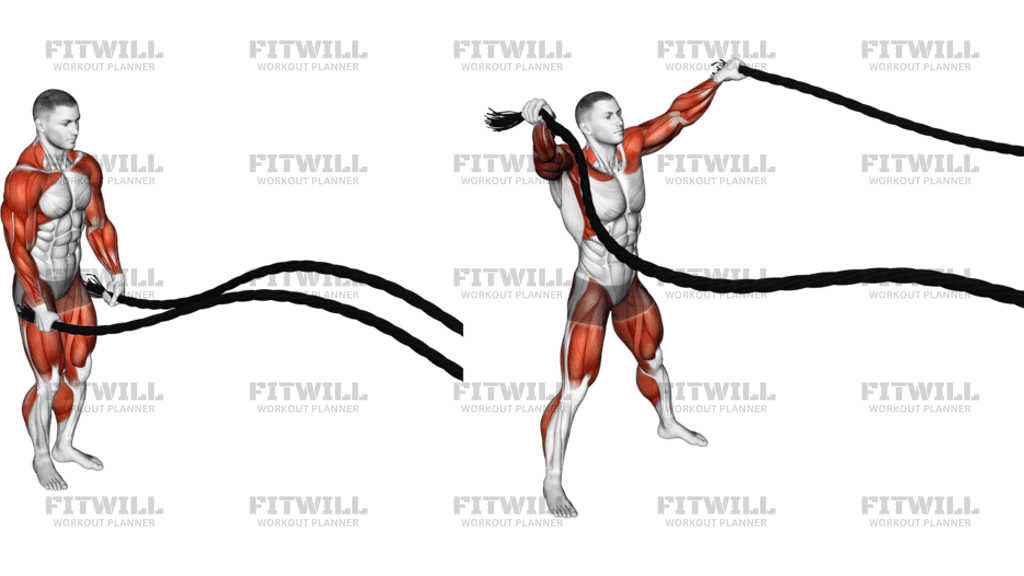
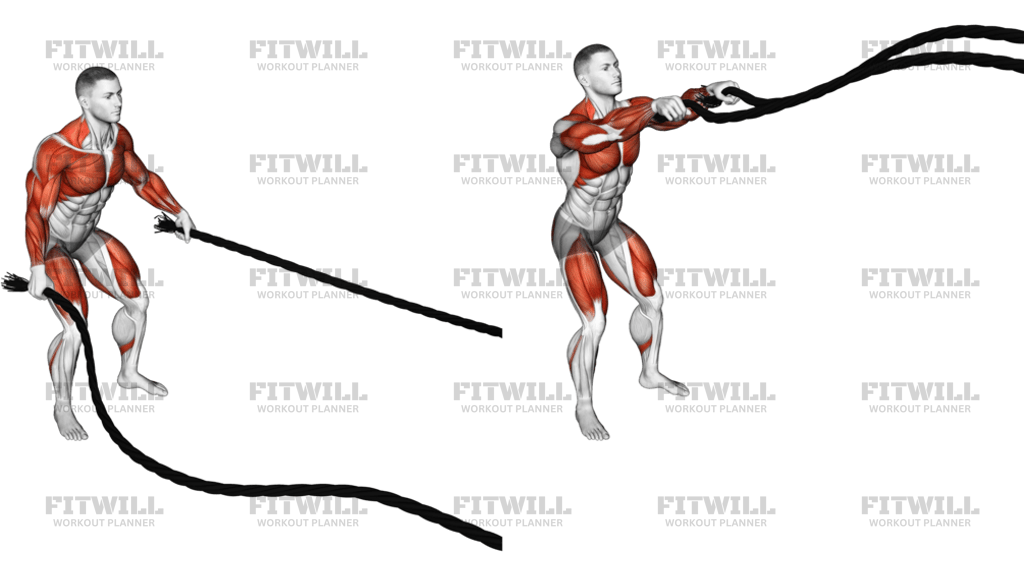
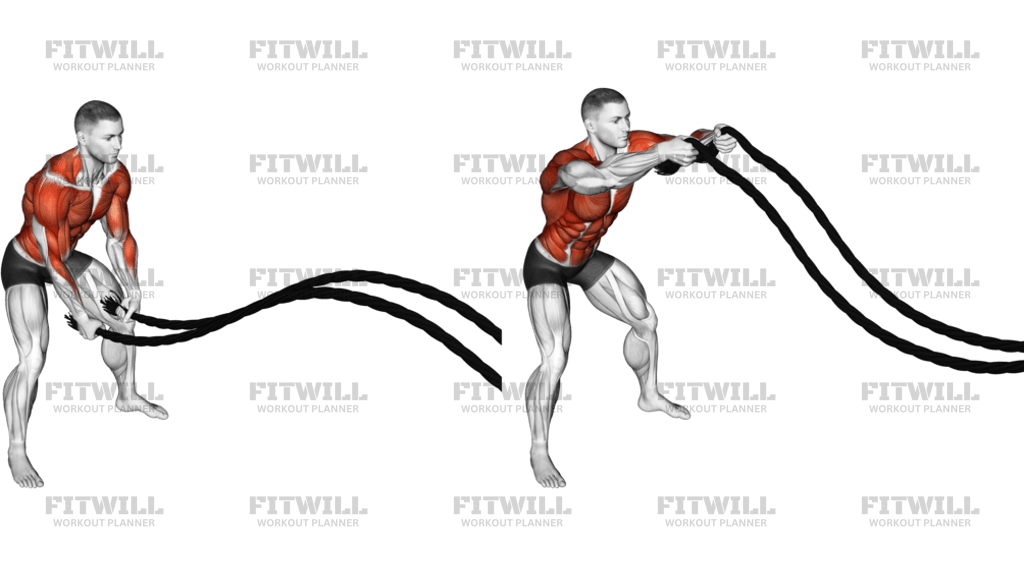
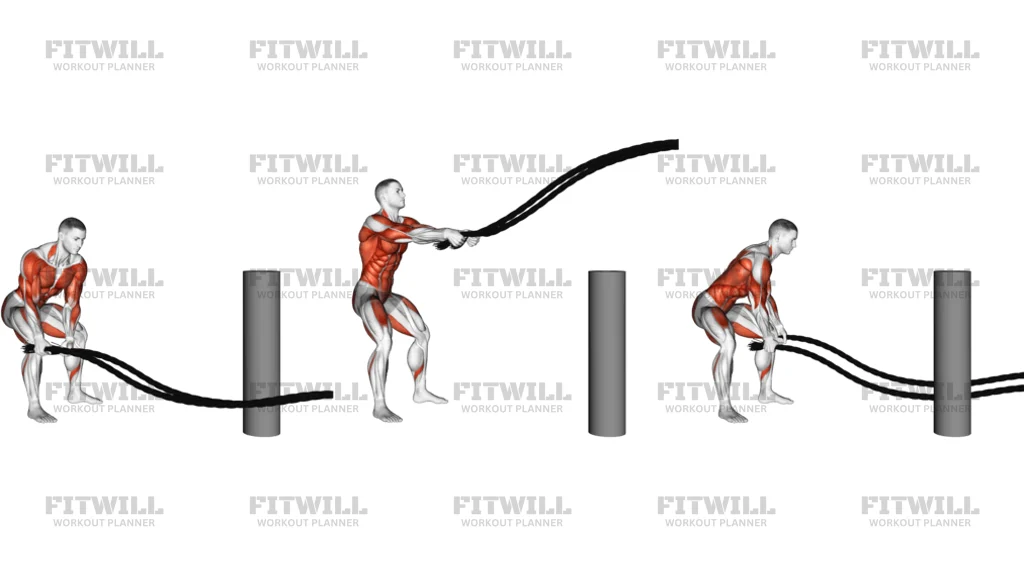
The image shows alternating waves. You drive one hand up as the other drops so the rope keeps a continuous left-right rhythm.
Can beginners use seated battling ropes?
Yes, if they start with short intervals and a rope thickness they can control without losing posture.
How do I make this exercise harder without changing the setup?
Increase wave speed, lengthen the working interval, or use a thicker rope. Bigger waves also raise the demand, but only if you can keep the torso still.
What should I do if the rope starts hitting my shins?
Scoot back slightly, widen your hand path, or adjust the anchor distance so the rope has a cleaner line over your legs.