Battling Ropes Outside Circle
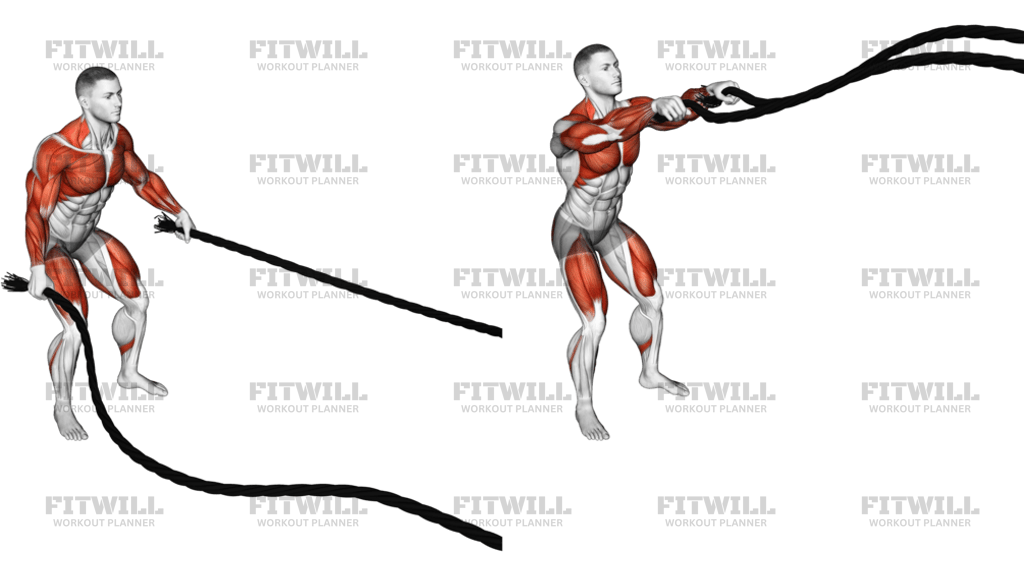
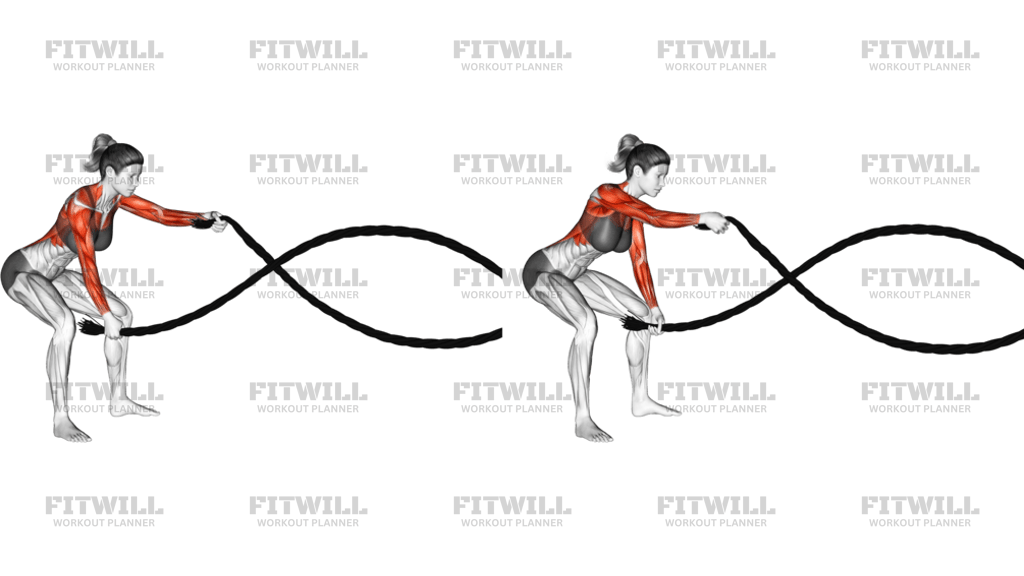
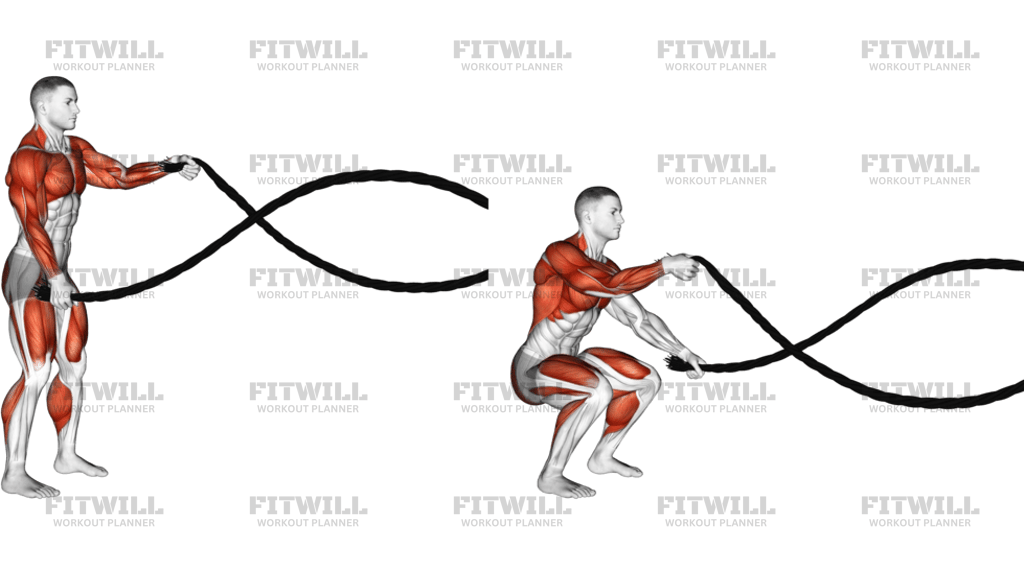
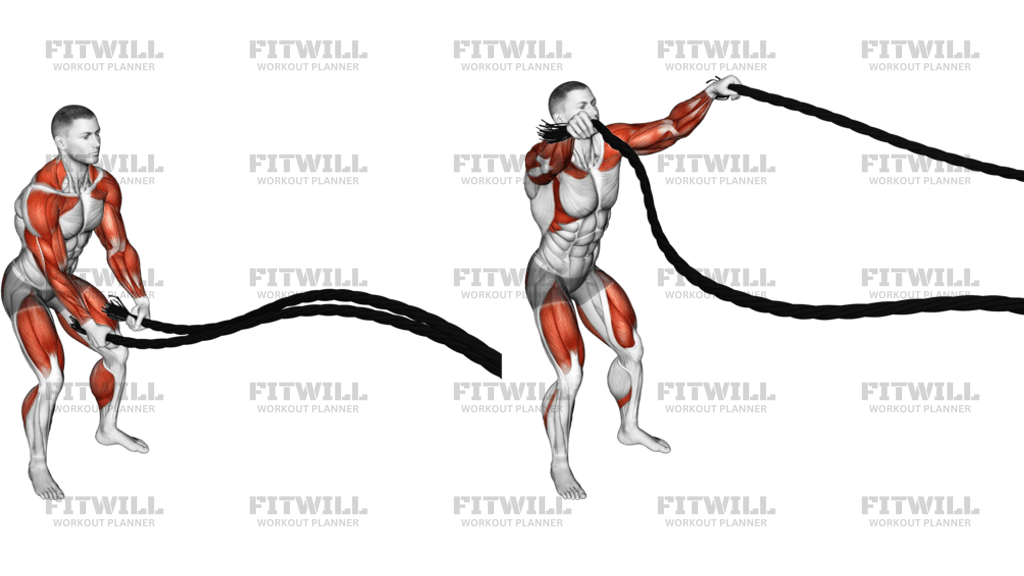
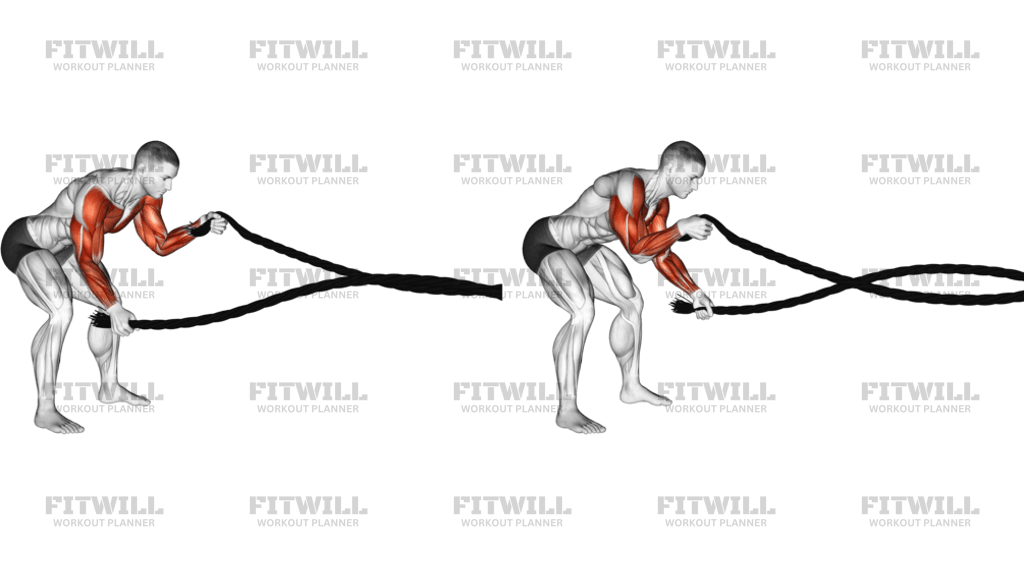
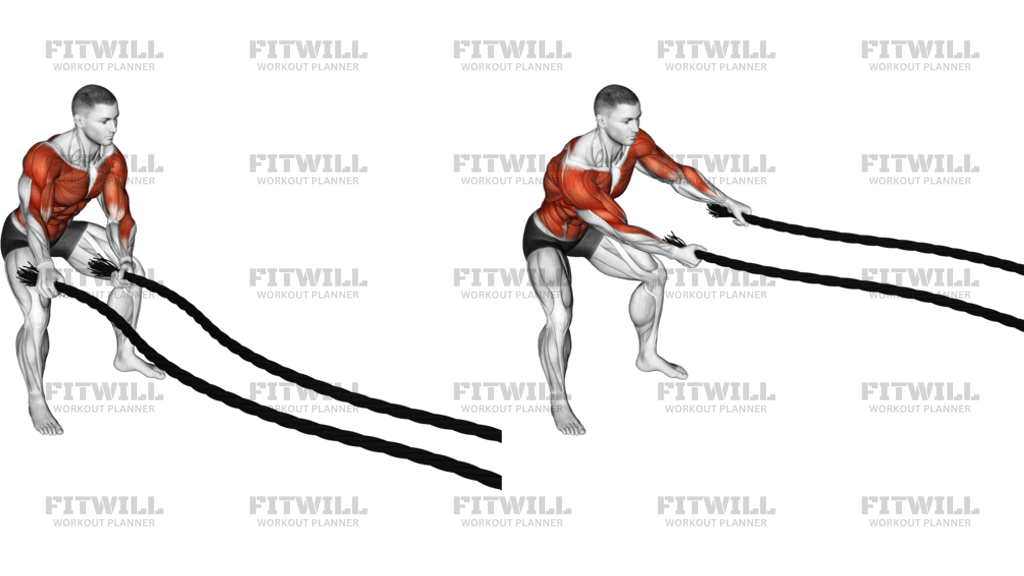
Battling Ropes Outside Circle is a standing rope-conditioning drill where you hold one end in each hand and trace wide circles that move away from the midline before coming back through the front. In the image, the stance is athletic and slightly hinged, with soft knees and the trunk staying tall while the rope travels in a long loop. That makes the drill a good match for shoulder endurance, grip stamina, trunk control, and general conditioning.
The outside-circle path changes the feel versus basic rope waves. Rather than snapping the rope vertically, you are guiding the handles through a rounded arc, which asks the deltoids, serratus anterior, upper back, forearms, and deep core to coordinate the motion and keep the shoulders organized. The goal is not a huge swing; it is a clean circle that stays smooth on both sides and does not turn into body sway or a shrug.
Setup matters because the rope needs enough tension to stay alive without pulling you out of position. Stand far enough from the anchor that the rope stays taut, keep the chest stacked over the pelvis, and let the knees absorb the load. A slight hinge and a neutral neck make it easier to keep the circle coming from the shoulders and arms instead of the low back.
During each rep, drive the hands out and around in a controlled circle, then bring them back through the front to reset without letting the rope crash or cross. Keep the elbows softly bent, wrists neutral, and breathing steady. If the torso rotates, the range gets smaller, or the pace gets frantic, the movement stops being a useful conditioning drill and becomes a mess of momentum.
Use this exercise when you want a rope pattern that is more coordinated than straight waves and less joint-dominant than heavy pressing work. It fits well in warmups, athletic conditioning circuits, and finishers, especially when you want the shoulders to work through repeated arcs while the trunk stays quiet. Light to moderate rope tension usually produces the best rhythm and the cleanest circles.
[ Workout Log & Planner ]
Put your next workout in Fitwill
Keep your plan and training log ready when you are.


Instructions
- Stand facing the anchor with your feet about shoulder-width apart, knees softly bent, and a slight hip hinge.
- Hold one rope end in each hand with neutral wrists and a small bend in the elbows; start with the handles low and slightly in front of your thighs.
- Stack your ribs over your pelvis, lift your chest, and keep your neck long before the first rep.
- Pull both hands out and away from the midline in a wide outside arc, letting the rope travel in a smooth circle rather than a sharp wave.
- Continue the circle through the top and around so the handles return to the front under control.
- Keep the circle even on both sides and avoid crossing the rope or letting one hand race ahead of the other.
- Exhale as you drive the circle, then inhale as the handles come back to the start.
- Reset your stance between reps or cycles if your torso starts twisting, your shoulders creep up, or the rope loses tension.
Tips & Tricks
- Step back enough from the anchor to keep the rope taut throughout the circle; slack makes the loop sloppy.
- Use smaller circles if the rope starts hitting your thighs, crossing your body, or pulling your shoulders forward.
- Keep your elbows softly bent so the movement comes from the shoulder girdle instead of a locked-out arm.
- Let the shoulders stay down and wide; shrugging turns the drill into trap-dominant work.
- If your low back feels it more than your shoulders, shorten the circle and re-stack your ribs over your pelvis.
- Smooth tempo beats speed; fast circles usually become uneven and noisy before they become productive.
- Keep the wrists straight so the handles do not torque your forearms and elbows.
- Choose a rope tension you can control for the full interval, not just the first few reps.
Frequently Asked Questions
What does Battling Ropes Outside Circle train?
It mainly trains shoulder endurance, upper-back coordination, grip, and trunk control, with a strong conditioning component.
Is this exercise more like cardio or strength work?
It can be either, but most people use it for conditioning and shoulder endurance because the rope tension is continuous.
How far out should the circle go?
As far as you can control without torso twisting, shrugging, or losing rope tension; cleaner circles are better than bigger ones.
Should my elbows stay straight?
No. Keep a small bend so the shoulders and arms can guide the rope without jamming the joints.
Can beginners do Battling Ropes Outside Circle?
Yes. Start with short, slow circles and light rope tension, then build speed and range only if posture stays organized.
What is the most common mistake?
Leaning back and muscling the rope with the low back or traps instead of keeping the trunk stacked and the shoulders controlled.
Where does this fit in a workout?
It works well in warmups, athletic circuits, shoulder finishers, or conditioning blocks where you want repeated upper-body effort.
What should I do if the rope feels jerky?
Shorten the circle, step a little closer or farther from the anchor as needed, and slow the tempo until the path feels smooth again.