Pike Push-Up On Bench
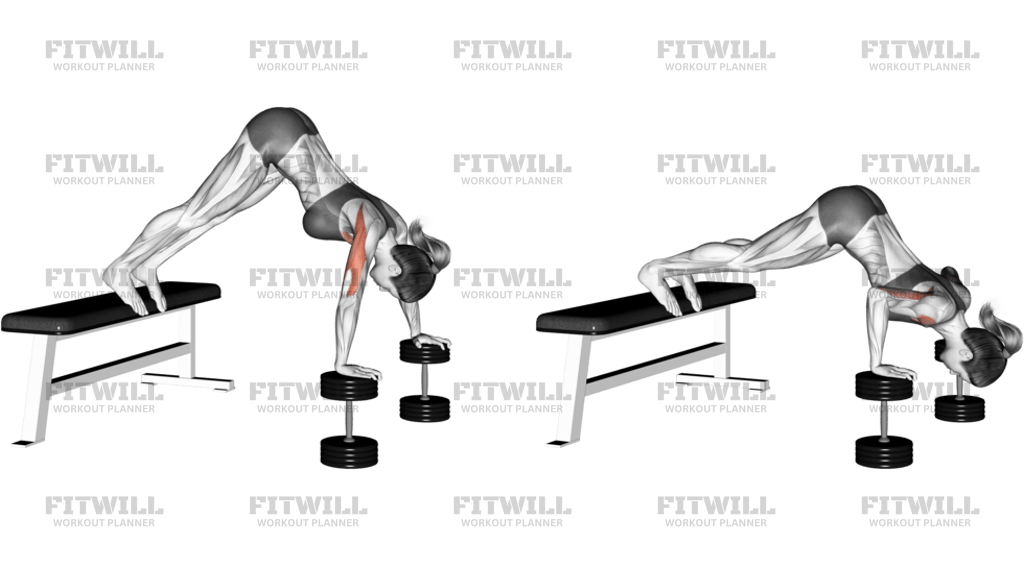
Pike Push-Up On Bench is a bodyweight pressing exercise that turns a push-up into a steep, shoulder-focused repetition by elevating the feet on a bench. The bench changes the angle of the body so the arms have to press more like a vertical movement, which shifts the demand toward the shoulders and triceps while the core and upper back keep the line of the body organized.
This setup matters. When the feet are on the bench and the hips stay high, the torso forms an inverted V rather than a flat push-up position. That angle is what makes the exercise useful for building overhead pressing strength without needing a barbell or machine. The hands in the image are on stable dumbbells, which can help keep the wrists more neutral, but the key idea is the same: create a solid base, keep the head traveling between the hands, and press smoothly without letting the spine collapse.
A good rep starts before you bend the elbows. Plant the hands under the shoulders, walk the feet onto the bench, and set the hips high enough that your shoulders are stacked to do the work. From there, lower with control until the head or upper forehead approaches the floor between the hands. The elbows should track back and slightly out, not flare aggressively. Press back up by driving the floor away and keeping the hips in the same high position.
Because the body is inverted, small mistakes show up fast. If the shoulders shrug toward the ears, the lower back arches, or the head crashes forward, the set usually becomes more about momentum than strength. Controlled range of motion, steady breathing, and a stable bench setup keep the repetition honest and much safer for the neck and shoulders.
Use this variation when you want a simple home or gym pressing drill that challenges shoulder strength, body control, and scapular stability at the same time. It works well as an accessory exercise, a progression toward harder pike or handstand pressing work, or a strength-focused bodyweight option when you want more loading than a standard push-up can provide.
[ Workout Log & Planner ]
Put your next workout in Fitwill
Keep your plan and training log ready when you are.


Instructions
- Place your feet hip-width apart on the bench and your hands on the floor or on stable dumbbells under your shoulders.
- Walk your hands or feet until your hips are high and your body forms a clear inverted V.
- Keep your head relaxed between your arms and look at the floor slightly in front of your hands.
- Brace your midsection and keep the ribs from flaring as you start the descent.
- Bend the elbows and lower the head toward the floor between the hands with control.
- Let the elbows travel back and slightly out while keeping the shoulders active and stable.
- Press the floor away to return to the start, finishing with the arms straight and the hips still high.
- Exhale as you press up, then reset your breath before the next repetition.
Tips & Tricks
- If your wrists complain on the floor, use dumbbells or push-up handles so the wrists stay more neutral.
- Keep the bench stable before every set; a shifting foot position makes the whole rep noisy and hard to control.
- Do not turn it into a regular push-up by dropping the hips too low, or the shoulders will lose most of the workload.
- Think about moving the head down and back up between the hands, not just bending the elbows straight forward.
- Stop the descent when the shoulders stay packed and you can still press without your neck jutting forward.
- A slower lowering phase usually makes the set more productive than adding sloppy reps.
- Keep the gaze on the floor so the neck stays long instead of craning at the top of each rep.
- Use a shorter range if the front of the shoulders pinches; pain-free depth is the right depth for this variation.
Frequently Asked Questions
What does Pike Push-Up On Bench work most?
It mainly trains the shoulders and triceps, with the core and upper back helping keep the body rigid.
Can beginners perform this exercise?
Yes, but beginners should start with a smaller pike angle, a lower foot elevation, or a reduced range if the shoulders feel overloaded.
Why are the feet on a bench instead of on the floor?
Elevating the feet shifts more of your bodyweight toward the shoulders and makes the press more demanding than a standard pike push-up.
Should I keep my hands on the floor or on dumbbells?
Either can work, but dumbbells or handles may be more comfortable if you want a more neutral wrist position.
How low should my head go?
Lower until the head or upper forehead approaches the floor between the hands while the shoulders stay controlled and pain-free.
What is the most common form mistake?
Letting the hips drop turns it into a different push pattern and takes load away from the shoulders.
Is this a good substitute for overhead pressing?
It can be a useful bodyweight substitute or accessory, especially when you want a vertical pressing pattern without a barbell.
How do I make the exercise harder?
Increase the foot height, slow the lowering phase, reduce momentum, or progress to a deeper and stricter range of motion.