Suspension Mountain Climber
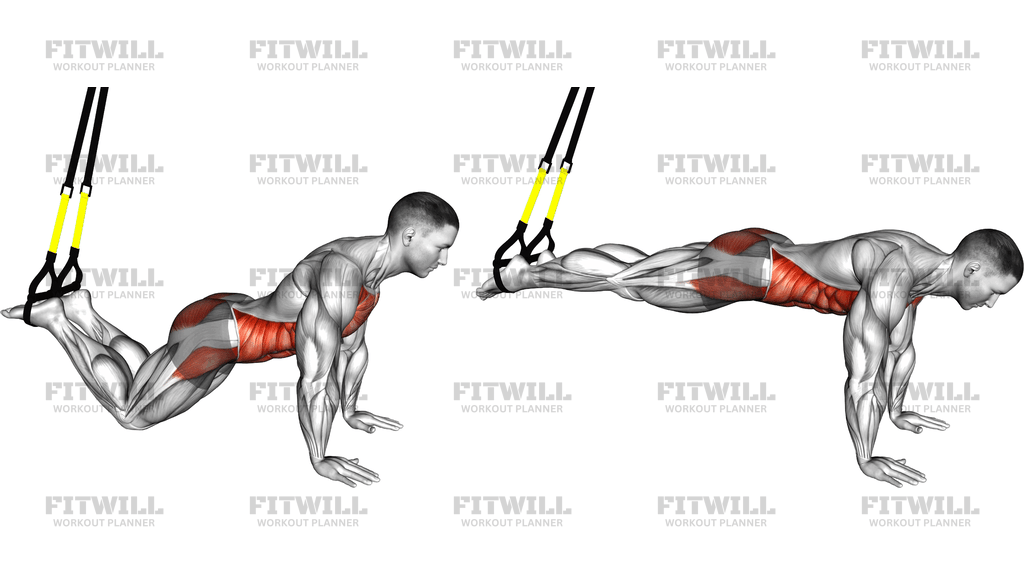
Suspension Mountain Climber is a suspension-trainer plank drill that challenges the core while the feet move in unstable straps. The hands stay planted on the floor, the body starts in a straight-arm plank, and each rep drives one knee forward before returning to a long, braced position. That instability makes the exercise more demanding than a standard floor mountain climber because the trunk has to resist sway, hip rotation, and low-back arching at the same time.
This movement is useful when you want to train hip drive and trunk control together. The core, hip flexors, shoulders, and glutes all have to contribute, but the real test is keeping the pelvis level while one leg moves and the other leg stays suspended. A clean rep looks compact and deliberate: the shoulders stay stacked, the ribcage stays quiet, and the knee travels forward under control instead of being whipped through by momentum.
The setup matters more here than in many bodyweight drills. If the straps are too long, the feet swing and the body loses tension. If the plank is soft, the lower back takes over. Set the hands under the shoulders, walk out until the body forms one straight line, and actively press the floor away before the first knee drive. A small posterior pelvic tilt and firm glute squeeze help keep the torso from sagging as the legs alternate.
During the rep, think about pulling the knee toward the chest without letting the hips twist open. Return the leg to full plank length before switching sides so every repetition starts from a stable base. Breathing should stay controlled rather than rushed, with a strong exhale during the knee drive and a quiet reset as the leg extends back.
Use Suspension Mountain Climber as a warm-up, core accessory, or conditioning drill when you want bodyweight work that still rewards precision. It is best performed for quality rather than speed, and it scales well by changing strap height, shortening the range of motion, or slowing the tempo. Stop the set if the straps start to swing wildly, the shoulders collapse, or the low back takes over the movement.
[ Workout Log & Planner ]
Put your next workout in Fitwill
Keep your plan and training log ready when you are.


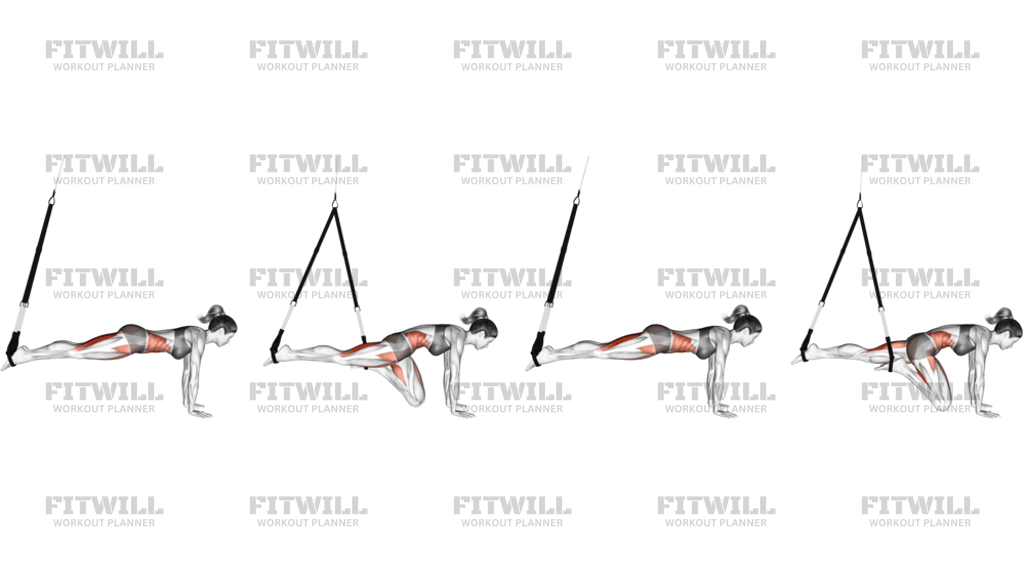
Instructions
- Adjust the suspension straps so the feet can hang freely without dragging the floor, then place your hands on the floor directly under your shoulders.
- Step your feet into the straps and walk your hands forward until you are in a straight-arm plank with your body in one long line.
- Press the floor away, squeeze your glutes, and set your ribs down so your lower back stays neutral before each rep.
- Drive one knee forward under your torso toward your chest while keeping both shoulders square to the floor.
- Keep the supporting leg long and the hips level instead of letting them twist or hike upward.
- Return the moving leg to a full plank position with control and re-establish your brace before switching sides.
- Alternate knees or work one side at a time for the planned number of repetitions.
- Exhale as the knee comes in, inhale as the leg extends back, and step out of the straps carefully when the set is finished.
Tips & Tricks
- Shorten the straps enough that the feet stay quiet; long straps make the exercise swingy and much harder to control.
- Keep the shoulders stacked over the wrists and avoid drifting into a pike as the knees alternate.
- Think of the knee drive as a small, sharp pull under the body rather than a big jump forward.
- Lock the ribs down and lightly tuck the pelvis so the low back does not arch when both legs extend.
- Move one leg only as far as you can without the hips turning open or the straps twisting side to side.
- Use a slower tempo if the suspension keeps pulling you out of position.
- Keep the neck long and look slightly ahead of your hands instead of craning up at the feet.
- End the set when the straps start to pendulum or when the plank shape breaks down.
Frequently Asked Questions
What does Suspension Mountain Climber train?
It trains the core, hip flexors, shoulders, and glutes while you resist rotation and keep the plank stable.
Where should my hands and feet be set up?
Place your hands on the floor under your shoulders and put your feet in the suspension straps behind you before walking out to plank.
Should the knee come toward the chest or the elbow?
Drive it toward the chest and slightly under the torso; only reach toward the elbow if you can keep the pelvis square.
Is this harder than a regular mountain climber?
Yes. The suspension straps add instability, so the core and shoulders have to work harder to keep the body from swaying.
Can beginners use Suspension Mountain Climber?
Yes, but start with short sets, slow reps, and straps set high enough that the feet stay controlled.
What is the biggest form mistake?
Letting the hips twist, the lower back sag, or the straps swing side to side usually means the rep is too fast or the setup is too unstable.
How should I breathe during the set?
Exhale as the knee drives forward, then inhale as the leg returns to the plank position.
How do I make the movement easier or harder?
Make it easier by slowing the pace and shortening the range; make it harder by reducing strap height or keeping the plank perfectly still through longer sets.