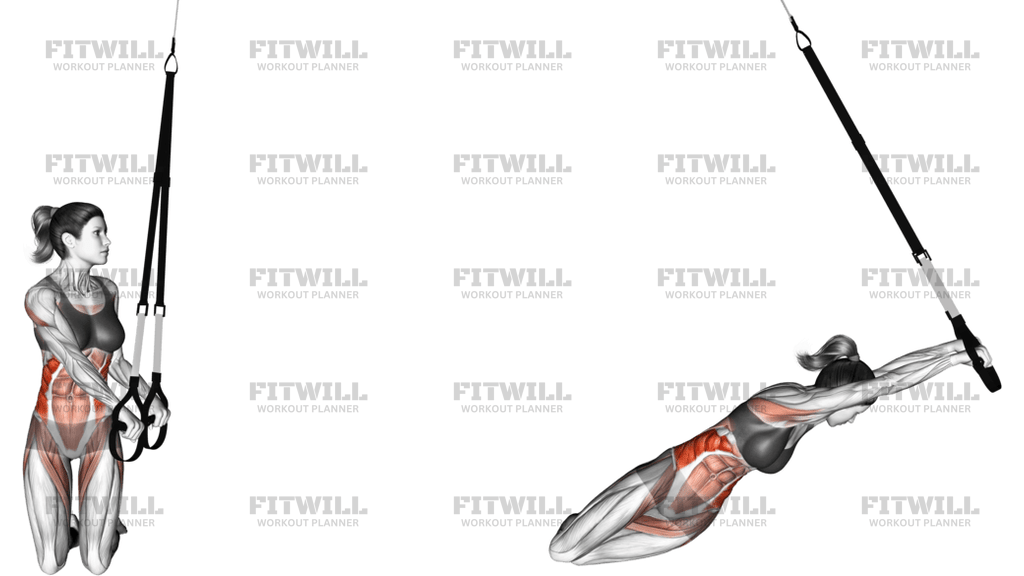
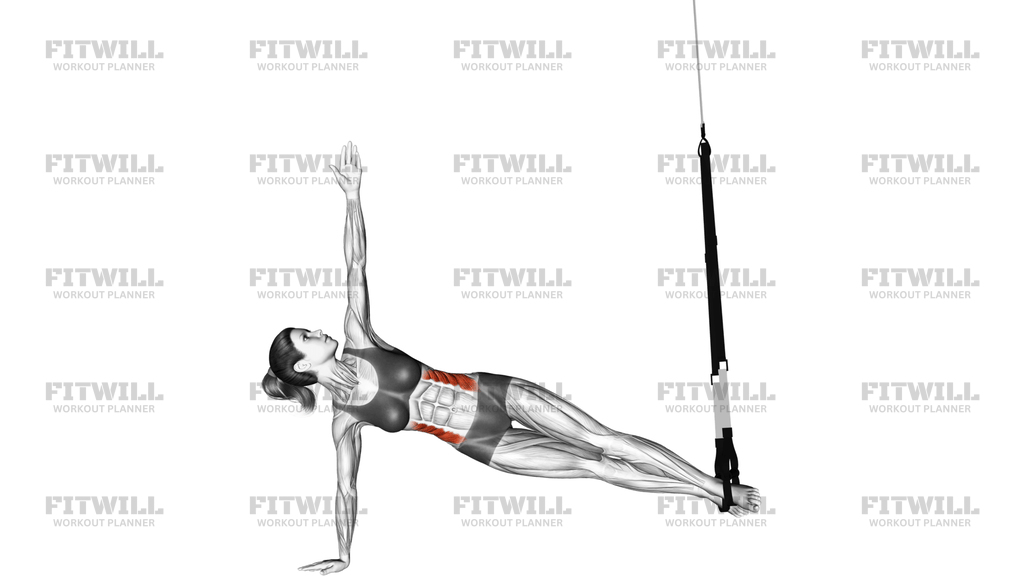
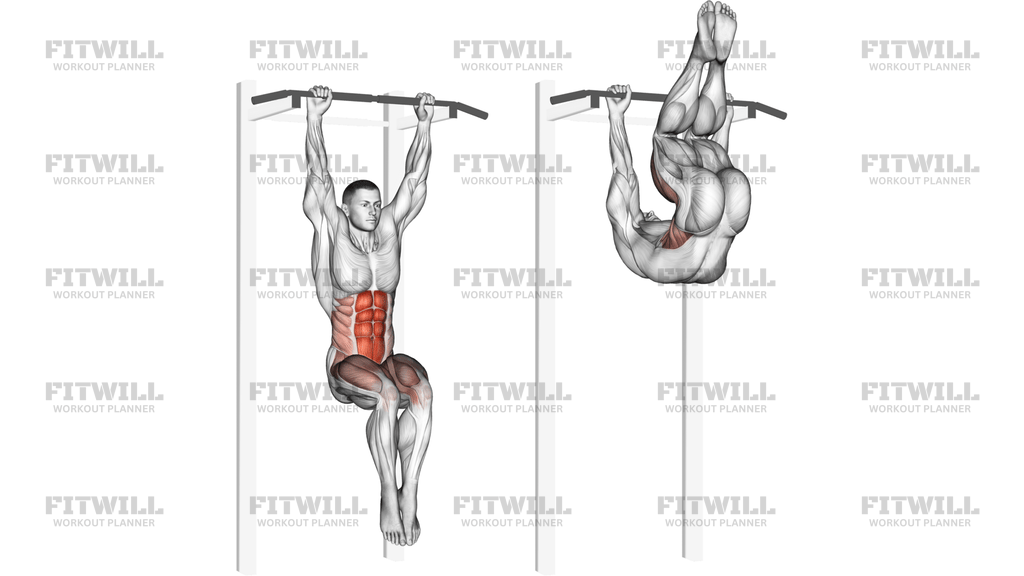
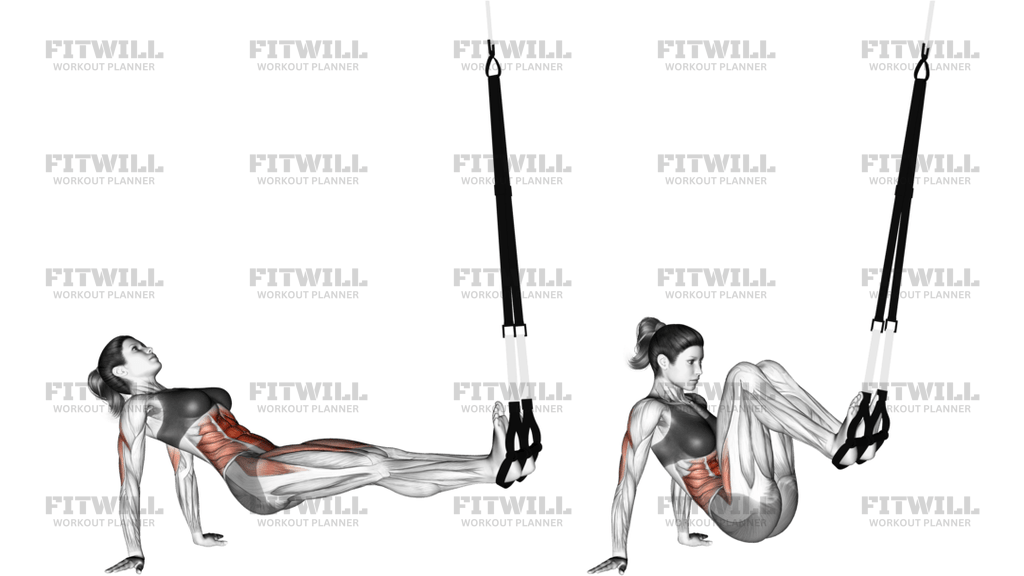
Suspension Front Plank
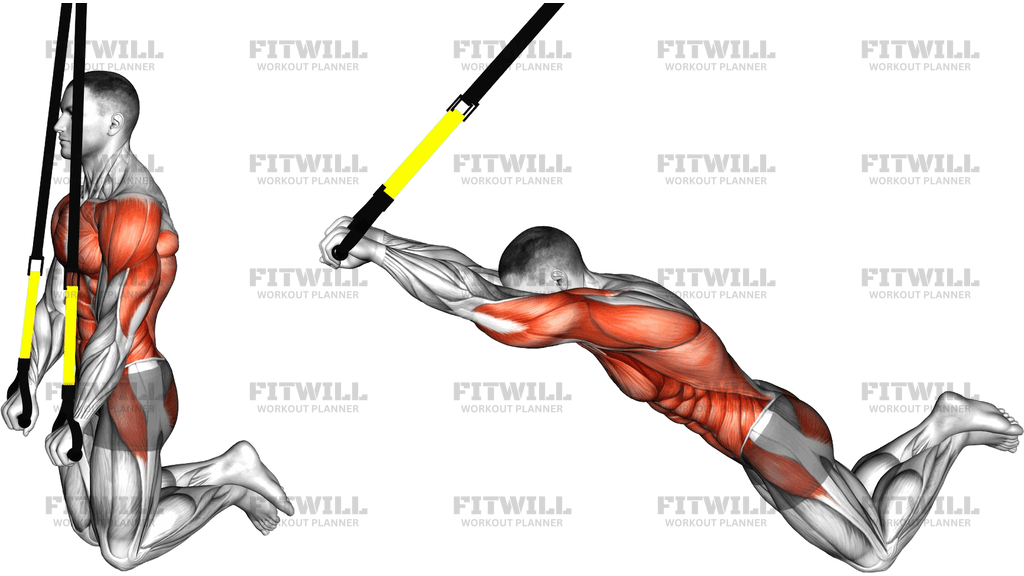
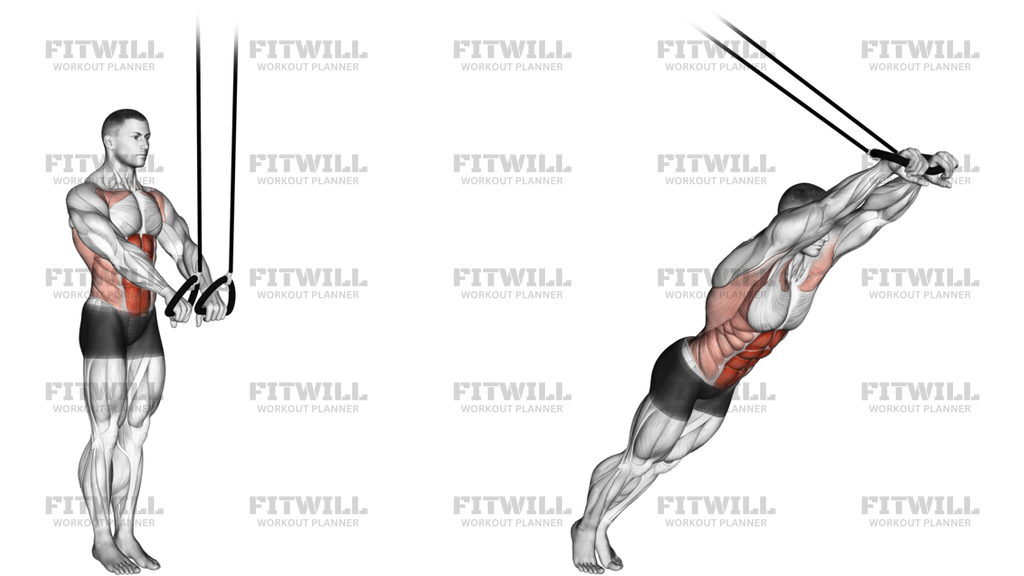
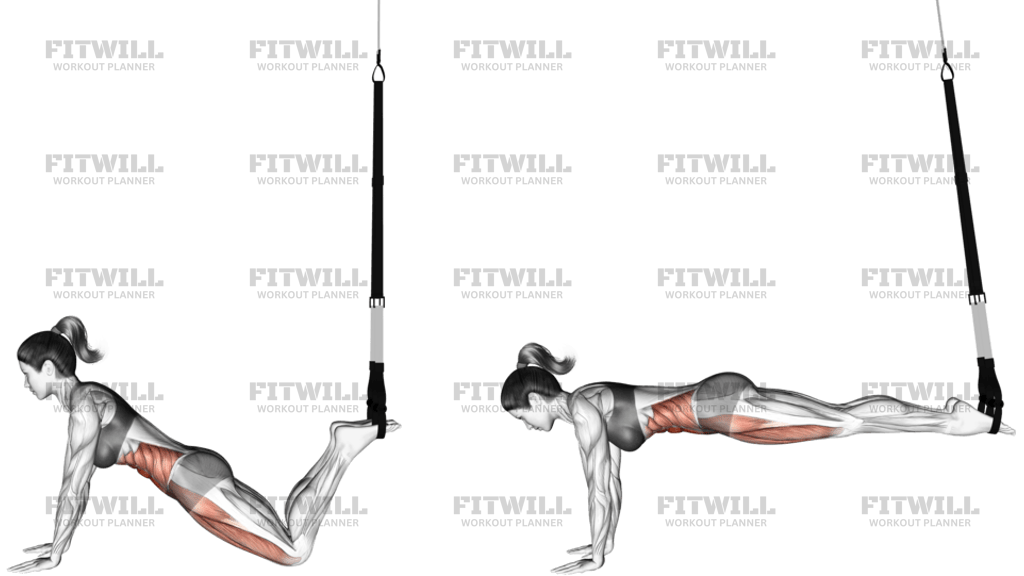
Suspension Front Plank is an unstable core exercise that challenges the abs, obliques, deep trunk muscles, and shoulders while your feet stay supported in suspension straps. The movement is simple on paper, but the suspension setup makes small mistakes obvious. If your ribs flare, your hips drop, or the straps start to sway, the exercise quickly turns from a clean plank into a fight against compensation.
The main job of Suspension Front Plank is anti-extension: you are resisting the urge for the low back to arch while keeping the whole body long and organized. That makes it useful for building trunk stiffness that carries over to pressing, running, sprinting, crawling patterns, and almost any lift that needs a strong midline. It also trains the shoulders to stay active while the hands press the floor away and the feet stay quiet in the straps.
Setup matters more here than on a floor plank because the suspension straps add motion at the feet. Set the straps to a length that lets the feet sit securely in the cradles without dangling too high, then place the hands directly under the shoulders and walk or step the legs back into a long plank. Some people will start from a slightly tucked-knee position and extend out; others will enter directly into a straight-body hold. In both cases, the finish should be the same: head, ribs, pelvis, and heels lined up with the glutes on and the abs fully braced.
During each repetition or hold, keep the chest broad, press the floor away, and let the shoulder blades stay stable instead of sinking between the ears. The straps should stay quiet while the legs remain long and the feet stay level. Breathe in short controlled breaths so the torso does not soften, and stop the set as soon as the hips begin to sag or the lower back starts to take over.
Use Suspension Front Plank as a core accessory, a warm-up for pressing days, or a strength-endurance drill when you want more challenge than a floor plank provides. Beginners can scale it by shortening the lever, bending the knees a little, or using shorter holds. Advanced lifters can make it more demanding by extending the hold, slowing the transition in and out, or keeping the body perfectly still against the instability of the straps.
[ Workout Log & Planner ]
Put your next workout in Fitwill
Keep your plan and training log ready when you are.


Instructions
- Set the suspension straps so the foot cradles hang at a height that lets you support your feet without your hips dropping toward the floor.
- Place your hands on the floor directly under your shoulders and hook both feet into the straps, then walk your body into a long plank position.
- Square your hips to the floor, stack your shoulders over your wrists, and look a few feet ahead so your neck stays neutral.
- Press the floor away, tighten your glutes, and pull your ribs down before you begin the hold or each repetition.
- Keep your legs straight or slightly soft at the knees, but do not let the hips pike up or sag when the straps move.
- Hold the plank with steady tension while the feet stay level in the straps and the torso stays rigid from shoulders to heels.
- Breathe in short, controlled breaths without letting the rib cage flare or the lower back arch.
- Lower one knee at a time or step the feet out of the straps to finish the set safely if you are using a tucked-knee entry.
- Reset the straps and body position before the next set so the feet are secure and the shoulders are still lined up.
Tips & Tricks
- Shorten the straps if the feet feel too high or unstable; a cleaner setup usually beats forcing a harder angle.
- Push the floor away through your palms to keep the shoulder blades active instead of letting the chest sink.
- Squeeze the glutes hard enough to keep the pelvis from tipping forward and taking the load into the low back.
- If the straps swing, slow down and start with a shorter hold until you can keep the lower body quiet.
- Keep the ribs tucked down; flaring the rib cage is the fastest way to turn this into a low-back exercise.
- Use a slightly wider hand position if your shoulders wobble, then narrow it once you can hold the line cleanly.
- A bent-knee entry is a good regression when a full straight-body plank makes the hips drop immediately.
- Stop the set when the hands start creeping back or the pelvis starts rotating, because those are the first signs of loss of tension.
- Treat every breath like part of the rep: inhale without losing the brace, then exhale slowly while keeping the straps quiet.
Frequently Asked Questions
What muscles does Suspension Front Plank work most?
It mainly trains the abs, deep core, obliques, and shoulders. The glutes and hip stabilizers also work hard to keep the body level while the feet move on the straps.
Is Suspension Front Plank a hold or a moving exercise?
It is usually programmed as a hold, although some versions start from a tucked-knee position and extend into a straight plank. In both cases, the goal is to keep the body line rigid and the straps from swinging.
Where should my feet sit in the suspension straps?
The feet should stay secure in the cradles so the straps support the ankles or midfoot without slipping. If the straps hang too low or the feet feel unstable, shorten them before you start.
Can beginners do Suspension Front Plank?
Yes, but they should start with short holds, a bent-knee entry, or a shorter strap length. If the hips sag within a few seconds, the setup is still too hard.
What is the biggest form mistake in Suspension Front Plank?
Letting the low back arch and the ribs flare. That shifts tension away from the abs and into the lumbar spine, which is exactly what the plank should prevent.
How can I make Suspension Front Plank easier?
Use a bent-knee setup, shorten the hold, or place the straps a little higher so the feet have more support. You can also widen the hands slightly to improve balance.
How do I know if I am bracing correctly?
Your torso should feel firm from the shoulders to the hips, and the breathing should stay controlled without the rib cage popping up. If the lower back is doing most of the work, the brace is too loose.
What is a good substitution if this bothers my shoulders?
A floor front plank, a forearm plank, or a stability-ball plank are all easier ways to train the same anti-extension pattern. Use the version that lets you keep the pelvis and ribs stacked.
How long should I hold Suspension Front Plank?
Use a hold long enough to challenge your brace without losing position, usually short sets with perfect control. Once the hips or straps start drifting, the set is over.