Resistance Band Spider Crawls
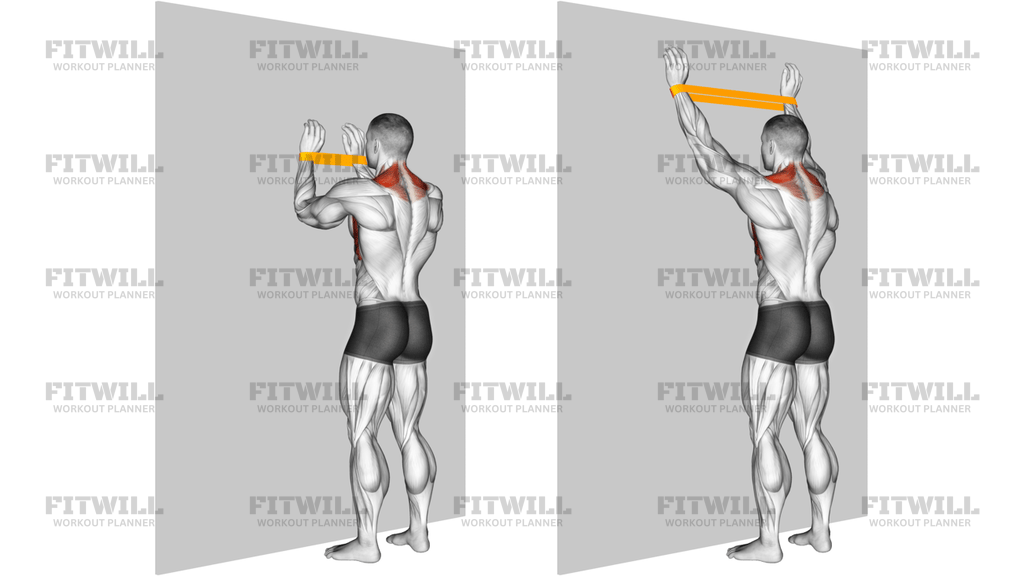
Resistance Band Spider Crawls are a wall-based shoulder and core drill that use light band tension to challenge how well you can control the shoulder blades, ribs, and trunk while your hands move. The band sits around the wrists so every reach also asks you to keep pressure outward through the hands instead of letting the arms collapse inward. That makes the exercise useful for serratus activation, scapular control, and upper-body coordination rather than just arm movement.
The setup matters because the wall gives you a clear reference for posture. When you stand close enough to keep both hands on the wall, you can feel whether your ribs flare, your lower back arches, or one shoulder leads the climb. A good rep keeps the torso stacked, the neck long, and the forearms or hands moving smoothly up the wall while the band stays lightly stretched. If the band slackens or your body twists, the crawl has become sloppy and the shoulder control work is lost.
During each crawl, the hands should travel one at a time, usually in a small alternating pattern, so the body has to stabilize as the arms reach higher. That combination of reach and anti-rotation demand is what makes spider crawls valuable in warmups, shoulder-prep circuits, and accessory work before pressing or overhead training. The goal is not a big range or a fast tempo. The goal is to keep constant outward pressure on the band, steady breathing, and smooth control from the first crawl to the last.
Use a resistance level that lets you maintain the wall contact, the arm path, and the torso position without shrugging or leaning away from the wall. Beginners can use this drill with a very light band and short climbs, while more advanced lifters can make it harder by increasing band tension, slowing the crawl, or extending the reach slightly higher. If the wall setup causes pain in the shoulders or wrists, reduce the height, step farther from the wall, or switch to a simpler scapular control drill.
Fitwill
Log Workouts, Track Progress & Build Strength.
Achieve more with Fitwill: explore over 9600 exercises with images and videos, access built-in and custom workouts, perfect for both gym and home sessions, and see real results.
Start your journey. Download today!




Instructions
- Stand facing a wall and place a light resistance band around both wrists.
- Set your hands or forearms on the wall at about chest height with elbows bent and feet staggered for balance.
- Keep your ribs stacked over your pelvis, chin tucked slightly, and pressure evenly through both hands before you move.
- Press gently outward into the band so it stays lightly stretched.
- Crawl one hand higher on the wall, then bring the other hand up to match while keeping the band tension even.
- Keep the shoulders from shrugging and the torso from twisting as you climb.
- Pause briefly at the highest controlled position with both hands stable on the wall.
- Reverse the crawl under control and return to the starting height without letting the band snap inward.
- Breathe steadily through the set and stop the rep if you lose wall contact or posture.
Tips & Tricks
- Choose a band light enough that your wrists can stay aligned without fighting the tension.
- Keep constant outward pressure into the band; if your hands drift together, the serratus and shoulder control demand drops.
- Move slowly enough that each hand placement is deliberate rather than a quick shuffle.
- Avoid arching the lower back to reach higher on the wall; the crawl should come from shoulder motion, not rib flare.
- Do not shrug toward your ears as you climb; keep the shoulder blades moving smoothly instead of jammed upward.
- If one side dominates the crawl, shorten the reach and make both hands travel the same height.
- Use the wall as a feedback tool: if your chest leaves the wall or your body leans away, the set is too hard.
- Exhale as you reach upward and keep the breath quiet so the torso stays stacked.
Frequently Asked Questions
What muscles do Resistance Band Spider Crawls work?
They primarily train the shoulders, serratus, upper back, and core while the band adds extra demand for scapular control.
How do I set up the band for this crawl?
Loop a light band around both wrists, face the wall, and start with your hands or forearms on the wall at about chest height.
Should my hands stay close together or apart on the wall?
Keep gentle outward pressure so the band stays stretched; the wrists should stay roughly shoulder-width and not collapse inward.
What is the biggest mistake during spider crawls?
Most people shrug, arch their low back, or rush the hand placements instead of keeping the torso stacked and the band tension steady.
Is this a good warmup exercise before pressing?
Yes, it works well before overhead pressing, push-ups, or other upper-body work because it wakes up shoulder control and trunk stability.
Can beginners do Resistance Band Spider Crawls?
Yes, beginners can use a very light band and a short crawl range as long as they can keep the ribs down and the shoulders quiet.
How high should I crawl up the wall?
Only climb as high as you can without losing wall contact, twisting, or letting the band go slack.
How can I make the exercise harder without changing the movement?
Use a slightly tighter band, slow the crawl, or hold the top position longer while keeping the same clean wall path.