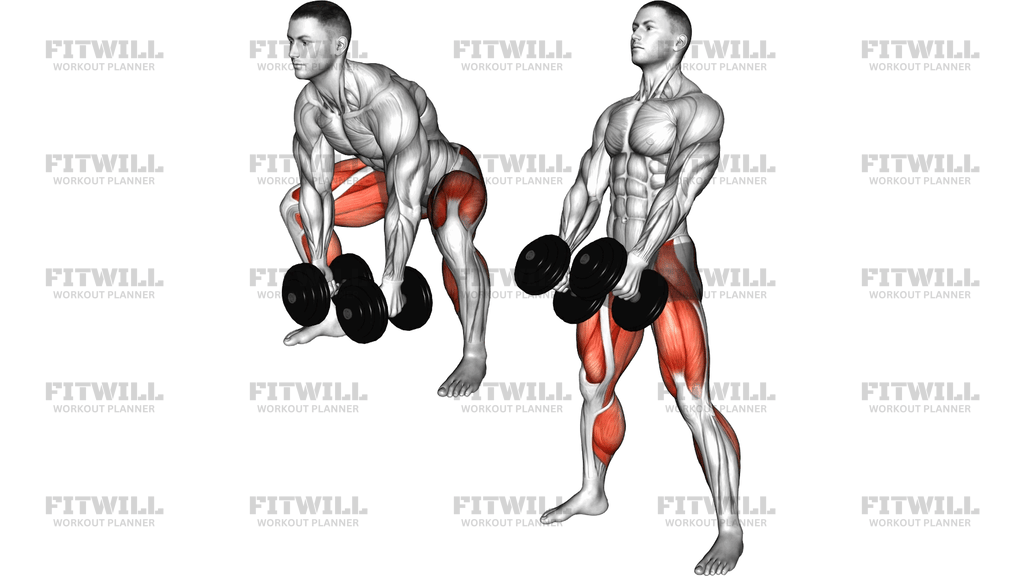
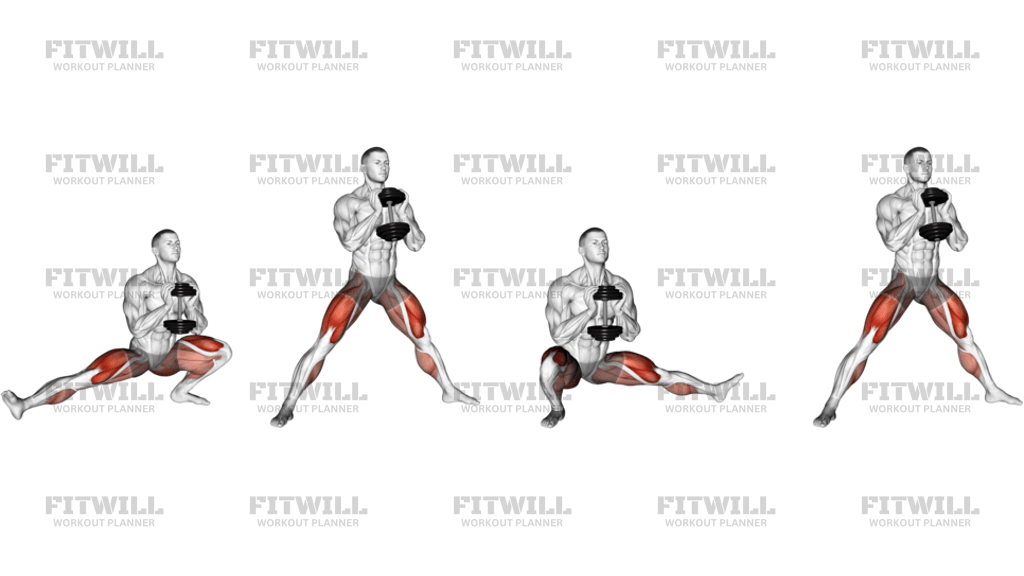
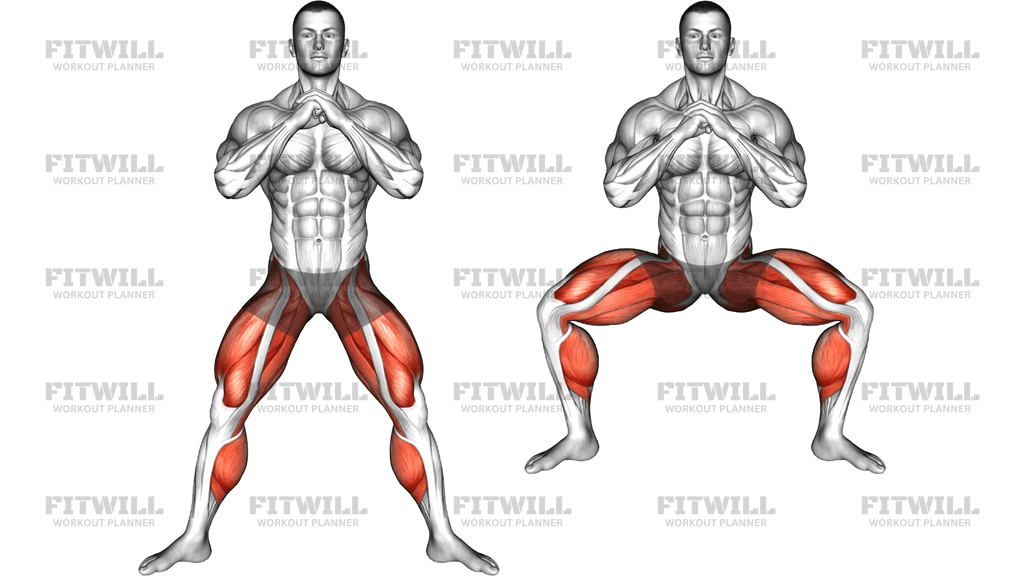
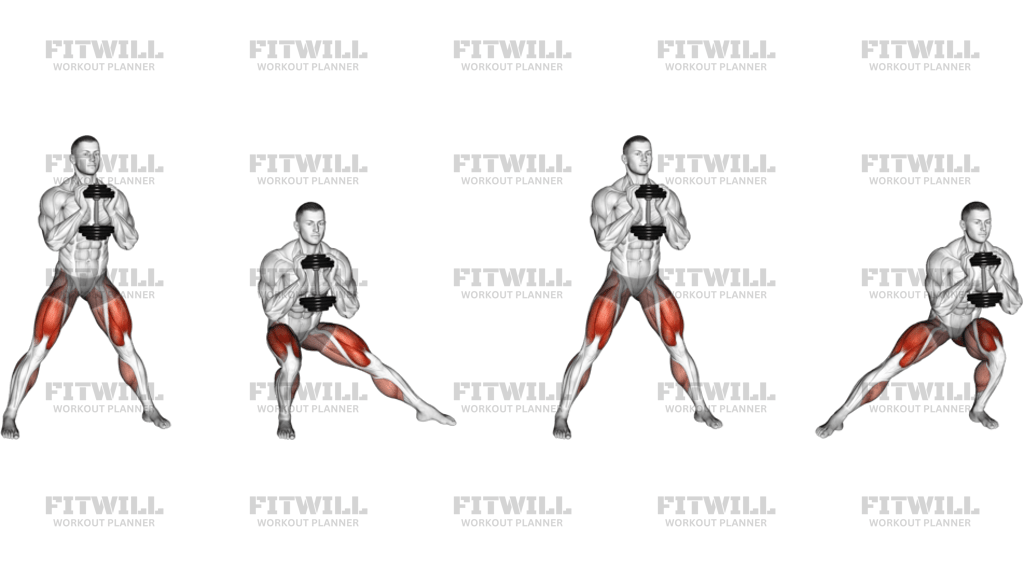
Dumbbell Split Squat
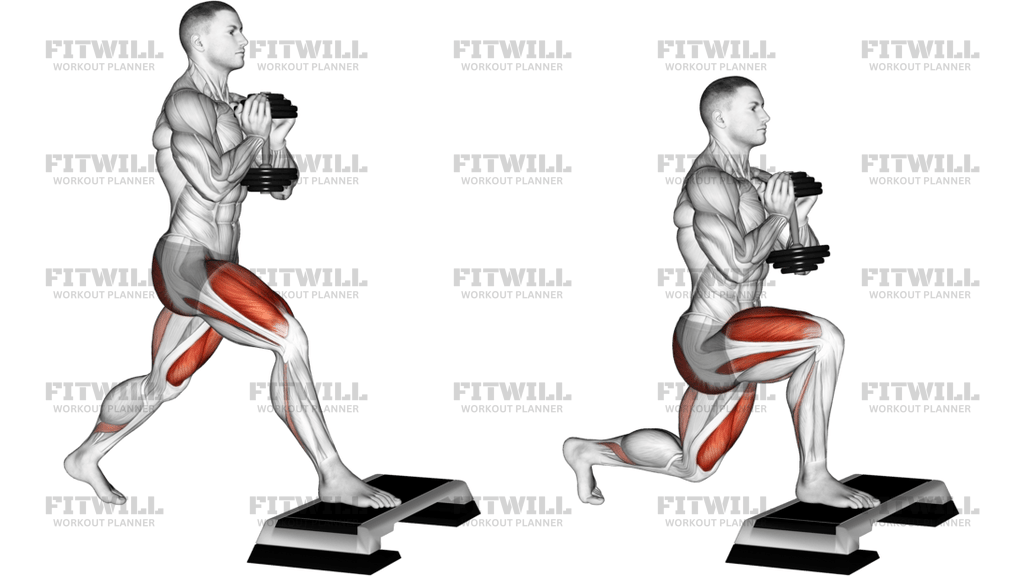
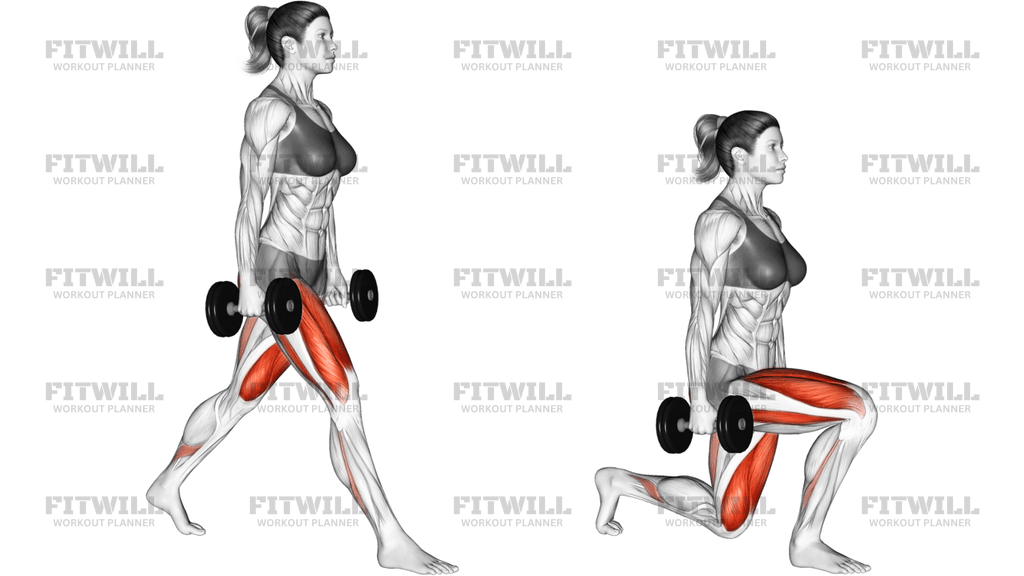
Dumbbell Split Squat is a unilateral lower-body strength exercise that puts most of the work on the front leg while the rear leg stays back for balance. With a dumbbell in each hand and the feet set in a split stance, you lower straight down, then drive back up through the front foot. It is a practical choice for building quad strength, single-leg stability, and control without needing a machine.
The main training effect comes from the front thigh, but the exercise also asks the glutes, adductors, calves, and trunk to keep the body steady. Because one leg works at a time, it exposes side-to-side differences more clearly than a two-legged squat. That makes it useful when you want to strengthen a weaker side, improve knee control, or build leg strength with less spinal loading than heavier bilateral squatting.
The setup matters more here than on many machine exercises. A stance that is too short makes the front knee feel cramped and can force the heel up; a stance that is too long turns the rep into a reach and can pull tension away from the quad. Set the front foot far enough forward that you can descend under control, keep the front heel planted, and let the back knee travel toward the floor without throwing your torso forward or bouncing off the bottom.
Good reps look smooth and repeatable. The dumbbells should hang quietly at your sides, the front knee should track in line with the toes, and the torso should stay tall with only a small natural lean. Lower until the rear knee is close to the floor or the front leg reaches a depth you can control, then drive upward through the front foot and finish the rep without losing balance or twisting the hips.
Use Dumbbell Split Squat for lower-body strength work, hypertrophy blocks, or accessory training after your main lift. It is also a useful option when you want to train each leg through a full range of motion without a barbell on the back. Beginners can use light dumbbells or even bodyweight first, but the exercise only pays off when each side stays stable, the knee path stays clean, and the load matches the amount of control you can maintain.
[ Workout Log & Planner ]
Put your next workout in Fitwill
Keep your plan and training log ready when you are.


Instructions
- Stand tall with a dumbbell in each hand, feet in a split stance, front foot flat and rear heel lifted.
- Place the front foot far enough forward that you can lower straight down without the heel peeling off the floor.
- Keep your torso stacked, ribs down, and eyes forward before you start the first rep.
- Inhale and lower your back knee toward the floor by bending both knees at the same time.
- Let the front knee travel in line with the toes while the dumbbells hang still beside your legs.
- Keep most of your pressure through the front midfoot and heel as you descend under control.
- Lower until the rear knee nearly touches the floor or the front thigh reaches a controlled depth.
- Exhale and drive through the front foot to stand back up without bouncing or twisting.
- Reset your stance before the next rep or switch sides if you are training one leg at a time.
Tips & Tricks
- If the front heel lifts, lengthen the stance slightly or shorten the depth.
- Keep the dumbbells quiet at your sides instead of letting them swing and pull your torso forward.
- A small forward lean is normal, but the chest should not collapse over the front thigh.
- Let the front knee travel forward in line with the toes instead of letting it cave inward.
- The rear leg is there for balance; do not push off it to make the rep easier.
- Use a slower lowering phase so you can feel the front leg doing the work from top to bottom.
- If your rear knee taps the floor hard, reduce the depth and keep the descent controlled.
- Choose a load that lets both sides look the same; if one side wobbles, the weight is too heavy.
- Hold onto a rack or post with one hand if balance is limiting the leg work more than the load.
Frequently Asked Questions
What muscle does Dumbbell Split Squat target most?
The quads are the main target, with the glutes, adductors, and trunk helping to stabilize the split stance.
How is this different from a regular lunge?
The feet stay in one split stance for the whole set, so the movement is more about lowering and rising than stepping.
Where should the dumbbells stay during the rep?
Let them hang at your sides and stay quiet; if they swing, you are usually rushing or losing trunk position.
How far apart should my feet be?
Far enough that the front heel stays down and the rear knee can move toward the floor without crowding the hips.
Should my torso stay perfectly upright?
A slight forward lean is normal, but the torso should stay braced and controlled rather than folding over the front leg.
Why does my front knee feel stressed in this exercise?
The stance may be too short, the load may be too heavy, or the knee may be drifting inward instead of tracking with the toes.
Can beginners use Dumbbell Split Squat?
Yes, but start light and use a stable stance or light support until you can lower and rise without wobbling.
How low should I go on each rep?
Lower until the rear knee is close to the floor and the front leg still feels controlled; do not bounce out of the bottom.
How can I make this more quad-focused?
Use a slightly shorter stance, stay more upright, and keep the front foot planted so the front knee can travel forward under control.