Dumbbell Front Squat
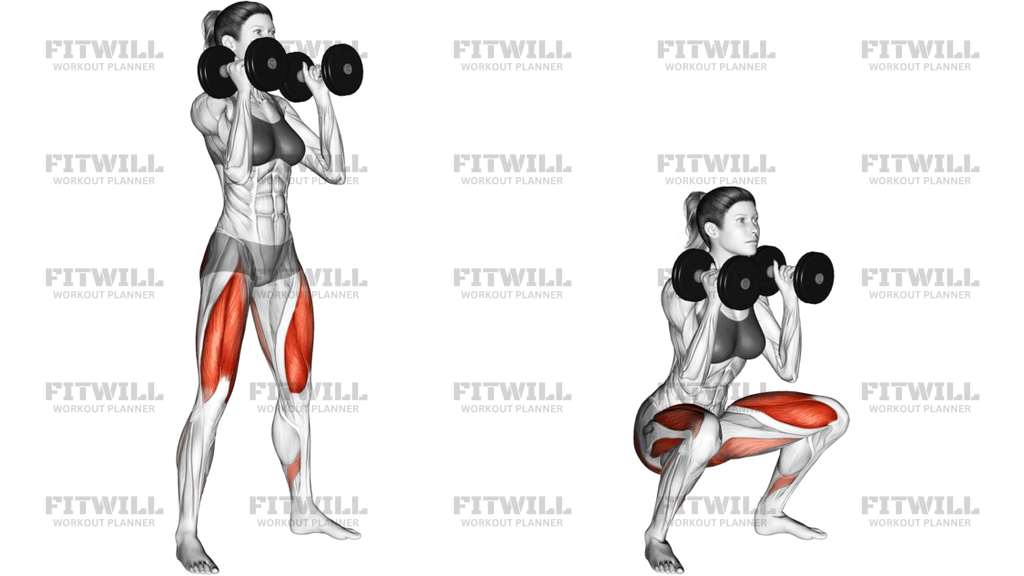
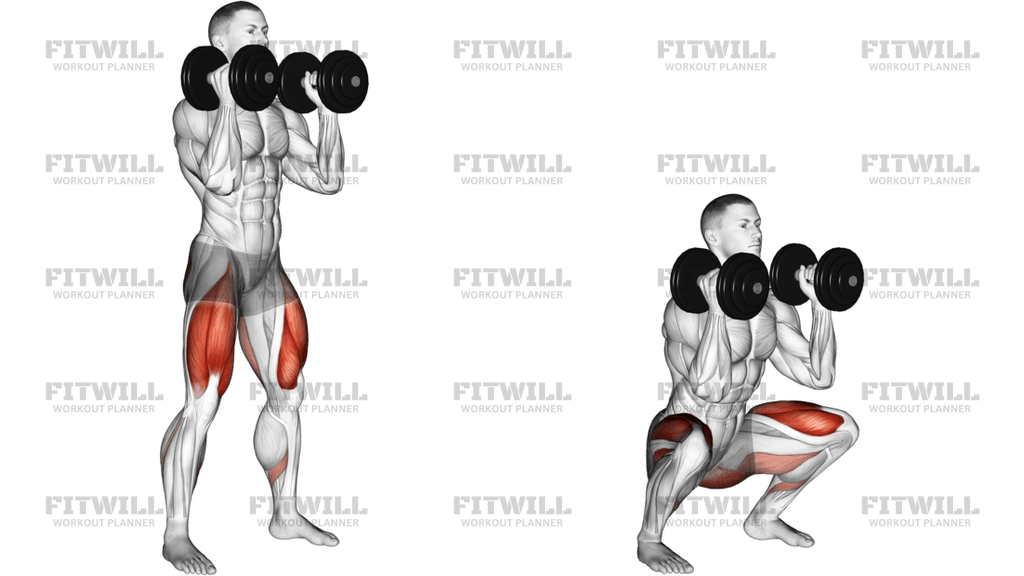
Dumbbell Front Squat is a front-loaded squat pattern performed with a dumbbell held at each shoulder in a rack position. The load stays close to the body, which helps you stay upright and makes this a practical lower-body strength exercise for the quads, glutes, and core while the upper back and arms work to keep the dumbbells steady.
The front-rack setup matters because it changes the mechanics of the squat. With the weight parked high on the shoulders instead of hanging at your sides, your torso has to stay tall, your ribs stay stacked over your pelvis, and your knees usually travel forward a little more to keep the balance centered over the midfoot. That makes the movement feel more demanding on posture and bracing than a simple dumbbell squat.
A good Dumbbell Front Squat starts before the first rep. Set the dumbbells on or just above the shoulders, keep the elbows slightly forward, and stand with a stance that lets you descend without the heels peeling up. Once you brace, lower under control, keep the dumbbells tight to the shoulders, and let the hips and knees bend together until you reach your available depth without losing position.
At the bottom, the goal is not to collapse into the stretch or bounce out of it. Stay connected through the whole foot, keep the chest tall, and drive upward by pressing the floor away while the knees and hips extend together. Because the load is front-racked, the exercise rewards smooth tempo, clean breathing, and a stable upper back more than raw speed.
This movement fits well in lower-body strength sessions, accessory work, or full-body training when you want a squat that builds leg strength without needing a barbell. It is also useful when you want a more upright squat than a dumbbell deadlift or split squat. Start light enough to keep the rack position clean, and use a range of motion you can repeat without losing balance, twisting, or letting the dumbbells drift away from the shoulders.
[ Workout Log & Planner ]
Put your next workout in Fitwill
Keep your plan and training log ready when you are.


Instructions
- Stand with your feet about shoulder-width apart and hold one dumbbell at each shoulder in a front-rack position, palms neutral and elbows slightly forward.
- Plant your whole foot, stack your ribs over your pelvis, and brace your core before you start the descent.
- Keep your chest tall and your upper back engaged so the dumbbells stay close to the shoulders instead of drifting forward.
- Sit your hips down between your heels while letting your knees track in line with your toes.
- Lower under control until your thighs reach your available depth without your heels lifting or your lower back rounding.
- Hold the bottom for a brief moment only if you can keep tension and balance.
- Drive up by pushing the floor away through your midfoot and heels, letting your hips and knees rise together.
- Finish tall without leaning back, then reset your breath before the next rep.
Tips & Tricks
- Keep each dumbbell pinned to the shoulder shelf; if the weights drift forward, the torso will tip and the squat will turn into a good-morning pattern.
- Think about sending the elbows slightly forward, not down, so the rack stays solid without cranking the wrists back.
- Let the knees travel forward as long as the heels stay planted; front-loaded squats usually need more knee bend than a rear-loaded squat.
- Use a small heel lift or weight plate under the heels only if ankle mobility limits depth, and keep the feet fully grounded.
- A slower lowering phase makes it easier to keep the chest tall and feel the quads and glutes work through the full descent.
- If the dumbbells start pulling your shoulders forward, the set is too heavy or the rack position is too loose.
- Exhale as you pass the hardest part of the ascent, not on the way down, so your brace stays intact in the bottom.
- Stop the set when you can no longer keep the dumbbells stacked over the shoulders without twisting or bouncing out of the hole.
Frequently Asked Questions
What muscles does Dumbbell Front Squat work most?
It mainly trains the quads and glutes, with the core, upper back, and arms helping hold the front-rack position steady.
How is Dumbbell Front Squat different from a goblet squat?
In Dumbbell Front Squat, each dumbbell sits on a shoulder instead of both hands holding one weight in front of the chest. That rack position usually lets you load the squat a little differently and stay very upright.
Should my elbows stay up during the rep?
They should stay slightly forward and high enough to keep the dumbbells supported on the shoulders. You do not need to force them straight up, but letting them drop usually makes the torso collapse.
How deep should I squat in this exercise?
Go as deep as you can while keeping your heels down, your chest tall, and the dumbbells stacked on the shoulders. If depth makes the back round or the weights drift, shorten the range for that set.
Can beginners do Dumbbell Front Squat?
Yes. Start with light dumbbells and a controlled tempo, or begin with a goblet squat if the front-rack position feels awkward on the wrists or shoulders.
What if my heels come up at the bottom?
That usually means the stance is too narrow, the depth is too aggressive, or the ankles need more help. Widen the stance slightly, reduce depth, or use a small heel wedge if needed.
Do the dumbbells have to touch my shoulders?
They should stay very close to the shoulders in the rack position. If they hang in front of you, the lift becomes harder to control and the torso is more likely to fold.
Is Dumbbell Front Squat good for leg day?
Yes. It fits well early in a lower-body session when you still have enough freshness to keep the rack position, breathing, and squat depth clean.