Dumbbell Incline Low Fly
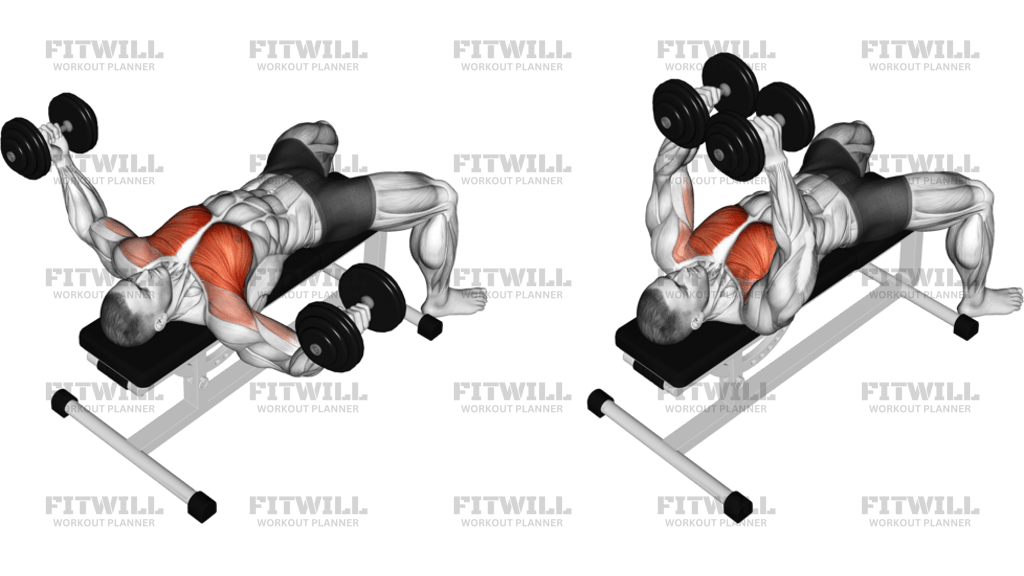
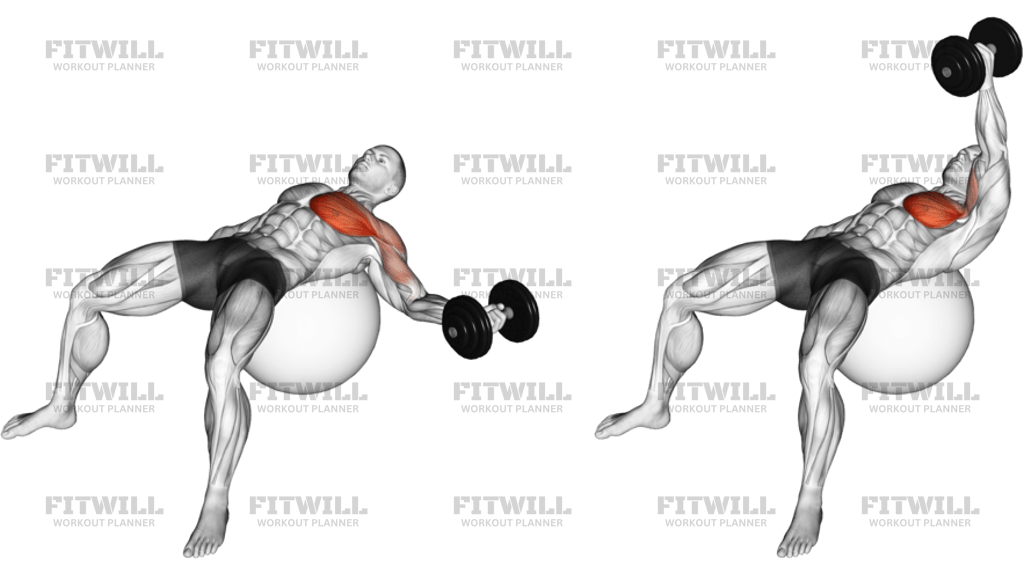
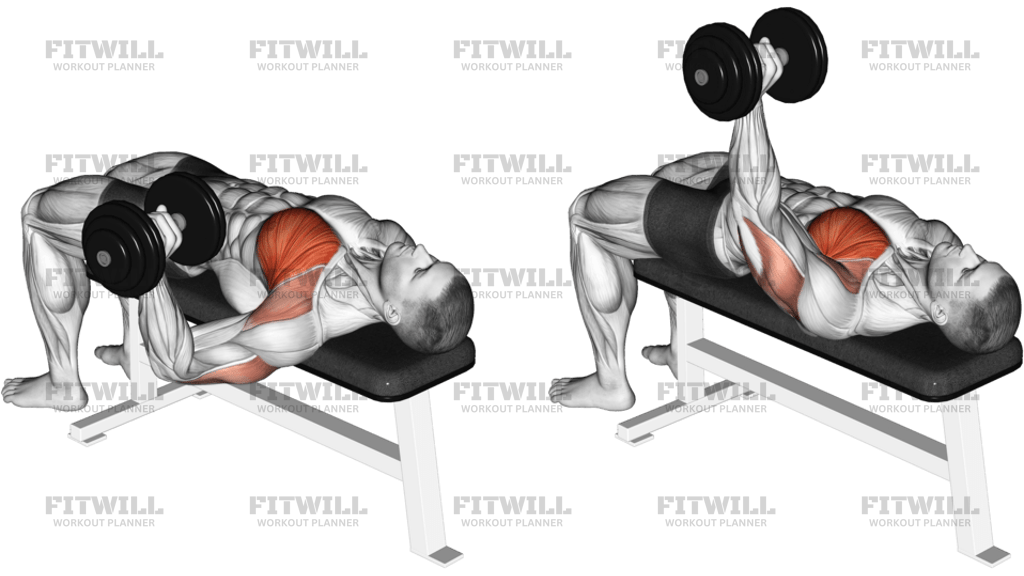
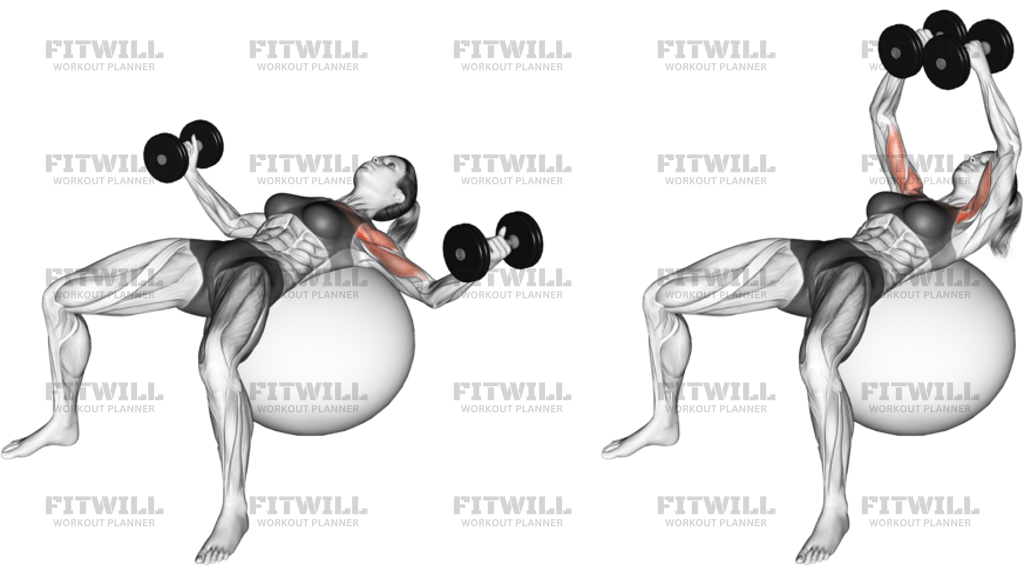
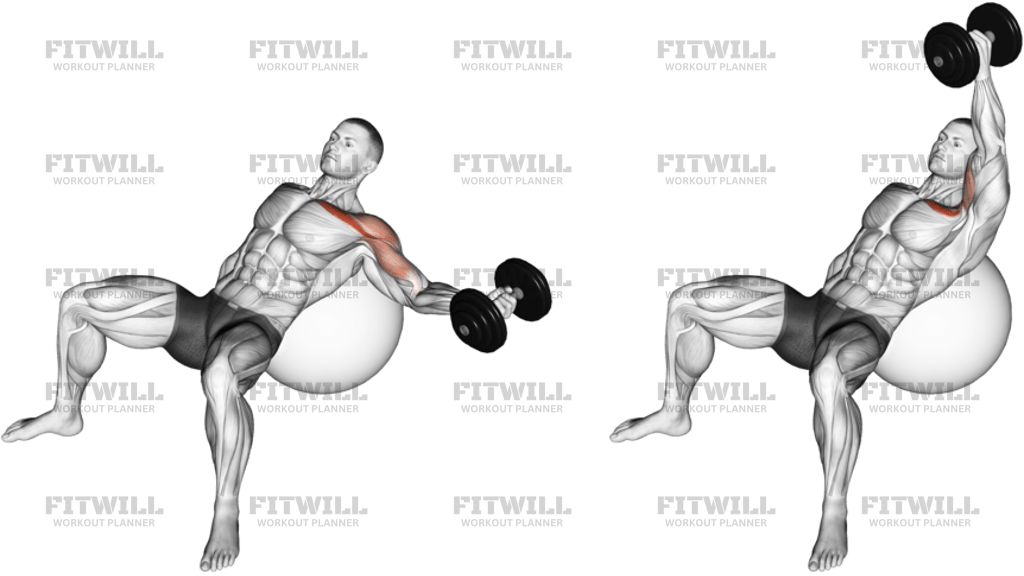
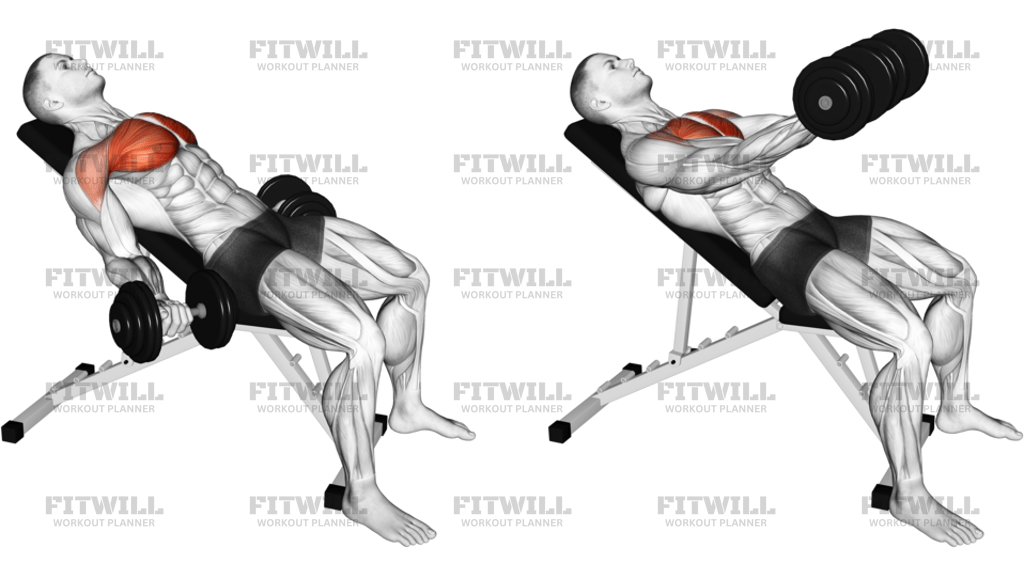
Dumbbell Incline Low Fly is an incline chest isolation movement that uses a low-to-high arm path to load the upper fibers of the chest while keeping the elbows softly bent. Lying back on a low incline and sweeping the dumbbells upward from beside the torso makes this a very different exercise from a press: the goal is to create tension through a wide arc, not to push the weights straight up. That makes Dumbbell Incline Low Fly useful when you want chest-focused work with less triceps involvement and more control over the stretch and squeeze.
The setup matters a lot because the bench angle and arm path decide where the work lands. A low incline, usually around 20 to 30 degrees, keeps the line of pull close to the upper chest and helps prevent the movement from turning into a front-delt raise. With the feet planted, shoulder blades gently set, and palms facing each other, the torso stays organized while the dumbbells travel from low and wide to higher and slightly inward.
Each repetition should feel like a controlled arc. The dumbbells start low beside the body, then rise in a smooth sweeping motion until they hover over the upper chest or just in front of the shoulders, depending on shoulder comfort and bench angle. The elbows stay at the same soft bend the whole time, the wrists stay stacked, and the chest stays lifted without overarch. On the way back down, resist the pull and let the pecs lengthen only as far as you can control without the shoulders rolling forward.
Dumbbell Incline Low Fly is a good accessory after pressing work, a chest-volume finisher, or a lighter hypertrophy exercise when you want to bias the chest without loading the triceps heavily. It is also useful for lifters who need a more deliberate chest contraction and a clearer feel for the upper pec line. Because the movement is long-lever and shoulder-sensitive, the load should stay modest and the rep quality should stay high from the first rep to the last.
Keep the range honest and pain-free. Going too deep usually shifts tension into the front of the shoulder and makes the rep harder to control, while raising the bench too steeply turns the exercise into a shoulder-dominant movement. The best versions of Dumbbell Incline Low Fly look smooth, balanced, and deliberate, with both dumbbells following the same path and the chest doing the work instead of momentum.
[ Workout Log & Planner ]
Put your next workout in Fitwill
Keep your plan and training log ready when you are.


Instructions
- Set an incline bench to about 20 to 30 degrees and sit with a dumbbell in each hand resting on your thighs.
- Lean back onto the bench, keep your feet flat on the floor, and settle your upper back and head against the pad.
- Bring the dumbbells down beside your torso with your palms facing each other and a slight bend locked into both elbows.
- Set your shoulder blades gently back and down, then keep your chest lifted without flaring your ribs hard.
- Brace your midsection and start with the dumbbells low and wide, just outside the bench line and below shoulder level.
- Sweep the dumbbells upward in a wide arc until they hover over your upper chest or slightly in front of your shoulders.
- Squeeze your chest briefly at the top without letting the dumbbells collide or your elbows straighten.
- Lower the weights along the same arc with control until you feel a stretch across the chest, then stop before the shoulders roll forward.
- Exhale as the dumbbells rise, inhale as they return, and sit up carefully to place the weights back on your thighs when the set is done.
Tips & Tricks
- A low incline usually works better than a steep one; once the bench gets too upright, Dumbbell Incline Low Fly starts feeling like a front-shoulder raise.
- Keep the elbow angle almost fixed. If the elbows keep bending and straightening, the rep turns into a loose press instead of a fly.
- Think about hugging a big barrel upward and inward so both dumbbells follow the same curved path.
- Stop the descent as soon as your shoulders start to drift forward; the chest should stretch, but the shoulder joint should not feel jammed.
- Use lighter dumbbells than you would for pressing. Dumbbell Incline Low Fly is limited by control and leverage, not by how much you can grind.
- Keep the wrists stacked over the forearms so the dumbbells do not fold backward at the bottom of the arc.
- If the front of the shoulder takes over, shorten the range and bring the top finish slightly lower, just in front of the upper chest.
- A brief squeeze at the top is enough. Clanging the dumbbells together usually adds noise, not better chest tension.
- Lower each rep slowly enough that the dumbbells do not swing past the bench line.
Frequently Asked Questions
What muscle does Dumbbell Incline Low Fly target most?
The main target is the upper chest, especially the pectoralis major. The front shoulders help stabilize the arm path, but they should not take over the movement.
Is Dumbbell Incline Low Fly a press or a fly?
It is a fly. The elbows stay softly bent while the dumbbells travel in a wide arc, which keeps the focus on chest tension rather than triceps-driven pressing.
What bench angle should I use for Dumbbell Incline Low Fly?
A low incline of about 20 to 30 degrees is usually best. If the bench is too steep, the movement shifts toward the front delts and loses the chest-focused line of pull.
How low should I let the dumbbells go?
Lower them only until you feel a controlled stretch across the chest. If the shoulders roll forward or the front of the shoulder pinches, the range is too deep.
Should my elbows stay bent the whole time?
Yes. Keep a small bend in both elbows and hold it steady from the bottom to the top so the motion stays a fly instead of a press.
Can beginners do Dumbbell Incline Low Fly safely?
Yes, but only with very light dumbbells and a short, controlled range. Beginners should learn the path before adding load.
Why do I feel Dumbbell Incline Low Fly more in my shoulders than my chest?
That usually means the bench is too steep or the dumbbells are traveling too high. Lower the incline and keep the arc aimed toward the upper chest instead of straight over the face.
What is a good substitution for Dumbbell Incline Low Fly?
A low-to-high cable fly is the closest substitute because it keeps a similar chest line of pull. An incline dumbbell press is different because it uses more elbow extension and heavier loading.