Barbell Drag Curl
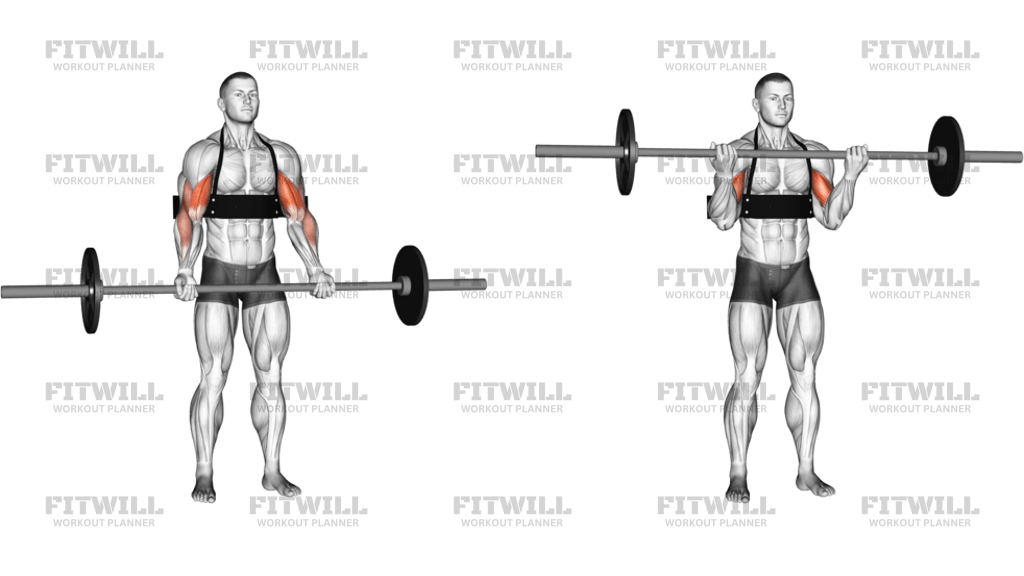
Barbell Drag Curl is a standing biceps exercise that keeps the bar close to your torso instead of curling it in a wide arc. The drag-style path changes the feel of a normal barbell curl: your elbows travel slightly behind your sides, your upper arms stay close to the body, and the bar slides upward along the shirt line toward the upper abdomen, lower chest, and finally the front of the shoulders. That close-to-body path is what makes the movement feel distinct and why it is often used to emphasize clean elbow flexion rather than body English.
The exercise primarily trains the biceps brachii, with the brachialis, brachioradialis, and forearm flexors helping stabilize the grip and control the bar. Because the shoulders stay relatively quiet and the elbows stay tucked and drifting back, the movement is less about swinging the load and more about maintaining tension through a very specific curl path. That makes it useful for lifters who want a strict arm-focused variation that still lets them use a barbell.
A good drag curl starts from a tall stance with the ribs stacked over the pelvis, wrists straight, and the bar hanging in front of the thighs. From there, the bar should skim up the body as the elbows move back, not flare outward. If the bar swings away from the torso, the repetition turns into a regular curl and the intended tension shifts away from the arm path the exercise is meant to train.
This variation is often used as accessory work after heavier pressing or pulling, or as a focused biceps movement when you want a stricter curl pattern than a conventional barbell curl. It works well for moderate loads and controlled repetitions, especially when you want to reduce lower-back cheating and keep the movement easy to judge visually. Beginners can use it if they keep the load light and learn to keep the bar close without shrugging or leaning back.
The main safety point is to keep the wrists, elbows, and shoulders in a comfortable line while the bar travels upward. If the front of the shoulders feels pinchy, the elbows are probably drifting too high or the bar is coming too far in front of the body. Use only the range you can control, lower the bar fully, and stop the set when the bar path no longer stays tight to the torso.
[ Workout Log & Planner ]
Put your next workout in Fitwill
Keep your plan and training log ready when you are.


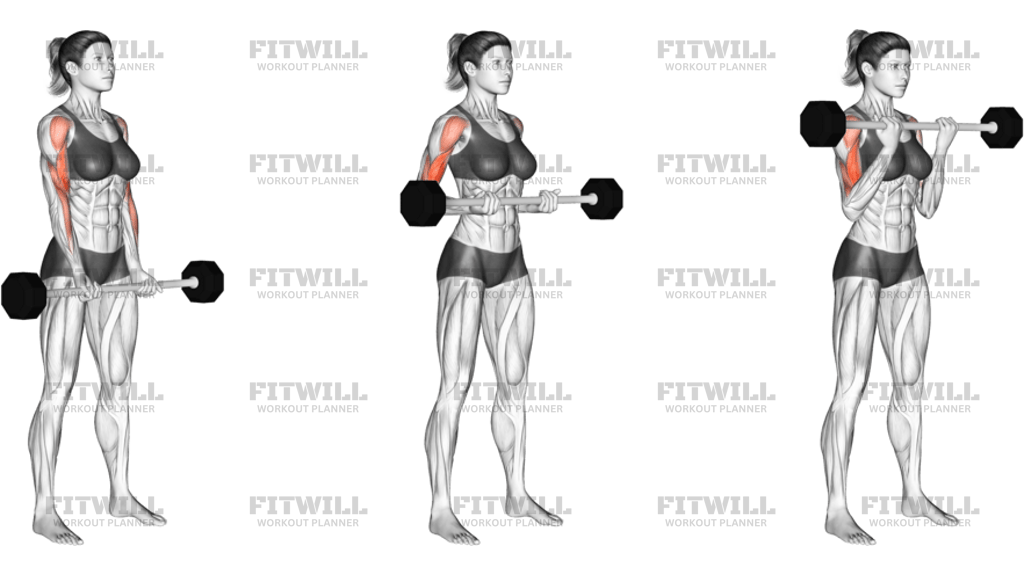
Instructions
- Stand tall with your feet about hip-width apart and hold the barbell in front of your thighs with an underhand grip just outside shoulder width.
- Let your arms hang long, keep your wrists straight, and set your shoulders down so the bar starts close to the front of your legs.
- Brace your midsection and keep your chest stacked over your pelvis before the first rep begins.
- Drive your elbows slightly behind your torso as you start the curl so the bar tracks up along your body instead of swinging forward.
- Keep the bar brushing or nearly brushing your shirt as it rises toward your upper abdomen and lower chest.
- Continue curling until the bar reaches high on the torso and the biceps are fully shortened without leaning back.
- Squeeze for a brief pause at the top while keeping the upper arms close and the shoulders quiet.
- Lower the bar under control along the same close path until the arms are almost straight again.
- Exhale as you curl up and inhale as you lower, then reset before the next repetition.
Tips & Tricks
- If the bar drifts out in front of your body, the set is turning into a standard curl instead of a drag curl.
- Think about pulling your elbows back and down, not lifting your hands higher with your shoulders.
- Keep the grip firm but not death-grip tight so the forearms do not take over the whole rep.
- A narrower grip usually makes the bar path easier to keep close; a very wide grip often encourages shoulder movement.
- Use a load that lets you keep the same torso angle on every rep without rocking backward.
- Pause only briefly at the top; long pauses often make the shoulders creep forward and change the line of pull.
- If your wrists bend back, the bar will feel heavier and the forearms will fatigue before the biceps.
- Lowering slowly matters here because the close bar path is easy to lose on the way down.
Frequently Asked Questions
What muscle does Barbell Drag Curl target most?
The biceps brachii is the primary mover, with the brachialis, brachioradialis, and forearm flexors helping stabilize and control the bar.
How is a drag curl different from a regular barbell curl?
In a drag curl, the bar stays close to the torso and the elbows travel slightly back, instead of letting the elbows drift forward in a wider curling arc.
Where should the bar travel during each rep?
It should skim up the front of your body, usually from the thighs toward the upper abdomen, lower chest, and front of the shoulders.
Should my elbows move forward like they do in a normal curl?
No. The elbows should stay close and drift slightly behind the torso so the bar can track upward along the body.
Is this a good beginner biceps exercise?
Yes, if the load is light enough to keep the bar path tight and the torso still. Beginners usually need to start lighter than they expect.
Why do my front shoulders feel more involved than my biceps?
That usually means the elbows are drifting too high or the bar is coming away from the torso, which shifts the work toward the shoulders.
What grip works best for this movement?
A shoulder-width to just-outside-shoulder-width underhand grip is usually easiest for keeping the bar close and the wrists in a neutral line.
When should I stop the set?
Stop when you can no longer keep the bar brushing the body and the torso starts leaning back to finish the curl.