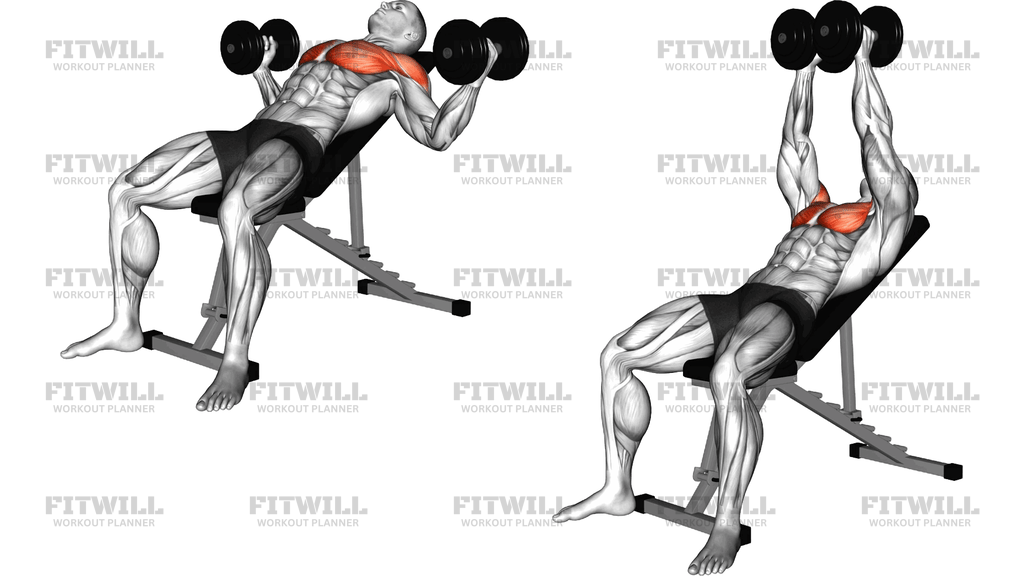
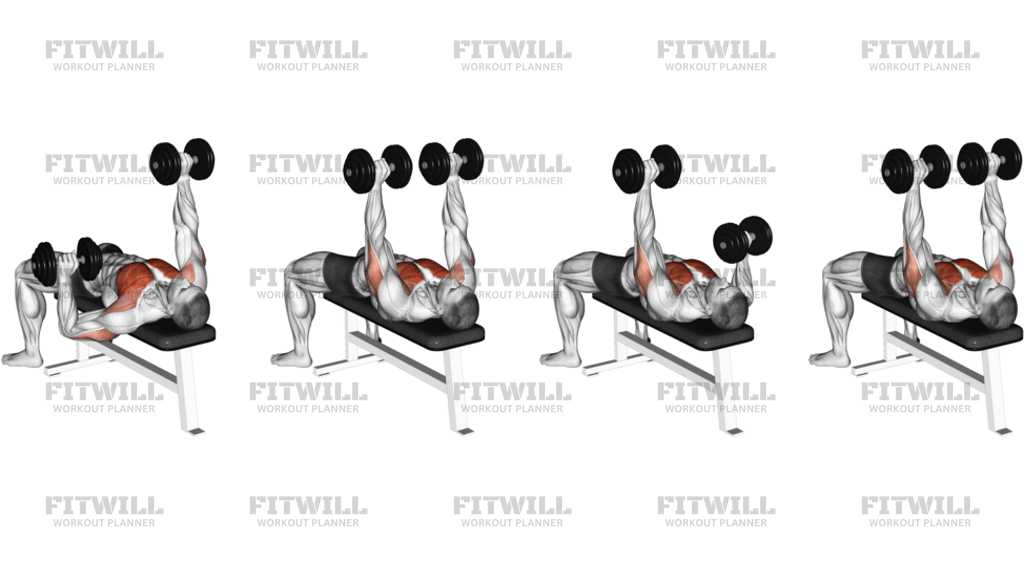
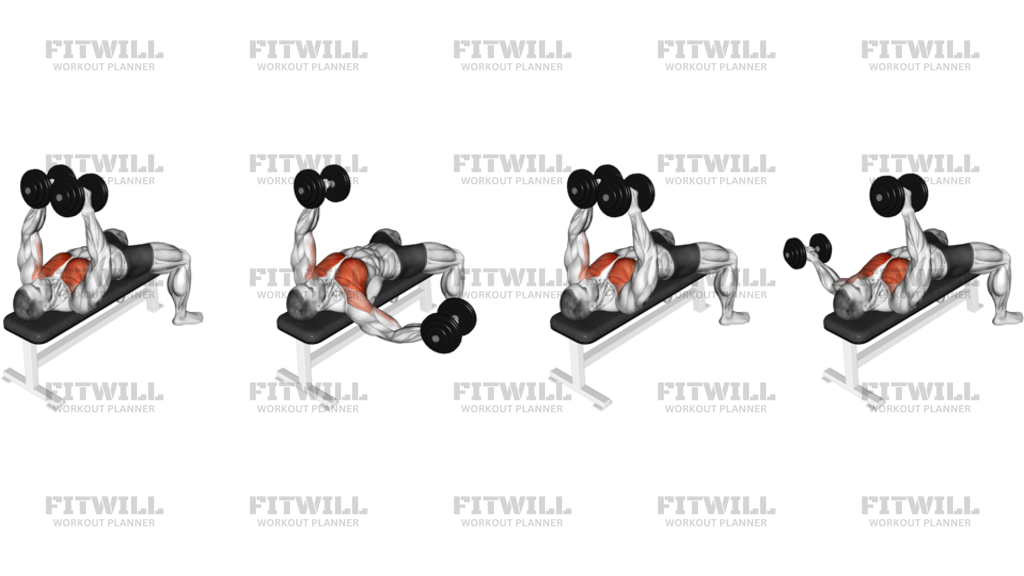
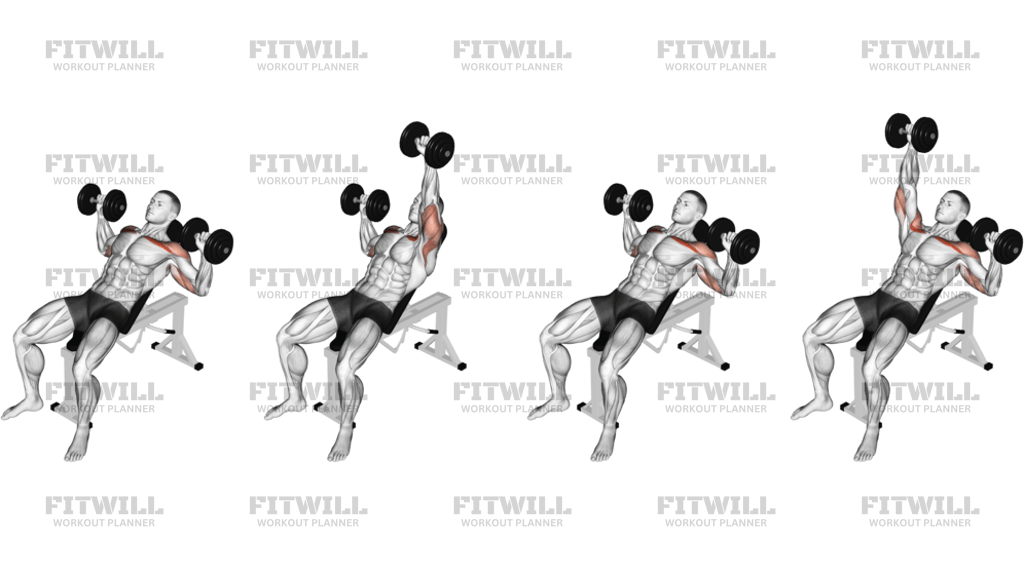
Dumbbell Close-Grip Press
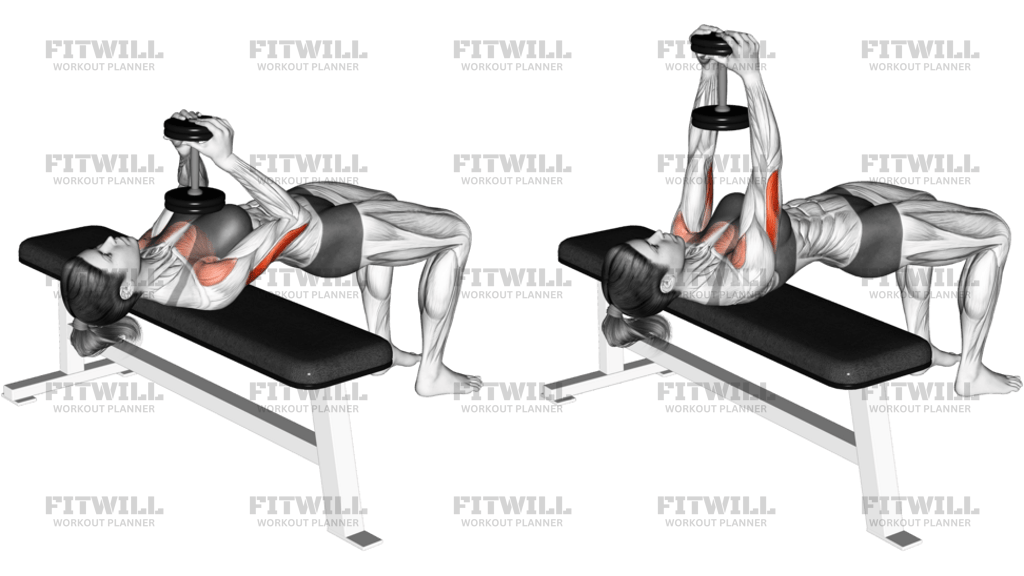
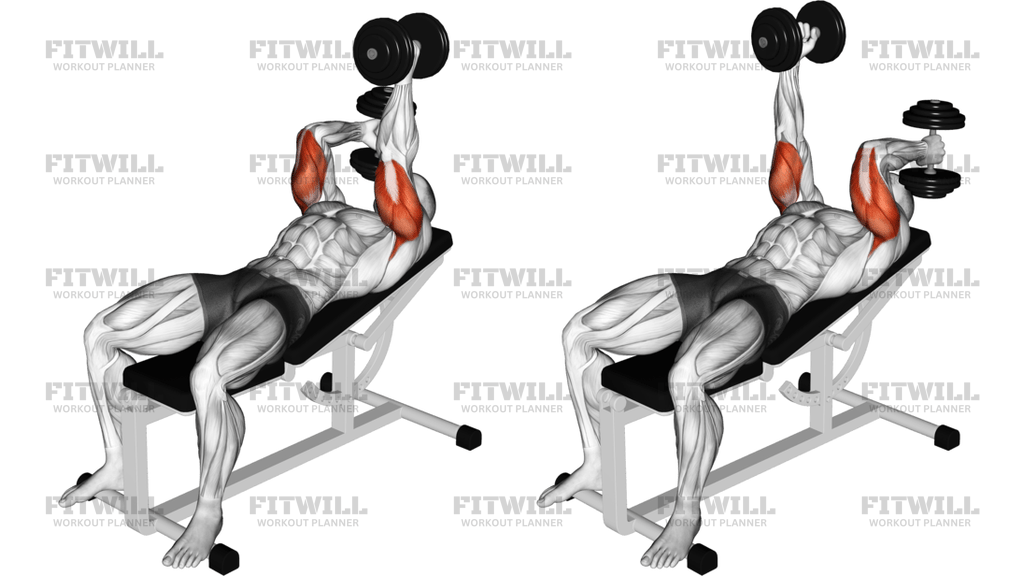
Dumbbell Close-Grip Press is a close-path pressing variation performed on a flat bench with a dumbbell in each hand held near the centerline of the chest. The narrower hand position shifts the emphasis toward the triceps while still loading the chest and front shoulders, and it works best when the upper back stays pinned to the bench and the dumbbells travel in a tight, predictable line.
The setup matters because the press is built around control, not a big stretch. Lie back with your feet planted, shoulder blades pulled down and back, and wrists stacked over the elbows. Keep the dumbbells close together with a neutral grip, then lower them under control until the upper arms are just below parallel or until you reach a comfortable, pain-free bottom position. If the shoulders roll forward or the elbows drift wide, the set usually becomes more shoulder-dominant and less stable.
Press the weights back up by driving through the palms and keeping the dumbbells close to one another instead of letting them wander apart. The elbows should stay tucked at a moderate angle, the ribs should stay down, and the lower back should not take over the lift. Breathe in on the lowering phase, exhale as you press, and briefly reset your upper back tension before each rep so the next descent starts from the same position.
This exercise is useful as an accessory press when you want a triceps-focused bench pattern without the wider shoulder stress of a standard dumbbell press. It can fit in chest, triceps, or upper-body strength work, and it is also a good option for practicing symmetrical pressing if one arm tends to drift. Choose a load that lets you keep the dumbbells level, the descent smooth, and the bottom position controlled from the first rep to the last.
[ Workout Log & Planner ]
Put your next workout in Fitwill
Keep your plan and training log ready when you are.


Instructions
- Lie on a flat bench with your feet planted, shoulder blades set down and back, and a dumbbell in each hand over the mid-chest.
- Use a neutral grip and keep the dumbbells close together so the handles stay stacked over the center of your chest.
- Tuck the elbows slightly toward your ribs and stack the wrists directly over the elbows before you start the descent.
- Lower both dumbbells together in a controlled line until the upper arms are just below parallel or until you feel a comfortable chest stretch.
- Keep the forearms close to vertical and avoid letting the dumbbells drift toward your face or out over the shoulders.
- Pause briefly at the bottom without bouncing, shrugging, or losing upper-back tension.
- Press the dumbbells back up by driving through the palms and keeping the weights tight to the midline.
- Finish the rep with straight arms but soft elbows, then reset your shoulder blades before the next descent.
- Inhale as you lower and exhale as you press, keeping the torso braced the entire set.
Tips & Tricks
- Keep the dumbbells close enough that the handles track over the sternum instead of drifting wide like a standard press.
- If your elbows flare, reduce the load and aim for a 30 to 45 degree tuck from the torso.
- A neutral grip usually keeps the shoulders happier than turning the palms forward.
- Lightly touching the dumbbells together can help you keep the path narrow, but do not let them collide or bounce off each other.
- Use a slower lowering phase if you want more triceps tension and less shoulder momentum.
- Stop the descent before the shoulders roll forward or the chest collapses off the bench.
- Keep your feet active so the rep stays anchored through the torso instead of turning into a lower-back bridge.
- If one side rises faster, slow the set down and match both dumbbells before the next rep.
Frequently Asked Questions
What muscles does Dumbbell Close-Grip Press work?
It mainly hits the triceps and chest, with the front shoulders helping during the press.
Can beginners perform this exercise?
Yes, beginners can use it if they keep the dumbbells light and the path tight and controlled.
How should the dumbbells be positioned at the start?
Start with the bells close together over the mid-chest, wrists stacked over elbows, and the shoulder blades pinned to the bench.
What is the most common mistake with this press?
Letting the elbows flare and the dumbbells drift apart, which turns the movement into a looser shoulder press.
Should the dumbbells touch each other?
They can lightly meet if that helps you keep the path narrow, but they should not slam together or bounce.
Is this more of a chest or triceps exercise?
It is usually more triceps-biased than a standard dumbbell bench press, but the chest still contributes strongly.
What range of motion should I use?
Lower only as far as you can keep the shoulders set and the dumbbells under control; stop before the bottom turns into a painful stretch.
Where does this fit in a workout?
It works well as accessory pressing after heavier chest work or as focused triceps volume on an upper-body day.