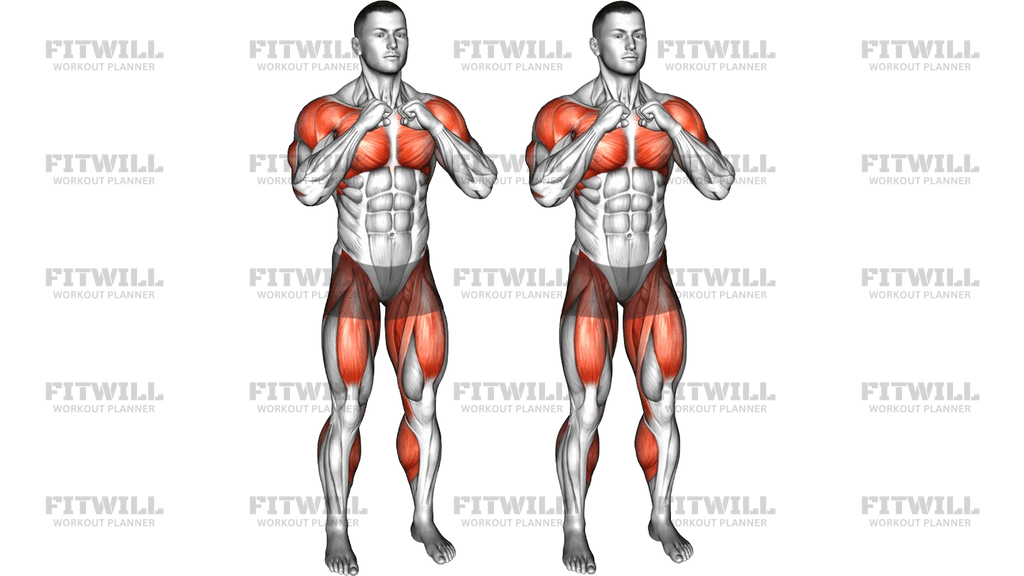
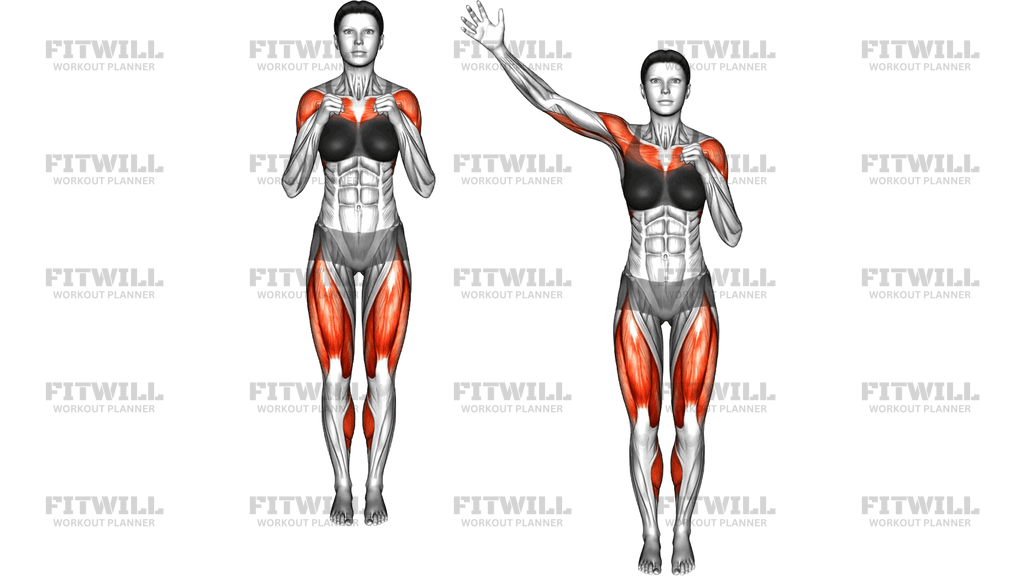
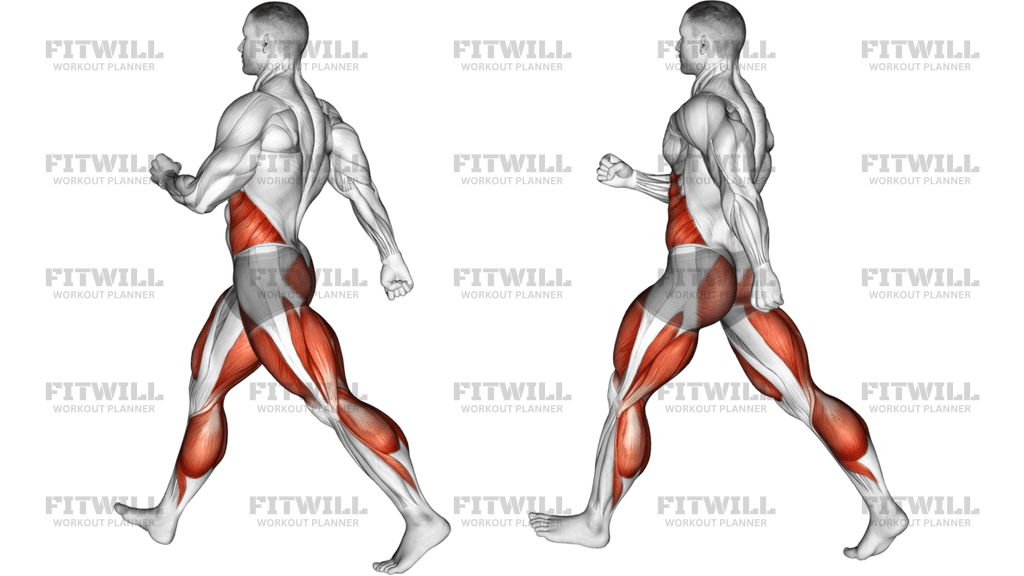
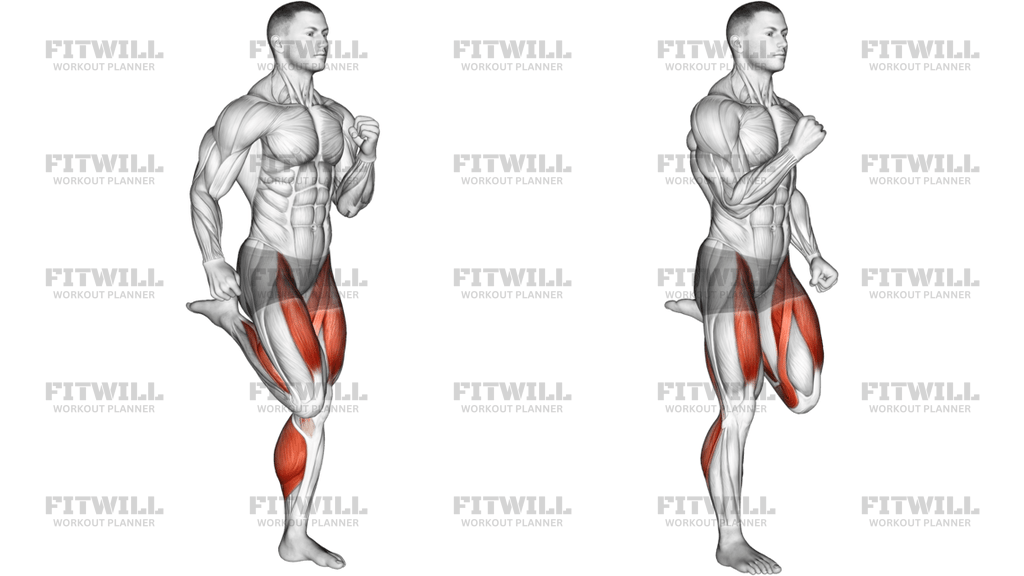
High Knee Skips
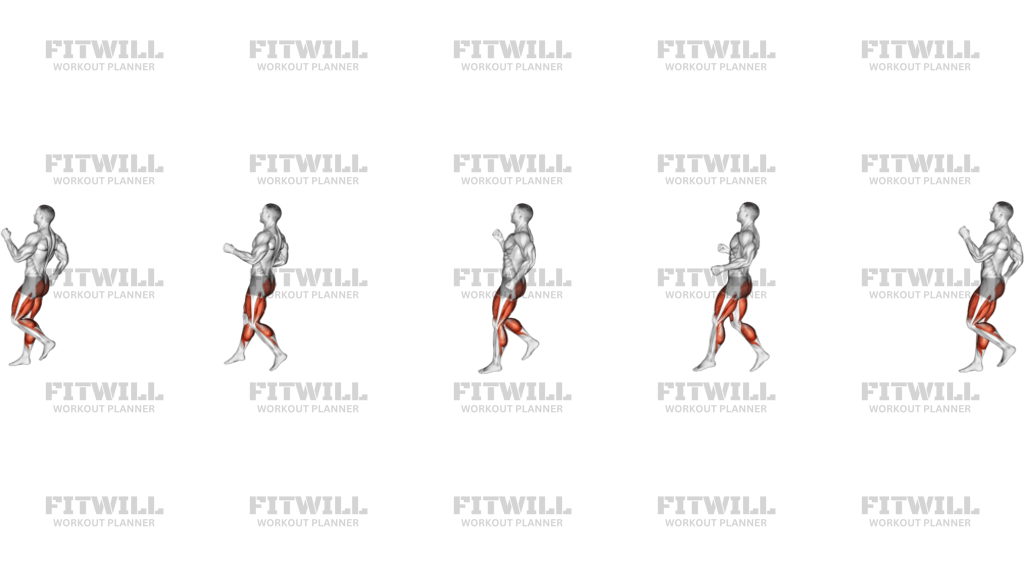
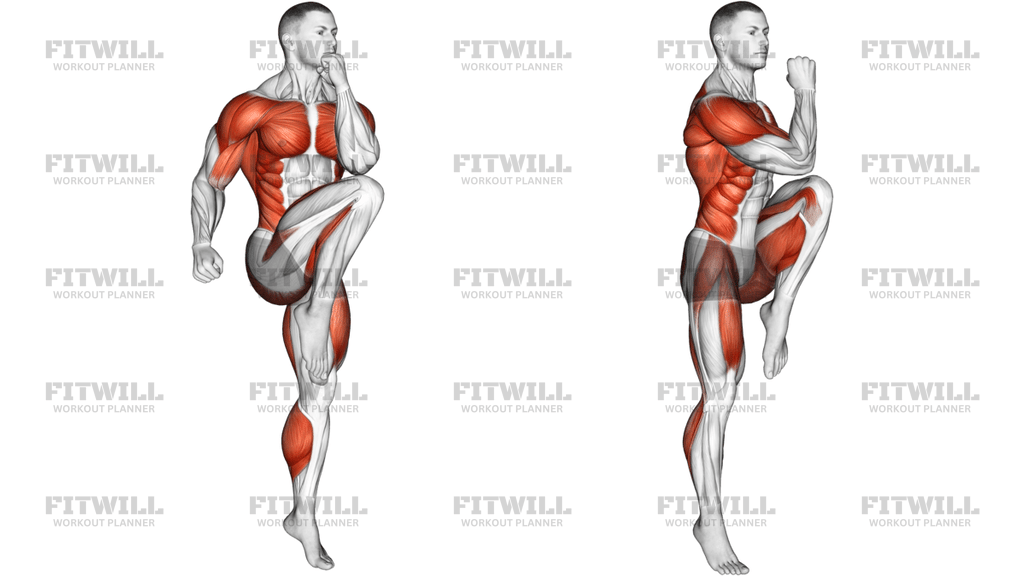
High Knee Skips is a body-weight running drill that blends a skip with an aggressive knee drive. It is commonly used to wake up the hips, calves, and trunk before sprinting, change-of-direction work, or any session where quick foot contacts and coordinated arm action matter. The goal is not to jump as high as possible; it is to develop a sharp rhythm, a tall posture, and a springy push-off that carries over to faster running.
This drill asks the hip flexors, glutes, calves, quads, and core to work together while the arms help drive the timing. That coordination is what makes High Knee Skips useful for athletes and general trainees alike. When the torso stays stacked and the foot lands under the body, the movement feels elastic and athletic. When the chest drops, the hips sit back, or the steps get too long, the skip turns into a loud hop and the quality falls off quickly.
A good rep starts with a clear lane of space and a relaxed sprint stance. Stand tall, keep your eyes forward, and bend the elbows as if you were running fast. From there, drive one knee up while the opposite arm punches forward, then switch quickly so the landing stays light and underneath you. The standing leg should help you spring into the next skip without reaching forward or stomping into the floor.
High Knee Skips work best when they stay crisp and rhythmic. In a warm-up, use them to prime the nervous system before running, jumping, or field work. In conditioning work, use short bouts so the cadence stays clean instead of sloppy. Beginners can reduce the height and turn the drill into a softer A-skip or marching knee drive until the timing feels natural.
Because this is a plyometric drill, the main safety concern is repeated impact with poor mechanics. Keep the contacts quick, the torso tall, and the landing quiet enough that you can maintain speed without bouncing side to side. If your shins, feet, or Achilles start feeling irritated, shorten the set, slow the rhythm, or switch to a lower-impact running drill for the day.
[ Workout Log & Planner ]
Put your next workout in Fitwill
Keep your plan and training log ready when you are.


Instructions
- Stand on a clear strip of floor with your feet about hip-width apart, your chest tall, and your elbows bent like a sprinter.
- Shift onto the balls of your feet and set your ribs over your pelvis so you can spring without leaning back.
- Drive one knee up toward hip height while the opposite arm swings forward in a strong running motion.
- Push the floor away with the standing leg and add a small hop so the movement becomes a skip, not a jump.
- Land softly under your hips on the ball of the foot and immediately prepare the next knee drive.
- Switch legs in a quick, rhythmic pattern, keeping the knee lift and arm swing coordinated on each step.
- Keep your torso tall and your gaze forward as you travel or skip in place, depending on the space you have.
- Continue for the planned distance or time, then slow the rhythm and walk it off before you stop.
Tips & Tricks
- Think of High Knee Skips as a rhythmic drill, not a vertical jump contest.
- Keep the foot strike light and under your center of mass; reaching forward makes the skip loud and inefficient.
- Let the opposite arm drive naturally with the knee so the drill keeps a sprint-like pattern.
- If you start leaning back as the knee rises, lower the knee slightly and keep the ribs stacked.
- Short, quick contacts are better than big, floating hops for this movement.
- Use a smaller range and slower cadence if your coordination breaks down after a few reps.
- A softer A-skip is a better regression than forcing high knees with poor balance.
- Stop the set when the landing gets heavy or the ankles and shins start absorbing the motion instead of the hips.
Frequently Asked Questions
What muscle does High Knee Skips target most?
High Knee Skips mainly challenge the hip flexors, calves, glutes, quads, and core as they coordinate each skip. It is more of an athletic coordination drill than a pure strength exercise.
Is High Knee Skips a good warm-up before running?
Yes. It prepares the ankles, hips, and arm-leg timing for faster running, jumping, and change-of-direction work.
How is High Knee Skips different from high knees?
High Knee Skips include a small hop and a more elastic running rhythm, while high knees are usually more vertical and rapid in place. Skips also emphasize coordination and ground contact timing.
Should my knee always reach hip height?
Hip height is a useful target, but only if you can keep the torso tall and the landing quiet. A slightly lower knee drive with better rhythm is better than forcing the height.
Can beginners do High Knee Skips?
Yes, but many beginners should start with a march or a softer A-skip first. Once the timing feels smooth, the skip becomes much easier to control.
Where should my foot land during High Knee Skips?
Land softly on the ball of the foot under your hips, not far out in front of you. That keeps the drill springy and reduces braking force.
How long should I do High Knee Skips?
Short bouts work best, such as 10 to 20 meters or 15 to 30 seconds. The drill loses quality quickly if you keep going after the rhythm gets sloppy.
What is the biggest form mistake with High Knee Skips?
Overstriding is the most common problem. If the skip gets loud or your chest falls back, shorten the step and focus on a faster, lighter contact.