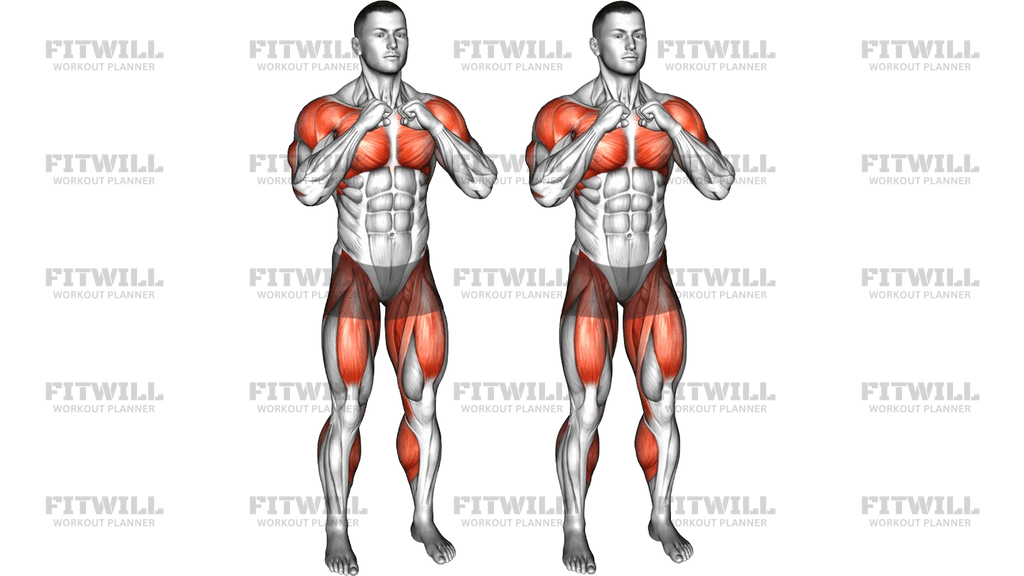
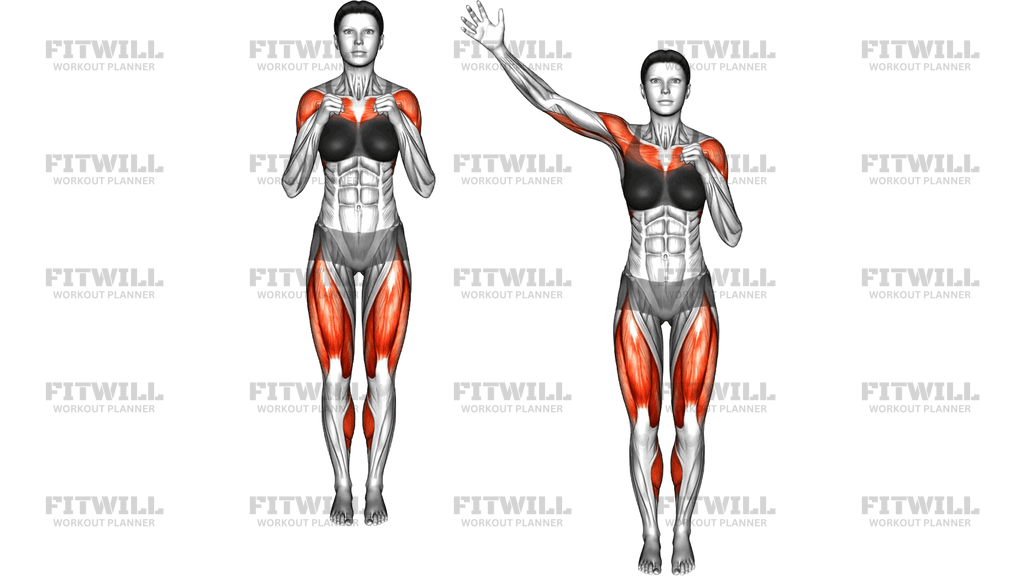
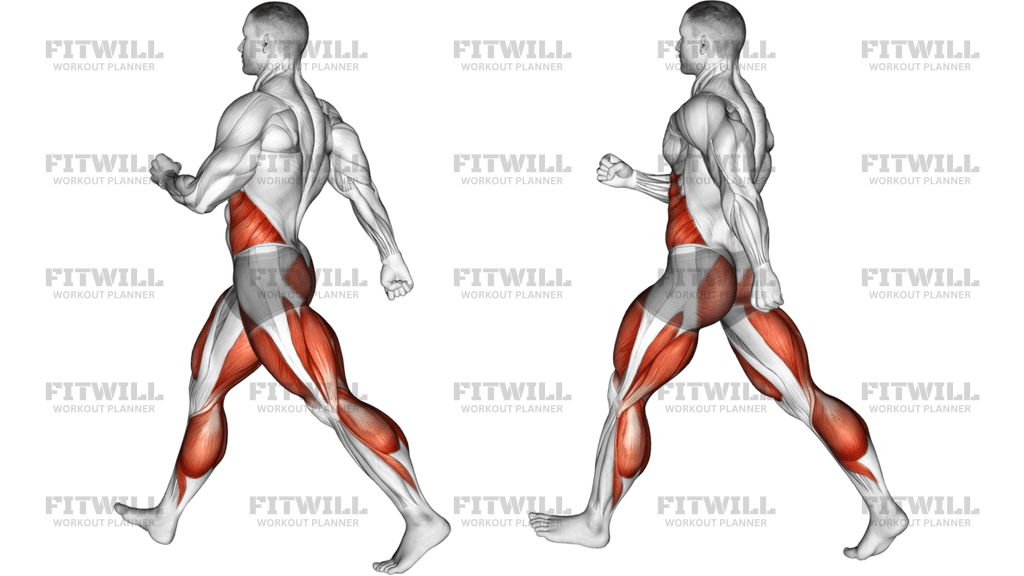
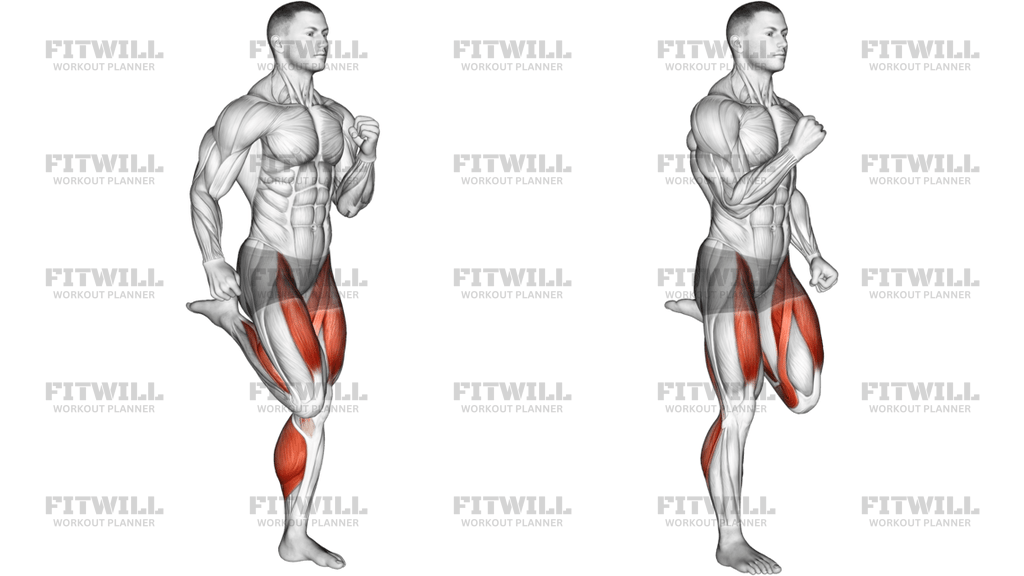
High Knee Squat
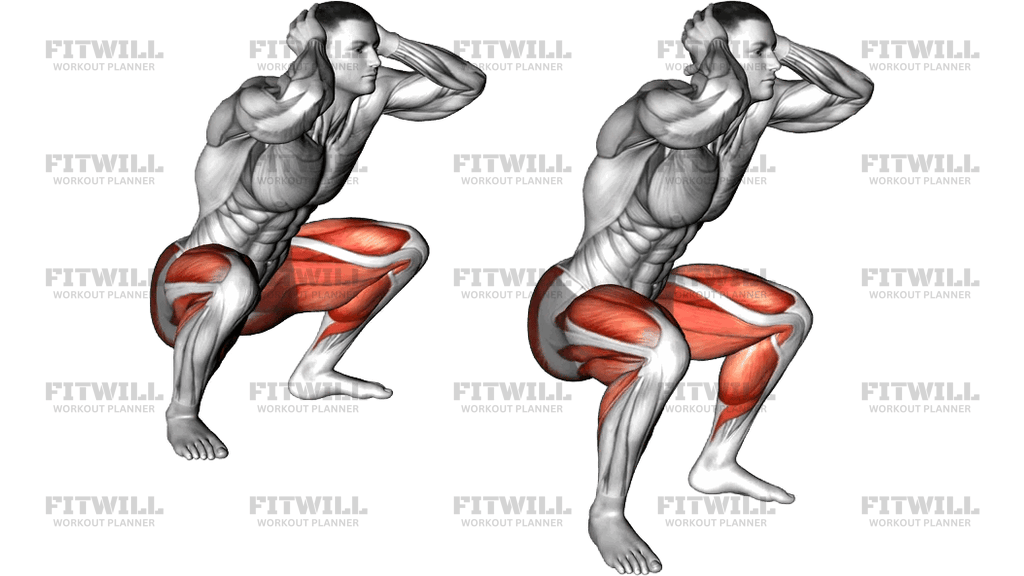
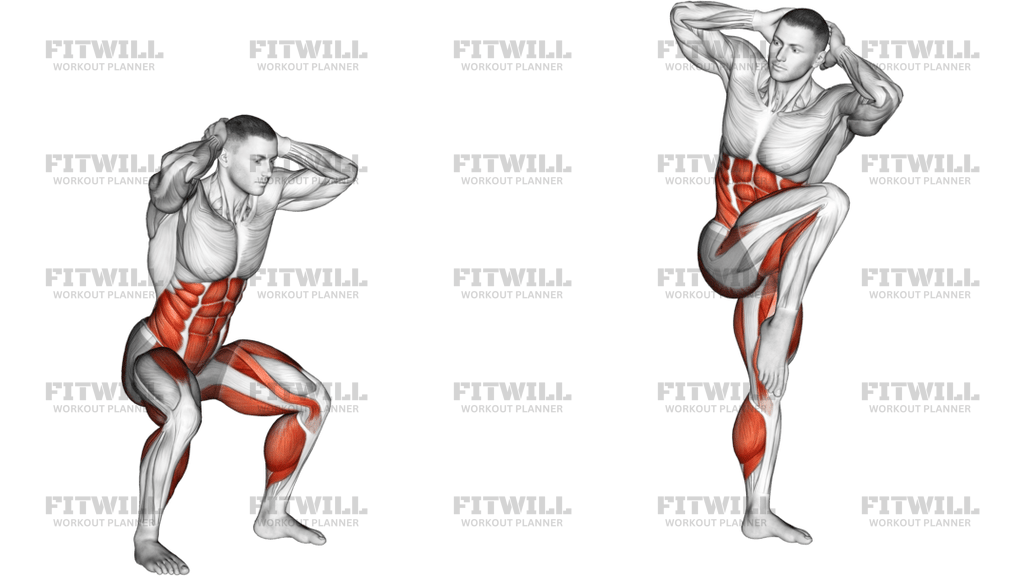
High Knee Squat is a bodyweight squat variation that adds a knee drive at the top of each rep, turning a basic lower-body pattern into a more athletic, cardio-friendly drill. It asks you to absorb your bodyweight in a controlled squat, then stand powerfully and lift one knee toward hip height before returning to the floor. The added knee raise makes the movement more dynamic than a standard squat and keeps the heart rate elevated without needing external load.
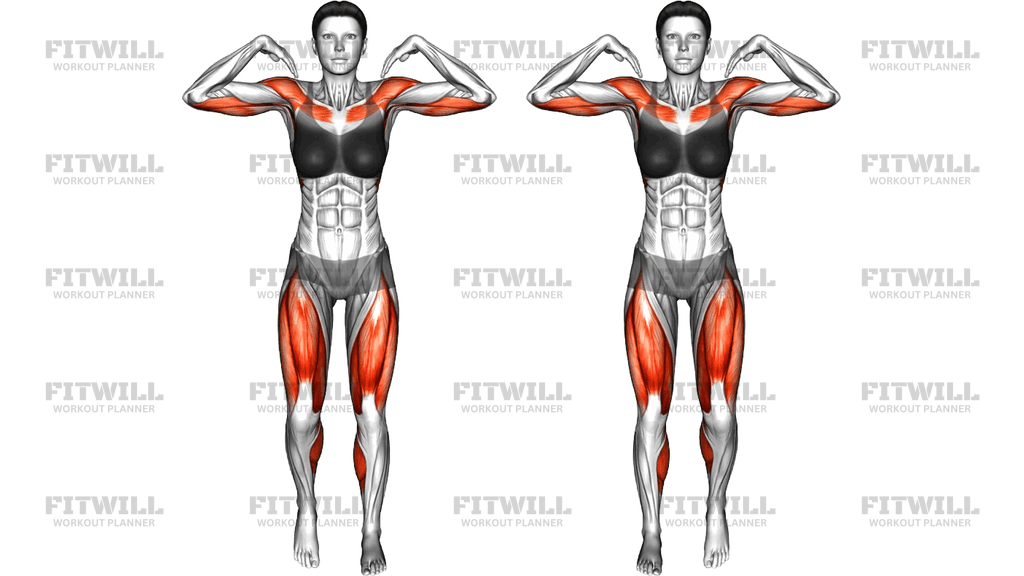
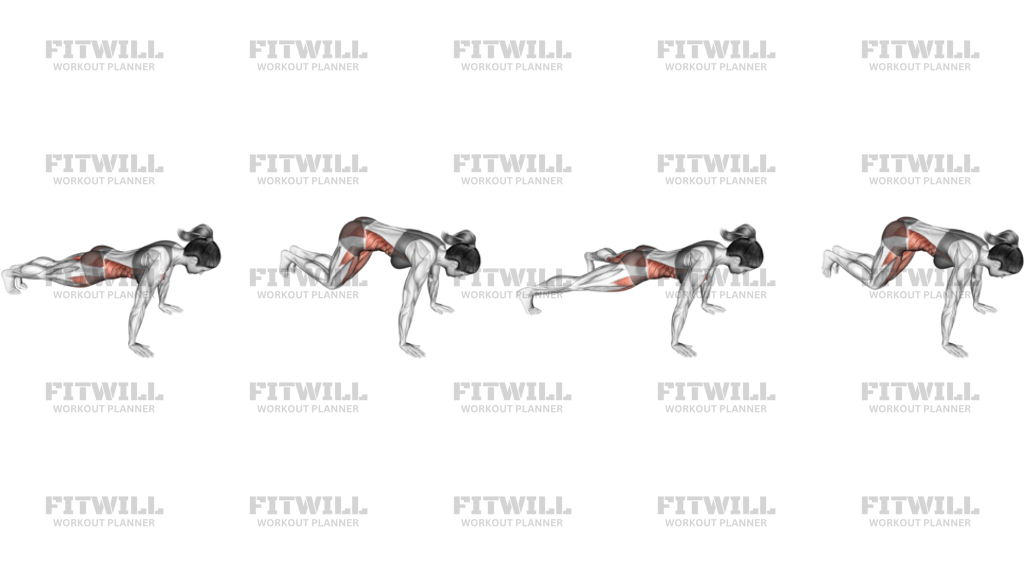
This exercise mainly targets the legs and hips, with the quads and glutes doing the bulk of the squat work while the hip flexors, calves, and core help stabilize the knee lift and the standing balance. The alternating knee drive also challenges coordination and single-leg control, which is why the rep quality matters as much as the pace. If the torso collapses or the landing gets noisy, the movement stops being a controlled conditioning drill and turns into a rushed bounce.
The setup is simple but important: plant your feet about hip-width apart, keep the chest lifted, and let the knees track in line with the toes as you descend. A clean squat gives you the base for the knee drive. If you start with your weight on your toes or your torso tipped forward, you will struggle to stand tall enough to lift the knee with control. Think of the squat as the load-up phase and the high knee as the finish.
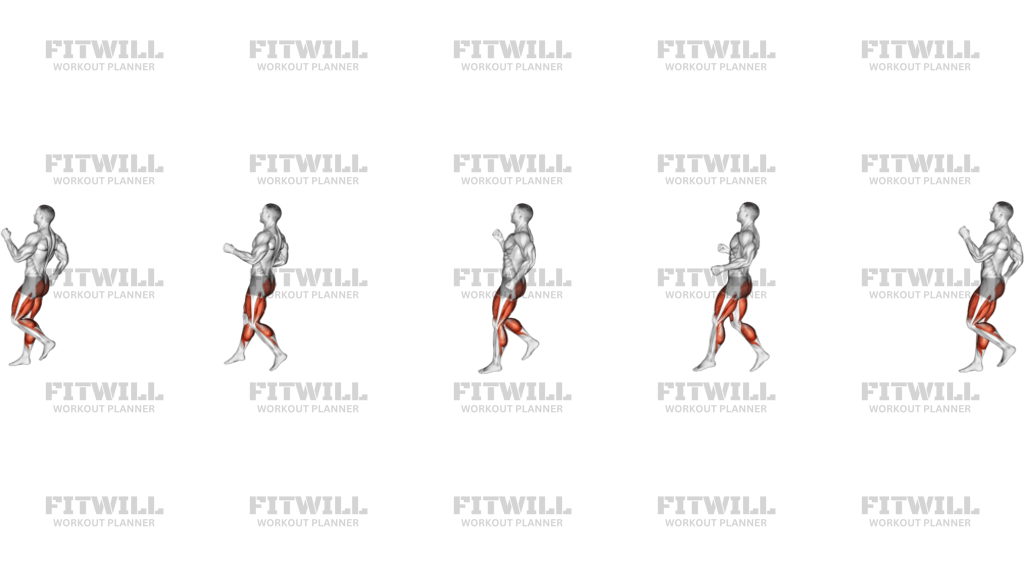
On each rep, sit down into the squat, press through the full foot to stand, then drive one knee up without leaning back or shrugging the shoulders. The standing leg should feel stable before the lifted leg comes up. Lower the knee under control, reset your balance, and repeat on the other side if the program calls for alternating reps. The rhythm should feel springy and athletic, not frantic.
High Knee Squat fits well in warm-ups, cardio circuits, low-equipment conditioning sessions, and athletic prep work where you want a lower-body movement that also trains balance and tempo. It is also easy to regress by slowing the knee drive or removing the alternating rhythm, which makes it a useful option when you want a squat pattern with more movement and less load. Keep the reps crisp, the stance steady, and the landing quiet so the drill stays effective and repeatable.
[ Workout Log & Planner ]
Put your next workout in Fitwill
Keep your plan and training log ready when you are.


Instructions
- Stand with your feet about hip-width apart, toes slightly turned out, and your arms in front of your body for balance.
- Lower into a squat by sending your hips back and down while keeping your chest up and your heels rooted to the floor.
- Track your knees in line with your toes and keep your weight spread through the whole foot instead of rolling onto the toes.
- At the bottom, pause just long enough to stay in control without collapsing through the lower back or knees.
- Drive up through both legs until you are standing tall and your hips and knees are fully extended.
- Shift your weight onto one leg and lift the opposite knee toward hip height or higher without leaning your torso back.
- Hold the high knee for a brief beat, then lower that foot back to the floor under control.
- Repeat the squat and knee drive on the same side or alternate sides as prescribed.
- Breathe in on the squat and exhale as you stand and drive the knee up.
Tips & Tricks
- Keep the squat depth consistent so every knee drive starts from the same base.
- If the knee lift turns into a hop, slow the rep down and make the standing leg do the work first.
- Let the lifted thigh come up from the hip, not from a backward lean in the torso.
- Keep the standing foot tripod planted through the big toe, little toe, and heel to stay balanced.
- Use a smaller knee lift if you lose control of the pelvis or start twisting through the spine.
- Make the landing quiet when the lifted foot returns to the floor; noise usually means you are dropping instead of controlling it.
- If your knees cave in on the squat, narrow your range slightly and focus on pushing them out in line with the toes.
- For a harder cardio effect, keep the transition smooth and reduce the pause between the squat and the knee drive.
- For a lower-impact version, remove any bounce and treat each rep as a controlled squat plus march.
Frequently Asked Questions
What muscles does High Knee Squat work most?
It mainly trains the quads and glutes through the squat, with the hip flexors and core contributing during the high knee drive.
Can beginners perform this exercise?
Yes. Beginners usually do best with a slower tempo, a smaller knee lift, and no jump between reps.
Should I alternate knees every rep?
Most versions alternate sides, but you can also keep the same side for a set if the workout is written that way.
What is the biggest form mistake in the knee drive?
Leaning backward or twisting the torso to fake the knee lift. The standing leg should support the rep while the trunk stays tall.
Is High Knee Squat supposed to be fast?
It can be brisk for conditioning, but the squat and the knee lift still need clean control. Fast should not mean sloppy.
How high should the knee come up?
Hip height is a good target if you can stay tall and balanced. If your pelvis tilts or you lose posture, raise it a little less.
What should I do if the squat feels unstable?
Shorten the squat depth slightly, slow the transition, and make sure your feet stay rooted before you lift the knee.
Can I use this as cardio without weights?
Yes. The exercise is already bodyweight-based and works well in circuits, warm-ups, and conditioning blocks.