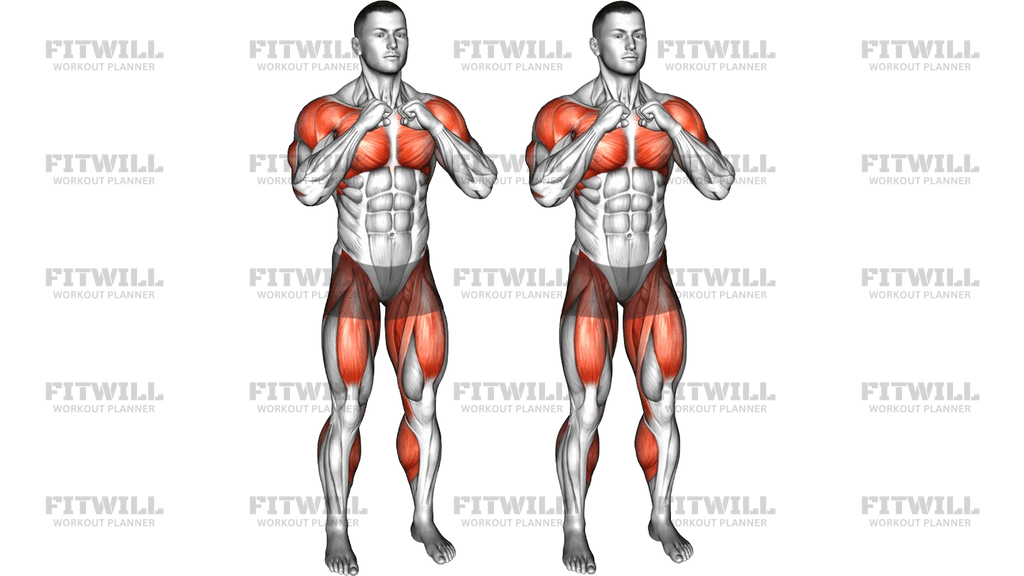
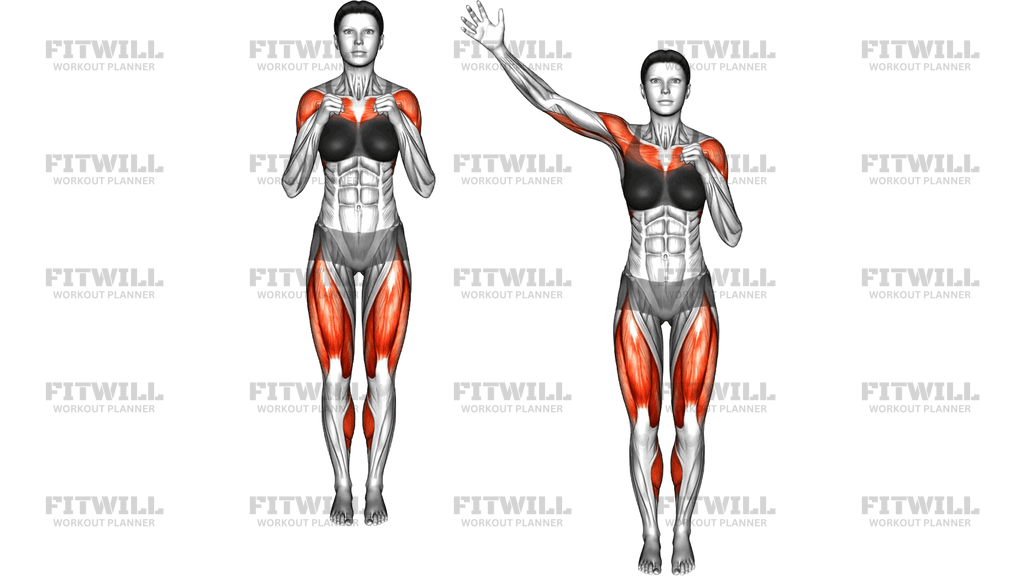
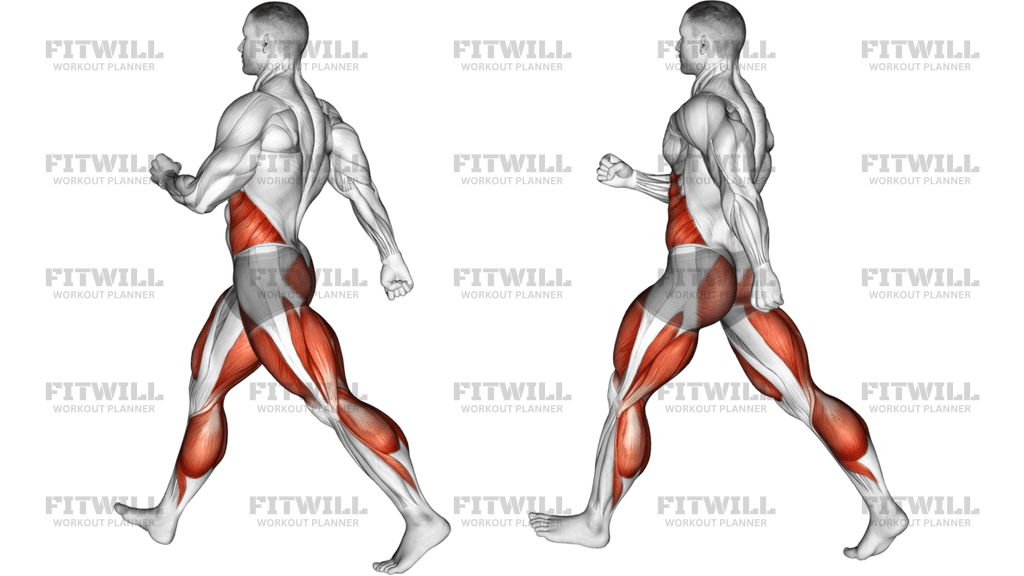
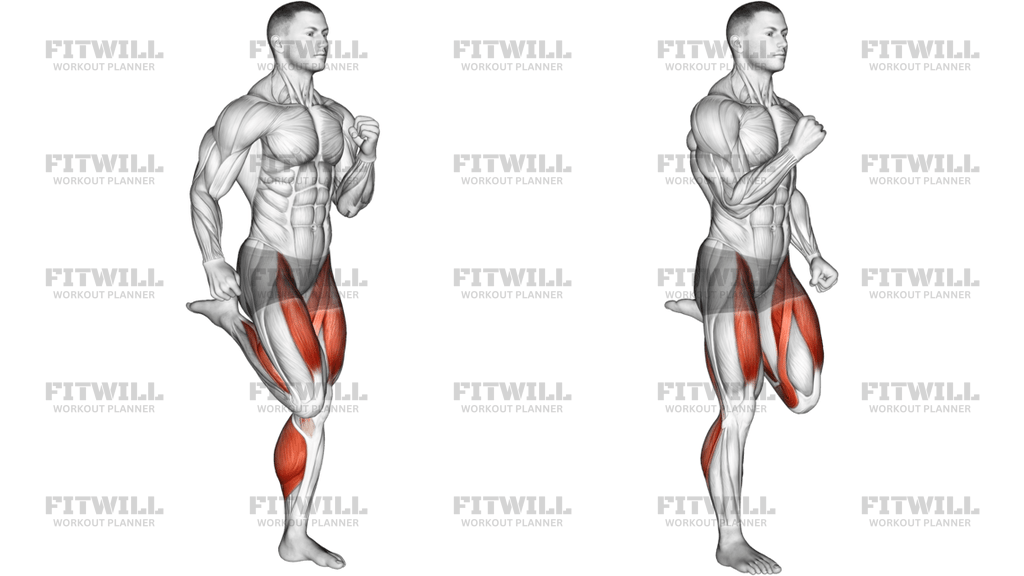
Jumping Jack
Jumping jacks are a bodyweight cardio drill built around a fast but organized switch from a narrow stance with the arms at your sides to a wide stance with the hands overhead, then back again. The exercise is simple, but the value comes from doing the whole pattern with rhythm, posture, and breathing instead of letting the jump turn into a loose bounce.
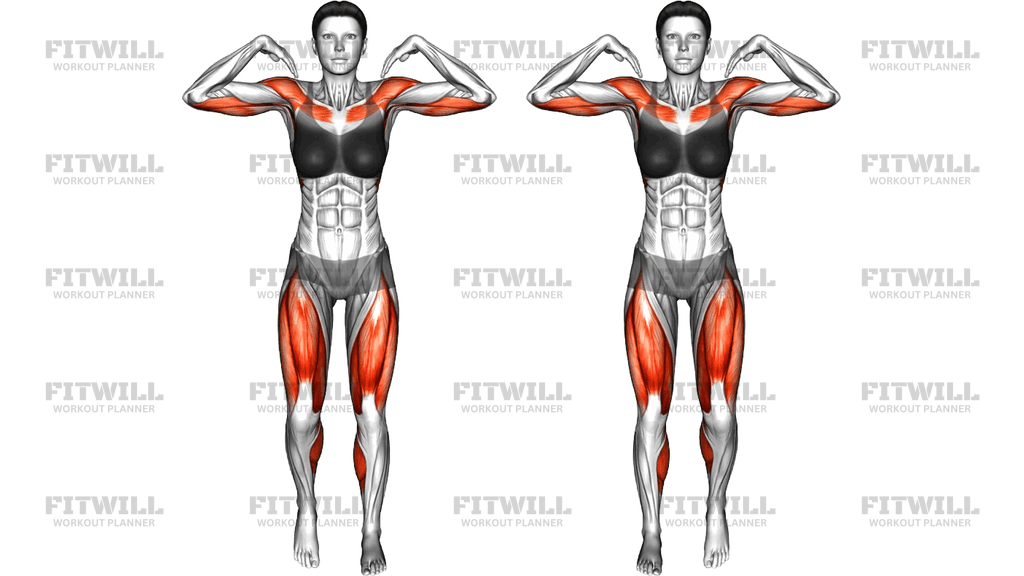
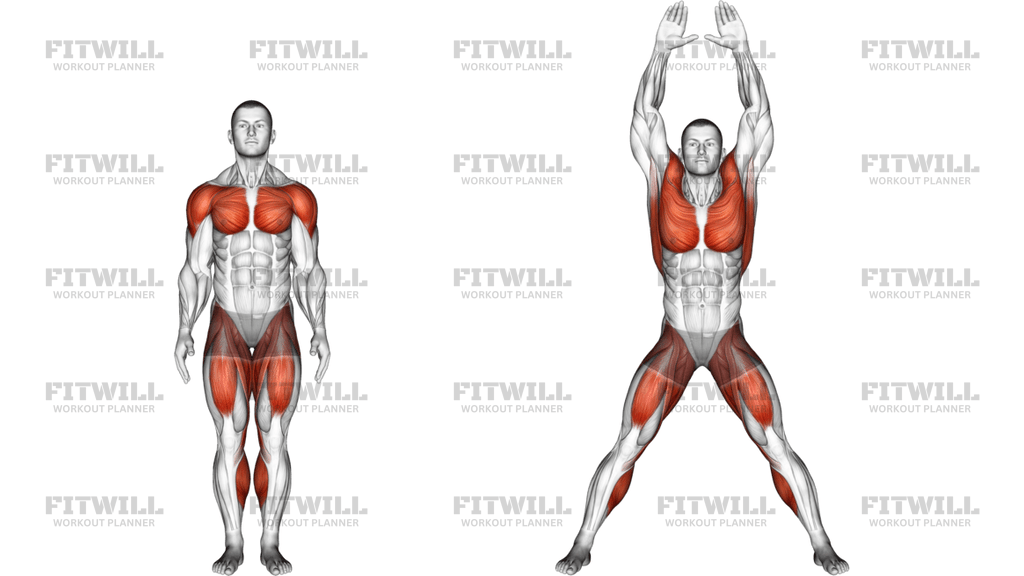
This movement is mainly used to raise heart rate, warm the body, and build coordination between the legs, shoulders, and trunk. The visible muscles are mostly the ones that stabilize the torso and control the arm and leg travel, which is why the exercise shows up as a cardio pattern rather than a strength lift. A clean set should feel springy and repeatable, not sloppy or loud.
The setup matters because the starting stance controls the quality of every rep. Stand tall with your feet together or nearly together, ribs stacked over the pelvis, and arms relaxed beside your thighs. From there, the body should leave the ground or step out just enough to land in a stable wide stance without the knees collapsing inward or the shoulders shrugging.
Each rep should open and close on the same track. Jump or step the feet apart while sweeping the arms out and up until the hands meet or nearly meet overhead, then reverse the same path to return to the start. Keep the landing soft, use the toes and midfoot to absorb force, and keep the trunk steady so the legs and shoulders do the work without excess sway.
Jumping jacks fit well in warmups, conditioning circuits, athletic prep, and low-equipment workouts because they are easy to scale and easy to repeat. They are also useful when you want full-body movement without loading the spine or using machines. The main limit is impact: if speed or volume makes the landing noisy, the torso bounce excessive, or the shoulders uncomfortable overhead, switch to step jacks or reduce the pace.
[ Workout Log & Planner ]
Put your next workout in Fitwill
Keep your plan and training log ready when you are.


Instructions
- Stand upright with your feet together or close together, arms relaxed at your sides, and your chest tall.
- Brace lightly through your midsection so your ribs stay stacked over your pelvis before the first jump.
- Jump or step your feet out to a wide stance while sweeping both arms out and overhead in one coordinated motion.
- Land softly with your knees tracking over your toes and your weight spread through the whole foot.
- Bring your hands close together overhead without forcing the shoulders into an uncomfortable range.
- Reverse the same path by jumping or stepping the feet back together as the arms travel back down to your sides.
- Keep the torso upright and avoid letting the upper body fold forward as the pace increases.
- Breathe out on the opening phase and inhale as you return to the starting stance.
- Repeat for the planned time or repetition count, then stop while you can still keep the rhythm clean.
Tips & Tricks
- Keep the jumps small enough that both feet land quietly; loud landings usually mean you are dropping too hard.
- If overhead reach bothers your shoulders, stop the hands short of contact and keep the arms in a comfortable arc.
- Drive the legs symmetrically so one foot does not land before the other, which can twist the knees and hips.
- Use a steady rhythm you can repeat for the whole set instead of sprinting the first few reps and crashing late.
- Let the arms travel in the same timing as the feet so the body opens and closes as one pattern.
- Keep the neck long and the chin neutral instead of looking up at the hands on every rep.
- If impact is an issue, turn the drill into step jacks by stepping one foot out at a time.
- Choose a pace that keeps the trunk from bobbing excessively; the torso should stay controlled, not bounce side to side.
- Stop the set when the knees start caving inward or the feet start landing wide and uncontrolled.
Frequently Asked Questions
What does a jumping jack train most?
It is mainly a cardio and coordination drill that also trains shoulder and hip control through a repeated open-and-close pattern.
Do the feet need to leave the floor every rep?
No. Beginners or anyone limiting impact can step the feet out and back instead of jumping.
Should my hands touch overhead?
They can meet or come close together, but only if your shoulders can reach that position comfortably.
What is the most common form mistake?
The most common issue is letting the landing get noisy and sloppy, which usually means the body is moving faster than it can control.
What muscles help stabilize the movement?
The core, shoulders, hips, calves, and upper back all help keep the body organized as the arms and legs move.
Is this a good warmup exercise?
Yes. It is a practical way to raise heart rate and rehearse coordinated full-body movement before training.
How do I reduce impact if my knees or ankles feel irritated?
Use step jacks, shorten the jump, and keep the stance width moderate instead of forcing a big landing.
What should I focus on during the rep?
Keep the feet and hands moving together, land softly, and return to the start with the same control you used to open.