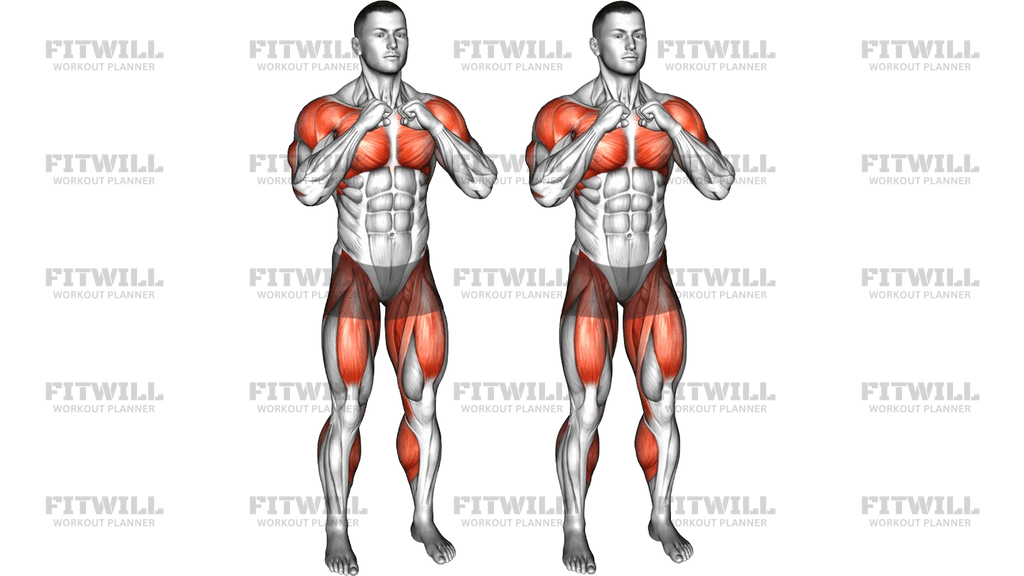
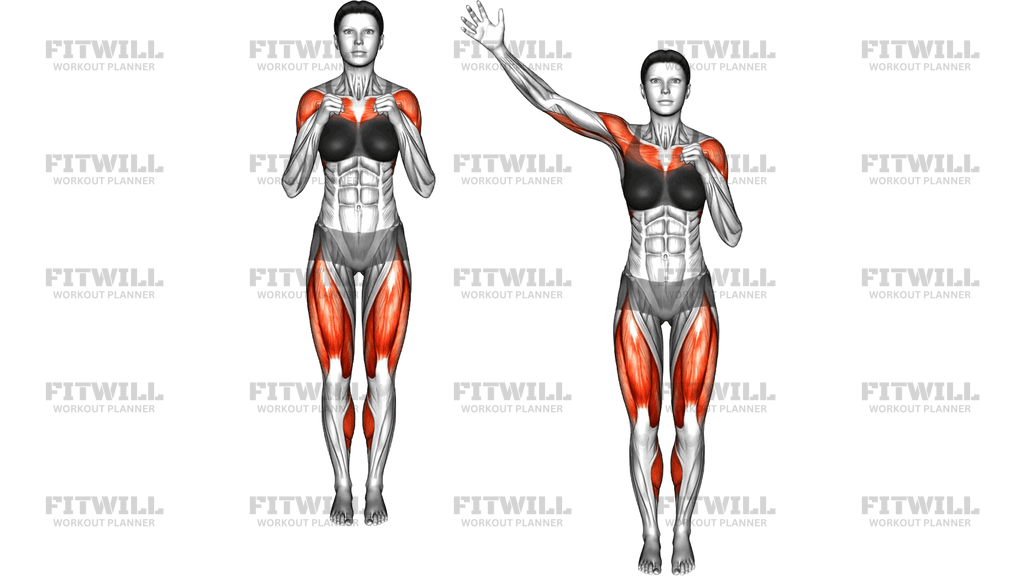
Plyo Jacks
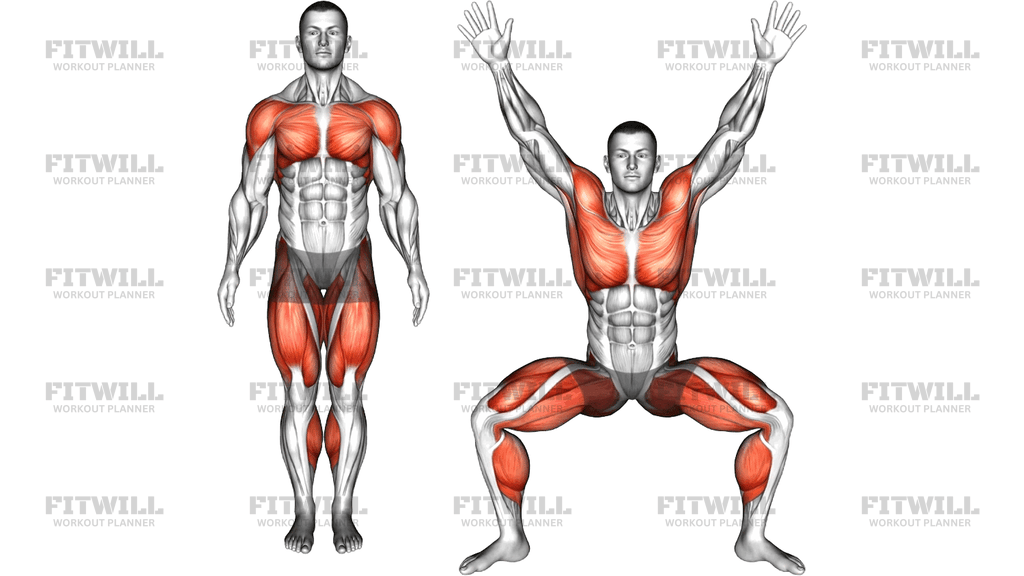
Plyo Jacks are a body-weight plyometric drill that combines a jumping-jack leg pattern with a deep athletic squat and an overhead arm reach. The movement trains lower-body power, coordination, and conditioning at the same time, while also challenging the shoulders and trunk to stay organized as the feet land and the knees bend.
The wide landing and overhead reach make setup matter. If you start too narrow, collapse into the knees, or let the chest cave forward, the rep turns into sloppy cardio instead of a useful power drill. A good plyo jack should feel springy on the way out, controlled on the landing, and stable in the bottom position, with enough knee and hip bend to absorb force without losing posture.
This exercise is useful when you want a more demanding version of a jumping jack that raises heart rate and improves lower-body explosiveness. It is commonly used in warm-ups, athletic conditioning circuits, and metabolic workouts. Because the movement is fast and repeated, the real goal is not just speed; it is consistent landing mechanics, steady breathing, and a repeatable squat depth that you can maintain for the whole set.
The shoulders and upper back must also stay active so the arms can travel overhead without pinching or arching the lower back. If overhead mobility is limited, the reach will shorten automatically, but the squat and jump should still stay crisp. Keep each repetition clean, land softly, and stop the set when the jumps get noisy, the knees drift inward, or the torso begins to wobble.
[ Workout Log & Planner ]
Put your next workout in Fitwill
Keep your plan and training log ready when you are.


Instructions
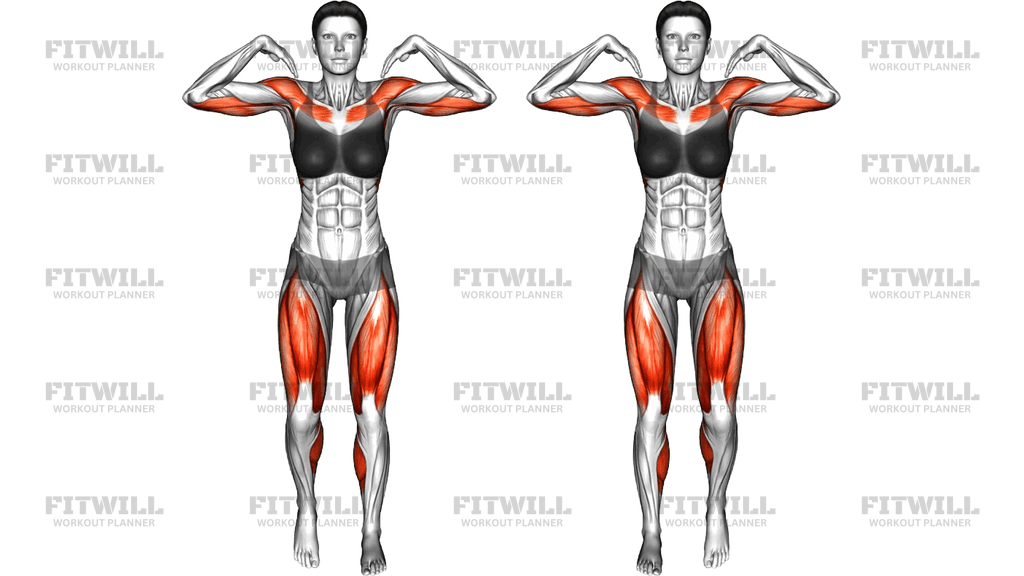
- Stand tall with your feet together, toes pointing forward, and your arms relaxed at your sides.
- Brace your midsection and keep your chest lifted before you leave the floor.
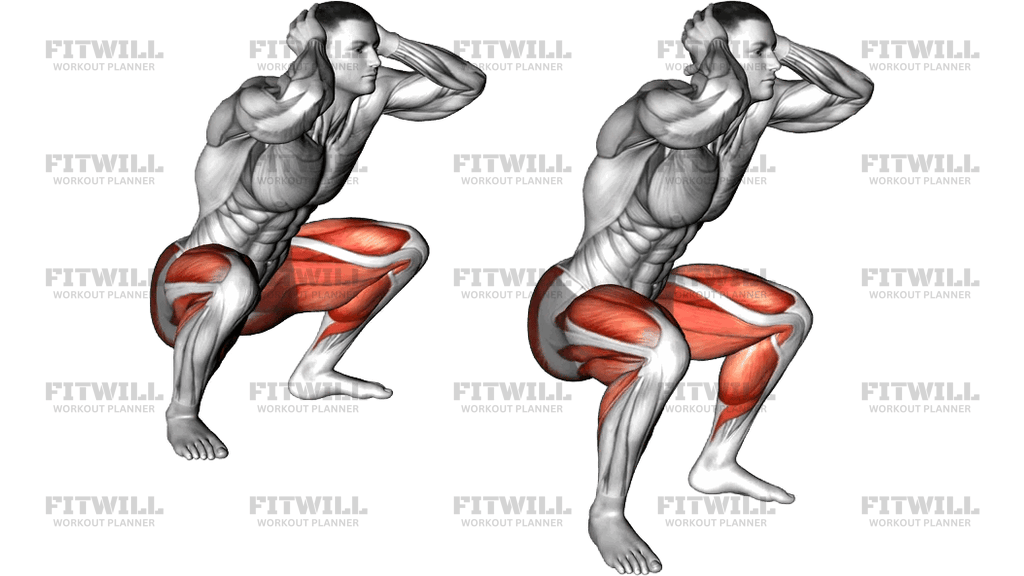
- Jump your feet out wider than shoulder width as you lower into a deep athletic squat.
- At the same time, sweep your arms up and overhead until your hands are above your head.
- Land softly with your knees tracking over your toes and your hips back behind you.
- Use your glutes and legs to reverse the movement and spring back to the start.
- Bring your feet back together as your arms return to your sides.
- Keep the jumps rhythmic and controlled, not rushed or bouncy.
- Breathe out as you jump and inhale as you reset for the next rep.
- Stop the set if your landings get loud, your knees cave inward, or your torso starts to pitch forward.
Tips & Tricks
- Think of the landing as a squat catch: hips back, knees soft, and weight spread across the whole foot.
- Keep the overhead reach active but not forced; if your shoulders are tight, let the hands stop just short of full lockout.
- Use a quick, light push off the floor instead of trying to jump as high as possible.
- Keep your knees aligned with your second and third toes on every landing.
- Stay tall through the torso so the squat comes from the hips and knees, not from folding at the waist.
- If the set gets noisy, shorten the jump and lower the squat depth before your form breaks down.
- Choose a pace that lets you reset between reps; this drill works best when every landing looks the same.
- Keep your gaze forward so you do not tuck your chin and round the upper back.
- For conditioning, use longer sets; for power, use shorter sets with more explosive but still controlled jumps.
Frequently Asked Questions
What muscles do plyo jacks work?
They primarily train the legs and glutes, with strong involvement from the shoulders, calves, and core as you jump, squat, and reach overhead.
Is this just a faster jumping jack?
No. Plyo jacks add a wider squat and a more forceful jump, so they demand more leg power, balance, and landing control than a standard jumping jack.
How deep should the squat be in the wide position?
Go as deep as you can while keeping the chest up, the heels grounded, and the knees tracking cleanly over the toes.
Should my arms touch overhead on every rep?
Only if your shoulders allow it comfortably. The important part is a strong overhead reach without arching the lower back or shrugging excessively.
Can beginners do plyo jacks?
Yes, but they should start with smaller jumps and shallower squats until they can land quietly and keep the knees stable.
What is the most common mistake with plyo jacks?
Letting the knees cave inward or landing too stiffly is the biggest issue, because both reduce power and increase stress on the lower body.
Where do plyo jacks fit in a workout?
They work well in warm-ups, conditioning circuits, or athletic finishers where you want a high-heart-rate movement with a power component.
How do I make this exercise easier?
Reduce the jump height, narrow the squat slightly, or slow the pace so you can keep each landing controlled.