Resistance Band Pull Apart
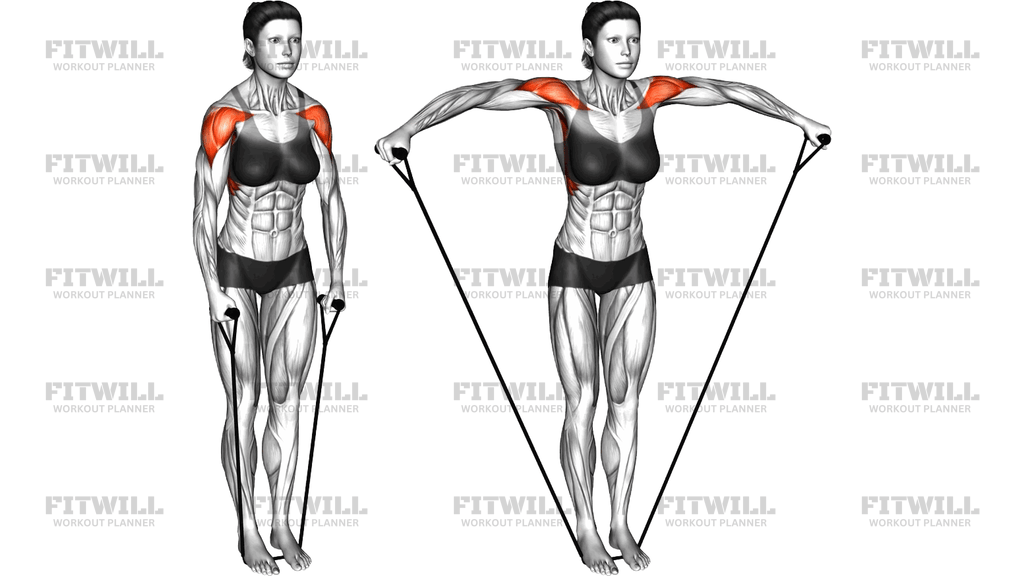
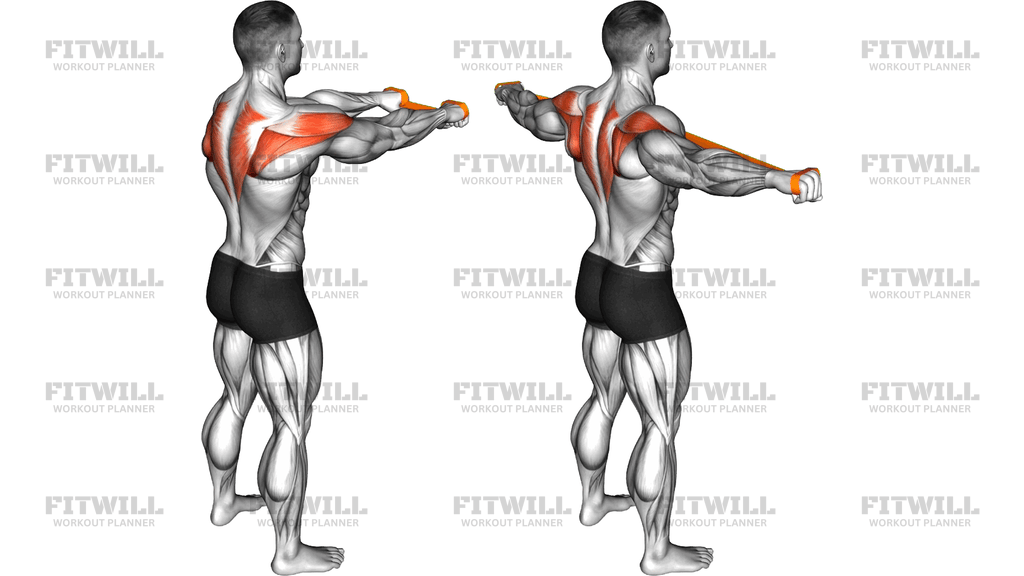
Resistance Band Pull Apart is a standing shoulder and upper-back exercise where you hold a resistance band at arm's length and pull the hands apart until the band stretches across the chest line. It is a simple but useful drill for building rear-delt, upper-back, and scapular control without needing a bench or machine. The movement is small, but the intent matters: the best reps come from clean tension, not from yanking the band or leaning backward to create extra range.
The main emphasis is on the deltoids, especially the rear shoulder fibers, with the rhomboids and middle traps helping to draw the shoulder blades back and keep the chest open. The arms stay mostly straight so the band tension stays on the shoulders and upper back rather than turning the drill into an elbow movement. That makes setup important: if you start with too much slack, the first half of the rep becomes a jerk; if you start too wide, the band never really loads the target area.
A good setup is tall and quiet. Stand with your feet about hip-width apart, hold the band at shoulder height, and create a little tension before you begin. Keep the ribs stacked over the pelvis, neck long, and shoulders down. From there, pull the hands apart in a smooth arc until the band touches or nearly touches the upper chest line, then pause briefly so you feel the back of the shoulders and the muscles between the shoulder blades doing the work.
The return matters just as much as the pull. Let the band come back under control so the shoulders do not collapse forward and the movement does not become a bounce. If the band yanks your arms forward, shorten the range or use a lighter resistance. If your traps or neck take over, lower the load and keep the shoulders away from your ears. The exercise should feel crisp, precise, and repeatable.
Resistance Band Pull Apart works well in a warm-up, a shoulder-prep circuit, or as accessory volume after pressing and rowing work. It is also a practical choice when you want upper-back activation without heavy loading on the spine. Beginners can use it effectively with a light band, and more advanced lifters can make it harder by increasing starting tension, slowing the return, or adding a pause in the fully opened position.
[ Workout Log & Planner ]
Put your next workout in Fitwill
Keep your plan and training log ready when you are.


Instructions
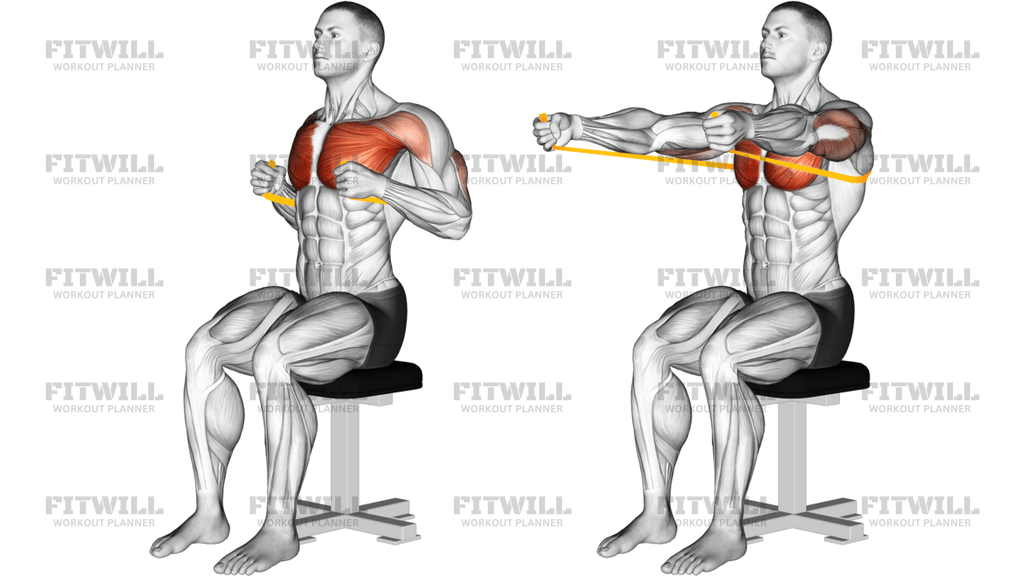
- Stand tall with your feet about hip-width apart and hold the band straight out in front of your chest at shoulder height.
- Take the slack out of the band before the first rep so the arms start with light, even tension.
- Keep your elbows almost straight, your wrists neutral, and your shoulders relaxed away from your ears.
- Brace your trunk and keep your ribs stacked over your pelvis before you begin to pull.
- Pull the hands apart in a smooth arc until the band stretches across the upper chest line.
- Finish the rep by squeezing the shoulder blades back without arching the low back or shrugging upward.
- Pause briefly at the open position and feel the rear shoulders and upper back working.
- Return slowly to the start with control, keeping tension on the band instead of letting it snap forward.
- Exhale as you pull apart, inhale as you come back in, and repeat for the planned reps.
Tips & Tricks
- Choose a band that lets you open the arms without shrugging or bending the elbows to cheat the range.
- If the first inch of motion feels jerky, start with more pre-tension or step farther from the anchor if you are using one.
- Keep the hands in line with the shoulders; dropping the band too low shifts the work away from the rear delts.
- Think about pulling the upper arms wide, not squeezing the hands together at the start of the return.
- Keep the neck long and the jaw relaxed so the upper traps do not steal the set.
- A brief pause in the fully opened position makes the rear shoulders and mid-back work harder than fast reps.
- Do not over-arch the lower back to fake a bigger stretch across the chest.
- Use a slower return than the pull if you want cleaner scapular control and less momentum.
- Stop the set when the band starts to pull your shoulders forward or your wrists begin to twist.
Frequently Asked Questions
What muscles does a Resistance Band Pull Apart target most?
It mainly trains the rear delts, with the rhomboids and middle traps helping to open the shoulders.
How far apart should my hands start on the band?
Start with the hands about shoulder-width apart, or slightly wider if that is the only way to keep the band under light tension.
Should my elbows stay straight during the pull apart?
Keep them almost straight with a soft bend. Bending too much turns the drill into more of a row and reduces the shoulder work.
Do I need to raise the band above shoulder height?
No. This version is usually best with the band held at shoulder height so the pull stays centered on the rear shoulders and upper back.
Can beginners do Resistance Band Pull Aparts safely?
Yes. A light band and a small, controlled range make it a very beginner-friendly shoulder activation exercise.
Why do I feel this in my neck instead of my shoulders?
That usually means the band is too heavy or you are shrugging. Reduce the resistance and keep the shoulders down as you open the band.
Is a standing pull apart better than doing it seated?
Standing is useful because it lets you keep a tall posture and see whether your ribs or lower back are helping too much.
How can I make the exercise harder without changing form?
Use a stronger band, start with more pre-tension, or add a short pause when the band is fully opened.