Barbell Military Press With Hanging Band Technique
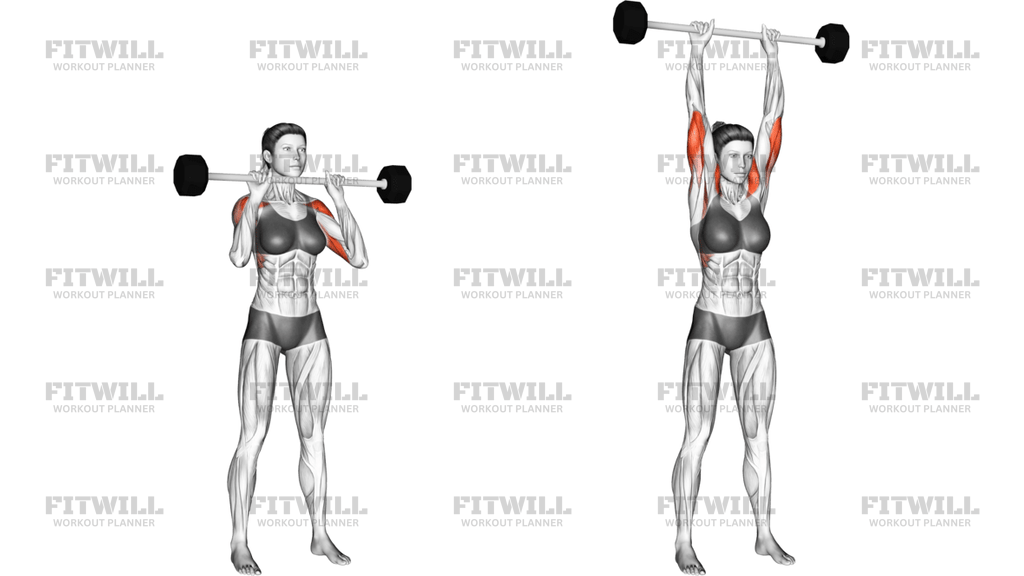
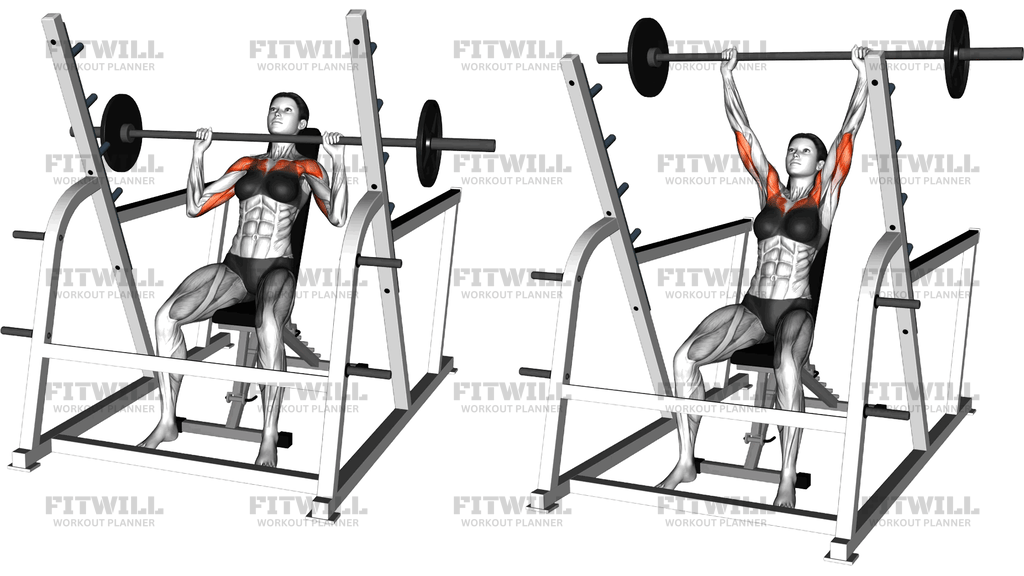
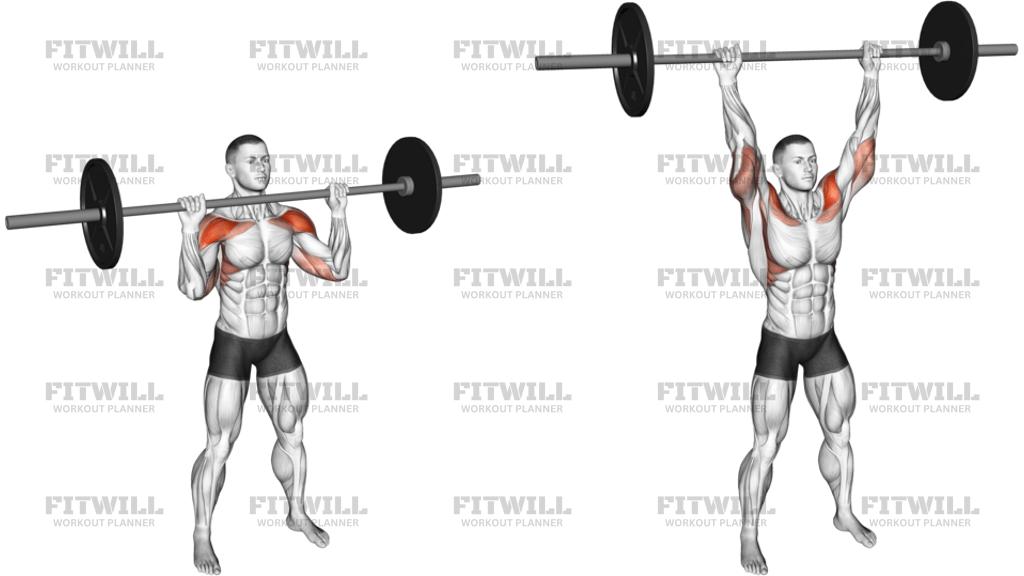
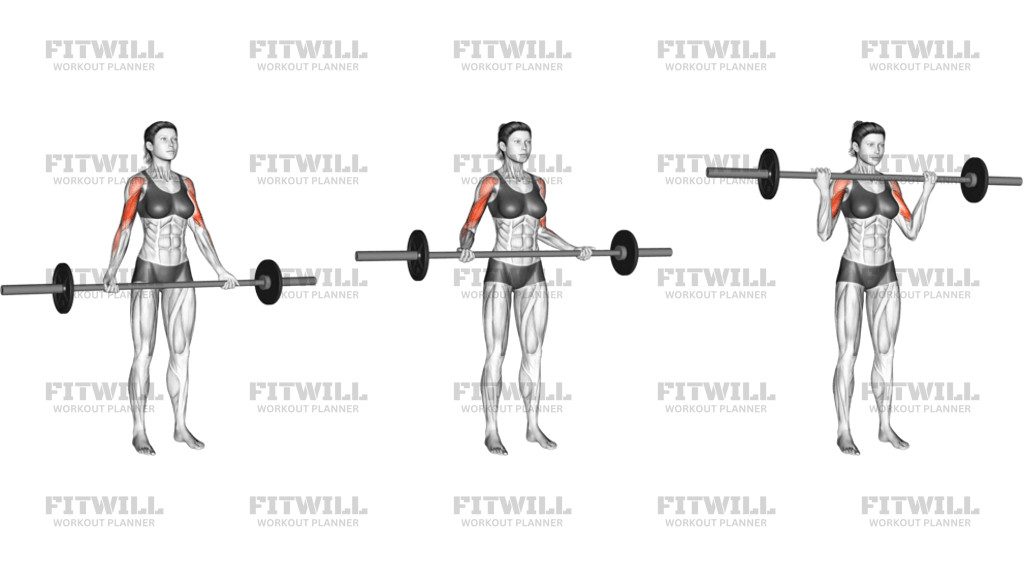
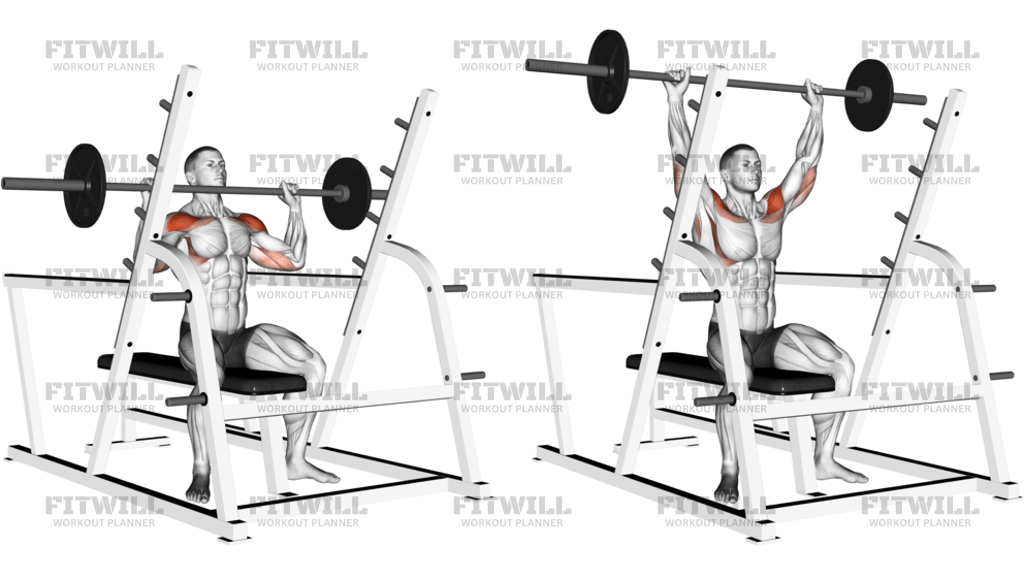
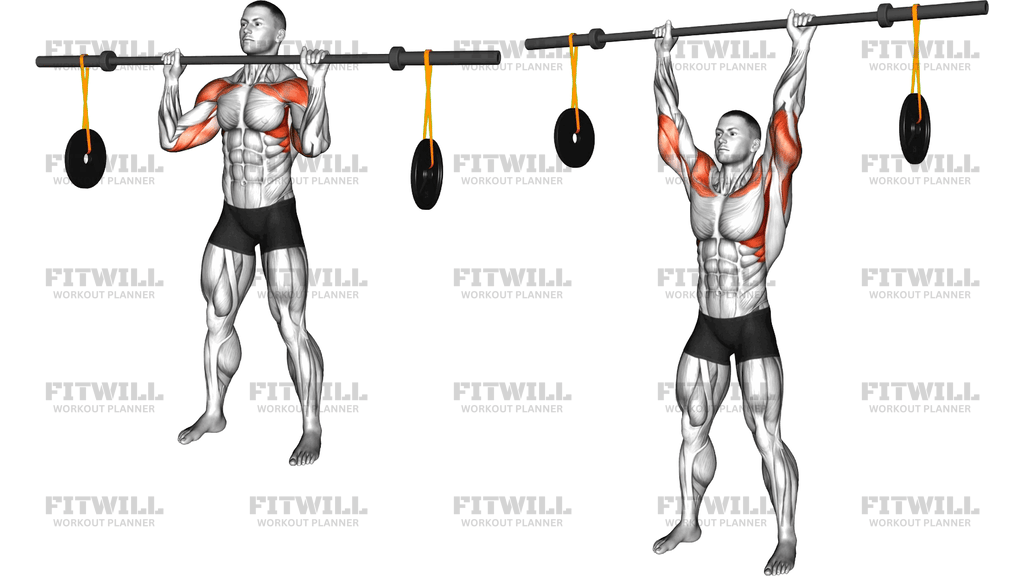
Barbell Military Press With Hanging Band Technique is a standing overhead press that places the delts under direct load while the suspended plates add instability. It is still a strict press, not a push press: the legs stay quiet, the torso stays stacked, and the bar travels from the upper chest to a stable lockout overhead. The hanging load makes the exercise more demanding for the shoulders, triceps, upper back, and trunk because every rep has to control both upward force and side-to-side sway.
The setup matters more here than in a standard press. A firm stance, ribs down, and glutes squeezed keep the bar from drifting forward when the hanging plates start to move. Your hands should sit just outside shoulder width with the bar resting across the front rack near the clavicles. Elbows stay slightly in front of the bar so the wrists, forearms, and shoulders are stacked before the first press. That position gives you the cleanest path and the most room to drive the bar overhead without leaning back.
During the press, the bar should move up and slightly back as your head clears the path, then come to a position over the midfoot with the biceps close to the ears. Because the plates are hanging, you will feel extra oscillation at the start and finish of each rep. Your job is to keep the bar level, avoid twisting through the torso, and let the weights settle under control before starting the next rep. A short pause overhead is useful if you need to prove balance before lowering.
This exercise works well as a shoulder-strength builder, a strict pressing accessory, or a stability-focused variation when you want more demand from the same basic movement pattern. It can also expose weak points in overhead control, especially if one side presses ahead of the other or if the lower back takes over. Keep the range pain-free, use a lighter load than you would for a normal military press, and stop the set when the hanging plates begin to swing more than you can control.
[ Workout Log & Planner ]
Put your next workout in Fitwill
Keep your plan and training log ready when you are.


Instructions
- Stand with your feet about hip width apart and the barbell resting across the upper chest in the front rack.
- Grip the bar just outside shoulder width, keep the wrists stacked over the forearms, and point the elbows slightly forward.
- Squeeze your glutes, brace your midsection, and keep your ribs down before you start the first rep.
- Take a breath, then press the bar up in a smooth line while moving your head back just enough to clear the face.
- Drive the bar overhead until the elbows lock out and the bar finishes over the middle of the body.
- Keep the hanging plates level and resist any twist or lean as the load settles at the top.
- Pause briefly overhead if the weights are swinging, then lower the bar under control back to the upper chest.
- Reset your breath and posture before the next repetition instead of bouncing straight into the next press.
Tips & Tricks
- Use less load than a normal military press, because the hanging plates make even moderate weight feel much less stable.
- Keep your forearms vertical in the front rack; if the elbows drift too far back, the bar will feel heavy and unstable before the rep even starts.
- Do not chase the bar with your lower back. If your ribs flare and your torso leans back, the press stops being strict.
- Let the head move out of the way on the way up, then bring it back through so the bar finishes directly over the midfoot.
- Press both sides evenly. If one end of the bar rises or swings more than the other, reduce the load and clean up the path.
- Expect a short settling phase at the top. Starting the next rep while the plates are still swinging usually turns into a shaky repeat.
- Keep the grip firm but not death-gripped so the wrists can stay stacked and the bar can move smoothly.
- If shoulder mobility is limited, stop just short of the point where the ribcage pops up or the bar drifts far in front of your head.
Frequently Asked Questions
What does Barbell Military Press With Hanging Band Technique train most?
It primarily trains the delts, with the triceps, upper back, and core helping keep the bar stable under the suspended load.
Why are the plates hanging from the bar instead of resting on the floor?
The suspended plates add instability, so you have to control sway and keep the bar level while you press overhead.
Where should the bar start before each rep?
It should start in the front rack against the upper chest or clavicle area with the elbows slightly in front of the bar.
Should I use leg drive on this press?
No. This is a strict standing military press, so the legs stay planted and quiet while the shoulders and triceps do the work.
What is the most common mistake with the hanging load?
The biggest mistake is leaning back and chasing the weights with the lower back instead of keeping the bar over the midfoot.
Can beginners try this variation?
Yes, but only with very light load and after they can perform a normal strict overhead press with control.
How should the bar path look on the way up?
The bar should travel up and slightly back around the face, then finish stacked over the shoulders and midfoot at lockout.
What should I do if the plates keep swinging between reps?
Pause longer at the top, lower the load, and restart only when the bar feels centered again.