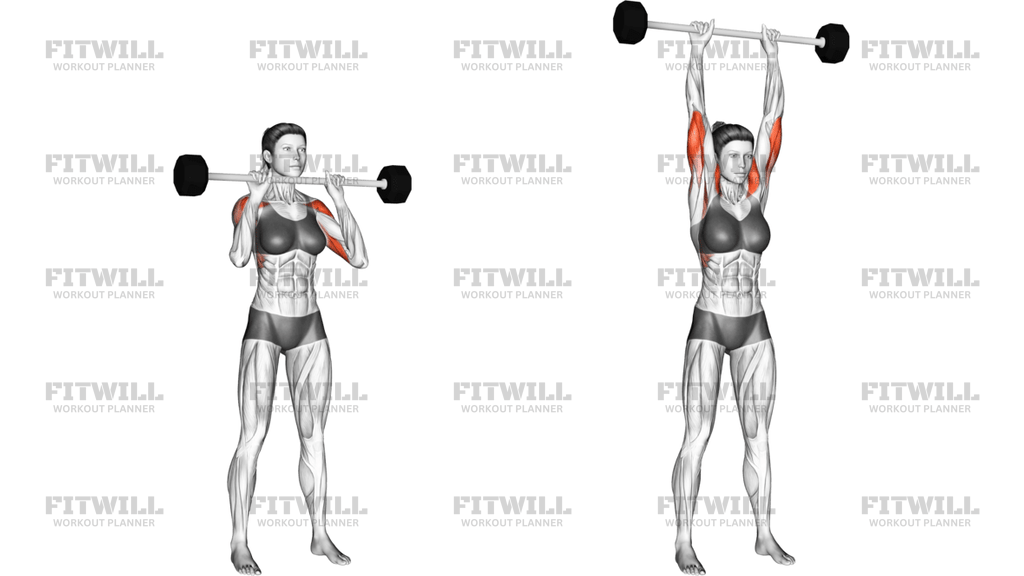
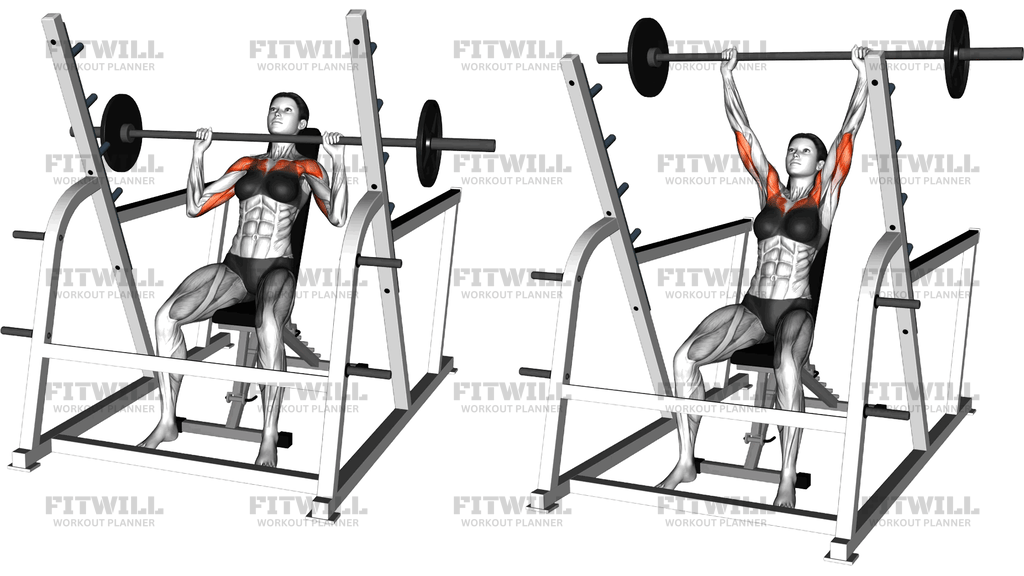
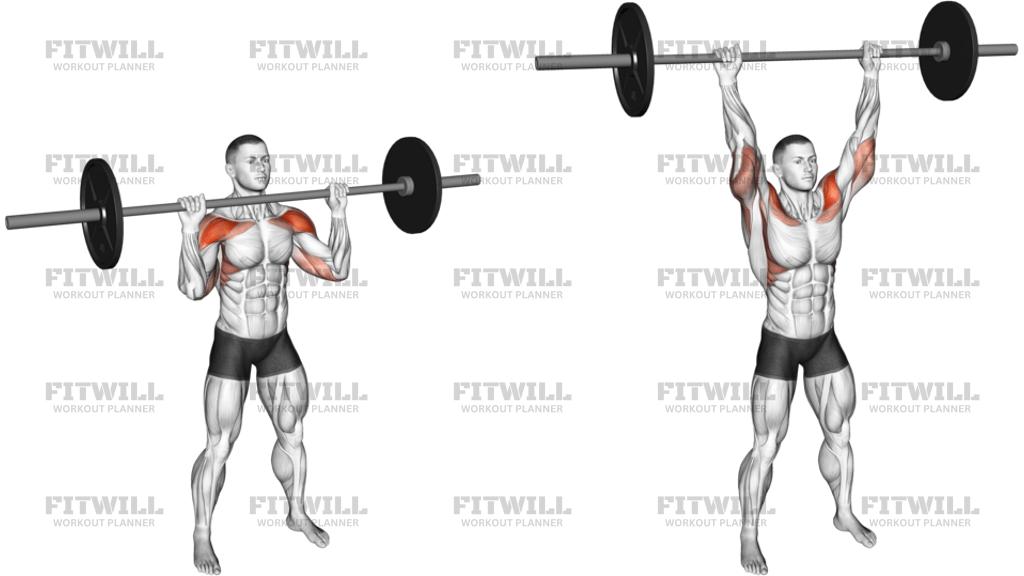
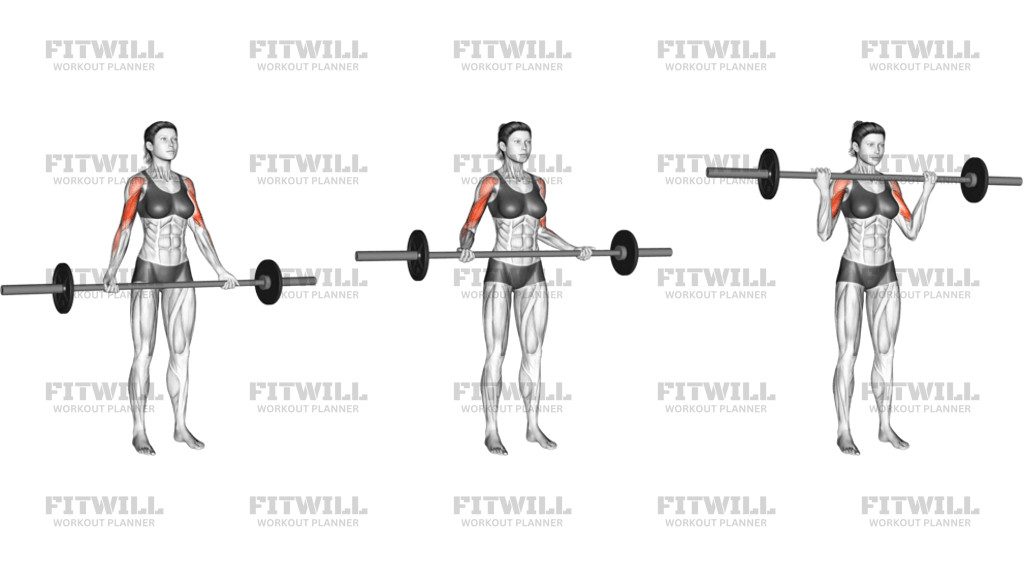
Barbell Incline Lying Rear Delt Raise
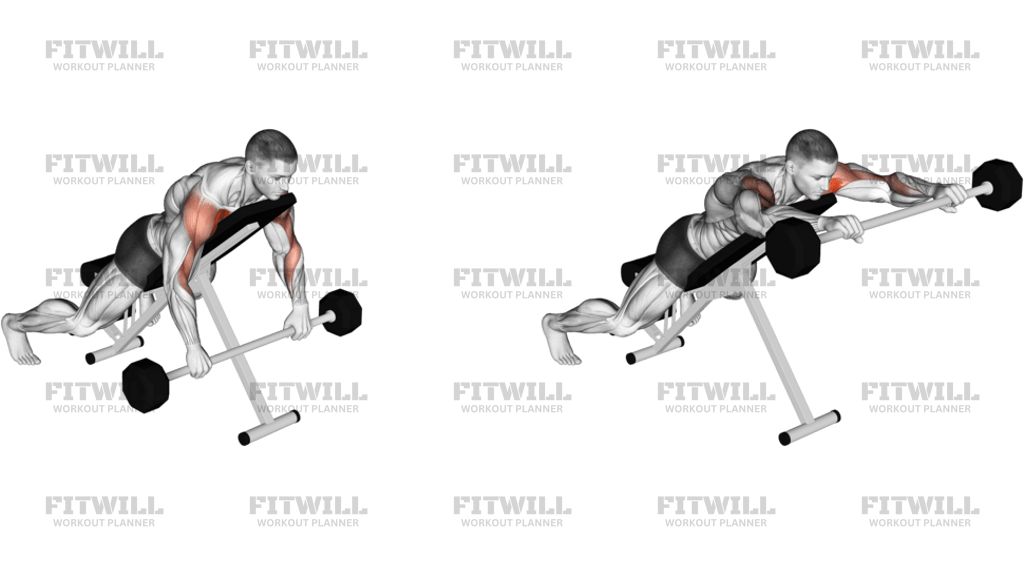
Barbell Incline Lying Rear Delt Raise is a chest-supported rear shoulder exercise performed face down on an incline bench with a barbell held in both hands. It places the rear deltoids under steady tension while also asking the upper back to stabilize the shoulder blades, so it is useful when you want direct posterior-shoulder work without standing momentum or heavy body English.
The bench angle is a big part of why this movement works well. Lying on an incline takes pressure off the lower back, keeps the torso from swinging, and helps isolate the line of pull through the back of the shoulders. Because the barbell is longer and less forgiving than dumbbells, the exercise rewards a lighter load, a controlled tempo, and a setup that lets the arms hang freely below the chest.
Start with the chest pinned to the pad, feet planted or legs extended for balance, and the barbell hanging under the shoulders with an overhand grip. From there, raise the bar in a wide arc until the upper arms line up with the torso or the bar reaches shoulder height, then lower it slowly without letting the weight drop. The rep should feel like a deliberate sweep rather than a shrug or a press.
This exercise is especially useful in shoulder accessory work, upper-back focused sessions, and bodybuilding-style programs where rear-delt development matters for shoulder balance and posture. It can also help lifters who need a stable rear-shoulder movement without standing hinge fatigue. The goal is not to move the heaviest bar possible, but to keep the shoulders doing the work while the torso stays quiet.
Use a range of motion that stays smooth and pain-free, and stop short of turning the top of the rep into a shrug. If the neck tightens, the lower back lifts off the bench, or the bar starts swinging, the load is too heavy or the bench position needs adjustment. Clean reps with a small pause at the top will build the rear delts and upper back more effectively than forcing extra height or speed.
[ Workout Log & Planner ]
Put your next workout in Fitwill
Keep your plan and training log ready when you are.


Instructions
- Set an incline bench to about 30 to 45 degrees and lie chest-first on the pad with your head clear of the top edge.
- Hold the barbell with an overhand grip that is a little wider than shoulder width, then let it hang straight down under your shoulders.
- Plant your feet, or extend your legs back for balance, so your torso stays pressed into the bench without drifting.
- Keep a soft bend in the elbows and turn your palms down before you start the lift.
- Raise the bar out and up in a wide arc until your upper arms are in line with your torso or the bar reaches shoulder height.
- Squeeze the rear delts at the top for a brief pause without shrugging the shoulders toward your ears.
- Lower the bar slowly along the same arc until your arms are hanging again under control.
- Exhale as you lift, inhale as you lower, and reset fully before the next rep.
Tips & Tricks
- Use a lighter barbell than you would for standing rear-delt work; the long lever makes this exercise feel heavier fast.
- Keep the chest glued to the bench so the rep does not turn into a torso heave.
- Let the elbows travel slightly higher than the hands, but do not turn the lift into a row.
- If the top position feels like a shrug, reduce the range and keep tension on the rear delts instead of the traps.
- A grip that is too narrow usually turns the movement awkward; widen the hands until the shoulders can open naturally.
- Do not slam the bar back to the bottom of the rep; the lowering phase should stay smooth and controlled.
- If your lower back arches off the pad, raise the bench a little or lighten the load so your body stays anchored.
- Use a short pause at the top only if you can keep the bar steady and the neck relaxed.
Frequently Asked Questions
What does Barbell Incline Lying Rear Delt Raise train most?
It primarily trains the rear deltoids, with the upper back helping stabilize the shoulders during the lift.
How should the barbell be held on this incline rear delt raise?
Use an overhand grip slightly wider than shoulder width and let the bar hang under the shoulders before lifting.
How high should I raise the bar on the incline bench?
Lift until the upper arms are about in line with the torso or the bar reaches shoulder height, then stop before the shoulders start shrugging.
Should my chest stay on the bench the whole time?
Yes. Keeping the chest pressed into the incline bench removes momentum and keeps the rear delts doing the work.
Why does this exercise feel awkward compared with dumbbell rear delt raises?
The barbell gives both hands one fixed lever, so the movement is less forgiving and usually needs a lighter load to stay clean.
Can beginners do Barbell Incline Lying Rear Delt Raise?
Yes, but beginners should start very light so they can learn the bench position, grip width, and controlled arc before adding load.
What if I feel the exercise mostly in my traps?
Lower the weight, shorten the top range slightly, and keep the shoulders away from the ears so the rear delts stay in control.
Where does this fit best in a workout?
It works well as accessory work after your main presses or pulls, especially on shoulder or upper-back focused days.