Quick Feet Run
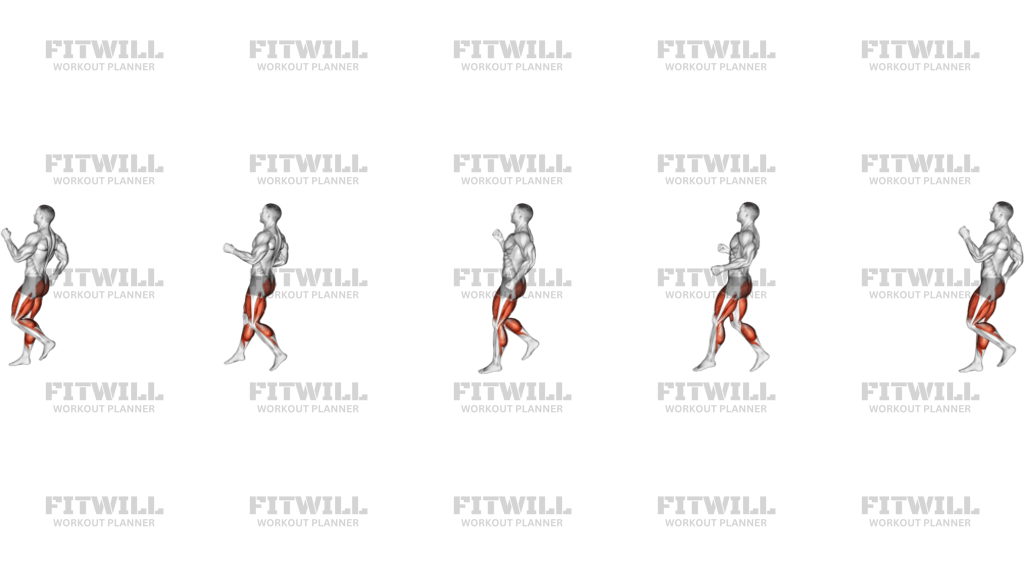
Quick Feet Run is a bodyweight speed drill built around short, fast steps and an athletic running posture. It is useful when you want to raise heart rate, rehearse quick ground contact, and train the lower body to stay organized while the feet move rapidly. The exercise looks simple, but the benefit comes from keeping the trunk steady while the legs and arms work at a brisk rhythm.
The drill leans heavily on the calves, quads, glutes, hip flexors, and core to keep the body springy and balanced. Because the movement is repetitive and fast, posture matters more than stride length. A slight forward lean from the ankles, soft knees, and an active arm swing help you stay quick without turning the drill into a sloppy bounce.
Quick Feet Run works best as a short conditioning burst, a warm-up before sprinting or field work, or a finisher when you want a simple no-equipment cardio option. Keep the steps light and fast, land under your center of mass, and let the knees lift only as high as you can control. The goal is not to bound upward or overstride, but to keep a compact running rhythm that you can repeat cleanly.
The exercise also rewards good breathing and relaxed upper-body tension. If the shoulders creep up or the jaw tightens, the pace is usually too aggressive or the effort has gone on too long. Stay tall through the chest, keep the eyes forward, and reset cleanly between intervals so each round starts with the same sharp foot speed.
Use Quick Feet Run when you want a low-cost, no-equipment way to build coordination, rhythm, and cardiovascular effort at the same time. It is easy to scale by changing pace, interval length, or total rounds, but the standard should stay the same: quick contacts, controlled torso position, and crisp arm drive from start to finish.
Fitwill
Log Workouts, Track Progress & Build Strength.
Achieve more with Fitwill: explore over 9600 exercises with images and videos, access built-in and custom workouts, perfect for both gym and home sessions, and see real results.
Start your journey. Download today!




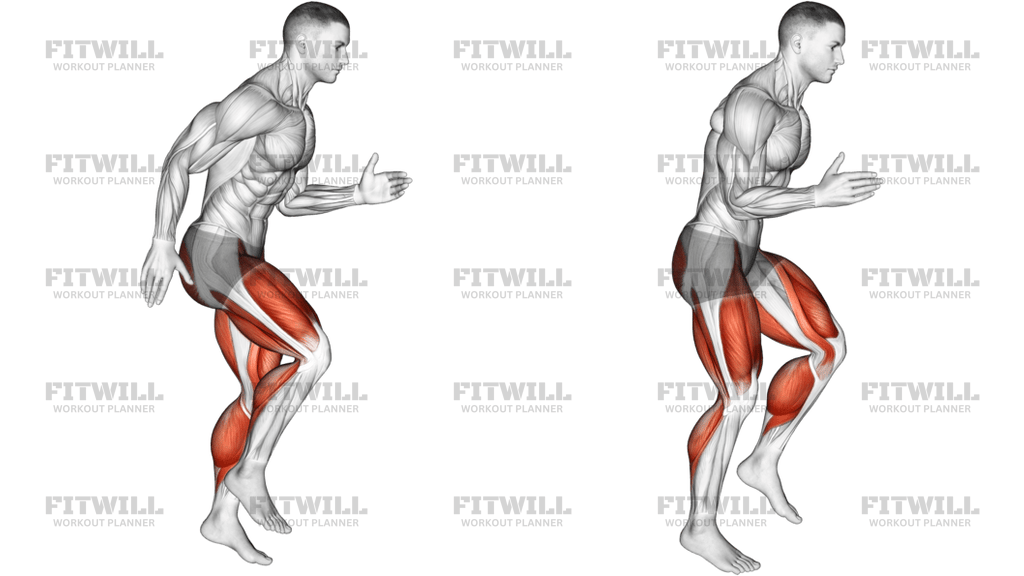
Instructions
- Stand tall on a flat surface with your feet about hip-width apart, knees slightly bent, and your weight balanced over the balls of your feet.
- Tilt your torso forward just a few degrees from the ankles and hold your chest up so your back stays long, not rounded.
- Bend your elbows to about 90 degrees and set your hands in a relaxed running position at your sides.
- Brace your midsection lightly and begin taking very short, quick steps in place.
- Drive one knee up as the opposite arm swings forward, then switch sides in a fast running rhythm.
- Keep each foot contact light and under your body instead of reaching your foot far out in front.
- Land softly through the forefoot and immediately lift into the next step without pausing on the floor.
- Breathe in a steady rhythm and keep the drill compact until the planned interval or rep count is complete.
- Slow the steps down, settle both feet flat, and walk it off before starting the next round.
Tips & Tricks
- Think of this as quick ground contact, not high jumping; too much bounce usually means wasted energy.
- Keep the steps underneath your hips so your shins stay closer to vertical and you do not overstride.
- Pump the arms from the shoulders, but keep the hands loose so the drill does not turn into a tense sprint.
- If your torso starts rocking side to side, shorten the stride and lower the knee lift a little.
- Use a slightly shorter interval if your foot speed drops and your landing gets heavy.
- Stay on the balls of your feet, but let the heel kiss down briefly if that helps you keep the rhythm smooth.
- Keep your gaze forward at chest height instead of looking down at your feet, which tends to fold the posture.
- When the calves start burning early, reduce the pace rather than stamping harder into the floor.
Frequently Asked Questions
What does Quick Feet Run train most?
It is mainly a conditioning and coordination drill for the calves, quads, glutes, hip flexors, and core while teaching faster foot turnover.
Is Quick Feet Run the same as running in place?
It is a faster, more compact version of running in place. The steps stay short and quick so the body feels springy rather than bouncy.
Should my knees come up high during Quick Feet Run?
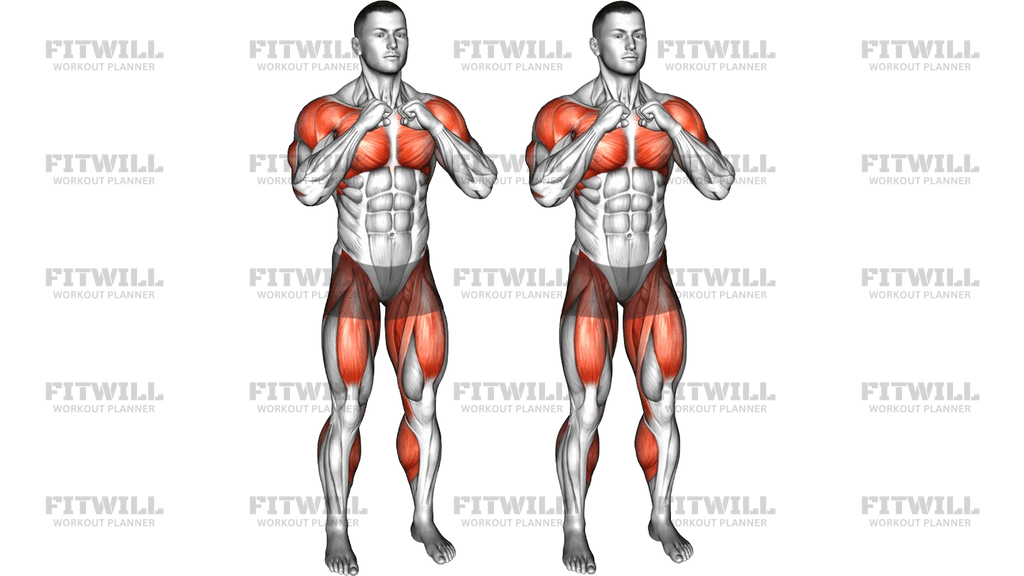
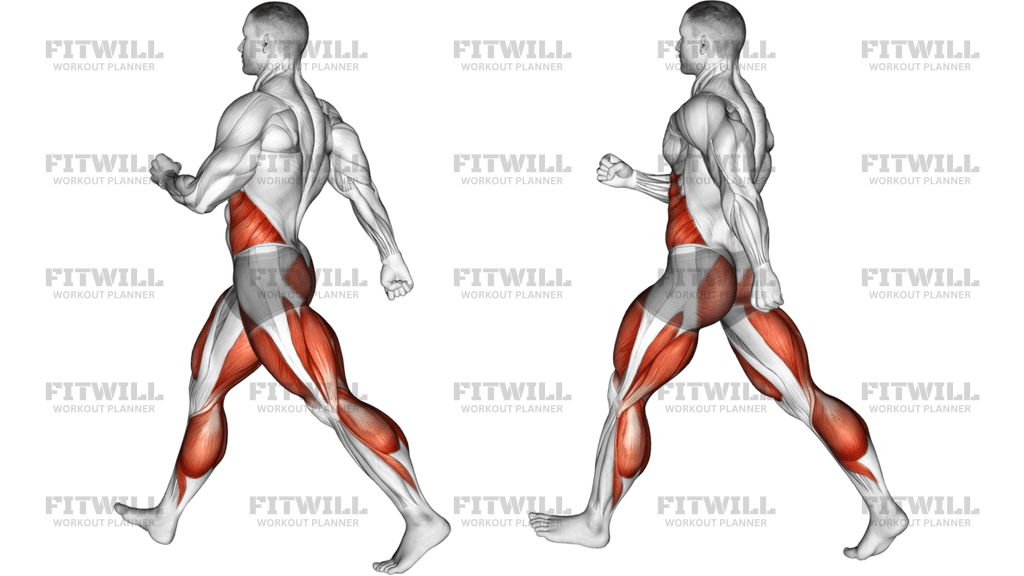
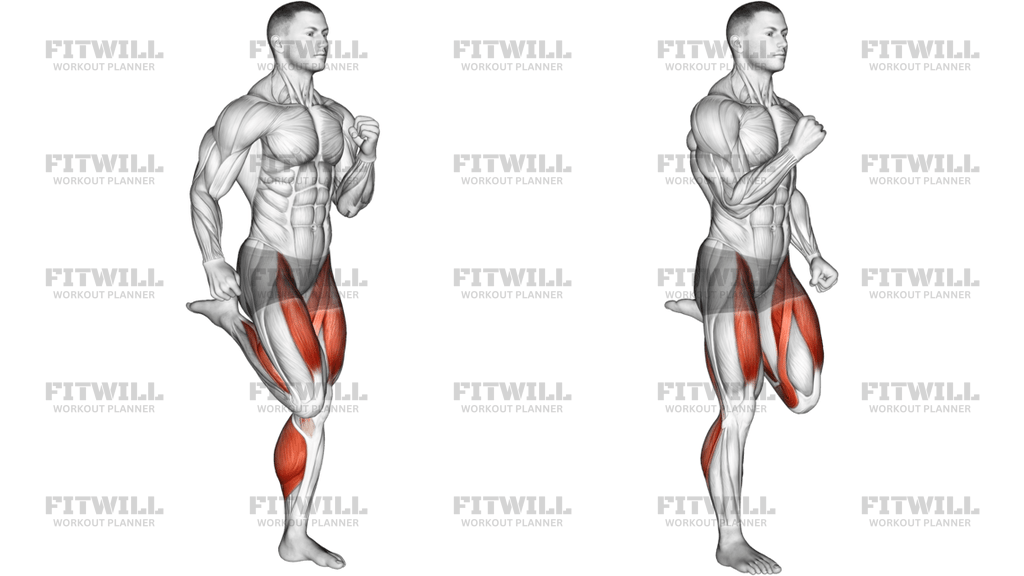
Only as high as you can control without losing rhythm. The image shows an athletic running stance, not a full high-knee sprint drill.
How long should I do Quick Feet Run for?
It usually works best in short intervals, such as 10-30 seconds, because the goal is quick, clean foot speed rather than a long steady run.
What is the biggest mistake in Quick Feet Run?
The most common mistake is reaching the feet too far forward and pounding the floor. That slows the drill down and makes the movement look stiff.
Can beginners do Quick Feet Run?
Yes. Beginners should keep the pace moderate, stay tall through the chest, and focus on quiet landings before trying to move faster.
Do I need equipment for Quick Feet Run?
No equipment is required. A flat, open space with enough room to run in place safely is all you need.
How do I make Quick Feet Run harder?
Increase the work interval, shorten the rest, or raise the pace slightly while keeping the same compact running posture.