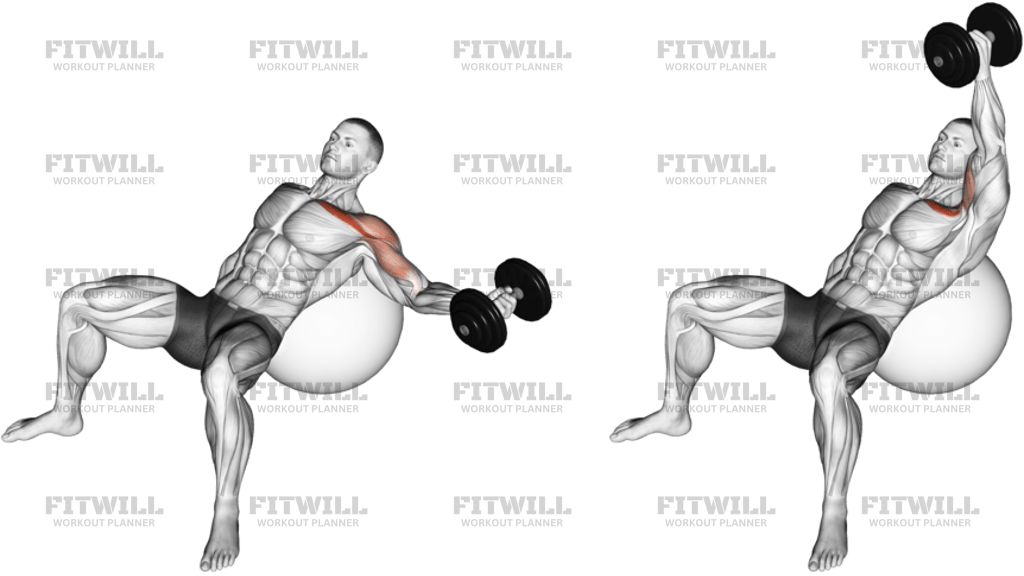
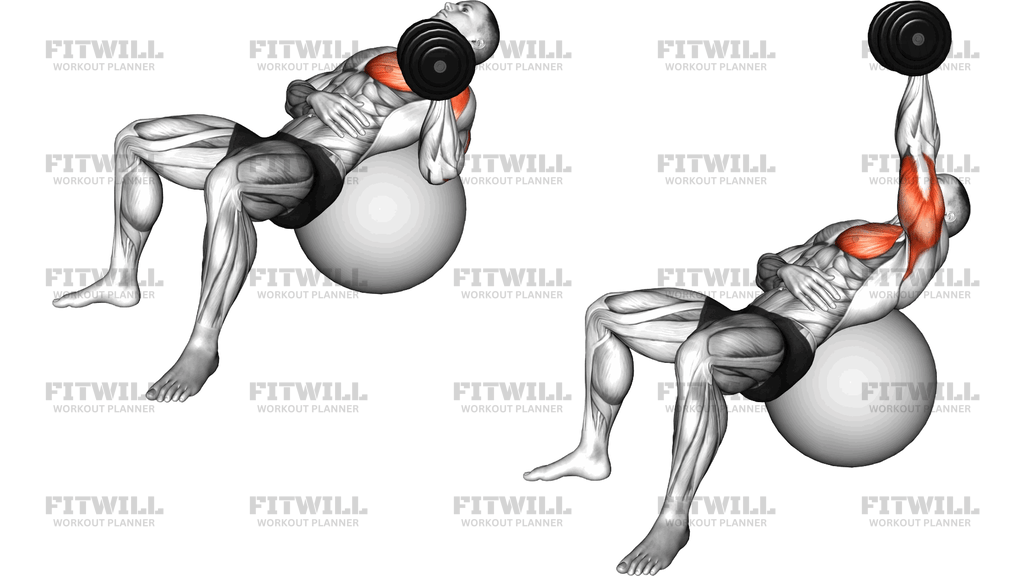
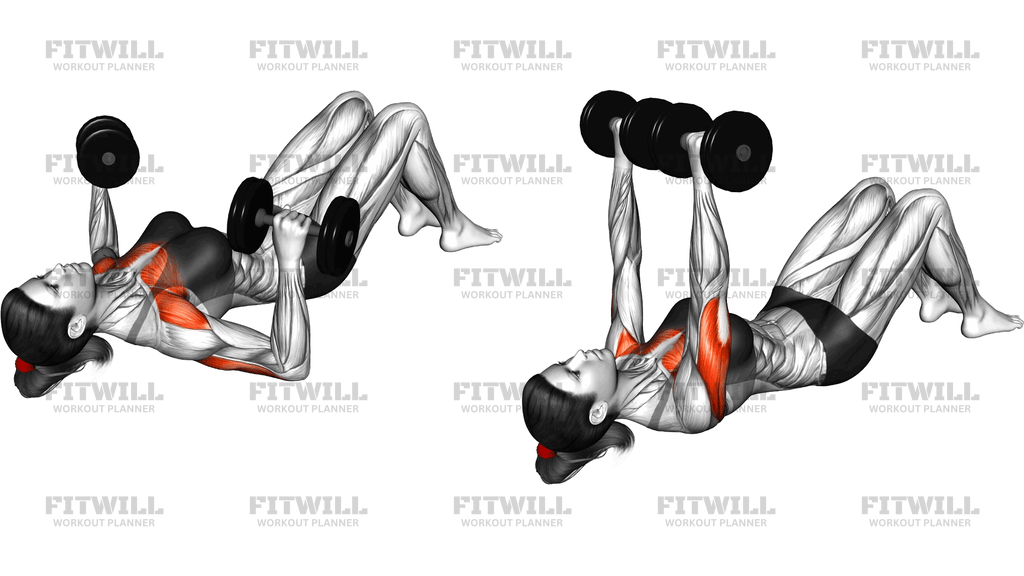
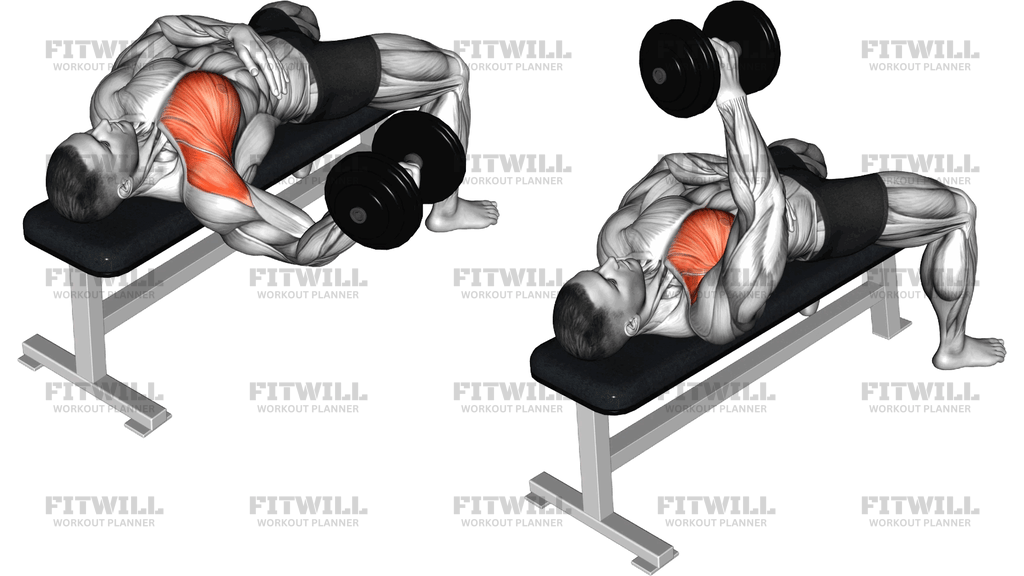
Hyght Dumbbell Fly
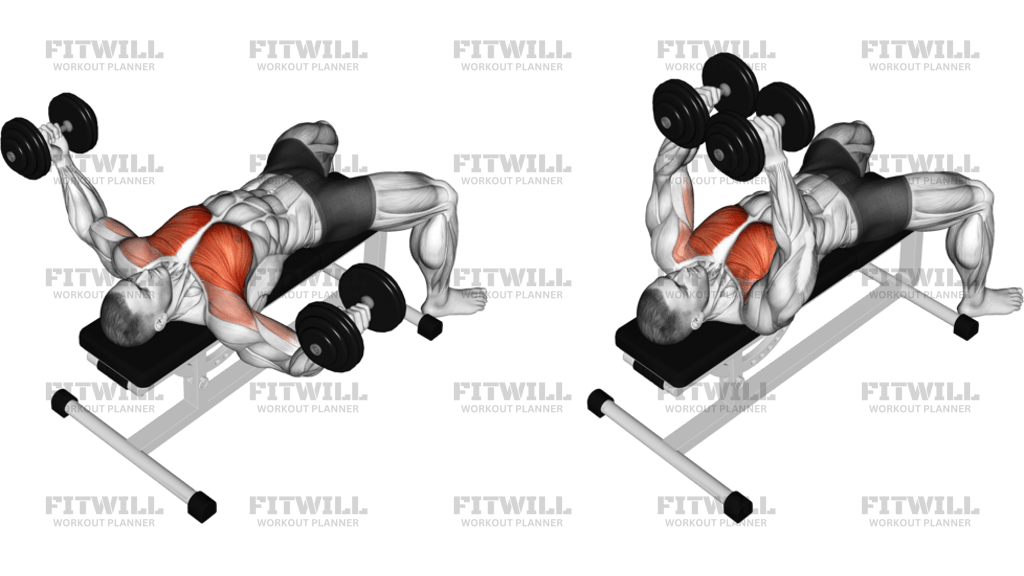
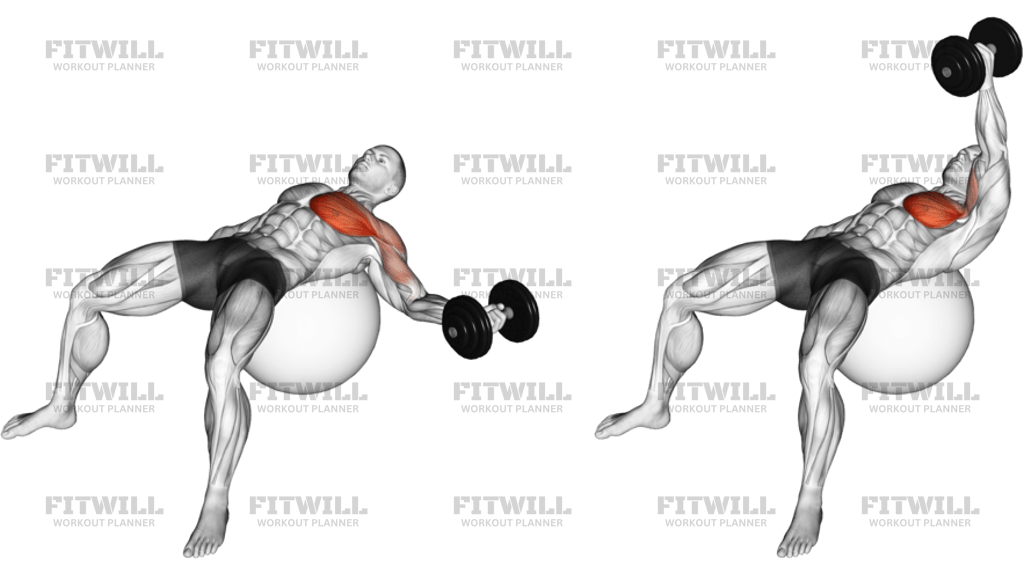
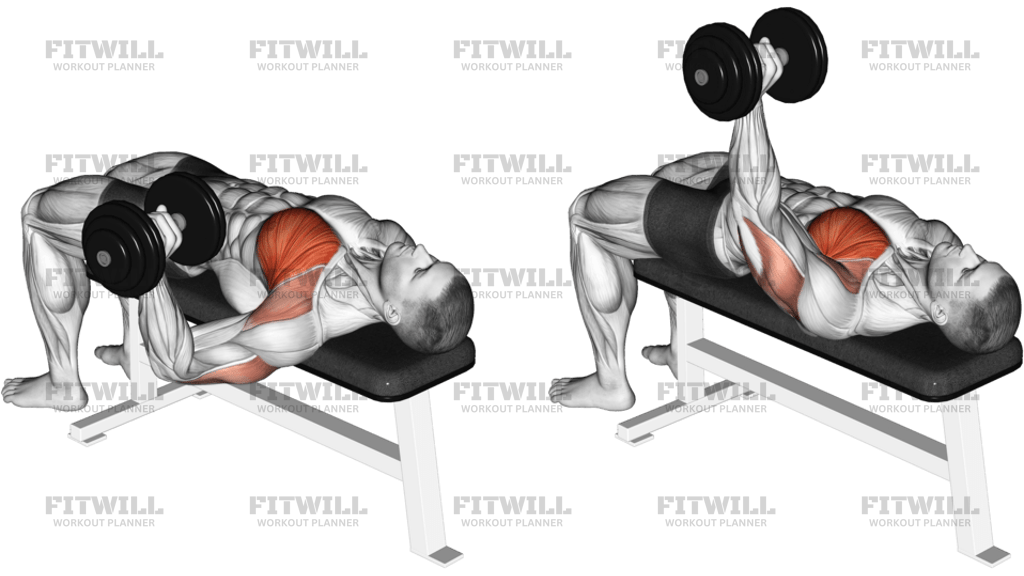
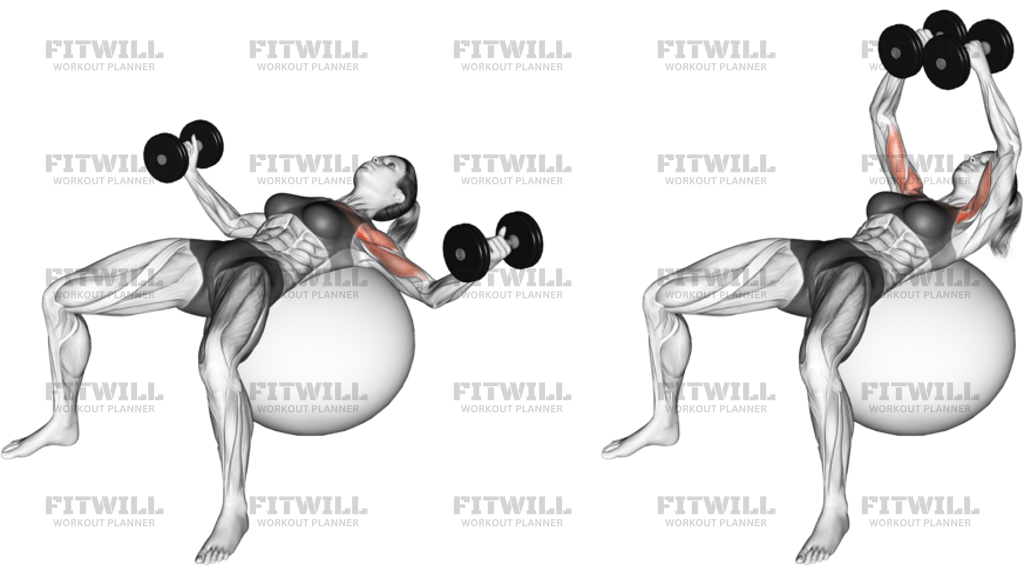
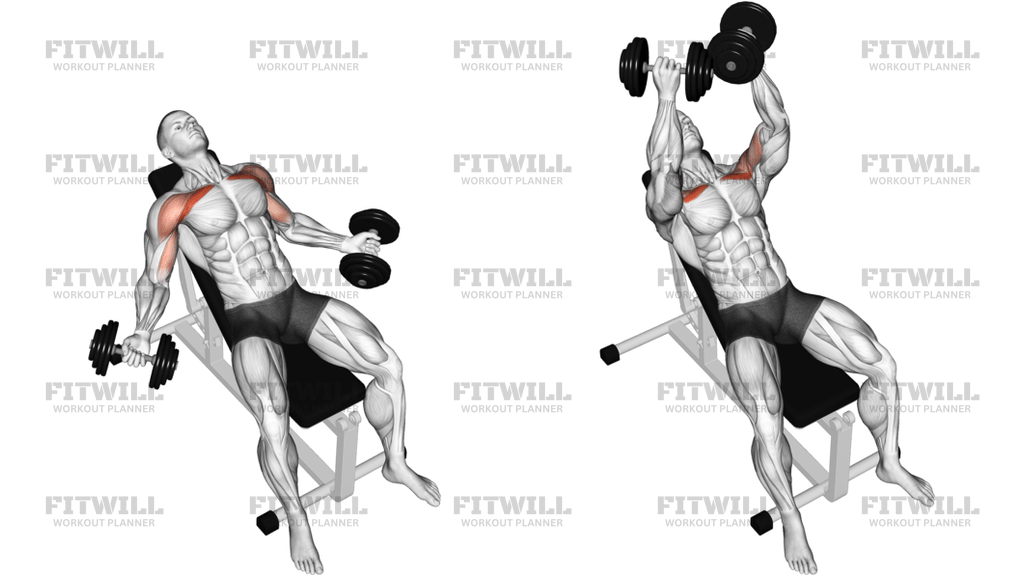
Hyght Dumbbell Fly is an incline dumbbell fly built around a wide chest arc on a bench set to a moderate angle. The movement puts the pecs under a long stretch and asks the shoulders to stabilize the dumbbells without turning the rep into a press. It is a useful accessory exercise when you want to train the chest with less elbow drive and more control through the open position.
Because the bench is inclined, the line of pull changes compared with a flat fly. You will still feel the chest doing most of the work, but the front deltoids help guide the dumbbells and keep the arms steady. That makes bench angle, shoulder blade position, and elbow angle important from the first rep. If the bench is too steep or the elbows start bending and straightening, the exercise quickly shifts away from the chest.
A good setup starts with the dumbbells resting above the upper chest, palms facing each other, and the shoulder blades lightly pinned to the bench. Keep the ribs down, feet planted, and wrists stacked over the elbows. Lower the weights in a smooth arc until the upper arms are roughly in line with the torso or until the stretch is deep but still comfortable. The goal is a controlled opening of the chest, not a forced drop into the shoulder joint.
On the way up, think about bringing the dumbbells back together over the upper chest rather than pressing them straight upward. Keep a small bend in the elbows and let that angle stay nearly fixed through the rep. Exhale as you bring the dumbbells together, then lower again with the same path and the same tempo. Matching the descent and ascent keeps tension on the pecs and makes the movement feel cleaner set to set.
Hyght Dumbbell Fly works well in chest-focused sessions, hypertrophy blocks, or as a controlled accessory after heavier pressing. It is also a useful option when you want to practice chest isolation without relying on machines. Beginners can use it with light dumbbells, but the range should be shortened if the front of the shoulder feels cranky. A stable bench, a moderate load, and strict control matter more here than chasing a big stretch or a heavy pair of bells.
[ Workout Log & Planner ]
Put your next workout in Fitwill
Keep your plan and training log ready when you are.


Instructions
- Set an incline bench to about 30 to 45 degrees and sit with a dumbbell on each thigh.
- Lie back on the bench, plant your feet flat, and keep your shoulder blades gently pulled down and back.
- Bring the dumbbells above your upper chest with your palms facing each other and a soft bend in the elbows.
- Brace your torso, keep your ribcage from flaring, and let the wrists stay stacked over the elbows.
- Inhale and lower the dumbbells in a wide arc until your upper arms are close to line with your torso or the chest stretch reaches its limit.
- Keep the elbow angle nearly fixed as the arms open so the movement stays a fly rather than turning into a press.
- Exhale and sweep the dumbbells back together over the upper chest using the same arc you used on the way down.
- Stop just short of clanking the weights together, squeeze the chest for a moment, and lower again under control.
- When the set is finished, bring the dumbbells back to your thighs before sitting up and setting them down safely.
Tips & Tricks
- Use lighter dumbbells than you would for a press; this movement punishes sloppy control long before the chest is fully challenged.
- Keep the bench angle moderate. A very steep incline turns Hyght Dumbbell Fly into more of a front-shoulder exercise.
- Lock in a small elbow bend and keep it almost unchanged from the bottom to the top of each rep.
- Think about hugging a wide barrel rather than lowering the bells straight out to the sides.
- If the front of the shoulder pinches, shorten the bottom range before you lower the load.
- Keep your shoulder blades set on the bench so the dumbbells move around the shoulder joint instead of the shoulders rolling forward.
- Lower the weights for at least two seconds so the stretch stays under control.
- The dumbbells should meet over the upper chest, not over the face or in front of the shoulders.
- If your wrists bend back or the bells wobble, the load is too heavy for this angle.
Frequently Asked Questions
What muscles does Hyght Dumbbell Fly work most?
It mainly trains the chest, especially the pecs, while the front shoulders help guide the dumbbells through the arc.
Is Hyght Dumbbell Fly more of an upper-chest exercise?
Yes. The incline bench shifts more emphasis toward the upper chest than a flat fly, although the full chest still works through the movement.
How low should I lower the dumbbells on Hyght Dumbbell Fly?
Lower them until your upper arms are roughly in line with your torso or until you feel a strong chest stretch without shoulder pinch.
Why do my shoulders take over on this exercise?
The bench may be too steep, the elbows may be bending too much, or the dumbbells may be drifting into a pressing path instead of a fly path.
Can beginners do Hyght Dumbbell Fly safely?
Yes, if they start with very light dumbbells and keep the range short enough to stay in control at the bottom.
What is the difference between this and a dumbbell press?
A press bends and straightens the elbows to move the weight; Hyght Dumbbell Fly keeps a soft elbow bend and uses a wide chest-opening arc instead.
Should the dumbbells touch at the top?
They can come close, but do not clank them together. Keep the chest doing the work and avoid losing tension at the top.
What should I do if the bottom position feels uncomfortable?
Shorten the range of motion and keep the shoulder blades anchored. A smaller stretch is better than forcing the dumbbells too deep.