Archer Push-Up
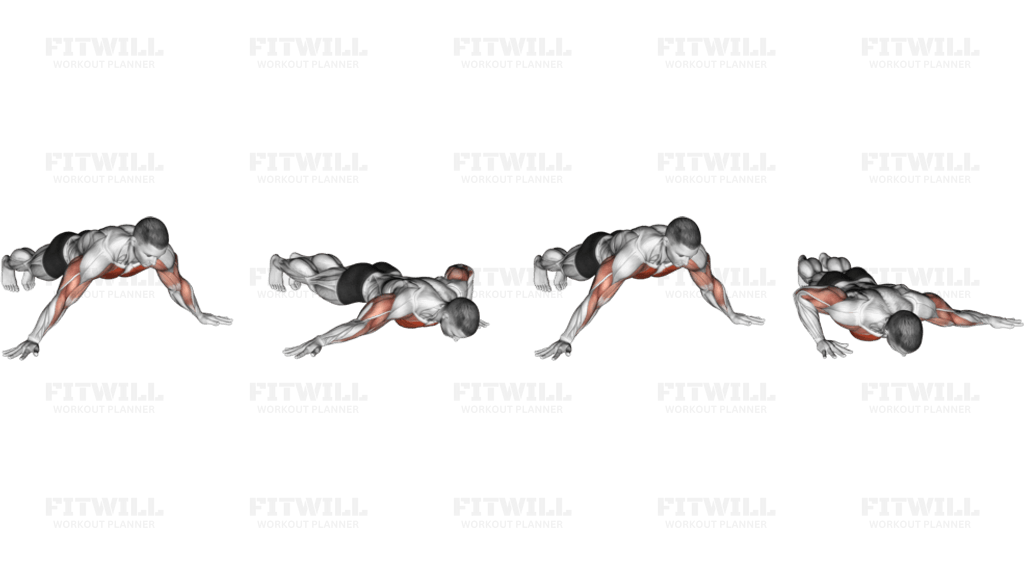
Archer Push-Up is a bodyweight pressing exercise that shifts most of the work to one side while the other arm stays long for support. It is a useful way to build chest strength, shoulder stability, triceps control, and trunk stiffness without needing equipment. Because one arm carries most of the load at a time, the exercise also exposes side-to-side differences that are easy to hide in a regular push-up.
The main emphasis is on the pecs, with the front shoulders, triceps, and core helping to stabilize the body through each repetition. In anatomy terms, the primary work centers on the Pectoralis major, with support from the Anterior deltoid, Triceps brachii, and Rectus abdominis. That combination makes Archer Push-Up a strong choice for athletes or lifters who want more horizontal pressing strength and better control through a wide arm position.
Set up with your hands wider than shoulder width, fingers pointing forward, and your feet planted so the body stays steady as you shift from side to side. Keep the torso in a straight line from head to heels, brace the ribs down, and avoid letting the lower back sag as the chest travels toward the working hand. The straight arm should stay active rather than collapsing into the shoulder, because that side is helping to manage balance as much as it is helping with the press.
On each rep, lower your chest toward the bent-arm side by letting that elbow bend while the opposite arm remains nearly straight. Keep the chest between the hands, let the shoulder blades move naturally, and press back up by driving through the palm of the working side. A controlled descent and a smooth push back to the top usually produce better tension than chasing depth that forces the hips to twist or the neck to crane forward.
Archer Push-Up works well as a progression from standard push-ups, a strength accessory in an upper-body session, or a bodyweight option when you want more unilateral demand without loading the spine. If full floor reps are too demanding, use a bench or box for an incline version, or shorten the range until the shoulder and wrist positions feel solid. The best reps look smooth, repeatable, and even from side to side, with no bouncing, sagging, or sudden shift into a regular push-up.
[ Workout Log & Planner ]
Put your next workout in Fitwill
Keep your plan and training log ready when you are.


Instructions
- Place your hands wide on the floor or on push-up handles, set your feet apart enough to stay balanced, and line your body up from head to heels.
- Turn your fingers forward, keep your elbows soft, and brace your ribs and glutes before you leave the top position.
- Shift your weight toward one hand while the other arm stays long and active, not collapsed into the shoulder.
- Bend the working arm and let your chest travel toward that side, keeping your torso square instead of rolling open.
- Lower until the working-side chest is close to the floor or your shoulder reaches the depth you can hold without twisting.
- Press through the palm of the bent arm and drive back up while the straight arm continues to stabilize the body.
- Keep your neck neutral and exhale as you press back to the top, then reset your brace before the next repetition.
- Finish the set by lowering your knees or stepping back carefully if you are using an incline or a modified setup.
Tips & Tricks
- Keep the straight arm long but not dumped into the shoulder; think of reaching through the floor instead of hanging on the joint.
- Widen your foot stance if your hips swing open as you shift toward the working side.
- Let the chest drift toward the bent-hand side instead of dropping straight down like a normal push-up.
- Use a slower descent if the bottom position feels rushed or if you lose the line from ribs to hips.
- An incline on a bench or box is the easiest way to keep the shoulder and wrist angles cleaner while you learn the pattern.
- Stop the descent when the working-side shoulder starts to shrug or the torso starts to rotate aggressively.
- Keep the elbow of the bending arm tracking out and back, not tucked tightly against the ribs.
- If one side is much weaker, start with that side and match the rep quality on the other side instead of forcing extra depth.
- Push the floor away through the working palm and avoid bouncing out of the bottom position.
Frequently Asked Questions
What does Archer Push-Up train most?
It mainly trains the chest, with strong help from the front shoulders, triceps, and core as you shift load to one side.
Is Archer Push-Up harder than a regular push-up?
Yes. One arm takes more of the load while the other stays extended for balance, so you need more pressing strength and shoulder control.
Can beginners do Archer Push-Up?
Yes, but an incline version is usually a better starting point. Raise your hands on a bench or box until you can keep the torso square and the shoulders stable.
Should my straight arm lock out completely?
Keep it long and strong, but do not hang passively on the joint. The shoulder should stay active so the supporting side helps control the shift.
How low should I go on Archer Push-Up?
Lower as far as you can while keeping the hips level and the chest moving toward the working hand. Depth is useful only if you can keep the shoulder and trunk organized.
Why do my hips twist during Archer Push-Up?
Usually the stance is too narrow or the reach is too aggressive. Widen your feet and shorten the range until the torso stays square.
Can I use push-up handles for Archer Push-Up?
Yes. Handles can reduce wrist extension and make the wide hand position feel more comfortable, especially if the floor position bothers your wrists.
How can I make Archer Push-Up easier or harder?
Make it easier by raising the hands or shortening the range. Make it harder by using a lower incline, slowing the lowering phase, or pausing briefly near the bottom.