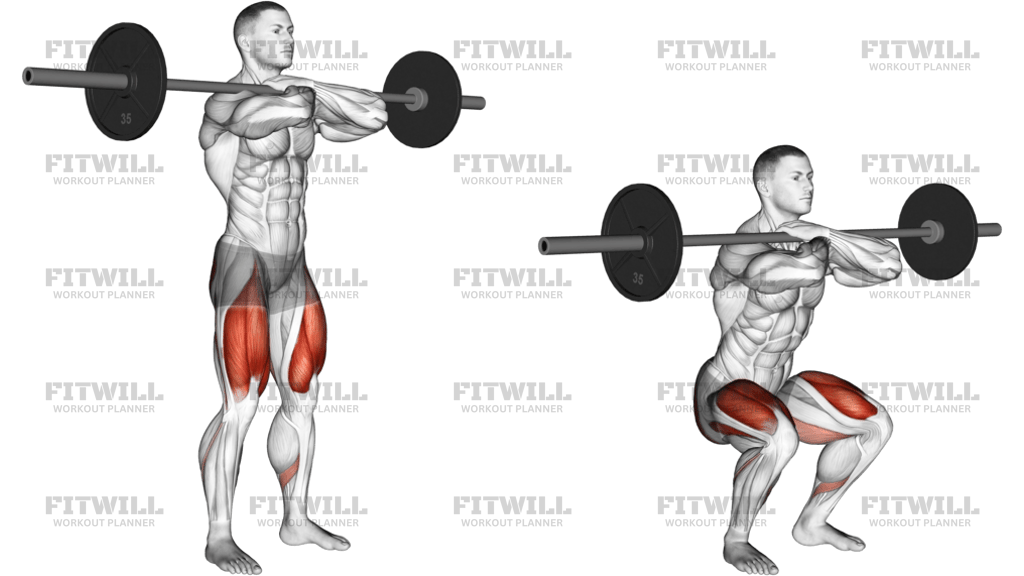
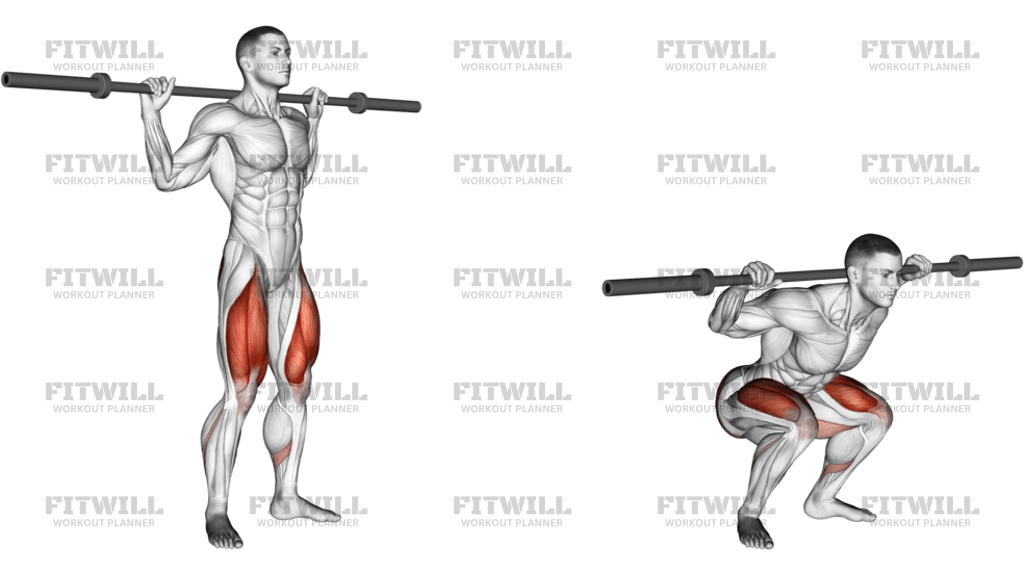
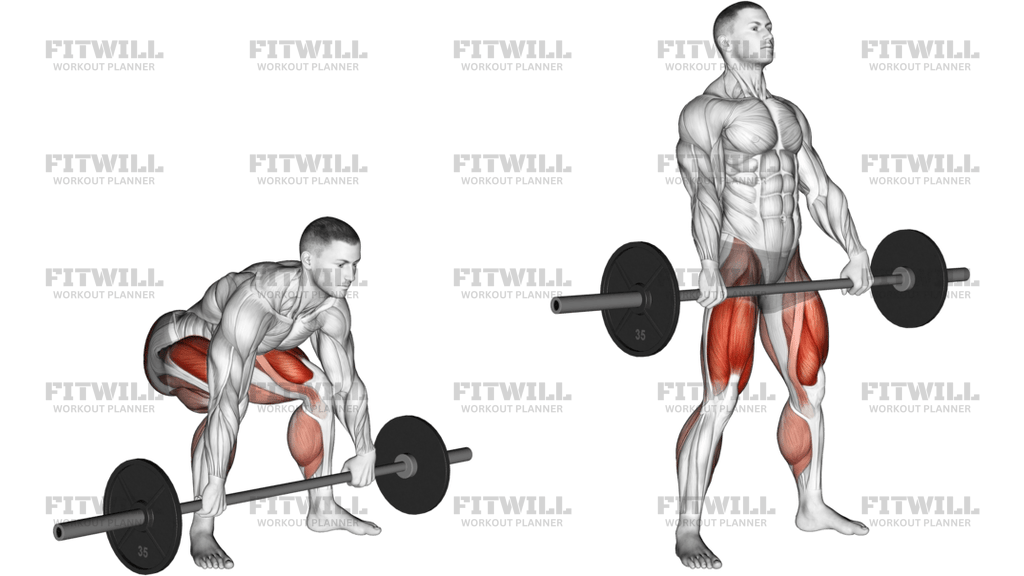
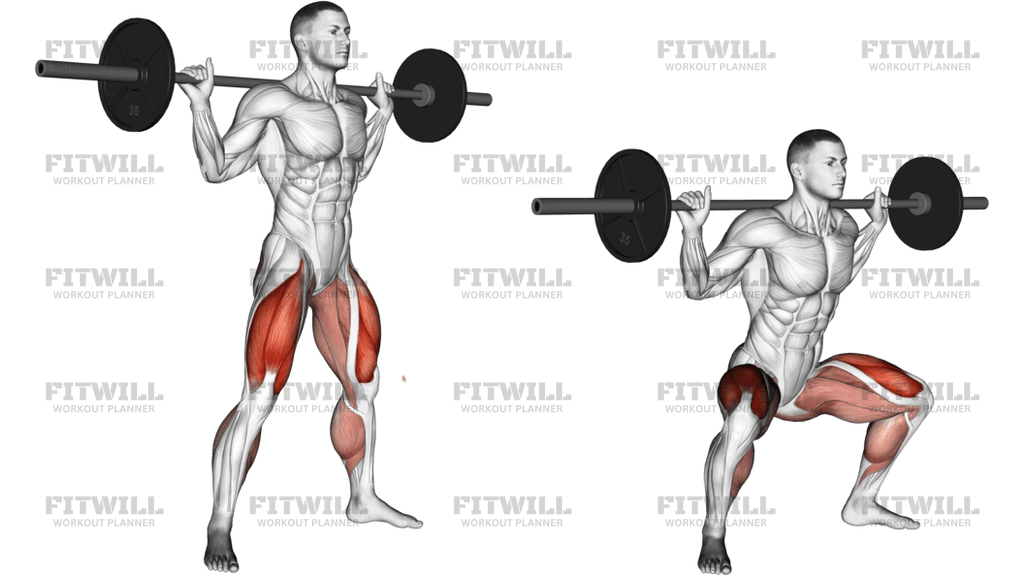
Barbell Front Squat From Blocks
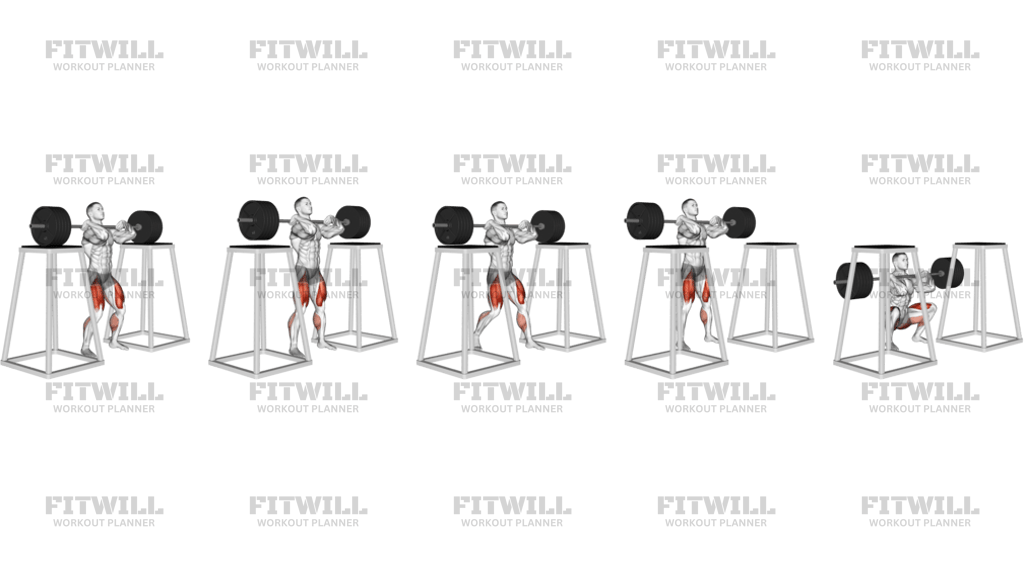
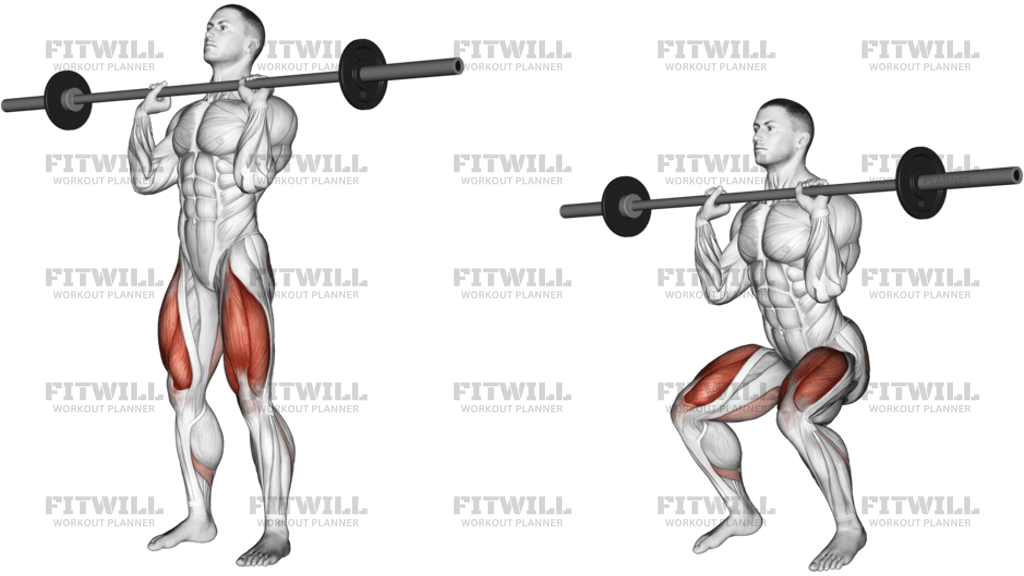
Barbell Front Squat from Blocks is a front-rack squat variation where the bar starts on high blocks or stands, letting you step in, brace, and take each rep from the same fixed setup. That matters because the short walkout reduces wasted energy and keeps the emphasis on torso position, elbow height, and a clean squat path instead of on re-racking a heavy bar between every rep.
This variation trains the thighs and glutes hard while asking the core and upper back to hold the front rack steady. Compared with a back squat, the front-loaded position keeps the torso more upright and usually pushes the knees forward more, which increases the demand on the quads while still requiring the glutes to drive you out of the bottom. The hamstrings, lower back, and deep trunk muscles work as stabilizers so the bar stays stacked over the midfoot.
Set the blocks high enough that the bar sits at a manageable front-rack height, then step in close, lift the bar clear, and take a short controlled step back before you start the first rep. Each squat should look like a vertical sit-down between the heels: chest tall, elbows pointed forward, ribs down, and feet planted evenly. If the bar drifts forward or the elbows collapse, the lift stops being a clean front squat and turns into a balance fight.
From blocks, this is especially useful when you want consistent repeatable reps, front-rack practice, or a squat pattern with less setup fatigue than a full walkout from J-hooks. It fits strength work, technique blocks, and accessory lower-body sessions where you want the squat to stay crisp and honest. The fixed start position also makes it easier to judge whether the rep quality is improving or whether fatigue is changing your posture.
Treat the blocks as part of the exercise, not as a reason to rush. Re-rack the bar with control, reset your breath before each rep, and stop the set if your heels lift, your elbows drop, or your chest caves forward. Clean position and steady bracing matter more here than chasing load, because the front rack will expose weak posture, mobility limits, and sloppy descent control very quickly.
[ Workout Log & Planner ]
Put your next workout in Fitwill
Keep your plan and training log ready when you are.


Instructions
- Set the bar on blocks or high stands at front-rack height so you can reach it without tiptoeing.
- Step in under the bar, rest it across the front delts, and keep your elbows lifted with your upper back tight.
- Lift the bar clear of the blocks, take one short step back, and set your feet about shoulder-width apart.
- Take a breath in and brace your trunk before every rep.
- Sit straight down between your heels, letting the knees travel forward and out while the chest stays tall.
- Lower until your thighs reach depth you can control without losing the front rack or shifting onto your toes.
- Drive up through the midfoot and heels, keeping the bar stacked over the center of your feet.
- Finish each rep by standing tall with the elbows still forward and the ribcage under control.
- Re-rack the bar onto the blocks smoothly, then reset your breath before the next repetition.
Tips & Tricks
- The bar should feel supported on the front delts, not held up by your hands; let the fingers guide it, not the wrists.
- Keep your elbows high enough that the upper arms stay nearly parallel to the floor on the way down.
- Choose block height that gives you a clean unrack. If you have to shrug, tiptoe, or reach awkwardly, the setup is too low.
- Think "down and up" rather than "hinge back" so the bar stays over the midfoot instead of drifting forward.
- Let the knees travel forward as long as the heels stay planted; that forward knee travel is part of a solid front squat.
- Use a controlled descent, especially on the first half of the rep, so the bar does not pitch you forward at the bottom.
- If the front rack limits your range before your legs do, reduce the load before you cut depth or let the chest collapse.
- Keep the abs tight enough that the ribs do not flare when you stand up from the bottom.
- Re-rack the bar carefully after the last rep; a sloppy return to the blocks can turn a clean set into a miss.
- Stop the set when the elbows drop or the bar starts riding on the fingertips instead of the shoulders.
Frequently Asked Questions
What muscles does Barbell Front Squat from Blocks work?
It primarily trains the thighs and glutes, with the core, upper back, hamstrings, and lower back working to keep the front rack stable.
Why use blocks instead of a rack for this squat?
Blocks let you start from a fixed front-rack height, which reduces walkout fatigue and makes each rep easier to repeat with the same setup.
How should the bar sit before I squat?
The bar should rest on the front delts in a secure front rack with the elbows lifted. If the wrists are taking all the load, the setup is off.
How deep should I go on the descent?
Go as deep as you can while keeping the chest tall, the elbows up, and the bar centered over the midfoot. Depth only counts if the position stays clean.
What is the most common mistake with the blocks setup?
Using blocks that are too low, which forces a sloppy unrack or a reach that throws you out of position before the first rep even starts.
Is this different from a regular front squat?
The squat pattern is the same, but the blocks change the start and finish. That usually means less setup fatigue and more consistent reps.
Can beginners use this variation?
Yes, if the front rack is comfortable and the load is light enough to keep the elbows high and the torso upright.
How do I know the set is too heavy?
If the elbows drop, the heels lift, or the chest collapses forward before you reach full depth, the load is too much for this setup.