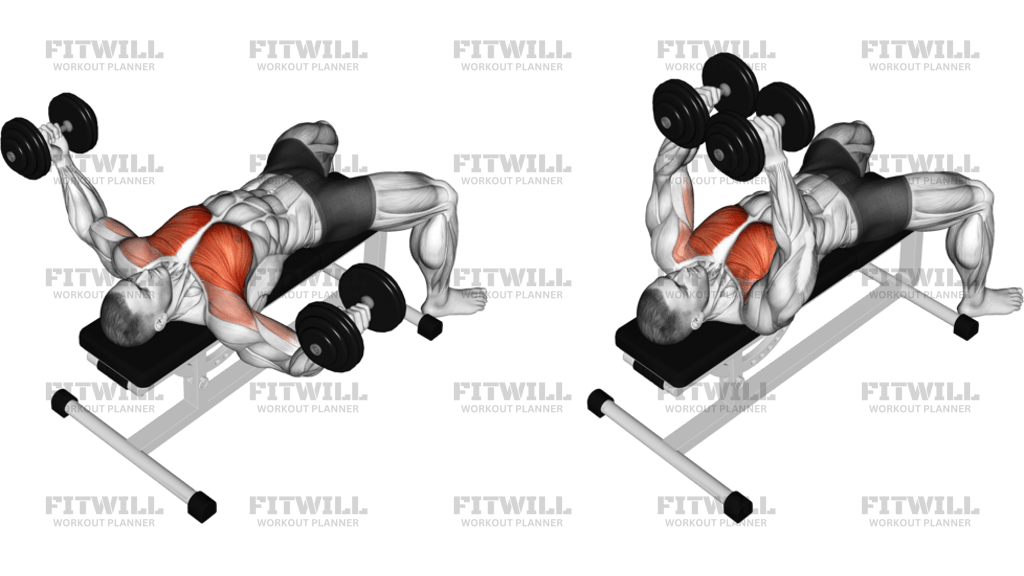
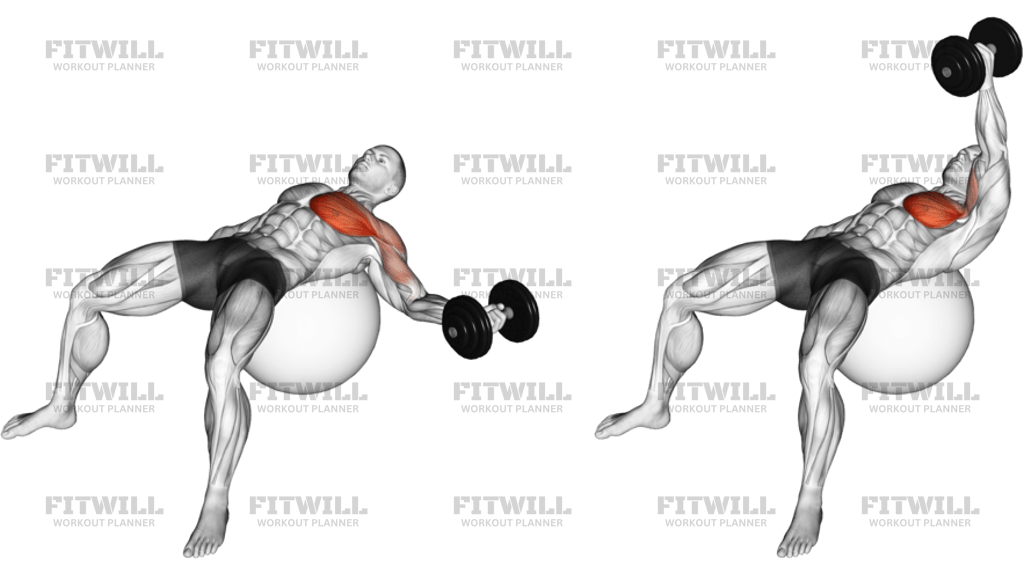
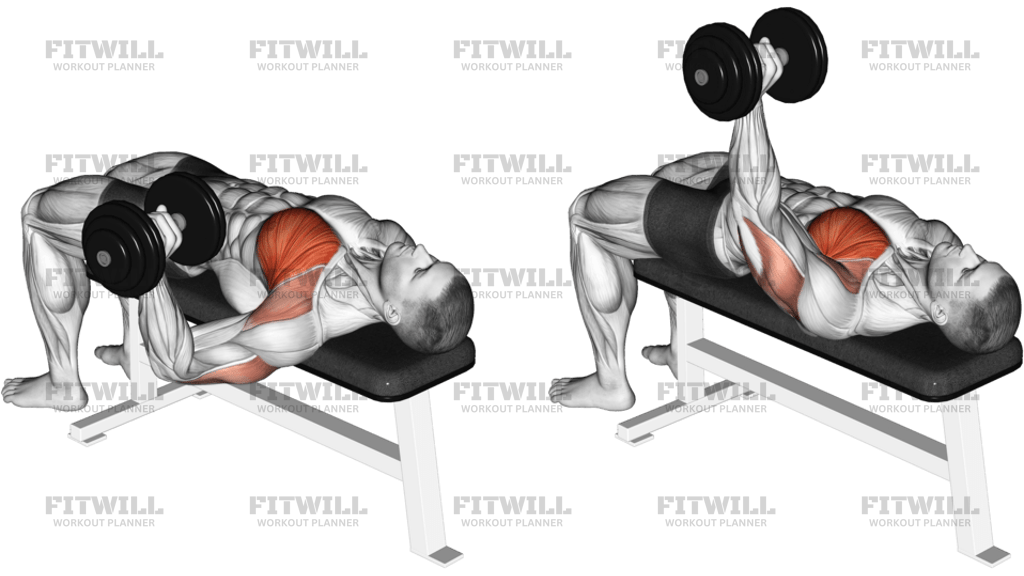
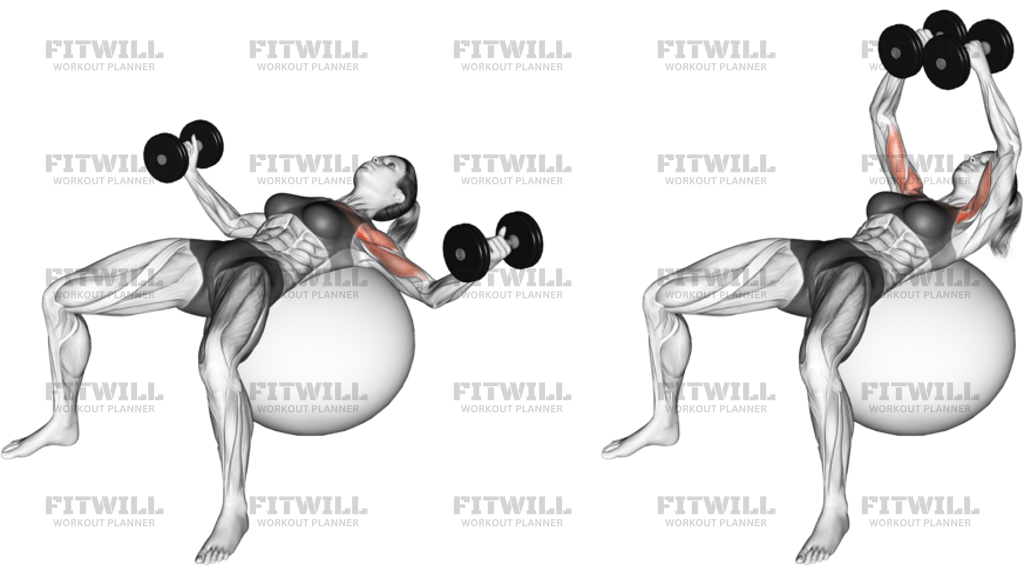
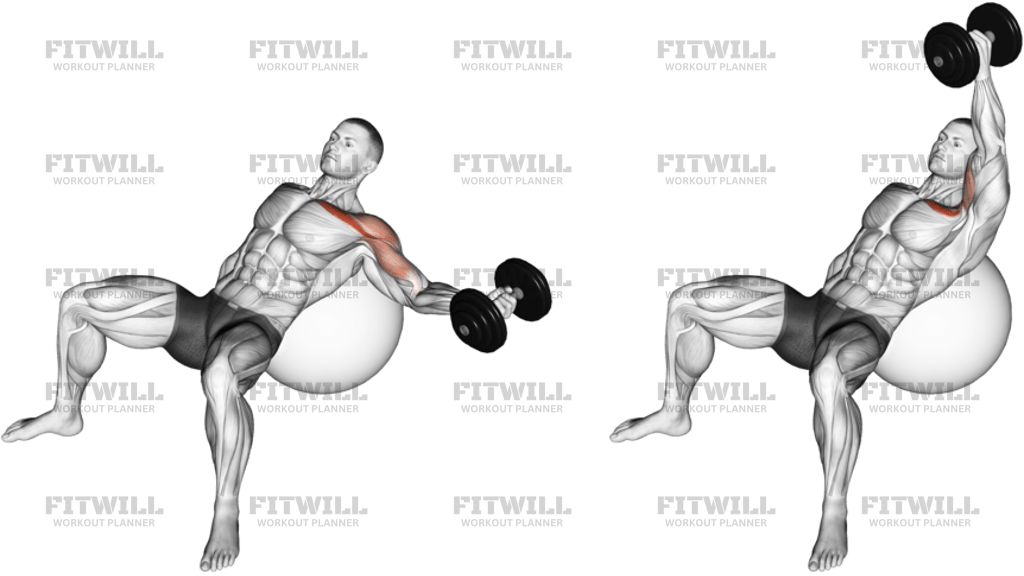
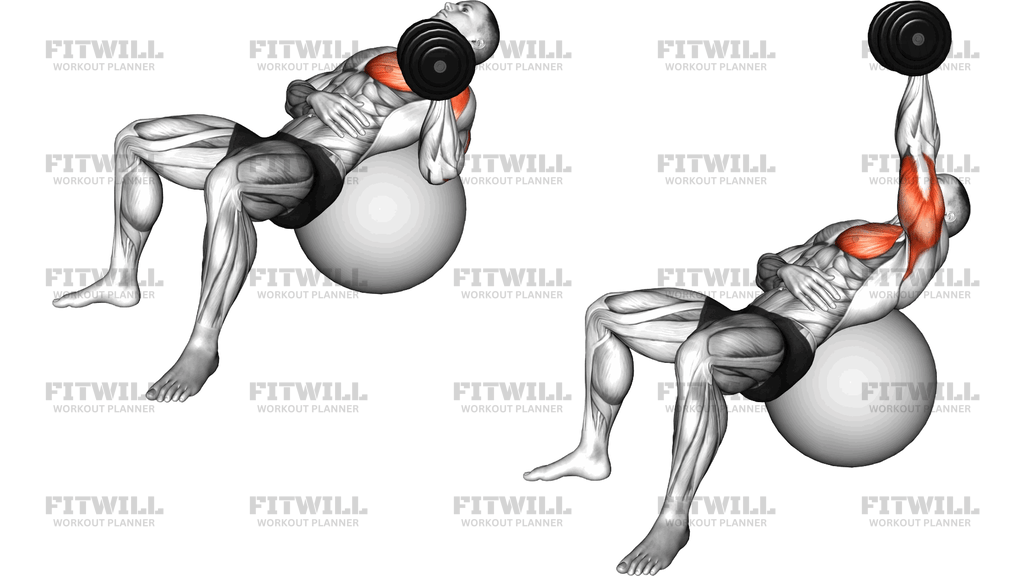
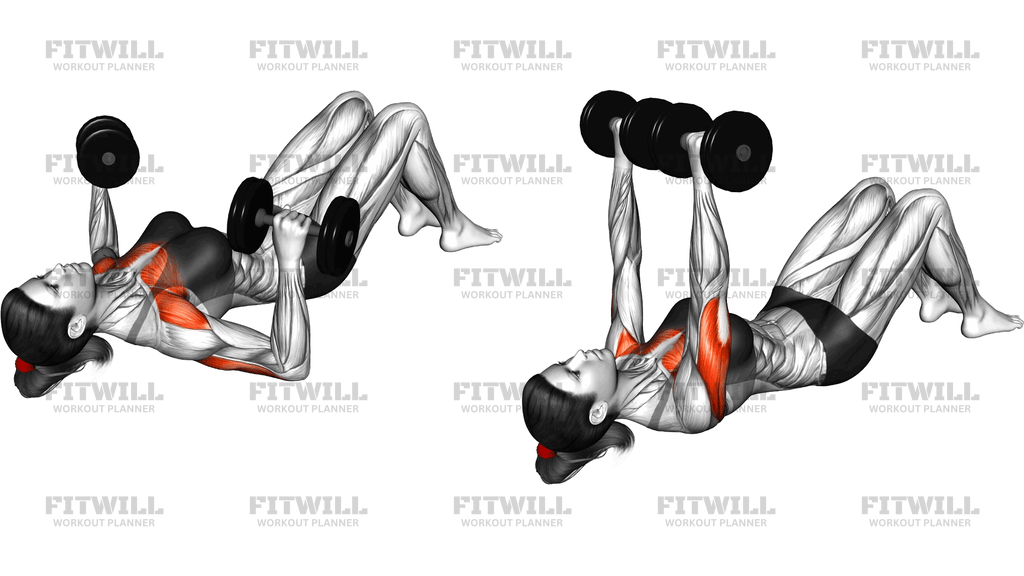
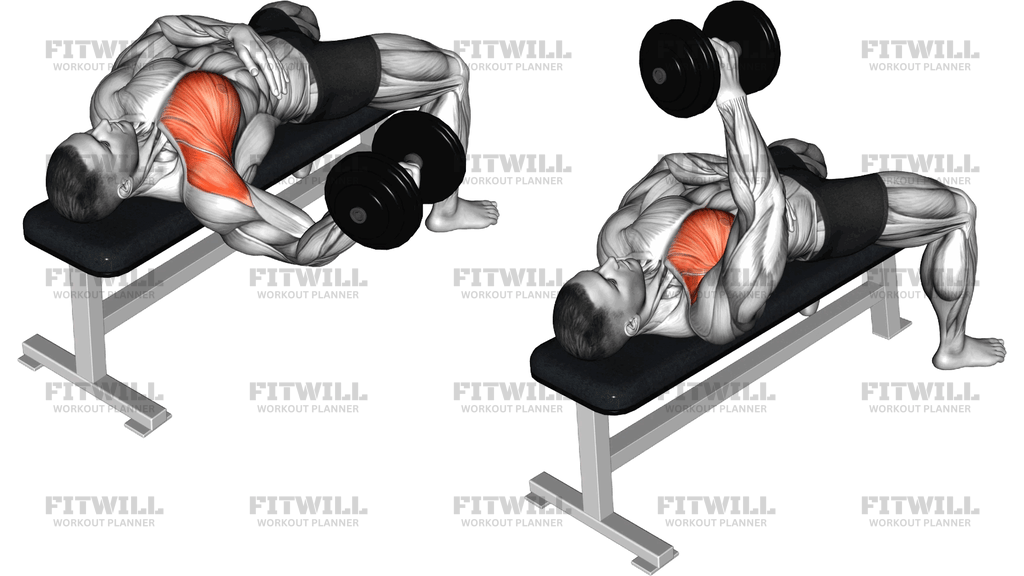
Dumbbell One-Arm Floor Fly
Dumbbell One-Arm Floor Fly is a unilateral chest exercise performed lying on the floor with one dumbbell. The floor shortens the bottom of the movement, so the shoulder cannot drift too far behind the torso, and that makes it easier to focus on chest tension instead of chasing a huge stretch. Because only one arm works at a time, the exercise also exposes side-to-side differences in control, shoulder stability, and rib cage position.
The main target is the chest, with the front shoulder and triceps helping stabilize the arm as the dumbbell travels through the arc. The free side has to stay quiet so the torso does not twist toward the working arm. That is why this movement is often used as an accessory drill for lifters who want chest work with a smaller, more controlled range than a bench fly.
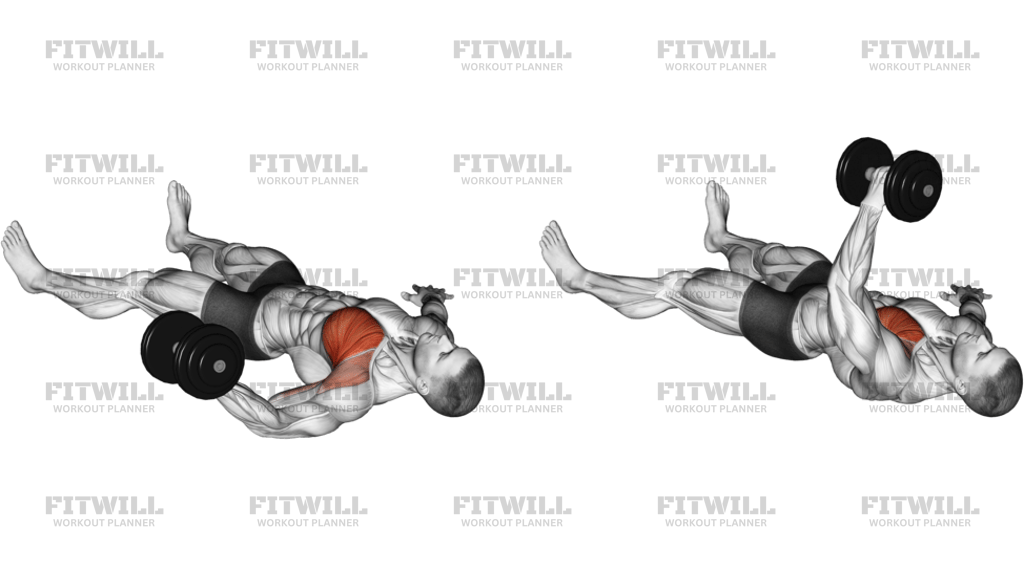
Start with your upper back and head flat on the floor, the working arm stacked over the shoulder, and the elbow kept softly bent. Lower the dumbbell in a wide arc until the upper arm touches the floor, then reverse the path by squeezing the chest to bring the weight back over the shoulder. The elbow angle should stay nearly fixed, and the wrist should stay aligned with the forearm so the dumbbell does not drift into a press or a shrug.
This exercise fits well in hypertrophy sessions, chest accessories, or any workout where you want clean tension without the deep stretch of a bench fly. The floor is the depth limiter, not a bounce point, so the repetition should stay smooth from top to bottom. Breathe out as you return the dumbbell to the top, and stop the set if the shoulder rolls forward, the ribs flare, or the torso starts rotating toward the working side.
[ Workout Log & Planner ]
Put your next workout in Fitwill
Keep your plan and training log ready when you are.


Instructions
- Lie on your back on the floor and hold one dumbbell above the working shoulder with a soft bend in the elbow.
- Plant your feet or extend your legs in a position that keeps your torso steady, then keep the nonworking arm relaxed on the floor for balance.
- Set the shoulder blade down, keep your ribs from popping up, and stack the wrist over the elbow before the first rep.
- Lower the dumbbell in a wide arc away from the midline while keeping the elbow angle nearly fixed.
- Stop when the upper arm lightly touches the floor and you feel a controlled stretch across the chest, not a pinch in the shoulder.
- Pause briefly on the floor without bouncing or relaxing completely.
- Exhale and squeeze the chest to bring the dumbbell back over the shoulder along the same arc.
- Finish with the dumbbell stacked above the shoulder, then repeat for the planned reps before switching sides.
- Set the dumbbell down carefully after the set instead of dropping it to the floor.
Tips & Tricks
- Use a lighter dumbbell than you would for a two-arm fly; the one-arm position makes rotation and drifting easier.
- Keep the elbow bend almost unchanged from top to bottom so the movement stays a fly instead of turning into a press.
- Let the floor end the descent, not your shoulder; if the upper arm does not comfortably touch down, shorten the arc.
- Keep the rib cage quiet and the low back flat enough that the torso does not twist toward the working side.
- If the shoulder feels pinchy, stop a little higher and bring the dumbbell back through a narrower arc.
- Think about hugging the dumbbell back over the chest rather than lifting it with the hand or front shoulder.
- Lower the weight slowly for about two to three seconds so the chest stays under tension the whole way down.
- Keep the wrist stacked over the forearm; if the wrist breaks back, the arm position usually starts to drift.
- Use the same side-to-side setup each rep so you can compare control between the left and right sides.
Frequently Asked Questions
What does Dumbbell One-Arm Floor Fly train most?
It mainly trains the chest, with the front shoulder and triceps helping stabilize the arm.
Why do this on the floor instead of a bench?
The floor limits how far the shoulder can drop behind the torso, which reduces the bottom stretch and keeps the rep more controlled.
Should my elbow stay bent the whole time?
Yes. Keep a soft, steady bend so the dumbbell follows a fly path instead of becoming a one-arm press.
How low should the dumbbell go?
Lower it until the upper arm touches the floor and then reverse the path without bouncing.
Can beginners use this exercise?
Yes, if they start light and keep the shoulder, ribs, and elbow position under control.
What is the most common mistake?
The biggest mistake is twisting the torso or letting the shoulder roll forward as the dumbbell comes down.
Is this the same as a floor press?
No. A floor press is a pressing motion with the elbow bending and straightening more noticeably, while this is a chest fly with a fixed elbow angle.
How many reps should I use?
Most lifters do well with moderate to higher reps, using a load that lets every rep stay smooth and strict.
How do I know if the weight is too heavy?
If your ribs flare, the torso rotates, or the dumbbell starts drifting into a press, the load is too much.