Dumbbell One-Arm Lunge
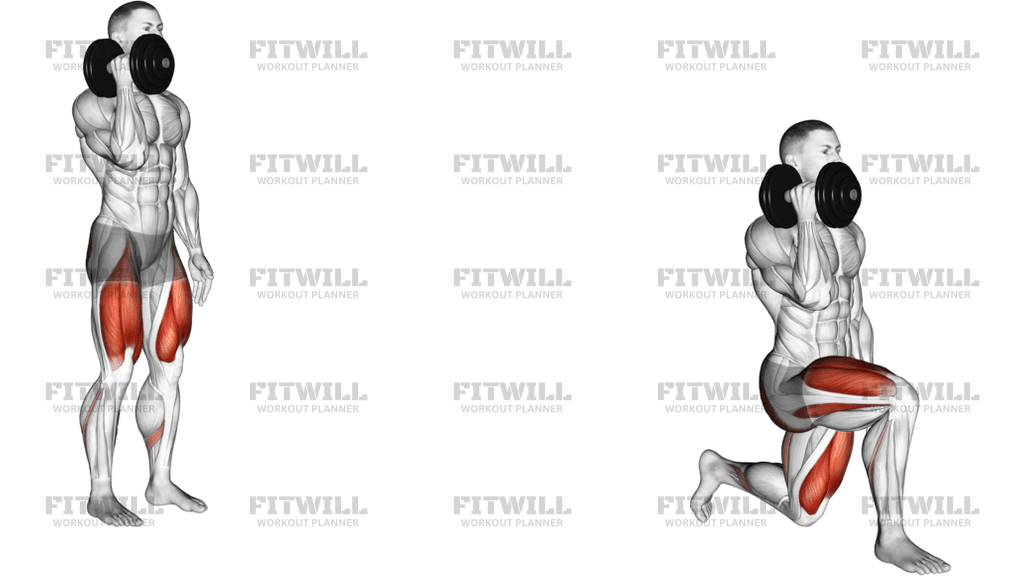
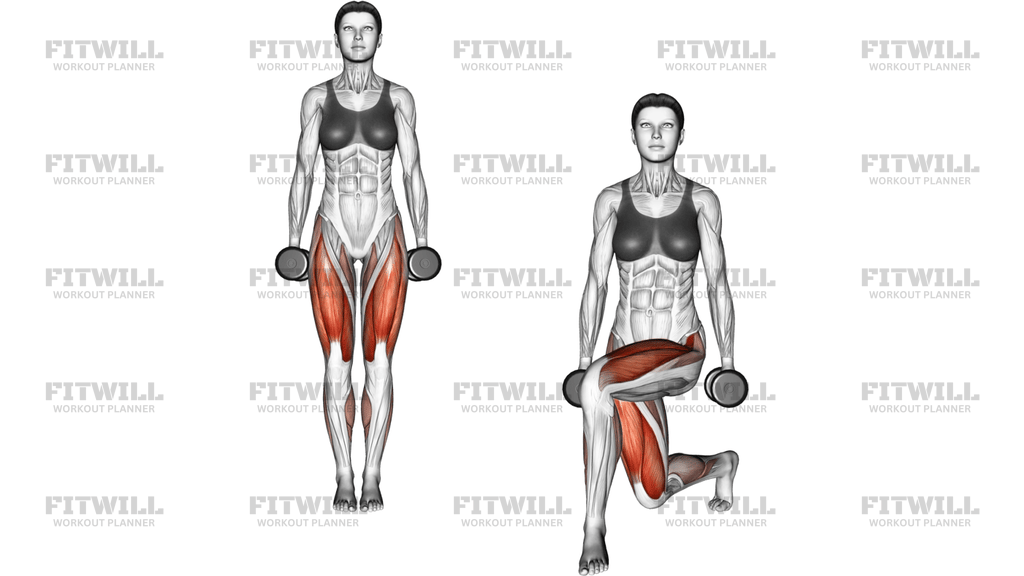
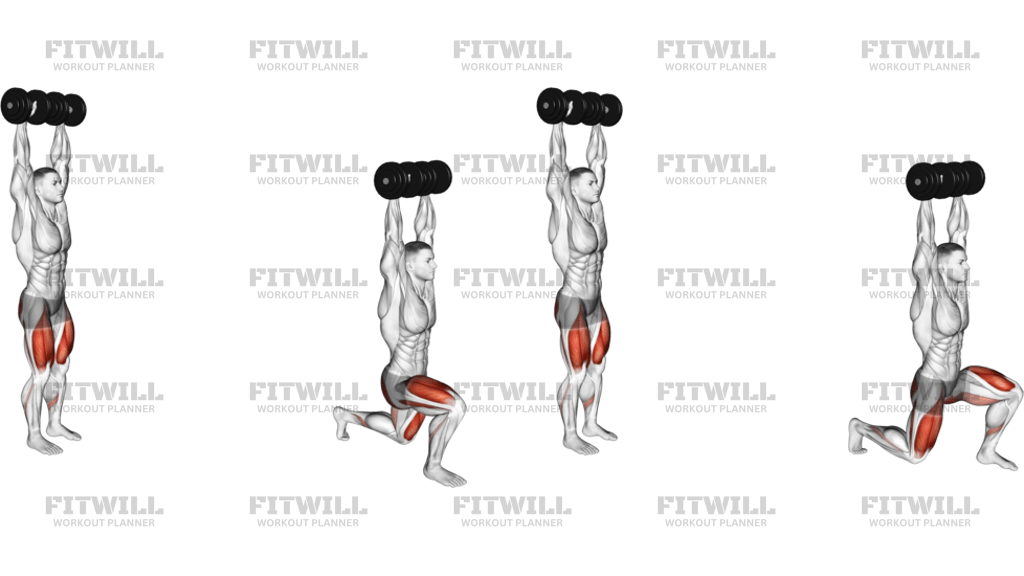
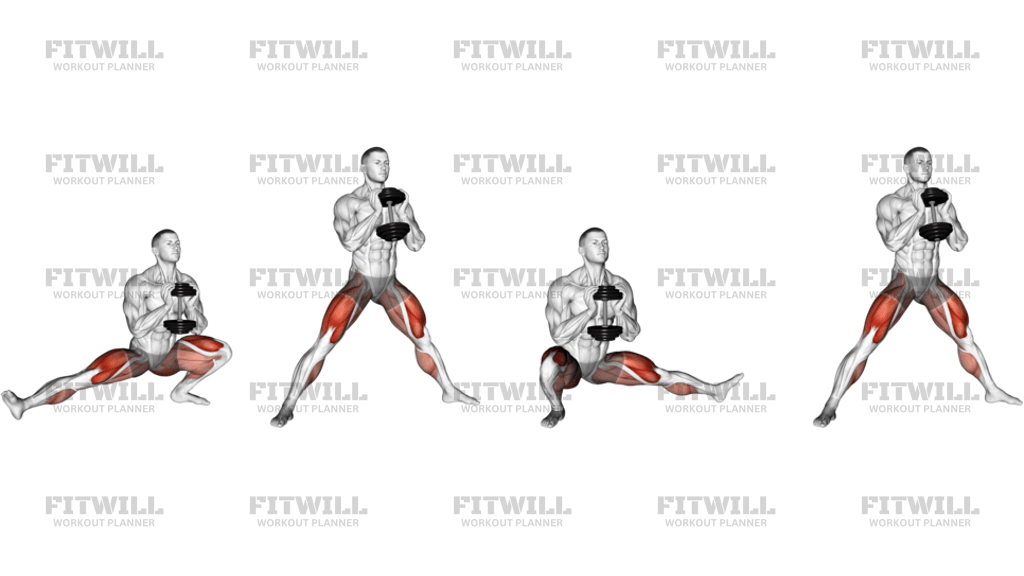
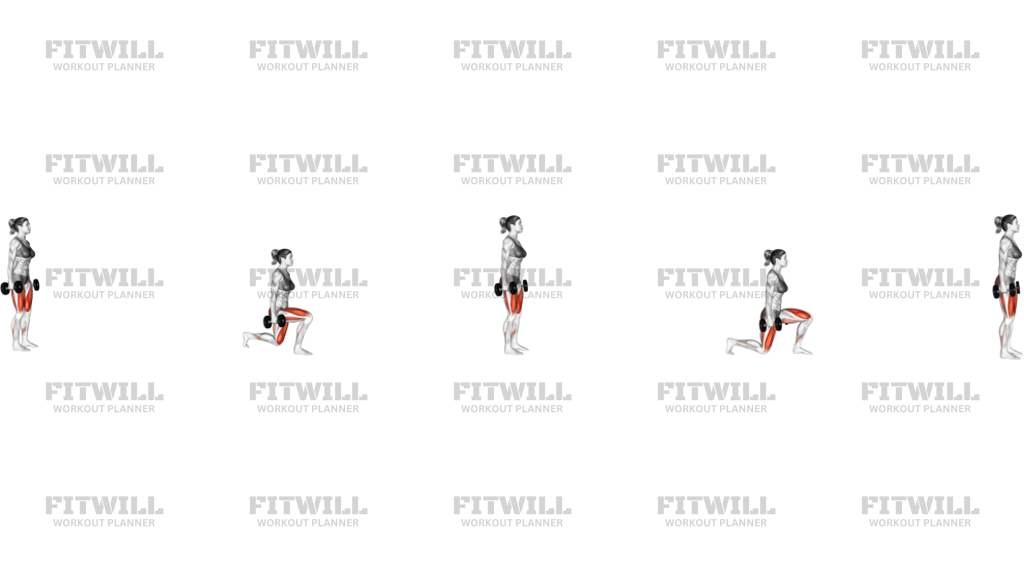
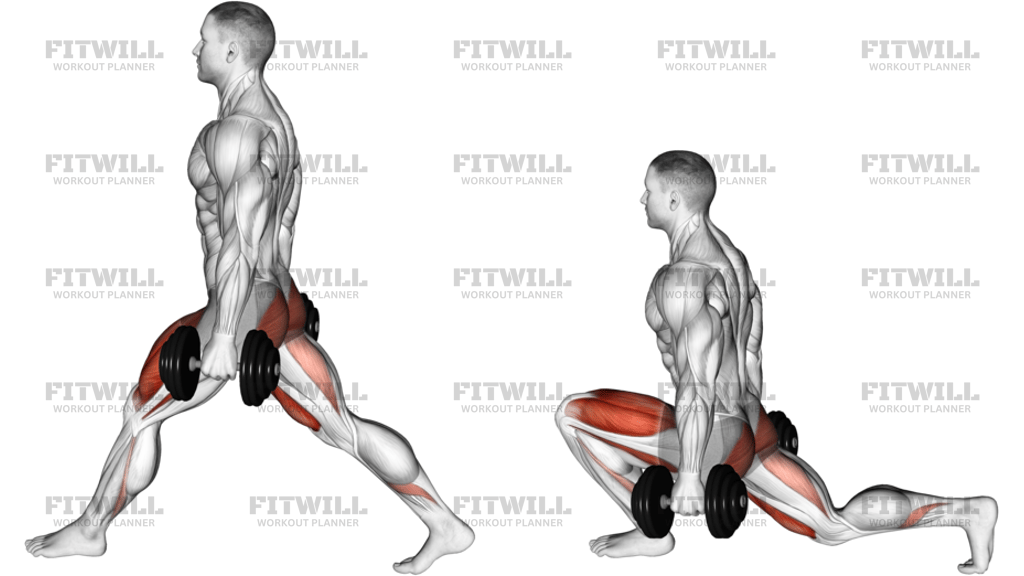
Dumbbell One Arm Lunge is a loaded lunge variation that builds single-leg strength, balance, and trunk control while keeping the torso upright and the working leg honest. In the reference image, the dumbbells are held at shoulder height in a front-rack style position, which shifts the challenge onto the front leg, glutes, and thighs while the core works to stop the torso from drifting forward.
This movement is useful when you want lower-body work that also trains posture under load. The front rack position makes the exercise more demanding than an unloaded lunge because the dumbbells sit close to the chest, increasing the need for bracing and clean foot pressure. It also lets you keep the load compact, which is helpful when you want leg work without a lot of swinging or lower-back shear.
A good repetition starts from a tall stance with the feet set hip-width apart, the ribs stacked over the pelvis, and the shoulders relaxed even though the dumbbells are racked. From there, step into a split stance and lower under control until the back knee approaches the floor and the front thigh is loaded without collapsing inward. The front heel should stay down, the front knee should track over the toes, and the pelvis should stay level rather than twisting toward the front leg.
On the way up, drive through the whole front foot and return to standing without bouncing off the bottom. If you are using one dumbbell instead of a pair, keep it close to the shoulder on the working side and resist leaning toward that load. If you are using two dumbbells as shown, keep both elbows slightly forward so the weights do not pull the chest open or force the lower back into extension.
Use this lunge for accessory strength work, unilateral leg development, or as part of a lower-body circuit where control matters more than speed. It is a practical choice for lifters who want glute and thigh work with a strong posture demand, but it should be done with a stride length and load that let you keep the back knee, front knee, and torso in sync on every rep.
Fitwill
Log Workouts, Track Progress & Build Strength.
Achieve more with Fitwill: explore over 9600 exercises with images and videos, access built-in and custom workouts, perfect for both gym and home sessions, and see real results.
Start your journey. Download today!




Instructions
- Stand tall with the dumbbell(s) racked at shoulder height, ribs down, and feet about hip-width apart.
- Pick one leg to work first and step that foot into a split stance, keeping your torso upright as you prepare to descend.
- Lower under control until the back knee moves close to the floor and both legs are bent without losing balance.
- Keep the front heel planted and let the front knee travel in line with the toes instead of collapsing inward.
- Hold the dumbbell(s) close to the body so the load stays compact and does not pull you forward.
- Pause briefly near the bottom, then drive through the front foot to stand back up with control.
- Finish each rep by fully extending the hips and knees without leaning back or snapping the lower back.
- Reset your stance before the next rep or switch sides and repeat with the same tempo and posture.
Tips & Tricks
- Choose a stride length that lets the front shin stay mostly vertical at the bottom instead of jamming the knee too far forward.
- If the torso tips forward, lighten the load or shorten the depth until you can keep the chest stacked over the hips.
- Keep the front foot tripod planted: big toe, little toe, and heel should all stay grounded as you descend and rise.
- A slow lower with a brief pause makes the front leg do the work instead of using a bounce out of the bottom.
- If you are holding two dumbbells, keep the elbows slightly in front of the ribs so the rack position stays compact.
- Do not let the back knee slam into the floor; stop just above it so the rep stays smooth and repeatable.
- The working-side glute should feel like it is driving you back to standing, not the lower back arching to finish the rep.
- Use a lighter load first if your knees drift inward or your pelvis twists when you change direction.
- Exhale as you stand and inhale on the way down so the brace does not collapse at the hardest part of the rep.
Frequently Asked Questions
What muscles does Dumbbell One Arm Lunge work most?
It mainly trains the glutes and thighs on the working leg, with the core and lower back helping you stay upright.
Why are the dumbbells held at shoulder height?
The front-rack position keeps the load compact and makes the lunge more demanding for posture and bracing.
Should the back knee touch the floor?
No. Lower until it comes close to the floor, but keep the rep controlled so you do not bounce or lose tension.
Can I do this with one dumbbell instead of two?
Yes. A single dumbbell racked on one side works well as long as you keep the torso from leaning toward the weight.
What is the biggest form mistake in this lunge?
Letting the front knee cave inward or letting the torso fold forward instead of staying stacked and controlled.
How do I know my stance is long enough?
At the bottom, the front heel should stay down and the back knee should lower without the front knee collapsing too far forward.
Is this more of a quad or glute exercise?
Both contribute, but the front leg glute and thigh share the work, especially when you stay upright and control the descent.
Can beginners use this variation?
Yes, but they should start light and practice the split stance before adding heavier dumbbells or deeper range.
How should I progress this exercise?
First make the reps smoother and more balanced, then increase load or add pauses before making the stance longer or the tempo faster.