Battling Ropes Jumping Jack
Battling Ropes Jumping Jack is a fast-paced conditioning drill that blends a jumping-jack lower-body pattern with the continuous tension of battling ropes. It is usually done with a rope anchored low in front of you, so each rep asks you to coordinate the arms, trunk, breathing, and footwork without letting the handles get sloppy or the torso lean backward.
The exercise is most useful for shoulder endurance, upper-back control, grip stamina, and general work capacity. The shoulders and arms drive the rope pattern, while the core keeps the ribs stacked over the pelvis and prevents the lower back from taking over. Because the movement is rhythmic, it also teaches coordination under fatigue, which is why it often appears in warmups, circuits, and conditioning blocks.
Setup matters more than it looks. Start with both rope ends in your hands, stand tall, and give the rope just enough tension that the handles are not drifting around before the first rep. A narrow, organized stance helps you find balance, but you can step or hop the feet apart and together if that matches the programmed version of the drill. The goal is to keep the movement crisp and repeatable, not to turn the set into a wild arm swing.
As you perform the rep, think of opening the body in a controlled jack pattern and then closing it back down with the same rhythm. The rope should travel in a clean arc while your shoulders stay down and your chest stays proud. If the handles start crashing overhead, your ribs flare, or your lower back arches, the set is too fast or too heavy for the current workload.
This drill fits well as a short conditioning piece, a finisher, or a light-to-moderate power-endurance interval. It is not meant to be a max-strength movement. Use a rope length and anchor setup that lets you keep even tension from side to side, and stop the set before your posture falls apart. Done well, Battling Ropes Jumping Jack gives you a demanding, athletic effort without needing complex equipment or long setup time.
Fitwill
Log Workouts, Track Progress & Build Strength.
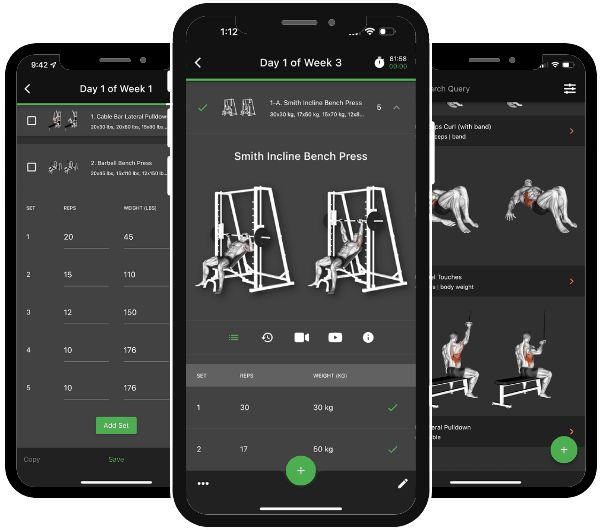
Achieve more with Fitwill: explore over 5000 exercises with images and videos, access built-in and custom workouts, perfect for both gym and home sessions, and see real results.
Start your journey. Download today!


Instructions
- Stand facing the rope anchor with both rope ends in your hands and the handles hanging in front of your thighs.
- Set your feet under your hips, soften your knees, and stack your ribs over your pelvis before the first rep.
- Pull enough slack out of the rope that both sides start with even tension.
- Brace your trunk and keep your shoulders down away from your ears.
- Drive your hands outward and upward in a jumping-jack arc as you open your feet or widen your stance.
- Reach the top of the pattern with control instead of letting the handles whip overhead.
- Reverse the motion by bringing the hands back down as your feet come back together or your stance narrows.
- Keep the rhythm smooth and repeat the same range on every rep.
- Stop the set when your back arches, your shoulders shrug, or the rope loses symmetry.
Tips & Tricks
- Keep the anchor low and directly in front of you so both rope ends start with the same line of pull.
- Open the arms with the shoulders, not with a big lean or a lower-back whip.
- If you are jumping the feet apart, land softly and let the ankles and knees absorb the impact.
- If the shoulders start creeping toward your ears, shorten the range before the set turns into a shrugging contest.
- Keep your wrists neutral so the handles do not fold the forearms into an awkward angle.
- Use a faster cadence only after you can keep the rope path even on both sides.
- Exhale as the body opens and inhale as you return to the starting position.
- Choose a rope and interval length that let you finish with clean rhythm instead of a flurry of desperate reps.
Frequently Asked Questions
What muscles do Battling Ropes Jumping Jack work?
It mainly trains the shoulders, upper back, arms, grip, and core, with a big conditioning demand layered on top.
Can beginners perform this exercise?
Yes. Beginners usually do best with a light rope, a shorter range, and a stepping version instead of a full jump.
Do my feet have to jump like a real jumping jack?
No. You can step the feet out and in if the impact or coordination is too high for the current set.
Where should the rope handles finish at the top?
They should rise in a controlled arc without crashing overhead. If the handles are hitting above shoulder height with no control, slow down.
What is the biggest form mistake on this movement?
The most common problem is leaning back and shrugging the shoulders while the rope gets yanked instead of guided.
Is Battling Ropes Jumping Jack cardio or strength work?
It is mostly conditioning and muscular endurance, especially for the shoulders and grip, with some power and coordination work mixed in.
Can I use this as a warm-up?
Yes, short sets work well as a warm-up or primer as long as the rope stays light and the reps stay crisp.
Should both ropes move the same way?
In this jumping-jack version, yes. The two rope ends should stay symmetrical so one side does not lag and twist your torso.