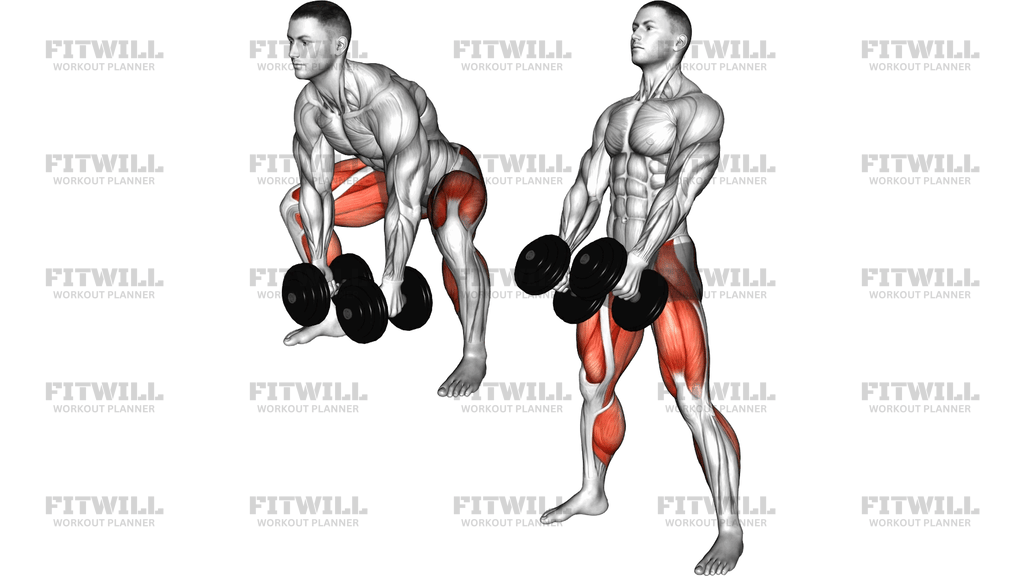
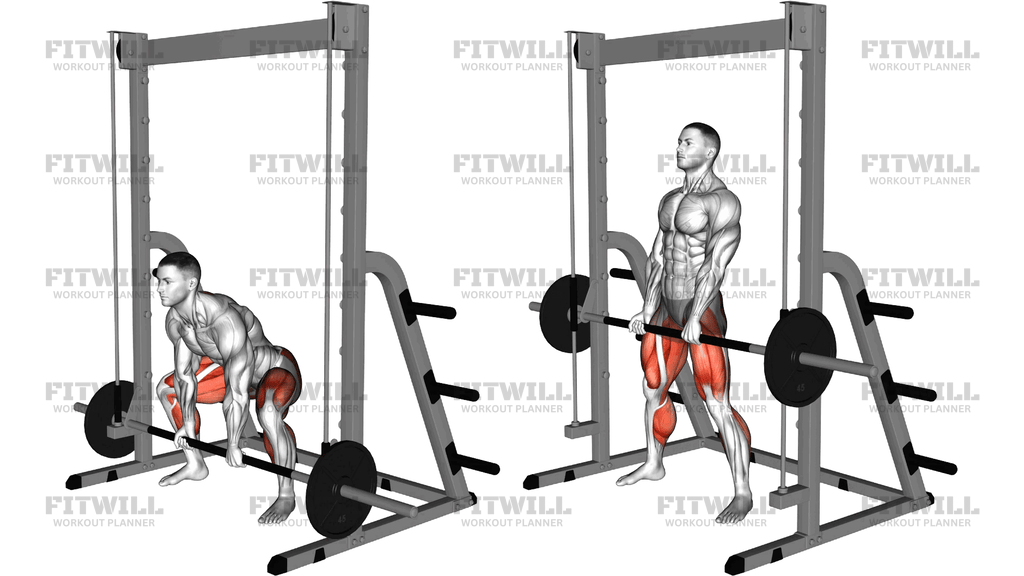
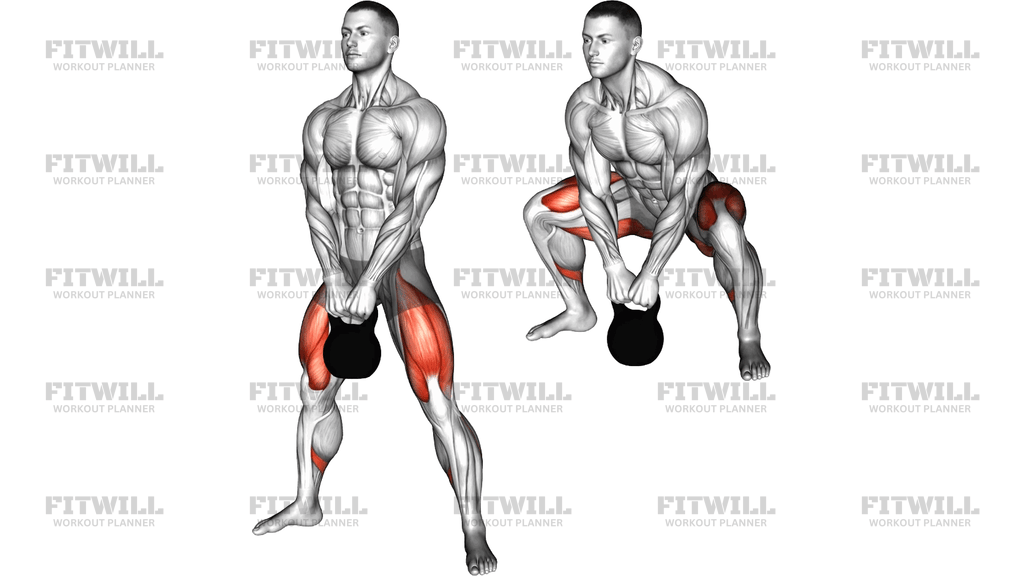
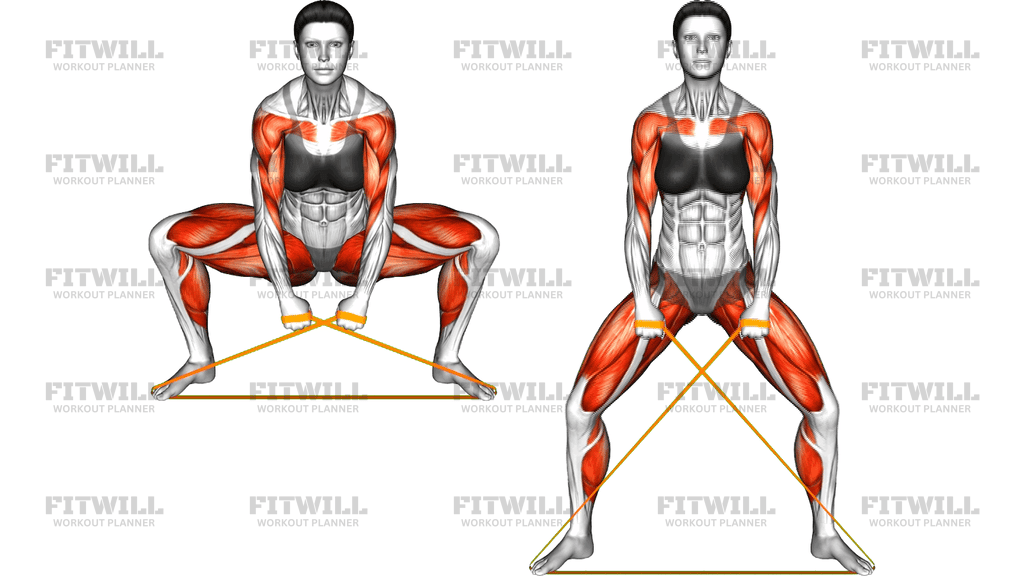
Barbell Front Rack Lunge
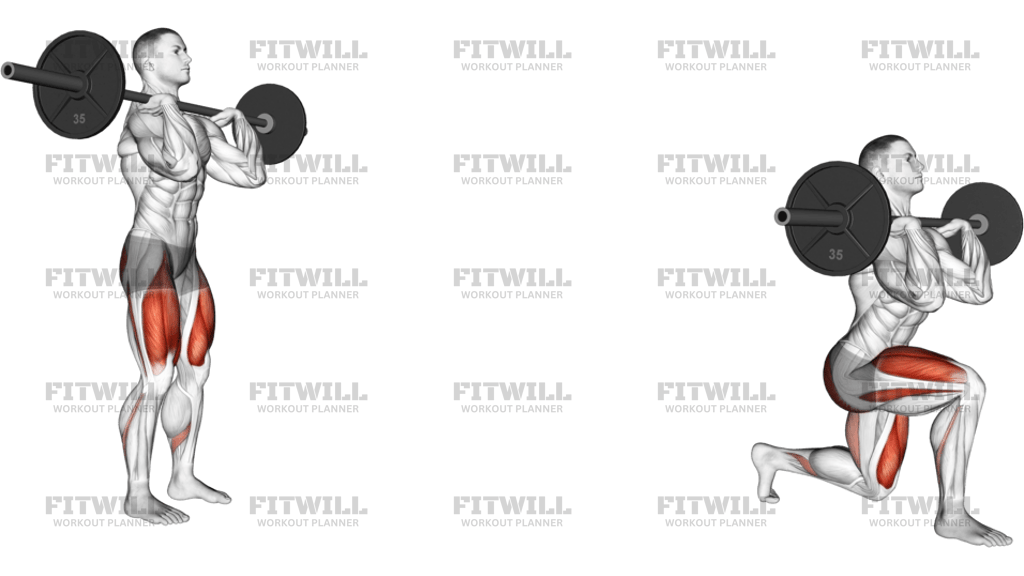
Barbell Front Rack Lunge is a loaded single-leg lower-body exercise that places the bar across the front of the shoulders while you step into a lunge and return to standing. The front rack position keeps the torso more upright than a back-rack lunge and shifts a lot of the training demand to the quads, while the glutes, adductors, calves, and trunk work hard to keep you balanced and stacked.
The front rack is not just a way to hold the bar. It changes the whole exercise. With the bar resting on the front delts and the elbows lifted, the upper back has to stay engaged and the core has to resist collapsing forward. That makes the lunge more demanding for posture, breathing, and bracing than a bodyweight version, and it also exposes weak links in wrist, elbow, shoulder, and thoracic mobility.
This movement is useful when you want quad-focused leg work without the same spinal loading pattern as a heavy back squat, or when you want unilateral training that highlights side-to-side differences in balance and knee control. It is also a practical accessory for lifters who already know how to rack a barbell safely and want to add controlled knee-dominant volume.
Good reps depend on a steady rack position and a clean split stance. Step back into the lunge, keep the front foot flat, lower the rear knee toward the floor, and let the front knee track naturally over the toes without caving inward. The torso should stay tall, the elbows should stay high enough to support the bar, and the bar path should remain stable over the midfoot instead of drifting forward.
Use a load that lets every repetition look the same from the first rep to the last. If the rack position breaks down, the front heel pops up, or the torso starts folding, the set is too heavy or the stance needs adjusting. Beginners can learn the pattern with an empty bar or very light load, but the rack position should feel comfortable before you push volume or intensity.
[ Workout Log & Planner ]
Put your next workout in Fitwill
Keep your plan and training log ready when you are.


Instructions
- Set a barbell across the front of your shoulders in the front rack, with your hands just outside shoulder width, your elbows lifted, and the bar resting on the front delts rather than in your hands.
- Stand tall with your feet about hip-width apart, ribs stacked over your pelvis, and your eyes fixed ahead before you start the first rep.
- Take one controlled step back into a split stance so your feet are far enough apart to lower straight down without wobbling.
- Inhale and brace, then lower the back knee toward the floor while keeping the front foot flat and the front knee tracking over the middle toes.
- Keep your torso upright and your elbows high enough to keep the bar stable as you descend.
- Pause briefly at the bottom if you need to remove bounce, with the rear knee close to the floor and the front shin in a comfortable angle.
- Drive through the front heel and midfoot to stand back up, letting the back leg assist only as much as needed to return to the start.
- Reset your stance before the next rep or switch legs only after you have finished the programmed reps on that side.
Tips & Tricks
- If your elbows drop during the set, the bar will drift and the torso will fold forward, so reduce the load before the rack position falls apart.
- Keep the bar on the shoulders, not in the fingertips; the hands guide the bar, but the front delts should carry the weight.
- Use a stance long enough that the rear knee can travel down without the front heel lifting, then shorten it if you feel unstable.
- A small forward lean is acceptable, but the bar should still feel stacked over the midfoot instead of hanging out in front of you.
- Let the front knee travel naturally as long as it tracks over the toes and does not cave inward.
- Control the lowering phase instead of dropping into the bottom; the front rack makes sloppy descents much harder to recover from.
- If the front rack irritates your wrists, try a looser open hand on the bar or use a lighter barbell until the position feels smooth.
- Stop the set when the front foot starts rolling in, the torso starts twisting, or the rear knee is no longer following the same path rep to rep.
Frequently Asked Questions
What muscles does a Barbell Front Rack Lunge work most?
The quads do most of the work, with the glutes, adductors, calves, core, and upper back helping keep you balanced and upright.
Why use the front rack instead of holding the bar on my back?
The front rack keeps the torso more upright and shifts the challenge toward the quads and trunk, while also demanding more upper-back and rack-position control.
Should my rear knee touch the floor?
It can lightly tap or hover just above the floor, as long as you keep control and do not crash into the bottom position.
How high should my elbows stay?
High enough to keep the bar stable on the front delts and prevent the chest from collapsing forward, but not so high that your shoulders or wrists feel forced.
Is this a lunge or a split squat?
If you step into position each rep, it is a lunge; if you stay planted and only lower and rise, it behaves more like a split squat. The image shows a split-stance lunge position.
What is the most common mistake with this exercise?
Letting the elbows drop and the torso pitch forward, which usually means the load is too heavy or the stance is too short.
Can beginners do this movement?
Yes, but they should start with an empty bar or a very light load after they can hold the front rack comfortably and balance the split stance.
What can I do if my wrists hurt in the front rack?
Use a lighter load, open the hands more, or switch to a front-loaded variation like a goblet lunge until the rack position feels better.