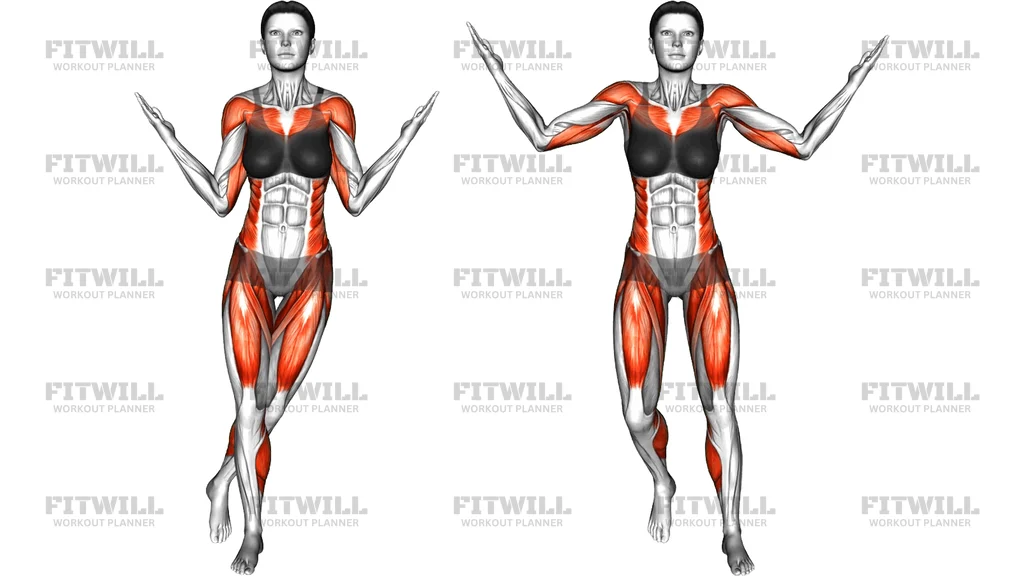
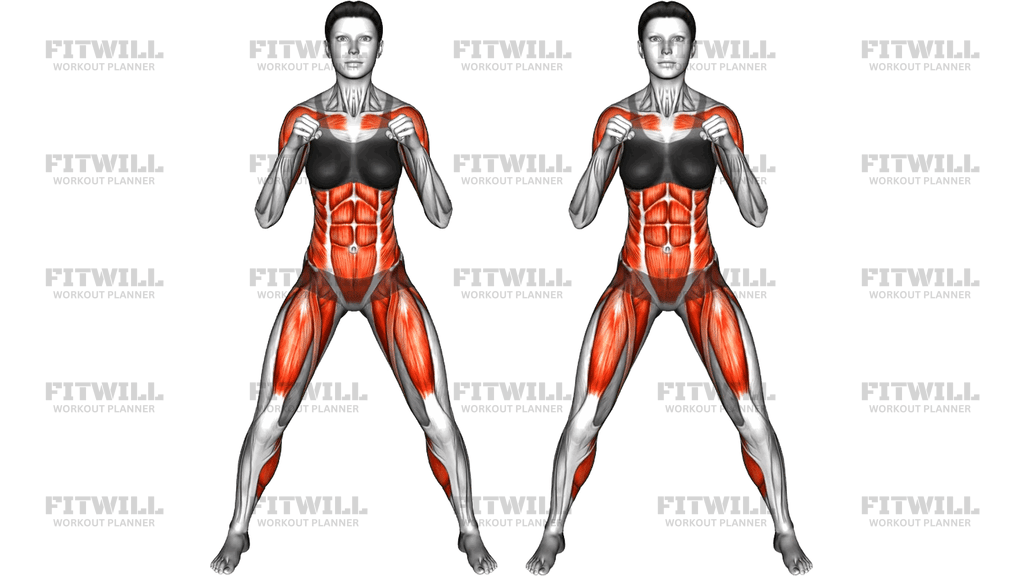
Standing Low Body Rotation
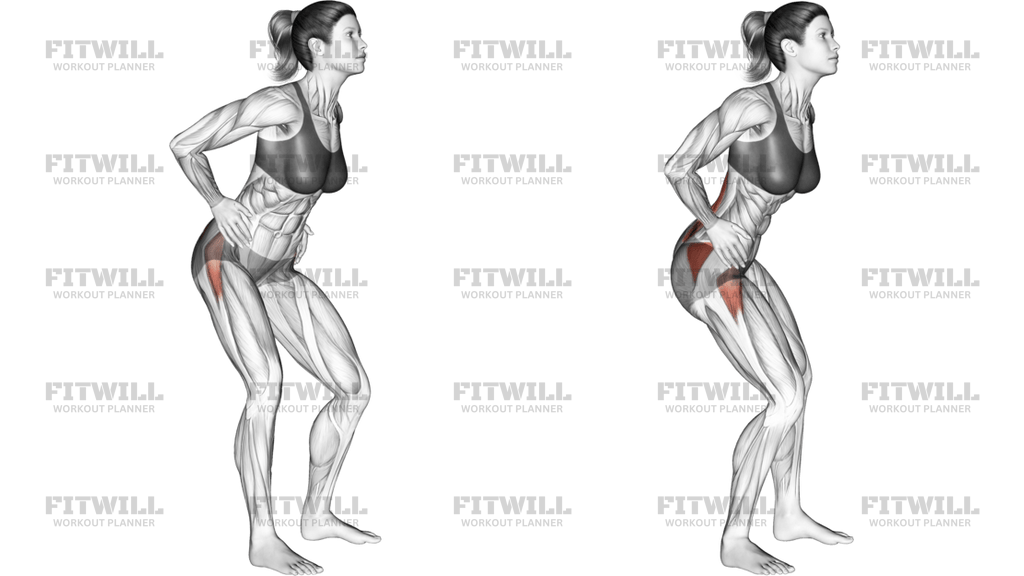
Standing Low Body Rotation is a standing hip mobility drill that teaches you to rotate the pelvis and hips with control while keeping the upper body quiet. The setup is simple, but the value comes from how cleanly you can move through the lower body without letting the chest, shoulders, or low back take over. It is useful as a warm-up, a reset between heavier lifts, or a light accessory drill when you want better hip awareness and smoother rotational control.
The movement should feel like a deliberate turn through the hips and pelvis, not a loose twist through the spine. With the feet planted and the knees softly bent, you create a stable base and then rotate the lower body side to side in a short, controlled arc. That controlled range is the point: you are training coordination, balance, and the ability to organize the hips under pressure instead of chasing a bigger swing.
This exercise is especially helpful if your hips feel stiff, your knees drift inward when you move, or you need a low-intensity drill before squats, lunges, sports work, or dynamic circuits. It can wake up the glutes and surrounding stabilizers while also asking the core to keep the rib cage stacked over the pelvis. If the motion turns into a shoulder twist or a hip sway, the repetition stops teaching the right pattern.
Quality matters more than range here. Keep the knees soft, the feet grounded, and the pelvis moving smoothly from side to side without bouncing. A good rep feels controlled, smooth, and repeatable, with the breathing staying calm and the posture staying organized from start to finish. If the setup gets sloppy, the drill becomes a generic sway instead of a useful hip-control exercise.
Use Standing Low Body Rotation when you want a simple, bodyweight way to improve lower-body control and prepare the hips for more demanding training. It is not a maximal strength movement, so the goal is clean movement quality, not load. The best version looks small, steady, and intentional.
[ Workout Log & Planner ]
Put your next workout in Fitwill
Keep your plan and training log ready when you are.


Instructions
- Stand tall with your feet about hip-width apart and your toes pointing mostly forward.
- Place your hands on your hips or the front of your pelvis so you can feel the rotation.
- Keep your knees softly bent and your weight even across both feet.
- Brace your abdomen and stack your ribs over your pelvis before you start moving.
- Rotate your hips and pelvis to one side in a short, smooth arc while keeping your chest mostly forward.
- Let the knees follow the pelvis slightly, but keep both heels grounded and avoid letting the arches collapse.
- Sweep back through center and rotate to the other side with the same controlled range.
- Breathe steadily, exhaling as you turn and inhaling as you return through center.
- Finish each rep under control and reset before starting the next rotation.
Tips & Tricks
- Keep the motion in the hips and pelvis; if your shoulders are turning hard, the rep is too loose.
- A small range of motion is usually better than a big swivel that pulls the low back into the movement.
- Think about turning the belt line, not cranking the rib cage.
- Press evenly through the tripod of each foot so the knees do not collapse inward during the turn.
- If you feel pinching in the front of the hip, shorten the rotation and slow the tempo.
- Use the hands on your hips as feedback so you can tell whether the pelvis is actually moving.
- Keep the neck long and relaxed; looking around or twisting the head can hide sloppy torso rotation.
- Match the rhythm of the drill to your breathing so each side feels smooth instead of jerky.
Frequently Asked Questions
What does Standing Low Body Rotation train?
It mainly trains hip mobility, pelvic control, and coordination through the glutes and core.
Should my feet stay planted during Standing Low Body Rotation?
Yes. The feet should stay grounded while the hips and pelvis rotate side to side.
How wide should my stance be?
Hip-width is a good starting point. Wide enough to stay stable, but not so wide that the knees lock or the hips feel jammed.
What is the most common mistake with this exercise?
People usually turn the chest and shoulders instead of moving the pelvis, which turns the drill into a loose torso twist.
Can I use Standing Low Body Rotation as a warm-up?
Yes. It works well before squats, lunges, running, or any session where you want the hips to feel smoother.
Should my knees move a lot?
Only a little. They should follow the hips enough to keep the motion natural, but not drive the movement themselves.
What if I feel it in my lower back?
Reduce the range and slow down. The movement should come from the hips, not a forced twist through the lumbar spine.
Is this exercise beginner-friendly?
Yes. Beginners should keep the stance narrow enough to stay balanced and use a very small, controlled rotation.