Crunch With Medicine Ball
Crunch With Medicine Ball is a weighted floor crunch performed while holding a medicine ball above the chest. It keeps the exercise simple and direct: the torso curls off the floor, the ribs close toward the pelvis, and the abdominals do the lifting while the arms mostly hold the load steady. The ball adds resistance without changing the basic crunch pattern, so it is useful when bodyweight work is no longer challenging enough but you still want a clean, controlled trunk flexion exercise.
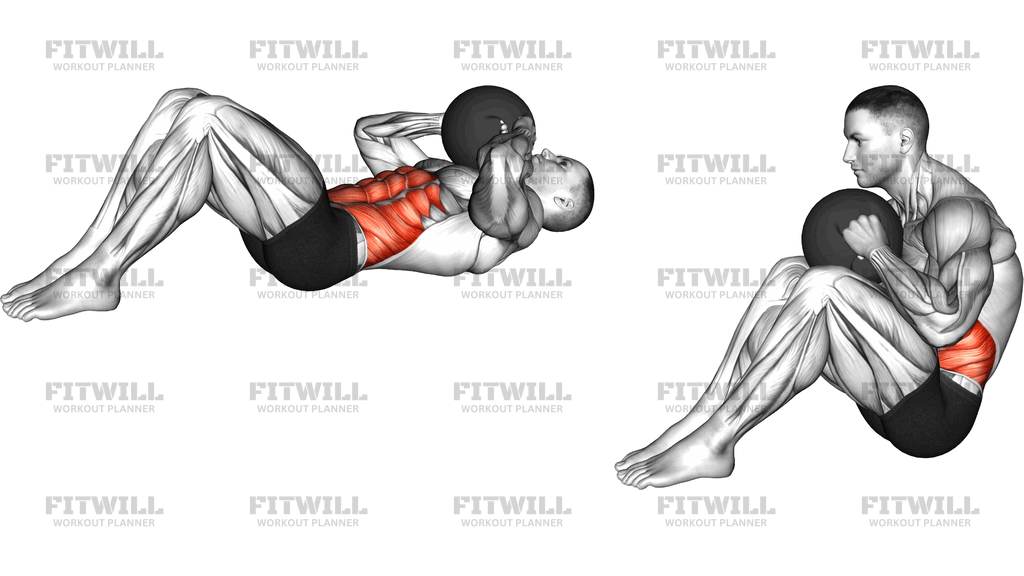
The image shows a bent-knee setup with the feet planted on the floor and the medicine ball held in both hands over the chest. That setup matters because it lets the rectus abdominis do the main work without turning the movement into a hip-dominant sit-up. Keep the pelvis quiet, the ribs down, and the lower back gently in contact with the floor at the start. If the ball drifts backward or the knees start to pull upward, the movement usually becomes less about the abs and more about momentum or hip flexor compensation.
Each repetition should be a short, deliberate curl. Exhale as you lift the head, shoulders, and upper back off the floor, then keep the ball traveling in line with the torso rather than swinging it forward. The goal is not to sit all the way up; it is to shorten the abdominals, pause for a moment at the top, and then lower with control until the shoulder blades return to the floor. A neutral neck and a small chin tuck usually make the rep feel much cleaner.
This exercise fits well in accessory core work, abdominal circuits, or as a loaded progression from a basic crunch. A lighter medicine ball is best when learning the pattern, while a heavier ball, a slower lowering phase, or a brief pause at the top will raise the difficulty later. The set should still look smooth from rep to rep. If the lower back arches, the elbows bend and swing, or the neck starts to strain, the load or range is too aggressive for the current set.
[ Workout Log & Planner ]
Put your next workout in Fitwill
Keep your plan and training log ready when you are.


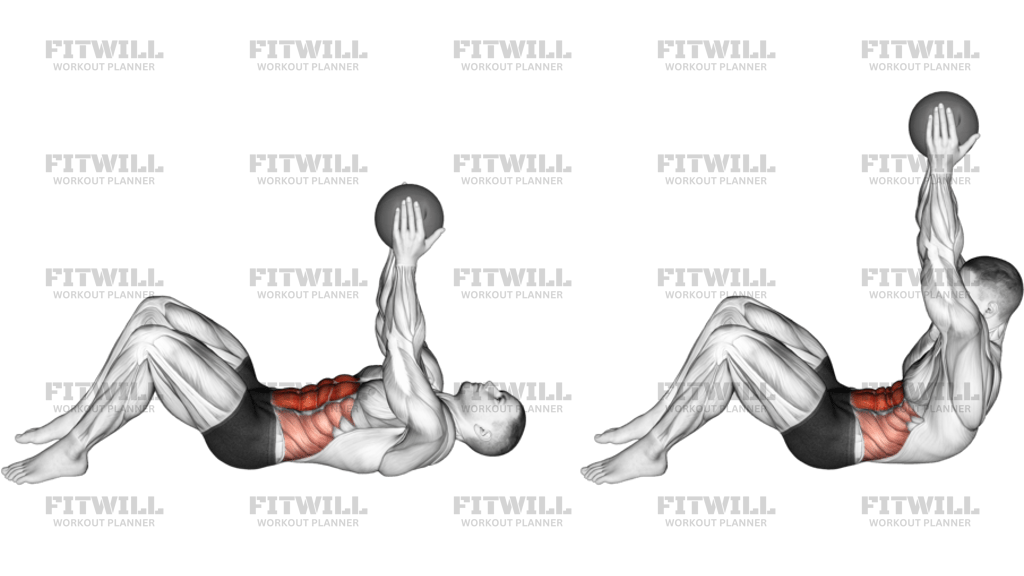
Instructions
- Lie on your back with your knees bent and your feet flat on the floor, about hip-width apart.
- Hold the medicine ball with both hands over the middle of your chest, arms mostly straight and shoulders relaxed.
- Set your ribs down, keep your lower back gently in contact with the floor, and brace your abs before you start.
- Exhale and curl your head, shoulders, and upper back off the floor without turning it into a full sit-up.
- Keep the ball steady above your chest as you lift; do not swing it or pull with your arms.
- Lift until your shoulder blades clear the floor and your abs feel fully shortened, then pause briefly.
- Lower yourself slowly until your shoulder blades touch down again while keeping tension in your core.
- Reset your brace each rep and repeat for the planned number of repetitions.
Tips & Tricks
- Choose a ball that you can hold steady above your chest without shaking or drifting backward.
- Think of the rep as a short rib curl, not a full sit-up.
- Keep your chin slightly tucked so the neck does not lead the movement.
- Exhale as you crunch up so the ribs stay from flaring and the abs can shorten cleanly.
- If your hip flexors take over, move the feet a little farther from the hips and shorten the range.
- Do not let the medicine ball swing toward your face or out over your knees.
- Lower more slowly than you rise to keep tension on the rectus abdominis.
- Stop the set when the lower back arches or you can no longer keep the ball stable.
Frequently Asked Questions
What muscle does Crunch With Medicine Ball target most?
The main target is the rectus abdominis, with the obliques and hip flexors helping stabilize the rep.
Can beginners perform this exercise?
Yes, beginners can use a light ball and a short range of motion. If a bodyweight crunch is still hard to control, start there first.
Where should I hold the medicine ball?
Hold it with both hands above the center of your chest. The arms should stay quiet while the torso does the curling.
Should I try to sit all the way up?
No. Keep it as a crunch: lift the shoulders and upper back, then lower before the movement turns into a full sit-up.
How heavy should the ball be?
Use a load that lets you keep the ball steady over your chest and keep the neck relaxed for every rep.
What is the biggest form mistake?
Swinging the ball or yanking with the neck usually means the load is too heavy or the range is too big.
How can I make the exercise harder later?
Use a heavier medicine ball, slow the lowering phase, or add a brief pause at the top of each crunch.
What should I do if my lower back arches?
Shorten the range, lighten the ball, and keep the ribs down at the start so the abs stay in charge of the movement.