Dumbbell Upright Row
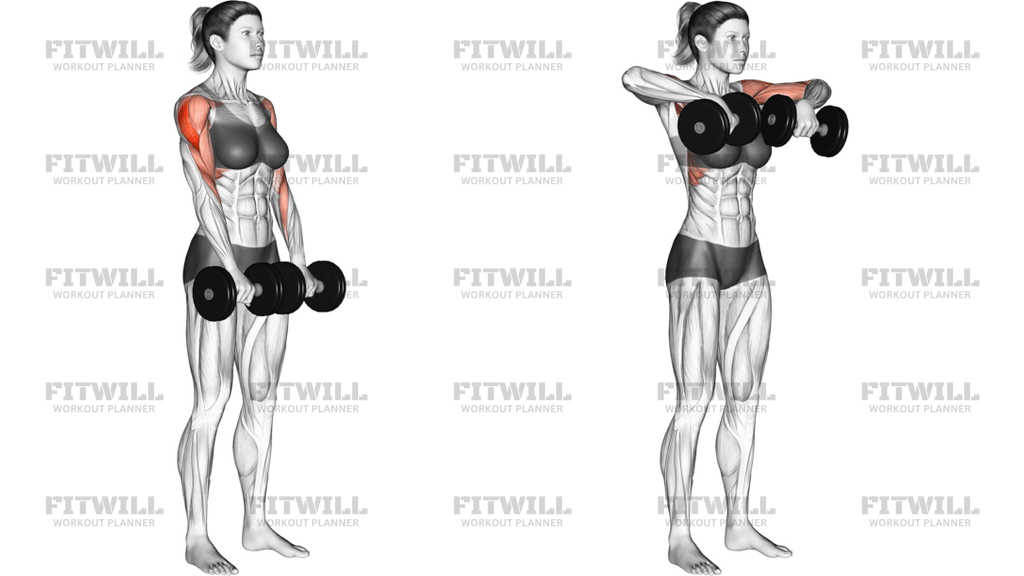
Dumbbell Upright Row is a standing shoulder-focused pulling exercise that moves the dumbbells from in front of the thighs up along the front of the body. The action is short and deliberate: you guide the weights close to your torso, lead with the elbows, and finish when the upper arms reach about shoulder height or slightly below it. That compact path is what makes the exercise useful for shoulder and upper-trap work without needing a large swing.
The setup matters because the torso, wrists, and elbow path decide whether the repetition feels smooth or awkward. Stand tall with a balanced stance, keep the dumbbells in front of the thighs, and let the arms hang naturally before the first pull. From there, the lift should feel organized rather than explosive, with the chest open, neck long, and the weights staying close enough to your body that they do not drift forward.
Used well, Dumbbell Upright Row can be a solid accessory movement after presses, rows, or other compound lifts. It is especially helpful when you want a controlled shoulder-dominant rep that still recruits the upper back and arms for support. The exercise also works well in higher-rep hypertrophy work because the dumbbells let each arm travel freely and make side-to-side asymmetry easier to notice.
The biggest mistake is turning the lift into a shrugging yank. If the dumbbells climb too high, the wrists bend back, or the shoulders feel pinched at the top, shorten the range and lighten the load. The goal is a clean vertical pull with the elbows leading, not forcing the hands higher than the shoulder line. A smooth lowering phase is just as important as the upward pull, because it keeps tension on the target muscles and makes the set easier to repeat with the same path.
For most lifters, this is best treated as a precise accessory movement rather than a max-effort lift. Start with a load you can move without swaying, keep the path consistent rep to rep, and stop the set as soon as the shoulders or wrists stop feeling stable. That approach keeps the exercise useful for shoulder development while reducing unnecessary stress on the joints.
[ Workout Log & Planner ]
Put your next workout in Fitwill
Keep your plan and training log ready when you are.


Instructions
- Stand tall with a dumbbell in each hand in front of your thighs, palms facing your body and feet about shoulder-width apart.
- Keep your chest up, knees softly unlocked, and your neck long so the dumbbells start relaxed instead of pulled forward.
- Set your wrists straight and let the weights hang close to the front of your legs before the first rep.
- Brace your torso, then drive the elbows up and out to begin the pull.
- Keep the dumbbells close to your body as they travel upward, letting the elbows lead the motion.
- Raise the weights until they reach upper chest height or just below shoulder level, whichever comes first without pinching.
- Pause briefly at the top, then lower the dumbbells along the same path under control.
- Finish each rep with the arms straight but not locked hard, then reset before the next pull.
- Breathe out as you lift and breathe in as you lower, keeping the torso steady through the full set.
Tips & Tricks
- Use lighter dumbbells than you would for rows; this movement gets sloppy fast when the load is too heavy.
- Think about leading with the elbows, not the hands, so the shoulders and upper traps do the work instead of the forearms.
- Keep the dumbbells brushing close to the torso; if they drift away from your body, the path is no longer an upright row.
- Stop the pull when the upper arms are about parallel to the floor or earlier if the front of the shoulder feels crowded.
- Do not crank the wrists backward at the top; stacked wrists keep the rep cleaner and easier on the forearms.
- Lower the dumbbells slowly enough that you can feel the same muscles working on the way down.
- If you start shrugging your shoulders toward your ears, reduce the load and shorten the range.
- A slight knee bend usually makes the lift easier to control than locking your legs rigidly straight.
- If one side rises faster than the other, slow the rep down and match both elbows to the same height.
Frequently Asked Questions
What muscles does Dumbbell Upright Row work?
It mainly trains the shoulders and upper traps, with the biceps and forearms helping to guide the dumbbells.
How high should I pull in Dumbbell Upright Row?
Pull until the dumbbells reach upper chest level or the elbows are just below shoulder height. Going higher usually adds more shoulder strain than benefit.
Should the dumbbells stay close to my body?
Yes. Keeping them close preserves the upright path and helps you lead with the elbows instead of swinging the weights forward.
Is Dumbbell Upright Row safe for beginners?
It can be, as long as the load is light and the range stays comfortable. Beginners should focus on a smooth pull and stop short of any shoulder pinch.
Why do my wrists feel uncomfortable during this exercise?
The wrists are usually bending back because the dumbbells are too heavy or the elbows are not leading the lift. Keep the wrists stacked and reduce the load.
What is the most common mistake with Dumbbell Upright Row?
The biggest mistake is turning it into a fast shrug. That usually shortens control, raises the shoulders too much, and takes tension away from the target muscles.
Can I use Dumbbell Upright Row as an accessory exercise?
Yes. It fits well after presses or rows when you want a shorter, controlled shoulder and upper-trap movement.
What should I do if my shoulders pinch at the top?
Shorten the range, lower the weight, or stop the exercise if the top position still feels crowded. A different shoulder accessory may be a better choice.